Key Takeaways
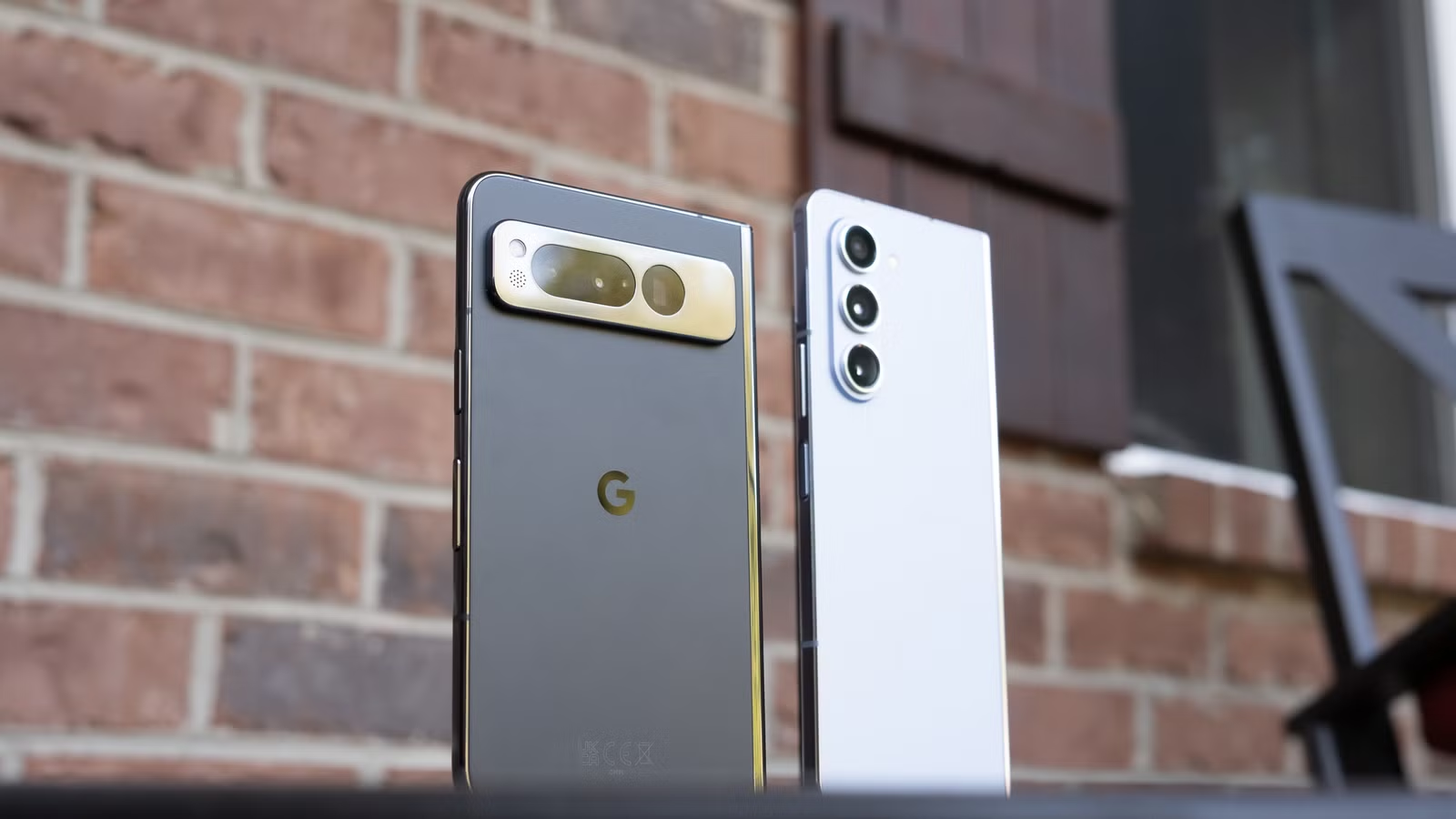
- Google's monthly Pixel Drops deliver new features, not just security patches, putting it ahead of Samsung's update schedule
- Pixel UI offers near-stock Android with minimal bloatware compared to One UI's preinstalled app load
- The Pixel camera experience prioritizes point-and-shoot simplicity with AI features like Add Me and Camera Coach
A longtime Samsung Galaxy owner just made the switch to Google's Pixel 10 Pro, and the reasons come down to five software exclusives Samsung cannot match. Writing for How-To Geek, tech journalist Goran Damnjanovic explains why Google's update cadence, cleaner interface, and camera AI tipped the scales after years of loyalty to Samsung's Galaxy lineup.
The piece lands at an interesting moment. Samsung remains the dominant Android brand in the US with roughly 25 to 28 percent market share, while Pixel hovers around 10 percent. Yet Google's phones punch above their weight in mindshare among developers and enthusiasts, and stories like Damnjanovic's illustrate why.
Why do Pixel software updates matter more than Samsung's?
Samsung improved dramatically on updates over the past five years. Galaxy flagships now receive four major Android upgrades and five years of security patches. But Google operates on a different rhythm entirely.
Monthly Pixel Drops bundle security fixes with new features. Recent additions include Comfort View and Notification Summaries. Samsung's updates tend to separate those concerns, so new One UI capabilities arrive less predictably.
Pixels also receive major Android releases first. Android 17 shipped to supported Pixel devices before any Samsung phone saw it. For users who want early access to beta builds, the Pixel line makes sideloading straightforward, even on older models.
Google promises seven years of software and security updates for current Pixel phones. That's two years longer than Samsung's commitment on its flagships. Over a phone's lifetime, the gap compounds.
How does Pixel UI compare to Samsung One UI?
One UI remains a capable Android skin. Paired with Samsung's Good Lock customization suite, it offers flexibility few competitors match. But Damnjanovic found Pixel's approach more cohesive.
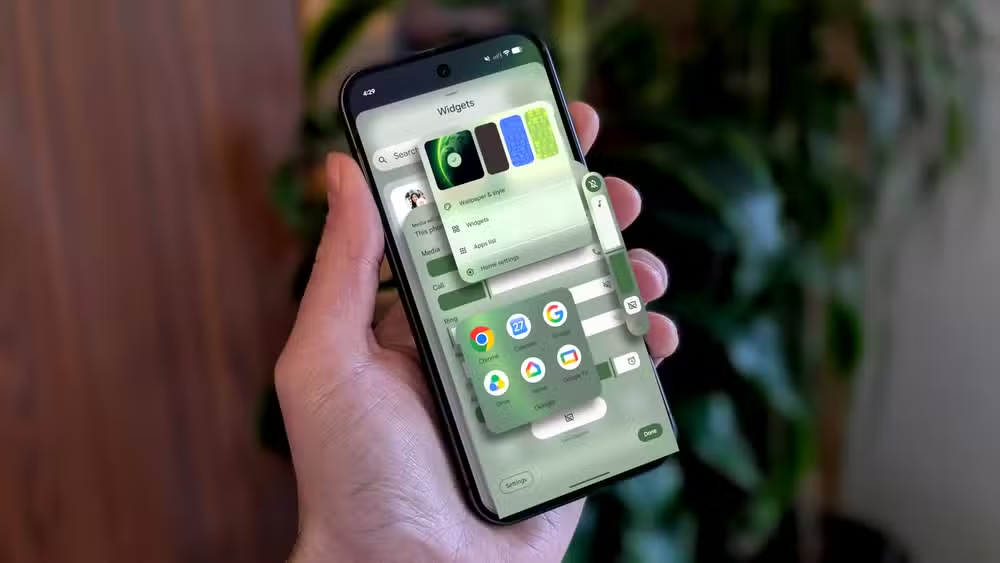
Material You theming on Pixel extends across the Settings app, home screen, quick settings, and most first-party apps. Colors adapt to your wallpaper, creating a unified look that One UI achieves only partially.
Then there's bloatware. Samsung phones ship with fewer preinstalled apps than they did five years ago, but the gap persists. Pixel devices arrive with a handful of Google apps and little else. No carrier add-ons, no duplicate productivity suites.
One caveat: the Pixel Launcher itself is fairly limited. Power users who want icon packs, custom gestures, or drawer tweaks may find it restrictive compared to third-party launchers, or even One UI Home.
Is the Pixel camera still better than Samsung's?
For years, Pixel phones held an undisputed lead in computational photography. That edge narrowed as Samsung, Apple, and Chinese brands invested heavily in their own image processing. Still, Damnjanovic found the Pixel 10 Pro's camera experience preferable to his previous Galaxy.
The hardware matters: a wide lens, ultrawide, and 5x optical telephoto cover most use cases. But the software differentiates. Add Me lets you join group photos after the fact. Camera Coach offers real-time tips for better composition. These features run on Google's Tensor G5 chip, purpose-built for on-device AI.
Point-and-shoot quality sealed the deal for this switcher. He didn't want to spend time adjusting Pro mode settings. Pixel's automatic processing delivers consistent results with minimal effort, which matters more to casual photographers than spec-sheet maximalism.
What does the Tensor G5 chip actually enable?
Google designs Tensor silicon around AI and machine learning workloads, not raw benchmark scores. The Tensor G5 in the Pixel 10 Pro handles on-device transcription, real-time translation, call screening, and the camera AI features mentioned above.
Samsung's Snapdragon-powered Galaxies perform well on traditional CPU and GPU tasks, and Qualcomm's latest chips include their own neural processing units. But Google's vertical integration, owning the chip, software, and services, allows tighter optimization for specific features.
The tradeoff: Tensor chips historically run warmer and consume more power under sustained load than Qualcomm equivalents. For users who prioritize raw gaming performance or all-day battery life, Samsung's hardware choices may still make more sense.
Should Samsung users actually consider switching?
That depends on what you value. Samsung offers wider hardware variety: foldables, S Pen integration, larger displays, and more aggressive trade-in deals. One UI's feature density appeals to users who want granular control over every setting.
Pixel makes sense for users who want the cleanest Android experience, earliest access to new features, and deep Google service integration. At $999 for the Pixel 10 Pro versus $1,799 for a Galaxy S Ultra, price enters the conversation too.
The switcher in this story found Pixel's exclusives worth the change. Whether that calculus applies to you depends on which features you actually use daily, not which specs look better on paper.
Samsung's upcoming foldable takes a different approach to flagship Android
Logicity's Take
Google's real advantage isn't any single feature. It's the pace of iteration. Monthly drops mean Pixel owners see tangible improvements twelve times a year, not twice. For a $999 phone competing against $1,799 Ultras, that velocity changes the value equation. Samsung still wins on hardware options and ecosystem breadth, but Google has made 'boring' updates into a competitive moat.
Frequently Asked Questions
Does the Pixel 10 Pro have better cameras than Samsung Galaxy?
The hardware specs are comparable, but Pixel's computational photography and AI features like Add Me and Camera Coach deliver more consistent point-and-shoot results without manual adjustment.
How long will Pixel 10 Pro receive software updates?
Google promises seven years of Android and security updates for the Pixel 10 Pro, two years longer than Samsung's commitment on flagship Galaxy phones.
Is Pixel UI the same as stock Android?
Pixel UI is close to stock Android with Google's Material You theming and exclusive features. It's cleaner than Samsung One UI but includes some Pixel-specific additions.
What are Pixel Drops?
Monthly updates that bundle security patches with new features. Recent examples include Comfort View and Notification Summaries, delivered to supported Pixel phones every month.
Is the Tensor G5 chip faster than Snapdragon?
Not in raw benchmarks. Tensor chips prioritize AI and machine learning tasks over peak CPU/GPU performance, enabling features like real-time transcription and on-device photo processing.
Need Help Implementing This?
Considering a switch from Samsung to Pixel for your team or personal use? Reach out to Logicity for guidance on ecosystem migration, app compatibility, and enterprise deployment considerations.
Source: How-To Geek
Huma Shazia
Senior AI & Tech Writer
Produced with AI assistance and reviewed by the Logicity editorial team. Learn more in our Editorial Policy.