Key Takeaways
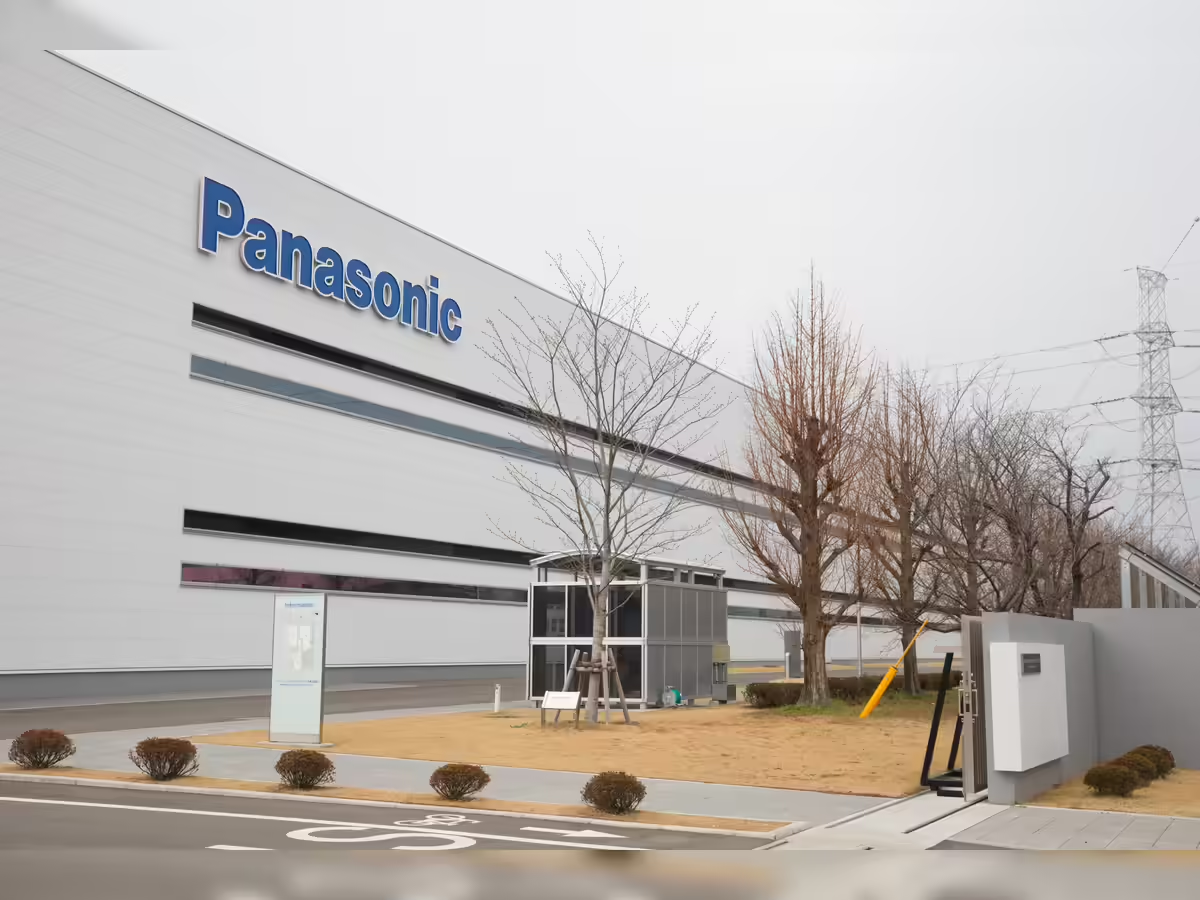
- Panasonic will produce battery cells for data centers at its Kansas plant starting fiscal year 2029
- The company is localizing its entire US supply chain for energy storage systems
- Panasonic is skipping LFP batteries, focusing instead on distributed systems for peak power smoothing
Panasonic will begin producing battery cells for data centers at its Kansas factory by March 2029, CEO Yuki Kusumi confirmed Tuesday. The Japanese conglomerate plans to localize its entire US supply chain for energy storage systems as it pivots away from a softening electric vehicle market toward the booming AI infrastructure sector.
"Since most of our customers are in the US for these energy storage systems, we think it makes sense to complete the supply chain as much as possible within the US," Kusumi said during a roundtable interview in Tokyo.
Why battery makers are chasing data centers
The Kansas plant, located in De Soto, already produces batteries for Tesla. But EV demand in the US has cooled significantly, leaving Panasonic and other battery manufacturers with capacity to repurpose. Data centers, meanwhile, are consuming power at unprecedented rates. AI workloads from companies like OpenAI, Google, and Microsoft require massive computing clusters that draw enormous amounts of electricity and need reliable backup systems.
Panasonic's initial investment in the Kansas gigafactory totaled roughly $4 billion. The facility was projected to create over 4,000 jobs and produce approximately 30 GWh of battery cells annually at full capacity. Redirecting some of that output toward energy storage for data centers makes financial sense when EV battery contracts are uncertain.
Panasonic bets against LFP chemistry
Kusumi made a notable technical decision: Panasonic will not produce lithium iron phosphate batteries for this market. LFP cells are cheaper than the nickel-heavy chemistries common in North American EV batteries, and they dominate large-scale energy storage projects globally. Chinese manufacturers have built massive LFP production capacity.
But Panasonic sees a different opportunity. The company is targeting distributed energy storage, systems designed to smooth peak power demand at individual servers rather than provide centralized backup for entire facilities. This application favors energy density over raw cost per kilowatt-hour, giving nickel-based chemistries an edge.
It's a calculated gamble. If data center operators prioritize server-level power management over bulk storage, Panasonic's approach could carve out a defensible niche. If they opt for the cheapest possible batteries for backup, LFP suppliers will win.
China supply remains stable, for now
Despite rising tensions between Beijing and Tokyo, Kusumi said Panasonic has not faced supply disruptions from China. This matters because Chinese firms control much of the global battery supply chain, from raw material processing to cell manufacturing.
China added 20 Japanese companies to a dual-use export control list this week. Panasonic was not among them. Still, the move underscores why localizing production in the US appeals to both Panasonic and its American customers. A battery supply chain that doesn't touch China reduces geopolitical risk.
What this means for data center operators
For CTOs and infrastructure teams planning data center builds, Panasonic's entry signals more competition in the energy storage market. More suppliers typically means better pricing and more options for procurement teams.
The distributed storage angle is worth watching. Traditional UPS systems protect against short outages. Panasonic's pitch, smoothing peak demand at the server level, suggests a different architecture: batteries integrated more deeply into the computing stack rather than sitting at the facility perimeter.
Mass production won't begin until fiscal year 2029, which ends in March of that year. That's a four-year horizon. Companies building data centers today will need to source batteries elsewhere, then potentially switch suppliers as Panasonic scales.
Logicity's Take
Panasonic's pivot is pragmatic but late. The company spent years betting on Tesla and the EV market while competitors like CATL and BYD built dominant positions in energy storage. Targeting distributed systems rather than centralized backup is a smart way to avoid competing directly on price with Chinese LFP suppliers. But execution risk is real. Four years is a long time in a market growing 15-20% annually. By 2029, competitors may have locked up the major hyperscaler contracts. Panasonic's US localization story will appeal to customers worried about supply chain resilience, but that appeal has a price premium baked in.
Frequently Asked Questions
When will Panasonic start producing data center batteries in the US?
Panasonic plans to begin mass production of battery cells for data centers at its Kansas plant in the fiscal year ending March 2029.
Why is Panasonic not using LFP batteries for data centers?
Panasonic believes LFP batteries are better suited for large, centralized backup applications. The company is focusing on distributed systems that smooth peak power demand at individual servers, where energy density matters more than raw cost.
Is Panasonic affected by China export controls?
Panasonic was not included in the 20 Japanese firms China added to its dual-use export control list this week. CEO Kusumi said the company is not struggling to secure supplies from China.
How much did Panasonic invest in the Kansas battery plant?
Panasonic invested approximately $4 billion in its De Soto, Kansas gigafactory, which was originally built to produce batteries for Tesla electric vehicles.
Need Help Implementing This?
If you're evaluating energy storage options for data center infrastructure, Logicity can connect you with specialists in power systems design and procurement strategy. Contact our team for vendor-neutral guidance.
Source: Tech-Economic Times / ET
Huma Shazia
Senior AI & Tech Writer
Produced with AI assistance and reviewed by the Logicity editorial team. Learn more in our Editorial Policy.




