Key Takeaways
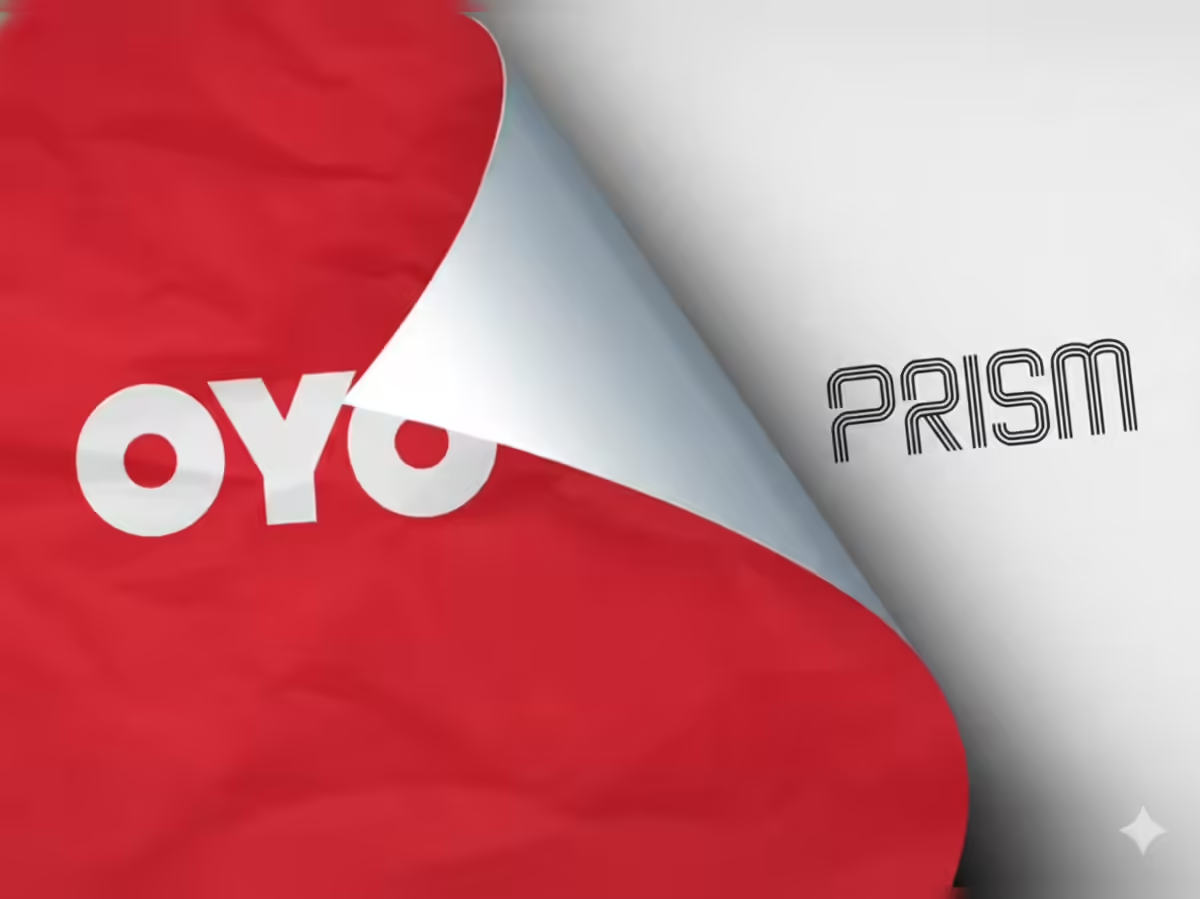
- Prism filed updated DRHP for ₹6,650 crore fresh issue IPO with no offer-for-sale component
- 75% of net proceeds (₹4,987.5 crore) will go toward repaying borrowings
- Revenue for 9 months ending December 2025 reached ₹6,941 crore, exceeding full FY25 revenue of ₹6,259 crore
Prism, the parent company of hospitality chain OYO, filed its updated Draft Red Herring Prospectus with SEBI on Tuesday for a ₹6,650 crore IPO. The filing is a fresh issue with no offer-for-sale, meaning existing investors won't cash out. Three-quarters of the proceeds will go straight to paying down debt.
This marks the latest step in OYO's stop-start public market journey. The company first filed confidentially in December 2025 and received SEBI approval earlier this month. Prism, which changed its name from Oravel Stays last September, may also raise up to ₹1,330 crore through a pre-IPO placement before the final Red Herring Prospectus. Any amount raised there would reduce the fresh issue size.
Where will the IPO money go?
The allocation is straightforward. Out of net proceeds, ₹4,987.5 crore will repay or prepay borrowings. That's roughly 75% of the total raise devoted to cleaning up the balance sheet. The remainder goes toward general corporate purposes, a standard catch-all for working capital and operational needs.
This debt-heavy use of funds signals Prism's priority: reduce leverage before growth investments. The company acquired G6 Hospitality from Blackstone in 2024, which brought Motel 6 and Studio 6 brands in the US and Canada. That acquisition likely contributed to the borrowings now targeted for repayment.
Financial performance: 9 months beat full FY25
The numbers in the DRHP make a case for momentum. For the nine months ending December 31, 2025, OYO posted revenue from operations of ₹6,941 crore. That already exceeds its full-year FY25 revenue of ₹6,259 crore. Net profit for the period hit ₹748 crore.
The geographic split is notable. Over 84% of revenue now comes from outside India. The US contributes 27%, Europe adds 24%. India, where OYO started and built its brand, accounts for less than 16% of revenue.
Scale of operations
As of December 2025, Prism's network spans 24,303 hotels, 124,668 homes, and 144,583 listings. The company operates 43 brands across more than 35 countries. Since 2012, OYO claims to have served 119.36 million unique customers.
In India, OYO is pushing its company-serviced hotel model. These storefronts grew 49% in number, reaching 1,573 by December 2025 compared to March. This represents a shift from the franchise-heavy approach that defined OYO's early years.
Credit rating outlook improves
S&P Global Ratings revised Prism's outlook to Positive from Stable earlier this month. The agency affirmed its 'B' issuer credit rating on the company's senior secured term loan. A positive outlook suggests the rating could be upgraded if financial performance continues on its current trajectory.
The timing matters. A ratings upgrade during the IPO window could improve institutional appetite for the stock, particularly among foreign investors who track these signals.
The G6 Hospitality acquisition
Prism's 2024 purchase of G6 Hospitality from Blackstone reshaped the company's geographic footprint. Motel 6 and Studio 6 are established budget brands in North America with decades of history. The deal brought scale in the US market, but also brought debt that Prism now aims to pay down with IPO proceeds.
This acquisition explains why the US now contributes 27% of revenue. It also explains the rebranding from Oravel Stays to Prism. The new name reflects a global portfolio spanning stays and co-working spaces, not just the OYO brand.
Logicity's Take
Prism is using this IPO primarily as a deleveraging event, not a growth capital raise. That's a pragmatic move. With ₹748 crore net profit in nine months and revenue already exceeding full-year FY25, the company can credibly argue it doesn't need outside capital for operations. The risk for IPO investors: they're effectively refinancing Prism's balance sheet rather than funding new initiatives. The reward: a cleaner financial structure and a company generating actual profits, unlike many tech IPO candidates. Watch the final pricing. If Prism seeks a valuation that reflects debt-free projections while still carrying significant debt, that gap becomes the investor's problem.
Earlier coverage of OYO's IPO filing and the three-year delay context
What happens next
With the updated DRHP filed, Prism awaits final SEBI observations before filing the Red Herring Prospectus. If the company proceeds with the ₹1,330 crore pre-IPO placement, that would reduce dilution for public investors while bringing in anchor capital at a negotiated price.
The hospitality sector's performance in 2025 will influence investor appetite. Travel demand has remained strong post-pandemic, but budget hotel segments face margin pressure from rising costs. OYO's ability to maintain its 9-month profit trajectory through a full fiscal year will be closely watched.
Frequently Asked Questions
How much is the OYO parent Prism IPO worth?
The IPO is sized at ₹6,650 crore as a fresh issue. If Prism completes a pre-IPO placement of up to ₹1,330 crore, the fresh issue size will be reduced accordingly.
Will existing OYO investors sell shares in the IPO?
No. The filing shows no offer-for-sale component, meaning all proceeds go to the company rather than existing shareholders.
What will OYO use the IPO money for?
₹4,987.5 crore (about 75%) will repay or prepay borrowings. The remainder funds general corporate purposes.
Is OYO profitable?
Yes. Prism reported net profit of ₹748 crore for the nine months ending December 2025, with revenue of ₹6,941 crore.
When will the OYO IPO launch?
No specific date is set. The company must complete SEBI review of the updated DRHP and file the final Red Herring Prospectus before pricing and launch.
Need Help Implementing This?
Tracking IPO filings and hospitality sector trends for investment decisions? Our team at Logicity covers tech and business developments that matter to decision-makers. Subscribe to our newsletter for analysis delivered to your inbox.
Source: Tech-Economic Times / ET
Manaal Khan
Tech & Innovation Writer
Produced with AI assistance and reviewed by the Logicity editorial team. Learn more in our Editorial Policy.