Key Takeaways
- GPT-5.4 autonomously identified TEMPO as an additive that improved Chan-Lam coupling yields from 16.6% to 25.2% on average
- The AI-designed conditions worked for 88% of boronic acids and 83% of sulfonamides tested
- Human chemists validated the results at bench scale, confirming higher yields for 11 of 14 substrate pairs
OpenAI and Molecule.one have demonstrated an AI chemist that autonomously improved a notoriously difficult reaction in medicinal chemistry. GPT-5.4, connected to Molecule.one's Maria autonomous lab platform, identified an unexpected additive that boosted yields for Chan-Lam coupling of primary sulfonamides, a reaction class that has frustrated synthetic chemists for years.
The results matter because synthesis bottlenecks kill drug candidates. If a promising molecule takes too long to make or produces too little product, medicinal chemistry teams often abandon it. Sulfonamide groups appear in drugs across oncology, antimicrobials, and diuretics, but coupling primary sulfonamides with boronic acids has historically delivered yields too low for practical use.
How the AI chemist designed its own experiments
OpenAI gave GPT-5.4 an open-ended goal: improve one of several important reaction classes. The model chose to focus on Chan-Lam coupling, then independently narrowed its target to primary sulfonamides after identifying them as high-value but underperforming substrates. It reviewed literature, proposed hypotheses, and designed experimental protocols.
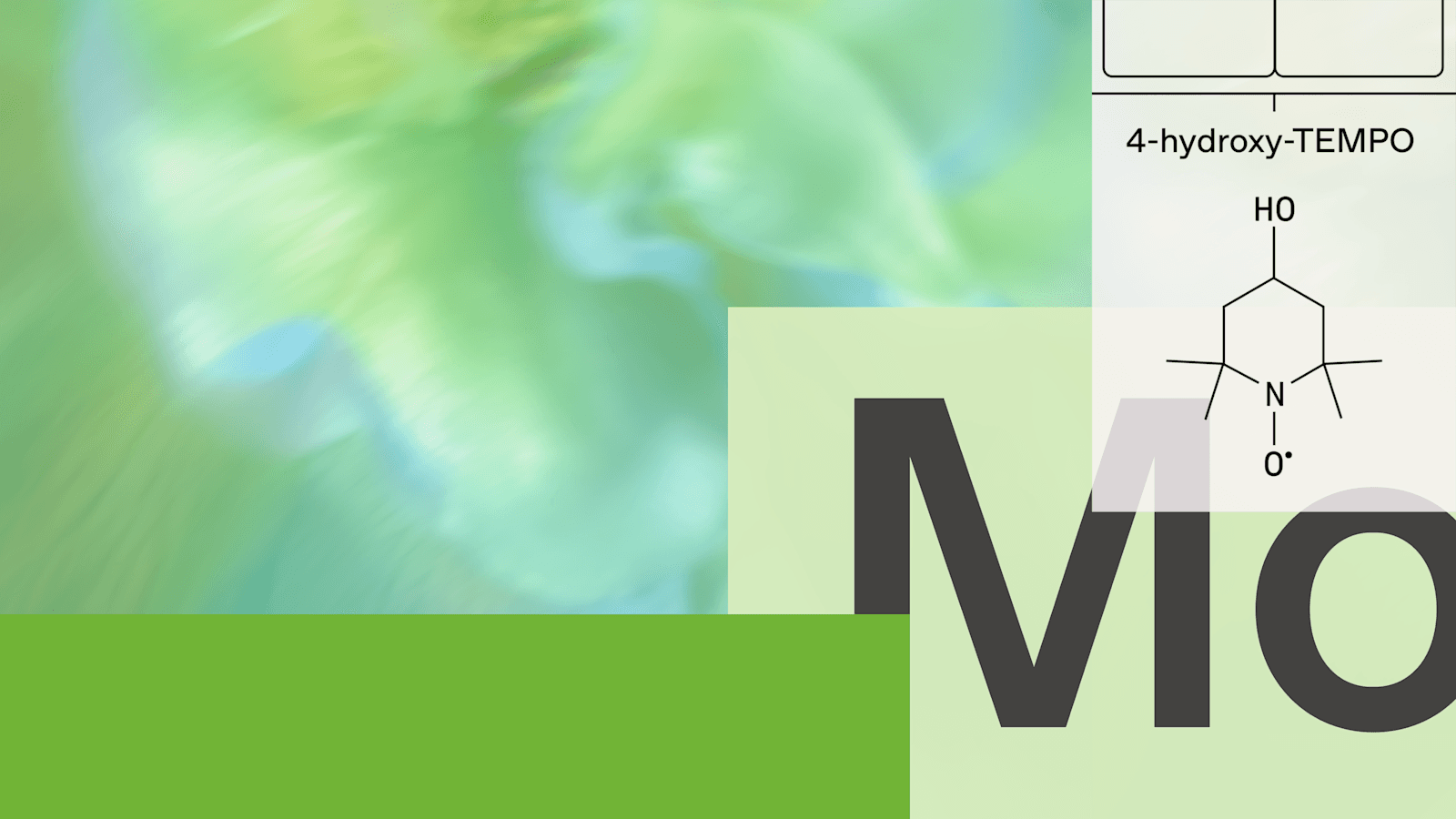
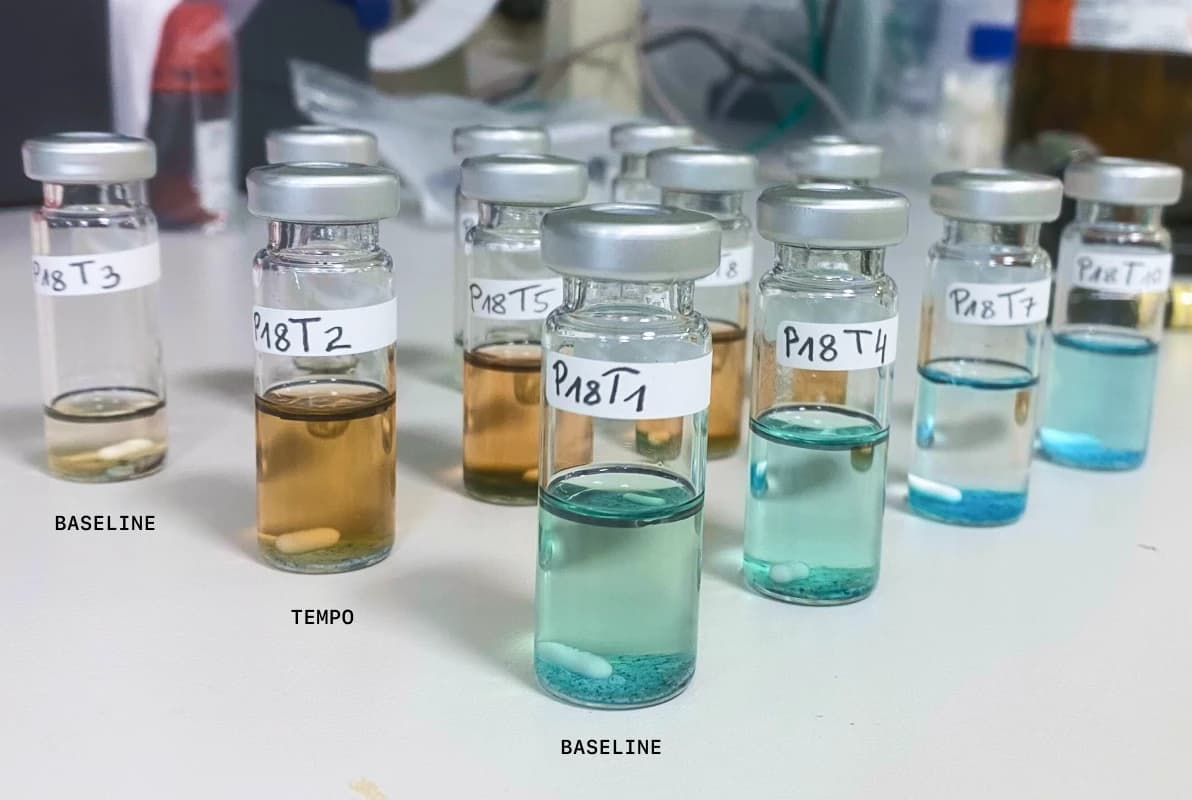
The key insight was suggesting mild oxidants, specifically TEMPO, could stabilize the reaction intermediates. That proposal, labeled OAI-M1-03, became the basis for two experimental cycles in Maria Lab.
Maria Lab ran 10,080 reactions to test the hypothesis at high throughput. Humans stayed in the loop but in a supervisory role: they designed grading prompts, selected which proposals to test, made limited corrections to experimental plans, and handled basic lab operations. The AI generated research proposals, analyzed data, and proposed follow-up experiments.
What the AI chemist actually achieved
Under GPT-5.4's optimized conditions, mean yield rose from 16.6% to 25.2%. That 52% relative improvement sounds modest until you consider the practical threshold: the share of reactions yielding above 30%, the level where a reaction becomes genuinely useful, jumped from 15.6% to 37.5%.
The AI-designed protocol improved yields for 88% of the boronic acids and 83% of the sulfonamides in the test set. Human chemists then repeated representative reactions at bench scale, the real-world setting where drug discovery happens. Eleven of 14 substrate pairs showed higher yields, with most showing more than twofold increases.
That bench-scale validation matters. Micro-liter screening results often fail to translate to practical workflows. The confirmation shows GPT-5.4's discovery is not just a statistical artifact of high-throughput conditions.
Why Chan-Lam coupling is hard to optimize
Chan-Lam coupling forms carbon-nitrogen bonds, which appear in most small-molecule drugs. The reaction uses copper catalysts and runs under milder conditions than alternatives like Buchwald-Hartwig amination. But it has a reputation for inconsistency.
Primary sulfonamides are particularly difficult substrates. The nitrogen is relatively unreactive, and traditional conditions produce low yields with many unwanted byproducts. Chemists have known for years that better conditions should exist, but manual optimization is slow and expensive.
This is exactly the kind of problem where AI can add value. The search space is large, the experimental cost per iteration is manageable, and the payoff for success is high because the improved reaction unlocks molecules that were previously impractical to synthesize.
OpenAI's broader push into scientific research
This project extends a pattern OpenAI has been building. The company has previously published AI-assisted results in mathematics, including work on the unit distance problem, in theoretical physics through new calculations on gluon amplitudes, and in biology, where GPT-5 helped reduce the cost of cell-free protein synthesis in an automated lab.
OpenAI also introduced GPT-Rosalind, a model purpose-built for life sciences research and drug discovery workflows. The Molecule.one collaboration represents the next step: moving from computational assistance to autonomous experimentation.
The distinction matters. A model that suggests experiments is useful. A model that designs, runs, and iterates on experiments with minimal human intervention changes the economics of discovery.
What this means for drug discovery timelines
Pharmaceutical companies spend years optimizing synthesis routes. A single reaction improvement can shave months off development timelines and millions off costs. If AI systems can reliably discover such improvements, the implications for drug pricing and availability are significant.
The current result is still early. One reaction class, one substrate type, one additive. But the approach, giving an AI an open-ended goal and letting it propose and test hypotheses autonomously, scales in ways that human-only research does not.
Another example of AI systems moving from narrow tasks to autonomous, goal-directed behavior
Logicity's Take
The real story here is not the yield improvement. It is the workflow. OpenAI demonstrated that GPT-5.4 can function as a research partner across the entire loop: literature review, hypothesis generation, experimental design, data analysis, and iteration. The 10,080 reactions Maria Lab ran would take a human team months. If this approach generalizes across reaction types, pharma companies will need to rethink how they staff and structure R&D.
Frequently Asked Questions
What is an AI chemist?
An AI chemist is a system that can autonomously propose, design, and analyze chemistry experiments. In this case, GPT-5.4 connected to Molecule.one's Maria lab to run reactions without constant human direction.
What is Chan-Lam coupling used for?
Chan-Lam coupling forms carbon-nitrogen bonds, which are common in small-molecule drugs. It uses copper catalysts and milder conditions than some alternatives, making it attractive for drug synthesis.
How much did the AI improve reaction yields?
Mean yields rose from 16.6% to 25.2%, and the share of reactions above the 30% practical threshold jumped from 15.6% to 37.5%.
Did human chemists validate the AI's results?
Yes. Human chemists repeated representative reactions at bench scale and confirmed higher yields for 11 of 14 substrate pairs tested.
What is TEMPO and why did the AI suggest it?
TEMPO is a mild oxidant. GPT-5.4 proposed it could stabilize reaction intermediates in Chan-Lam coupling, improving yields for difficult substrates like primary sulfonamides.
Need Help Implementing This?
If your organization is exploring AI-assisted drug discovery or autonomous lab systems, Logicity can connect you with implementation partners and case studies. Contact our editorial team at editors@logicity.in.
Source: OpenAI News
Manaal Khan
Tech & Innovation Writer
Produced with AI assistance and reviewed by the Logicity editorial team. Learn more in our Editorial Policy.