Key Takeaways
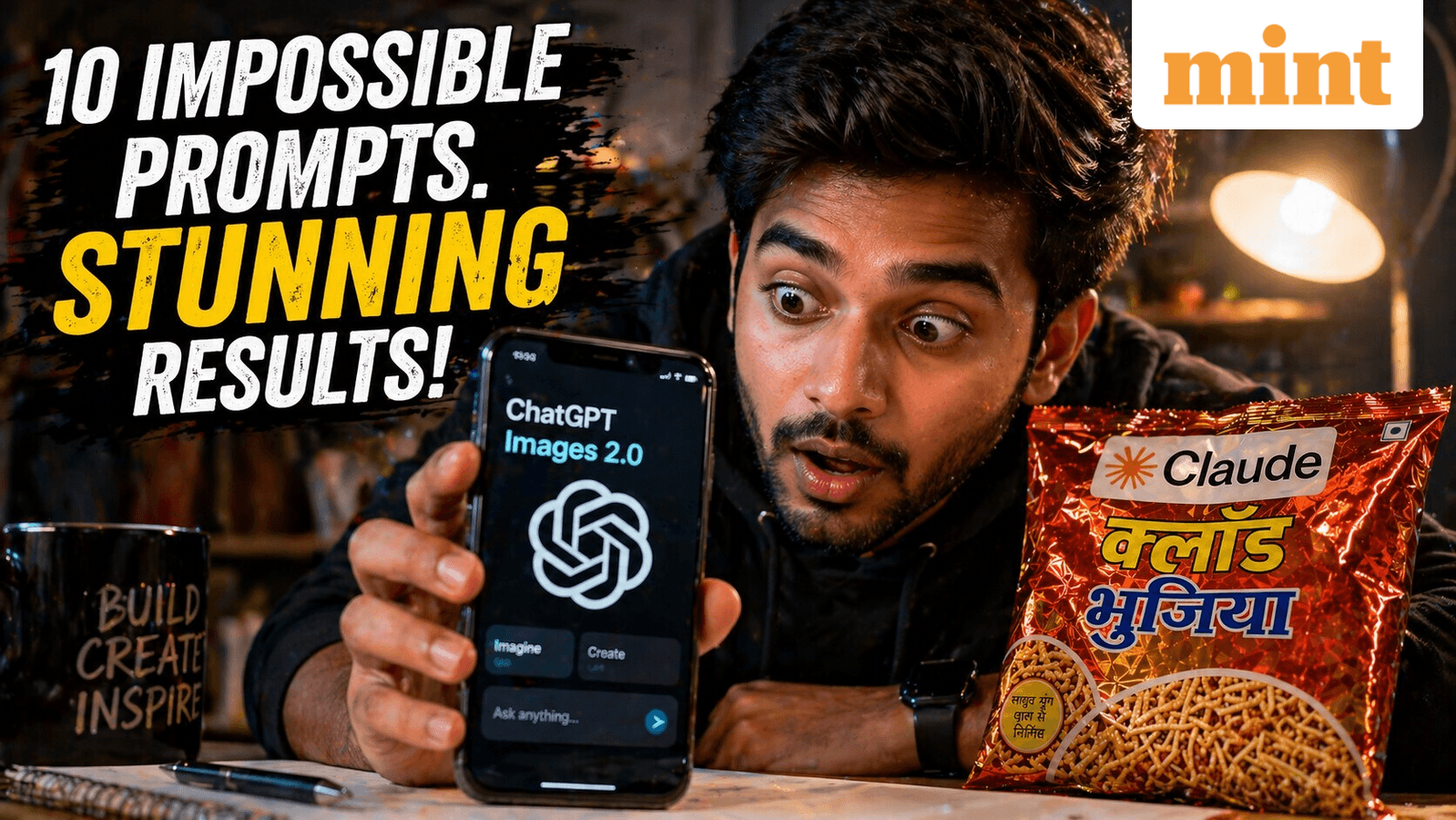
- ChatGPT Images 2.0 renders legible Hindi Devanagari text on billboards and product packaging
- The model generates valid Python code in screenshots without gibberish characters
- OpenAI's new image model uses a 'Thinking' mode to plan layouts before generating pixels
OpenAI's Image Model Gets a Stress Test
OpenAI released ChatGPT Images 2.0 this week. The update flew under the radar amid a flood of AI announcements. But early testing suggests it's one of the strongest image generation models available, competing directly with Gemini, Seedream, and Qwen.
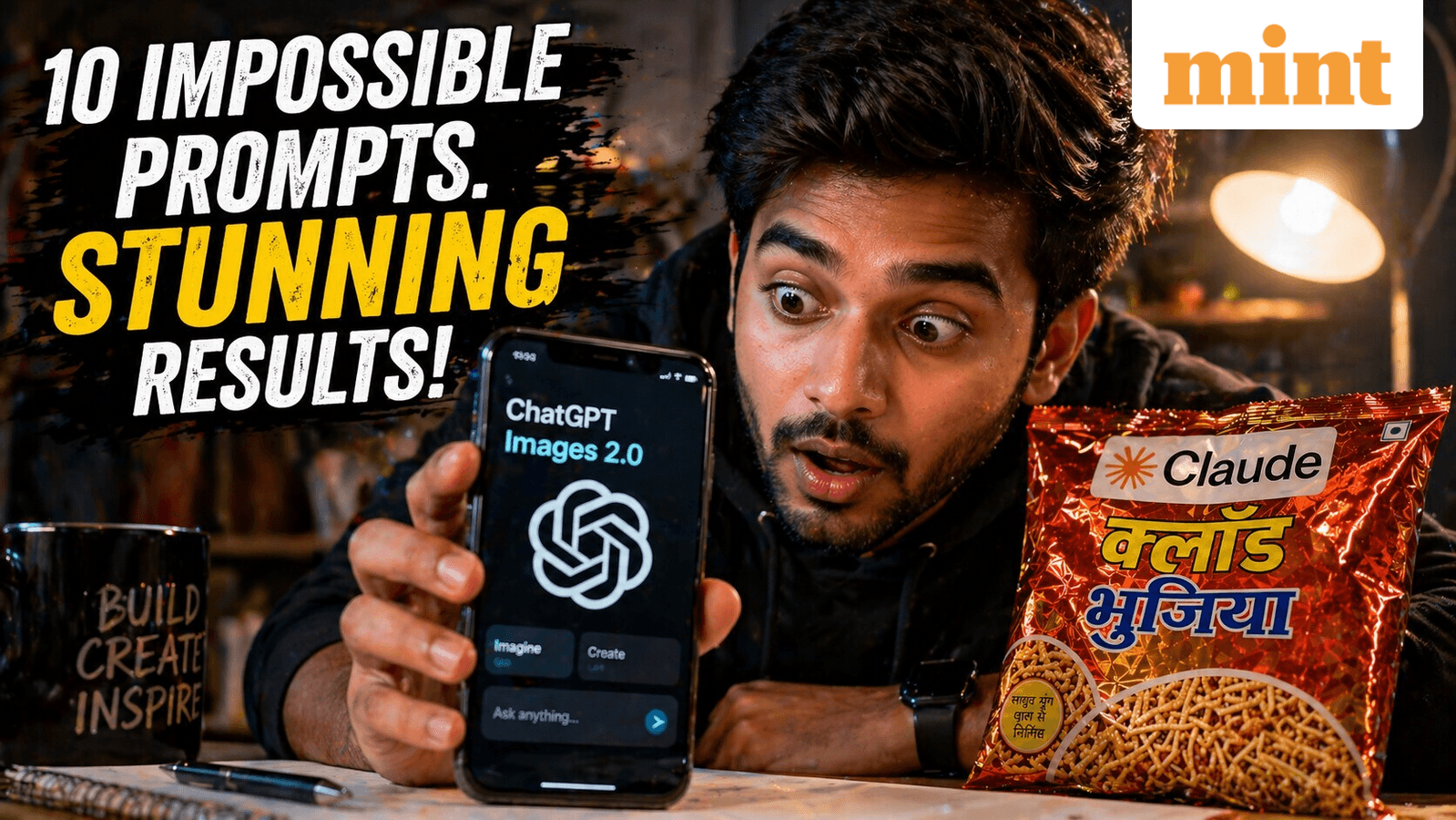
A journalist at Mint put the model through 10 demanding prompts over several days. The tests targeted problems that have plagued AI image generators for years: readable text in non-Latin scripts, accurate clock faces, legible code, and consistent character identity across multiple images.
Hindi Text on Billboards
The first prompt asked for a photorealistic Indian highway billboard with Devanagari text reading 'यह एक परीक्षण है – OpenAI इमेज मॉडल'. Previous image models would mangle Hindi characters, producing something that looked like script but was unreadable. The test also demanded natural lighting, realistic shadows, weathering, and passing traffic.
This type of prompt matters for businesses operating in India. Marketing teams need to mockup signage, packaging, and advertisements before committing to production. If the AI can render Devanagari accurately, it becomes a prototyping tool rather than a toy.
Analog Clocks and Digital Displays
Clock faces have been a notorious weakness for image generators. The prompt asked for three analog wall clocks in an airport terminal, each showing a specific time (10:15, 2:45, and 7:30). Below each analog clock, a digital LED sign had to display the identical time.
This tests whether the model understands time representation across formats. It's not just about drawing clock hands. The model has to know that 10:15 means the hour hand points slightly past 10 while the minute hand points at 3.
Python Code Without Gibberish
Another prompt requested a laptop screen showing a code editor with Python code. The requirements were specific: the code had to be structurally valid, properly indented, syntax-highlighted, and contain zero gibberish characters.
This prompt targets a common AI image failure. Previous models would generate something that looked like code from a distance but contained fake symbols and nonsense words when examined closely. For developers creating tutorial content or documentation, unusable code screenshots are worthless.
Product Packaging With Logos
The most complex prompt asked for a packet of 'Claude Bhujia' (a fictional snack) placed in an Indian kirana store rack. The packet needed metallic foil with realistic crinkles, the official Claude AI logo rendered accurately, and Hindi text that followed the natural folds of the packaging.
This is a packaging design test. Consumer goods companies prototype dozens of packaging variations before selecting one for production. An image model that can render logos, brand names in multiple scripts, and realistic materials could compress weeks of design work into hours.
Face Identity Preservation
One prompt uploaded a photo and asked the model to transform the subject into a rugged biker photoshoot. The key constraint: keep the facial identity unchanged while adding a leather jacket, motorcycle, highway background, and dramatic lighting.
Identity preservation is critical for commercial applications. A clothing brand wants to show the same model in different outfits without reshooting. A real estate firm wants the same agent across all marketing materials. Without consistent identity, each generation looks like a different person.
How the Model Works
ChatGPT Images 2.0 uses what OpenAI calls a 'Thinking' mode. Before generating any pixels, the model researches context and plans complex layouts. This approach differs from one-shot generation, where the model attempts to create the entire image in a single pass.
The thinking approach addresses two persistent problems. First, garbled text. By planning the layout first, the model can allocate proper space for text elements and render characters correctly. Second, character inconsistency. By establishing identity parameters before generation, the model maintains features across multiple outputs.
Performance Numbers
The model claimed the top spot on the Image Arena leaderboard within 12 hours of release. It supports native 2K and 4K resolution for professional-grade exports. In batch generation tests, the model produced 8 to 10 perfectly consistent images with matching characters, lighting, and style.
These specs matter for production workflows. A social media campaign might need 20 variations of the same scene for A/B testing. A product launch might require consistent imagery across web, mobile, and print formats. Native high resolution eliminates the need for upscaling tools.
What the Competition Offers
ChatGPT Images 2.0 competes with Google's Gemini, ByteDance's Seedream, and Alibaba's Qwen. Each has strengths in different areas. Gemini integrates tightly with Google Workspace. Seedream excels at short-form video. Qwen offers strong performance on Chinese language prompts.
OpenAI's advantage appears to be text rendering accuracy across scripts and the thinking-based approach to complex compositions. For teams that need reliable Devanagari, Arabic, or other non-Latin text, this could be the deciding factor.
Logicity's Take
Frequently Asked Questions
Does ChatGPT Images 2.0 support Hindi and other Devanagari text?
Yes. Testing shows the model can render legible Hindi text on billboards, product packaging, and other surfaces. Previous models often produced unreadable characters.
Can ChatGPT Images 2.0 generate readable code screenshots?
The model was tested with Python code prompts and produced structurally valid, properly indented, syntax-highlighted code without gibberish characters.
What resolution does ChatGPT Images 2.0 support?
The model supports native 2K and 4K resolution for professional-grade exports without requiring separate upscaling tools.
How does ChatGPT Images 2.0 differ from DALL-E?
ChatGPT Images 2.0 uses a 'Thinking' mode that plans compositions before generating pixels, unlike DALL-E's one-shot generation approach. It's also integrated directly into ChatGPT rather than being a separate tool.
Apple's hardware upgrades may be driven partly by on-device AI image generation requirements
Need Help Implementing This?
Source: mint / Aman Gupta
OpenAI CEO Apologizes for Safety Reporting Failure
OpenAI CEO Sam Altman issued a formal apology for the company's failure to notify police about a banned user's threatening ChatGPT conversations prior to a shooting in Tumbler Ridge, B.C. The company has also updated its policy to proactively report 'imminent and credible' threats to authorities.
GPT-5.5 Benchmark Comparison and Agentic Capabilities
The new article introduces GPT-5.5 and provides specific performance benchmarks (Terminal-Bench 2.0, OSWorld-Verified) comparing it to Claude Opus 4.7 and Gemini 3.1 Pro. It details the model's advancements in agentic capabilities and autonomous computer operation, which were absent from the initial report on image generation.
Manaal Khan
Tech & Innovation Writer
Produced with AI assistance and reviewed by the Logicity editorial team. Learn more in our Editorial Policy.