Key Takeaways
- ChatGPT ads expanding to UK, Mexico, Brazil, Japan, and South Korea in coming weeks
- Plus, Pro, Business, Enterprise, and Education tiers remain ad-free
- OpenAI claims no impact on consumer trust metrics and low ad dismissal rates
OpenAI announced on May 7, 2026, that it will expand its ChatGPT advertising pilot to five new markets: the United Kingdom, Mexico, Brazil, Japan, and South Korea. The expansion follows a phased rollout that started in the US in February and grew to include Canada, Australia, and New Zealand in March.
The ads appear only for logged-in adult users on the Free and Go subscription tiers. Paid subscribers on Plus, Pro, Business, Enterprise, and Education plans will not see ads.
How the ads work
OpenAI has been clear about one core claim: ads do not influence ChatGPT's answers. The company states that conversations remain private from advertisers, and the AI's responses stay independent regardless of ad presence.
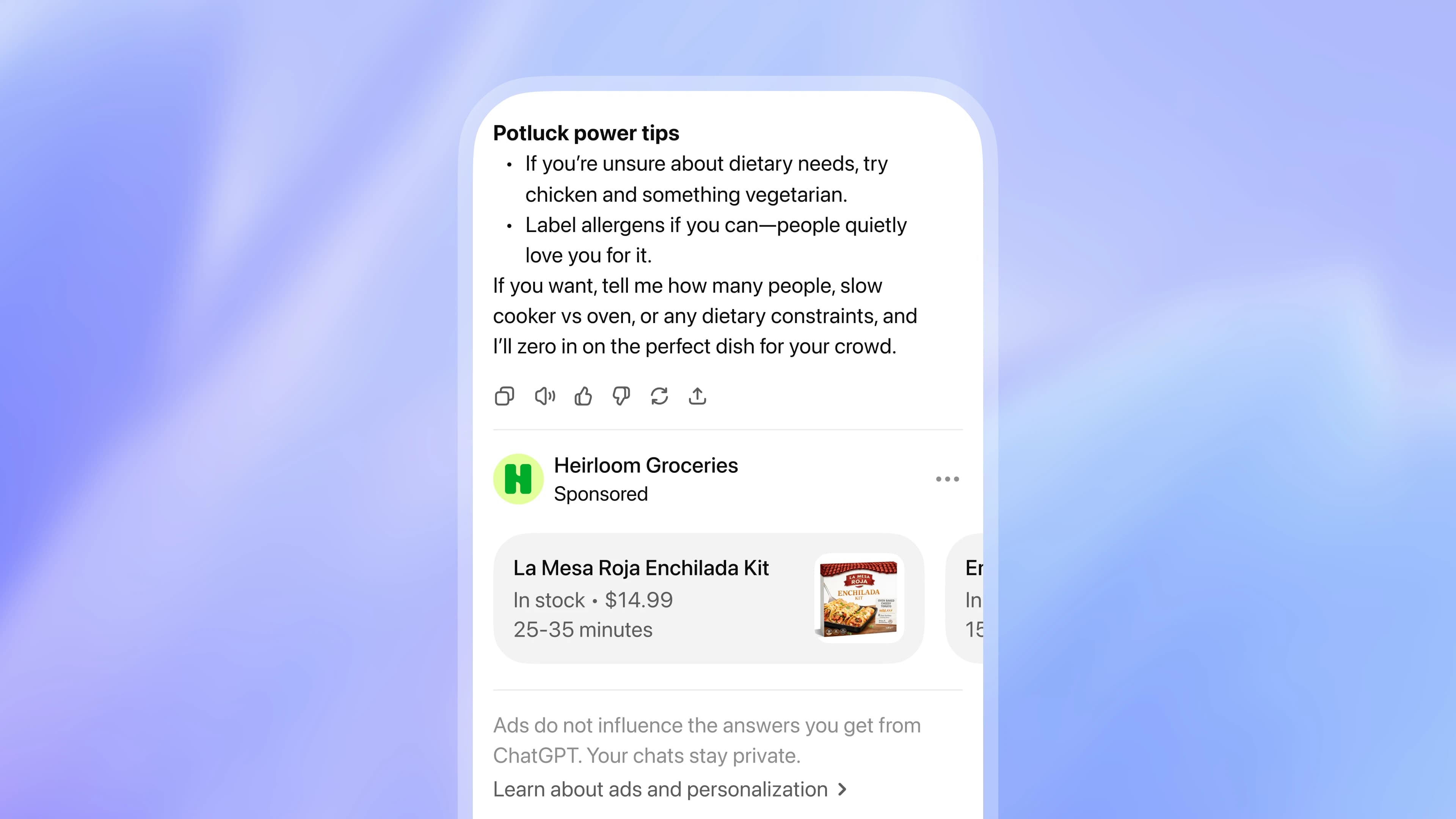
Free tier users who want to avoid ads have two options: upgrade to a paid plan, or opt out of ads in exchange for fewer daily free interactions. OpenAI hasn't disclosed exactly how many daily queries this reduction involves.
Early results from the pilot
OpenAI shared limited performance data from its initial US pilot. The company reports no impact on consumer trust metrics and low dismissal rates of ads. It also claims ongoing improvements in ad relevance based on user feedback.
The company did not release specific numbers for any of these metrics. Without baseline figures or comparison data, it's difficult to assess what "no impact" and "low dismissal" mean in practice.
Why OpenAI is adding ads
OpenAI frames the ads as a way to fund free access to ChatGPT. The company says hundreds of millions of people use the service for learning, work, and everyday decisions. Keeping the Free and Go tiers fast and reliable requires significant infrastructure investment.
Ads represent a new revenue stream beyond subscriptions and API access. For OpenAI, which has raised tens of billions in funding and faces enormous compute costs, advertising could help offset the expense of serving free users.
User controls and privacy
OpenAI says users keep "meaningful control" over their ad experience, though the specifics remain vague. The company mentions ad settings and history features in its update.
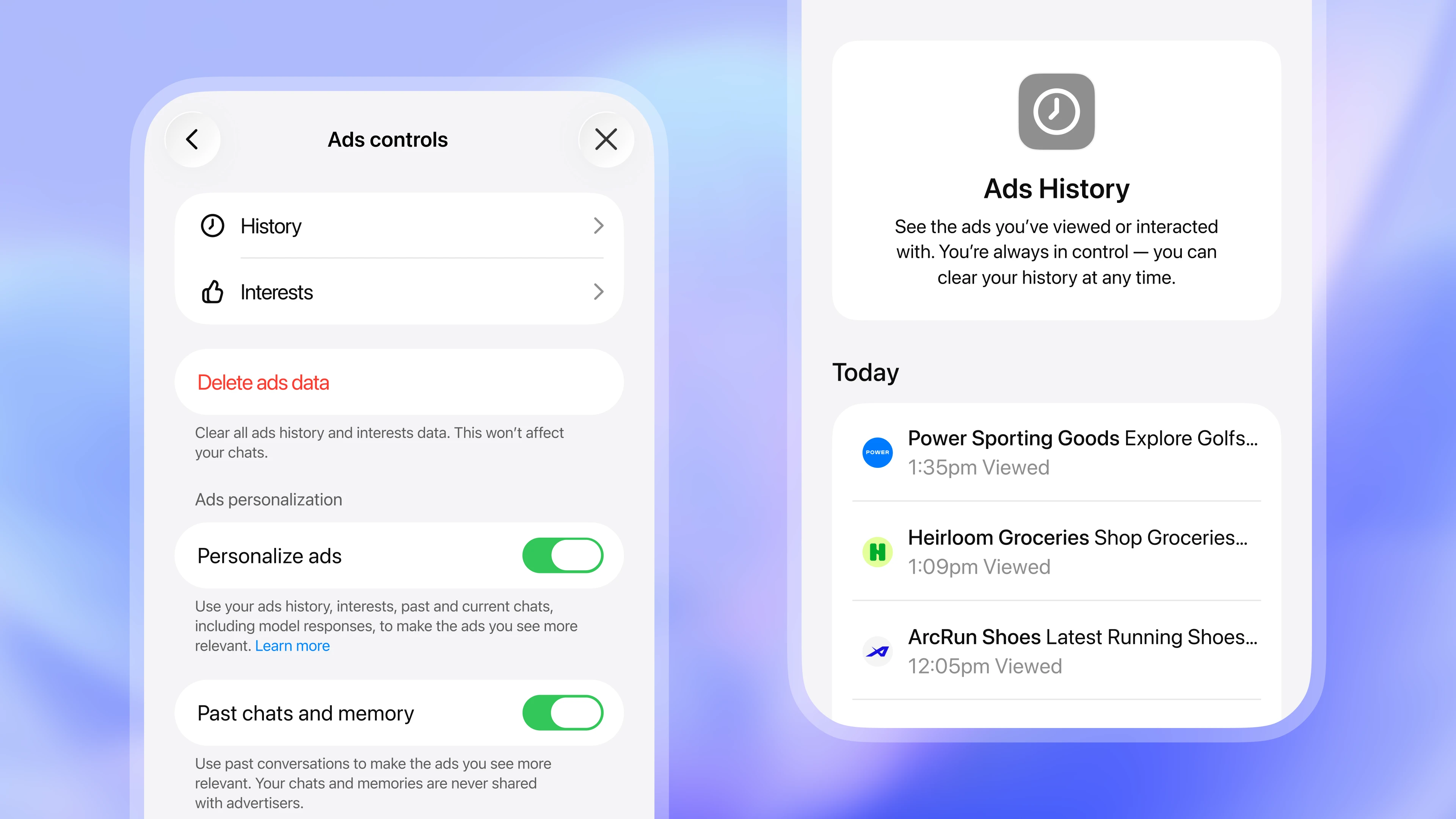
The core privacy promise is that conversations stay private from advertisers. OpenAI hasn't detailed whether this means advertisers receive no targeting data at all, or whether they get aggregated, anonymized signals about user interests.
Timeline of the rollout
OpenAI says it plans to expand to "many more markets" by the end of 2026. Businesses interested in advertising on ChatGPT in the new markets can sign up at openai.com/advertisers/.
What this means for competitors
Google, Microsoft, and other AI providers will be watching closely. If OpenAI can monetize free ChatGPT users through ads without damaging trust or user experience, it creates a template others might follow. Conversely, if users revolt against ads in their AI assistant, competitors could use "ad-free" as a selling point.
The test also raises questions about AI answer integrity. OpenAI insists ads don't influence responses, but as advertising revenue grows, that claim will face ongoing scrutiny from users and regulators.
Logicity's Take
Related coverage on AI policy developments
Frequently Asked Questions
Will ChatGPT Plus subscribers see ads?
No. Plus, Pro, Business, Enterprise, and Education subscribers will not see ads. Only Free and Go tier users are included in the ad pilot.
Do ads affect ChatGPT's answers?
OpenAI claims ads do not influence ChatGPT's responses. The company states that answers remain independent and unbiased regardless of advertising.
Can I opt out of ChatGPT ads without paying?
Yes. Free tier users can opt out of ads in exchange for fewer daily free interactions. OpenAI hasn't specified exactly how many queries this limits you to.
Which countries have ChatGPT ads?
As of May 2026, the pilot includes the US, Canada, Australia, New Zealand, and is expanding to the UK, Mexico, Brazil, Japan, and South Korea.
Does OpenAI share my conversations with advertisers?
OpenAI says conversations stay private from advertisers. The company hasn't detailed whether advertisers receive any aggregated or anonymized user data for targeting purposes.
Need Help Implementing This?
Source: OpenAI News
OpenAI Launches 'Trusted Contact' Safety Feature
OpenAI has introduced a 'Trusted Contact' feature that allows ChatGPT to notify a designated person if a user's conversations indicate a risk of self-harm. The system utilizes both automated detection and a specialized human review team to determine when an alert should be sent.
OpenAI Launches 'Trusted Contact' Safeguard for Self-Harm Prevention
OpenAI has introduced a 'Trusted Contact' feature that allows users to designate a friend or family member to be notified if the AI detects mentions of self-harm. The system utilizes a combination of automated triggers and human review to send alerts while protecting user privacy by omitting specific conversation details.
Manaal Khan
Tech & Innovation Writer
Produced with AI assistance and reviewed by the Logicity editorial team. Learn more in our Editorial Policy.