Key Takeaways
- Ollama raised $65M Series B, bringing total funding to $88M with just 14 employees
- The tool now has 8.9 million monthly active developers and sits in 85% of Fortune 500 companies
- Founders Jeff Morgan and Michael Chiang previously built Docker Desktop, applying the same simplification approach to AI models
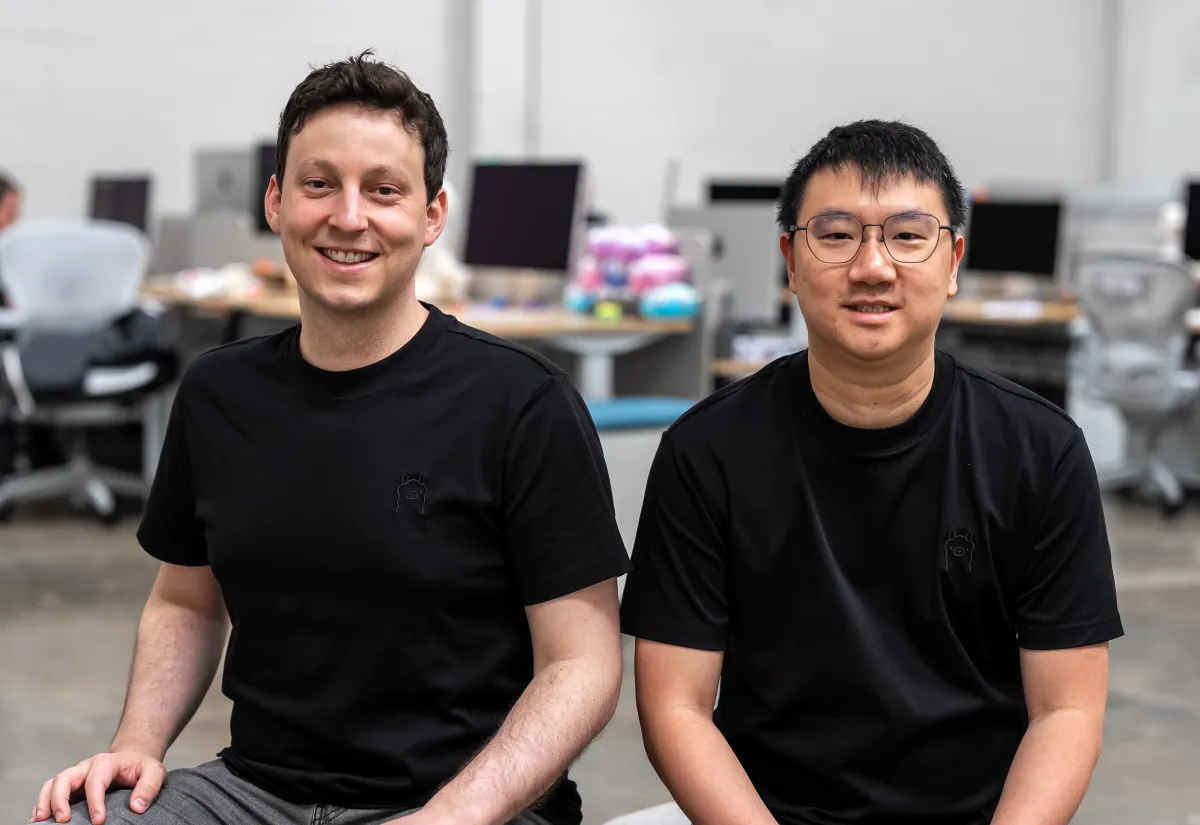
Ollama, the open source tool that lets developers run AI models locally, has raised $65 million in Series B funding led by Theory Venture. The round brings total funding to $88 million. CEO Jeff Morgan told TechCrunch the company now serves 8.9 million monthly active developers and has landed in 85% of Fortune 500 companies. All with 14 employees.
The numbers are striking. Since launching in 2023, Ollama has accumulated 176,000 GitHub stars and nearly 17,000 forks. For context, that star count places it among the most popular developer tools on the platform. The rapid adoption reflects a real pain point: before Ollama, running open-weight models like Llama or Mistral locally required wrestling with dependencies, quantization settings, and hardware configurations. Ollama reduced that to a single command.
Why Docker veterans are building AI infrastructure
Morgan and co-founder Michael Chiang have done this before. They built Kitematic, which Docker acquired. Then they helped build Docker Desktop, now used by over 10 million developers daily. The pattern is the same: take something complex that only specialists can manage, and make it accessible to working programmers.
"Open models started coming out in 2023 but they were really hard to use," Morgan said. The models had been built for researchers, not application developers. "As a result, it was really hard to get them up and running."
That track record is what attracted Benchmark's Peter Fenton, who led the earlier $15 million Series A and joined the board. "What Jeff and Michael built with Docker is being used by 10 million-plus developers every day," Fenton told TechCrunch. "The creative powers to create a product that goes to ubiquity for developers is extremely rare."
The business model: free locally, paid for scale
Ollama remains free for local use. The company monetizes through a "neocloud" service that hosts larger models too resource-intensive for most laptops. Subscription tiers range from free to $100 per month, with usage tracked by GPU time rather than token limits.
Morgan points to January 2026 as the inflection point. That's when OpenClaw and similar agentic coding tools demonstrated that open models could handle production tasks. "Obviously, we saw the explosion of the assistants like OpenClaw, and this idea that open models can get real work done."
The implication for startups: inference costs are becoming a strategic concern. Every company running AI at scale faces what Fenton calls a "vital existential project" to reduce those costs. Open-weight models, accessed through tools like Ollama, offer a path.
Open vs. closed models: not either/or
Fenton pushes back on the framing that open and closed AI models are in zero-sum competition. "I still think that this is the part that most of the debate gets wrong. It's not an either/or," he says. Enterprises are reserving closed models like Anthropic's Claude for specific use cases while running open models for routine inference.
That hybrid approach is already visible in how teams structure their AI toolchains. Local development with Ollama, production inference through a mix of open and closed APIs, testing with tools that can automate model comparison. The pattern resembles how Docker coexists with managed cloud services.
The enshittification debate
Not everyone is thrilled about Ollama's cloud business. About a year ago, blog posts and social threads accused the company of "enshittification," the term for open tools degrading as commercial pressures mount. Critics worried the cloud service would drain attention from the free desktop product.
Morgan frames the cloud as an extension of the open source mission. The largest, most capable open models often exceed what a personal computer can handle. "So we said, 'Hey, let's help find the compute for that,'" he explained.
Fenton adds: "Nothing has changed for the core product that's free on the desktop. There's zero change to the premise that this is the place you can discover and run local models."
A wave of open source AI startups
Ollama's raise reflects a broader trend: VCs are backing open source AI infrastructure at every layer. Inference providers like Inferact (maker of vLLM) and RadixArk (maker of SGLang) have attracted funding. So have agentic tools like OpenClaw and its alternatives. Even startups like Arcee, building open models from scratch, are finding backers.
For founders building AI-native products, this creates options. Local development reduces API costs during prototyping. Open models offer transparency that some regulated industries require. And the tooling gap that once favored closed providers is narrowing.
Logicity's Take
Ollama's efficiency is remarkable: $88M raised, 8.9M users, 14 employees. That's roughly 635,000 users per employee, a ratio most SaaS companies would envy. The real question for founders is whether the open model ecosystem matures fast enough to displace API dependency. If you're building an AI product today, the prudent move is designing your architecture to swap inference providers. Ollama for local dev, Replicate or Together AI for cloud inference, with the option to call OpenAI or Anthropic when task complexity demands it. The companies that win will be the ones that treat model selection like database selection: a configurable infrastructure choice, not a locked-in commitment.
Frequently Asked Questions
What is Ollama used for?
Ollama lets developers run open-weight AI models like Llama and Mistral locally on their computers. It simplifies setup to a single command, eliminating the need to manage dependencies and hardware configurations manually.
How much has Ollama raised in total?
Ollama has raised $88 million across all rounds: a $65 million Series B led by Theory Venture, a $15 million Series A led by Benchmark, and earlier seed funding.
Is Ollama free to use?
Yes, the core desktop product remains free. Ollama charges for its cloud service, which hosts larger models, with subscription tiers from free to $100 per month.
Who founded Ollama?
Jeff Morgan and Michael Chiang, who previously built Kitematic (acquired by Docker) and helped create Docker Desktop.
How many users does Ollama have?
Ollama reports 8.9 million monthly active developers and presence in 85% of Fortune 500 companies as of July 2026.
Another case of organizations choosing open source tools over proprietary alternatives
Need Help Implementing This?
If you're evaluating open source AI infrastructure for your startup or need help designing a hybrid model strategy, reach out to Logicity's editorial team. We track the tools and can connect you with practitioners who have deployed them at scale.
Source: Startups | TechCrunch / Julie Bort
Huma Shazia
Senior AI & Tech Writer
Produced with AI assistance and reviewed by the Logicity editorial team. Learn more in our Editorial Policy.