Key Takeaways
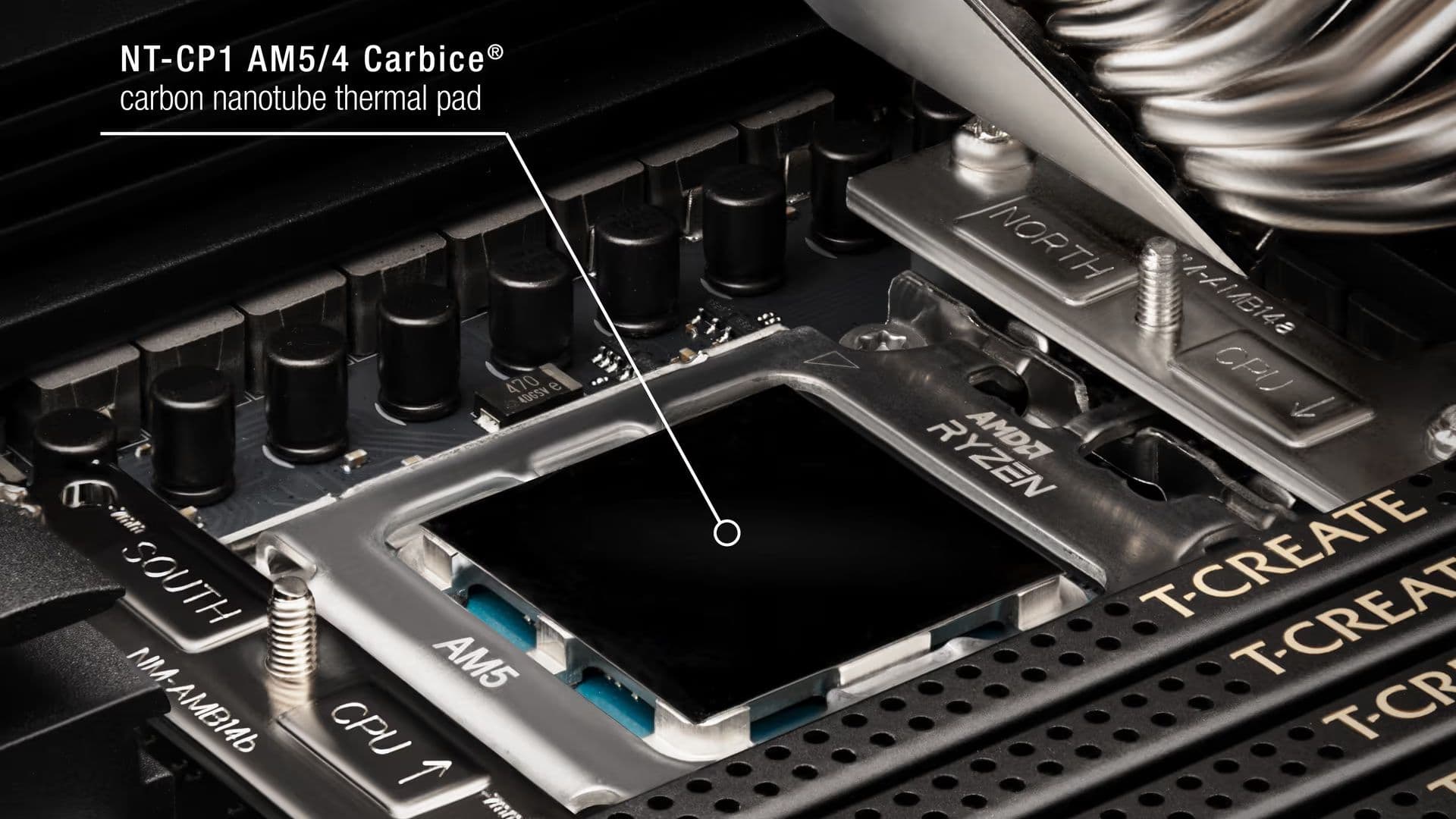
- Noctua becomes exclusive retail distributor for Carbice thermal pads, starting with the NT-CP1 for AMD AM5 and AM4 sockets
- Carbon nanotube technology eliminates thermal paste degradation by conforming to CPU surface over 1,000+ thermal cycles
- Product launches in September 2026 after Computex premiere, with Intel versions potentially in development
Noctua Partners with Aerospace Thermal Specialist Carbice
Noctua has announced its first thermal pad through a partnership with Carbice, a company that builds thermal solutions for satellites and aerospace applications. The NT-CP1 AM5/4 will be Noctua's exclusive retail product from the collaboration, targeting AMD Ryzen CPU users who want to stop worrying about thermal paste degradation.
The pad debuts at Computex this week and ships in September 2026. Noctua will present it alongside its cooler lineup, marking the company's expansion beyond fans and heatsinks into thermal interface materials.
How Carbon Nanotubes Replace Thermal Paste
Traditional thermal paste is a viscous compound that fills microscopic gaps between a CPU's integrated heat spreader (IHS) and the cooler. The problem: repeated heating and cooling cycles cause the paste to dry out, crack, or migrate away from the contact surface. This "pump-out" effect is why enthusiasts recommend replacing paste every three to five years.
Carbice's approach uses vertically aligned carbon nanotubes that act like a microscopic forest. These structures slowly conform to the IHS surface over hundreds or thousands of thermal cycles, improving contact rather than degrading. The nanotubes are anchored to an aluminum backbone and protected with a nanoscale polymer coating.
“By anchoring the carbon nanotubes to a structural aluminum backbone, we've created a thermal interface that doesn't suffer from pump-out or drying, finally bringing aerospace-grade thermal technology to the home PC.”
— Roland Mossig, CEO of Noctua
The result is a "set and forget" solution. Once installed, the NT-CP1 should last the lifetime of the CPU without reapplication or maintenance.
AMD-Only for Now
The NT-CP1's surface area matches the IHS dimensions of AMD Ryzen processors in AM5 and AM4 sockets. Intel's different IHS sizes mean a separate product would be needed for those platforms.
Noctua says it will assist Carbice in developing future thermal pads, suggesting Intel-compatible versions could follow. The partnership structure gives Noctua input on product development, not just distribution rights.
AMD's re-released 5800X3D ships with Carbice thermal pads from the same partnership
Carbice's Path from Satellites to Desktop PCs
Carbice already supplies thermal pads for satellites, aerospace hardware, and pre-built gaming PCs through a partnership with CyberPowerPC. The company recently announced a deal with AMD, supplying its Ice Thermal Pad with the re-released Ryzen 7 5800X3D.
Dr. Baratunde Cola, Carbice's CEO, said the company chose Noctua specifically because of its reputation in the DIY PC community. Noctua's brand trust could help legitimize a new thermal interface category that many builders remain skeptical about.
Community Reaction: Cautious Optimism
PC builders on Reddit and hardware forums are interested but waiting for independent benchmarks. The main question: does it actually outperform top-tier thermal pastes like Thermal Grizzly Kryonaut or Kingpin Cooling compounds?
On HackerNews, discussion centers on the material science and the rarity of aerospace technology successfully reaching consumer markets. Carbon nanotube thermal interfaces have existed in industrial applications for years, but commercializing them at DIY-friendly prices is new.
One concern from forum commenters: some thermal pads are directional and perform worse if installed incorrectly. Neither Noctua nor Carbice has clarified whether the NT-CP1 has orientation requirements.
Pricing and Availability
Noctua has not announced pricing. The company will showcase the NT-CP1 at Computex starting tomorrow, with retail availability scheduled for September 2026.
Logicity's Take
Frequently Asked Questions
Does the Noctua NT-CP1 work with Intel CPUs?
No. The NT-CP1 is sized specifically for AMD AM5 and AM4 socket processors. Noctua has suggested Intel-compatible versions may follow through its ongoing partnership with Carbice.
How long does the Noctua thermal pad last?
The NT-CP1 is designed to last the lifetime of the CPU. Unlike thermal paste that dries out over 3-5 years, the carbon nanotube structure improves its contact with the CPU surface over time.
When can I buy the Noctua NT-CP1?
Noctua will launch the NT-CP1 in September 2026. The company is debuting the product at Computex this week.
Is carbon nanotube thermal pad better than thermal paste?
In theory, carbon nanotube pads eliminate the pump-out and drying issues that degrade thermal paste. However, independent benchmarks comparing the NT-CP1 to top pastes like Kryonaut are not yet available.
Need Help Implementing This?
Source: Latest from Tom's Hardware
Manaal Khan
Tech & Innovation Writer
Produced with AI assistance and reviewed by the Logicity editorial team. Learn more in our Editorial Policy.