Key Takeaways
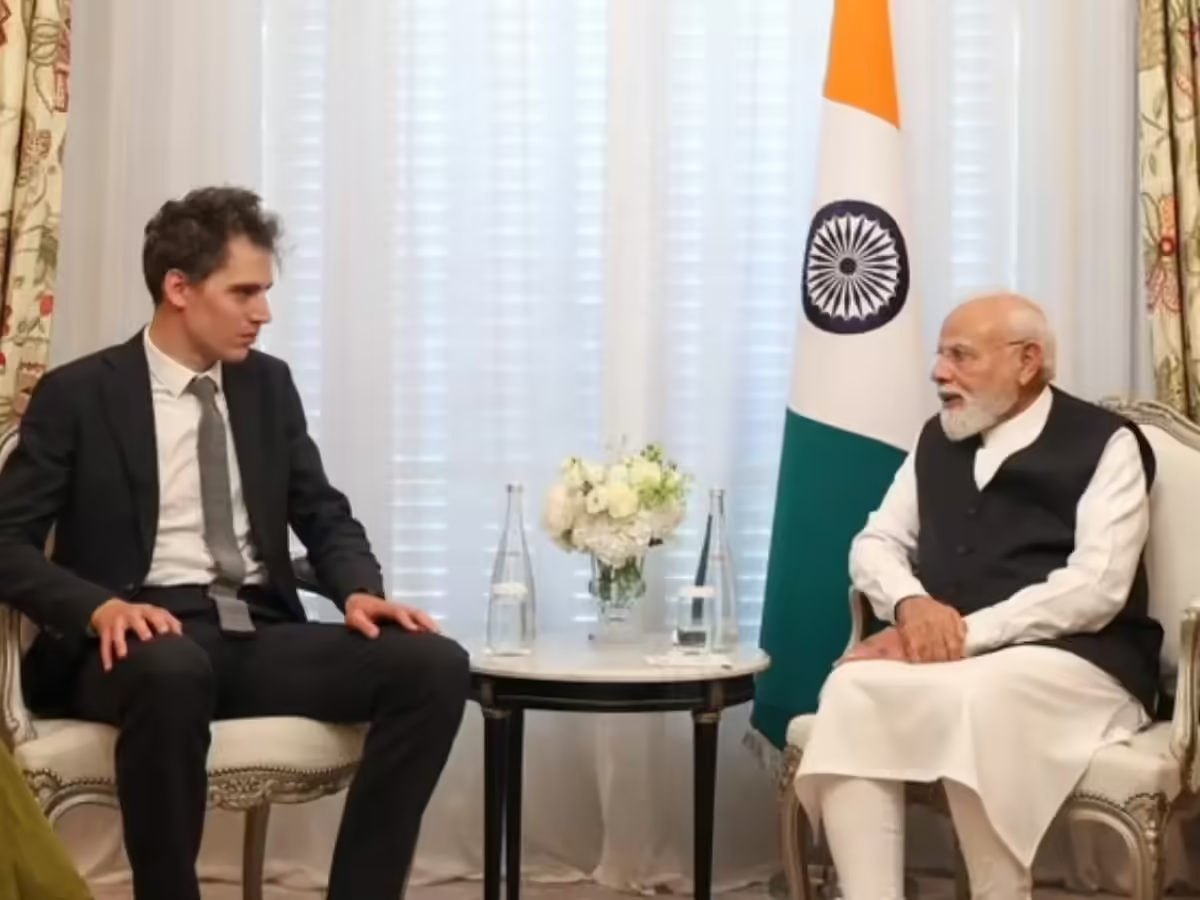
- PM Modi met Mistral AI CEO Arthur Mensch at VivaTech 2026 to explore AI partnerships in India
- Discussions centered on open-weight models, sovereign AI, and keeping AI human-centric
- Mistral is valued at €20 billion and plans to launch a new model this summer
Prime Minister Narendra Modi met Mistral AI CEO Arthur Mensch in Paris to discuss AI partnerships between India and the French AI company. The meeting took place during the VivaTech Summit 2026, where India is serving as the designated AI partner country.
The conversation covered trusted AI systems, innovation, and keeping AI human-centric and inclusive. Modi confirmed the talks on X, writing that they discussed "prospects for partnerships in India in diverse aspects relating to AI."
“India remains committed to developing AI solutions that empower humanity while promoting innovation, trust and international cooperation.”
— Narendra Modi, Prime Minister of India
What does Mistral AI want from India?
Mistral has been pushing its vision of sovereign AI aggressively. The company argues that countries need to own their AI infrastructure rather than depend on American hyperscalers. India, with 1.4 billion people and a government increasingly focused on digital sovereignty, fits that pitch perfectly.
Mistral's open-weight model approach is central to its value proposition. Unlike OpenAI or Anthropic, Mistral releases model weights publicly, letting governments and enterprises run AI on their own infrastructure. For India's civil sectors and local businesses, this could mean access to advanced AI without routing data through foreign cloud providers.
Mistral's financial position and infrastructure push
The French startup is not operating from a position of weakness. Mistral's current funding round values the company at €20 billion. Its annualized revenue run-rate has grown 20-fold from late 2024 to early 2026.
The company is building what it calls Mistral Compute, targeting 1 gigawatt of proprietary data center capacity by 2030. This infrastructure play is a bet that AI sovereignty requires physical ownership, not just model access.
Mistral also confirmed it plans to launch a new model this summer, though specifics remain unclear. The timing suggests India could be a launch partner or early adopter.
Why VivaTech matters for this partnership
India's role as AI partner country at VivaTech 2026 is not ceremonial. It signals France's interest in deepening tech ties with India, and gives Indian officials direct access to Europe's most prominent AI companies.
For Mistral, the Modi meeting is a validation play. The company competes against American giants with deeper pockets and more compute. A partnership with a country of India's scale would change that equation. It would also give Mistral a massive deployment base for its open-weight models.
Detailed coverage of Mistral's sovereign AI proposition for India
Can Mistral's approach work against US hyperscalers?
The tech community is divided. On HackerNews and r/MachineLearning, debate centers on whether Mistral's infrastructure-heavy strategy can sustain competitiveness. Building proprietary GPU clusters and data centers requires massive capital. If AI models commoditize faster than expected, that investment could become a liability.
The counterargument: governments increasingly want AI they control. The EU's regulatory push, combined with geopolitical tensions over data sovereignty, creates a market that American cloud providers cannot fully serve. Mistral is positioning itself as the European alternative. India's participation would extend that positioning to Asia.
Neither Modi nor Mensch announced concrete deals. The meeting was exploratory. But the fact that it happened during a high-profile summit suggests both sides see potential.
Logicity's Take
This meeting is about positioning, not announcements. Mistral needs a massive market to justify its infrastructure spending, and India is the obvious candidate. For India, Mistral offers something American AI companies cannot: model weights that stay on Indian soil. Whether this becomes a formal partnership depends on pricing and whether India's government is willing to bet on a European challenger over established US players. The summer model launch could be the trigger.
Frequently Asked Questions
What did PM Modi and Mistral AI CEO discuss?
They discussed AI partnerships between India and Mistral, focusing on trusted AI systems, open-weight models, and keeping AI human-centric and inclusive.
What are open-weight AI models?
Open-weight models release their parameters publicly, allowing governments and enterprises to run AI on their own infrastructure rather than through cloud providers.
What is Mistral AI's current valuation?
Mistral AI's current funding round values the company at €20 billion, with revenue growing 20-fold from late 2024 to early 2026.
Why is India a partner country at VivaTech 2026?
India was designated as the AI partner country, signaling France's interest in deepening tech ties and giving Indian officials direct access to European AI companies.
When will Mistral launch its new AI model?
Mistral plans to launch a new model this summer, though specific details and capabilities have not been announced.
Need Help Implementing This?
If you're evaluating open-weight AI models for your enterprise or exploring sovereign AI infrastructure options, reach out to Logicity's advisory team for implementation guidance and vendor comparisons.
Source: Tech-Economic Times / ET
Manaal Khan
Tech & Innovation Writer
Produced with AI assistance and reviewed by the Logicity editorial team. Learn more in our Editorial Policy.




