Key Takeaways
- Midjourney's new hardware scans the entire body in 60 seconds using 40 ultrasound-on-chip modules
- The company plans to open a San Francisco spa with 10 scanners by end of 2027
- Medical diagnostic use will require FDA clearance; initial offering focuses on body composition mapping
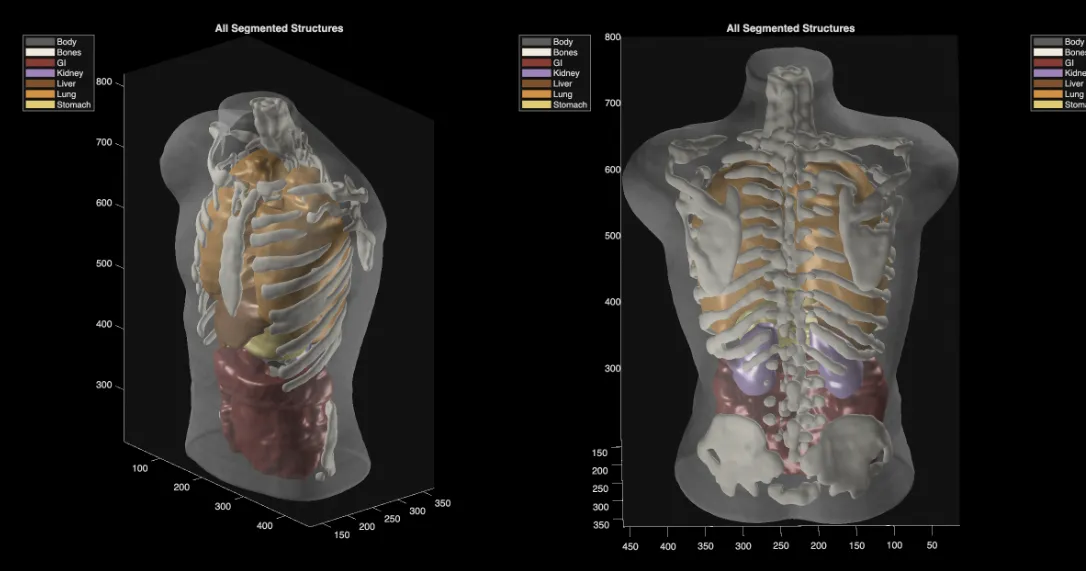
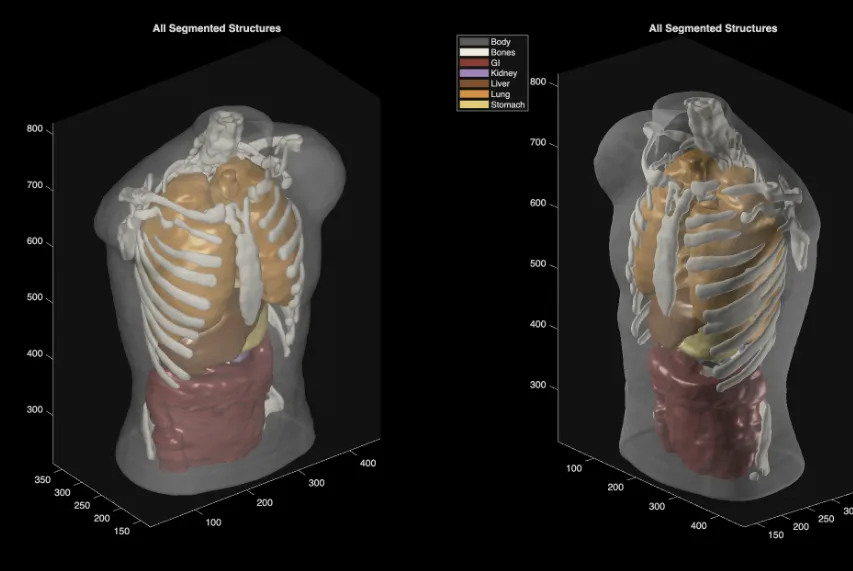
Midjourney, the company best known for generating AI art from text prompts, just announced hardware that scans your entire body in 60 seconds. The Midjourney Scanner uses a ring of ultrasound sensors to produce 3D images of muscle, fat, bone, and organs. CEO David Holz claims the technology will eventually rival MRI quality without radiation or powerful magnets.
The scanner was developed in partnership with Butterfly Network, whose Ultrasound-on-Chip technology already powers handheld imaging devices used in clinical settings. Each Midjourney Scanner contains 40 of these chip modules arranged in a circular array. Holz revealed the product during a livestream, though he acknowledged the jump from "cat pictures" to medical imaging is unusual.
How the Midjourney Scanner works
The scanning process starts when you step onto a platform that descends into a pool of water. As you pass through the sensor ring, thousands of transducers emit ultrasonic waves from every angle. The waves travel through your body, and the system records how they scatter and reflect. Two petaflops of processing power then reconstruct a detailed 3D image from this acoustic data.
Midjourney describes the experience in almost mystical terms: "It starts by stepping into a shallow pool of golden light. You then begin to descend into the water. Your body passes through a ring of underwater sensors, each acting like a dolphin, using its echolocation."
About a dozen people have been scanned so far. The company says the process takes roughly 60 seconds, compared to 30 to 60 minutes for a typical MRI. The hardware is also reportedly 10 times cheaper to produce than a traditional MRI machine, though Midjourney has not disclosed an exact cost per unit.
What does AI image generation have to do with ultrasound?
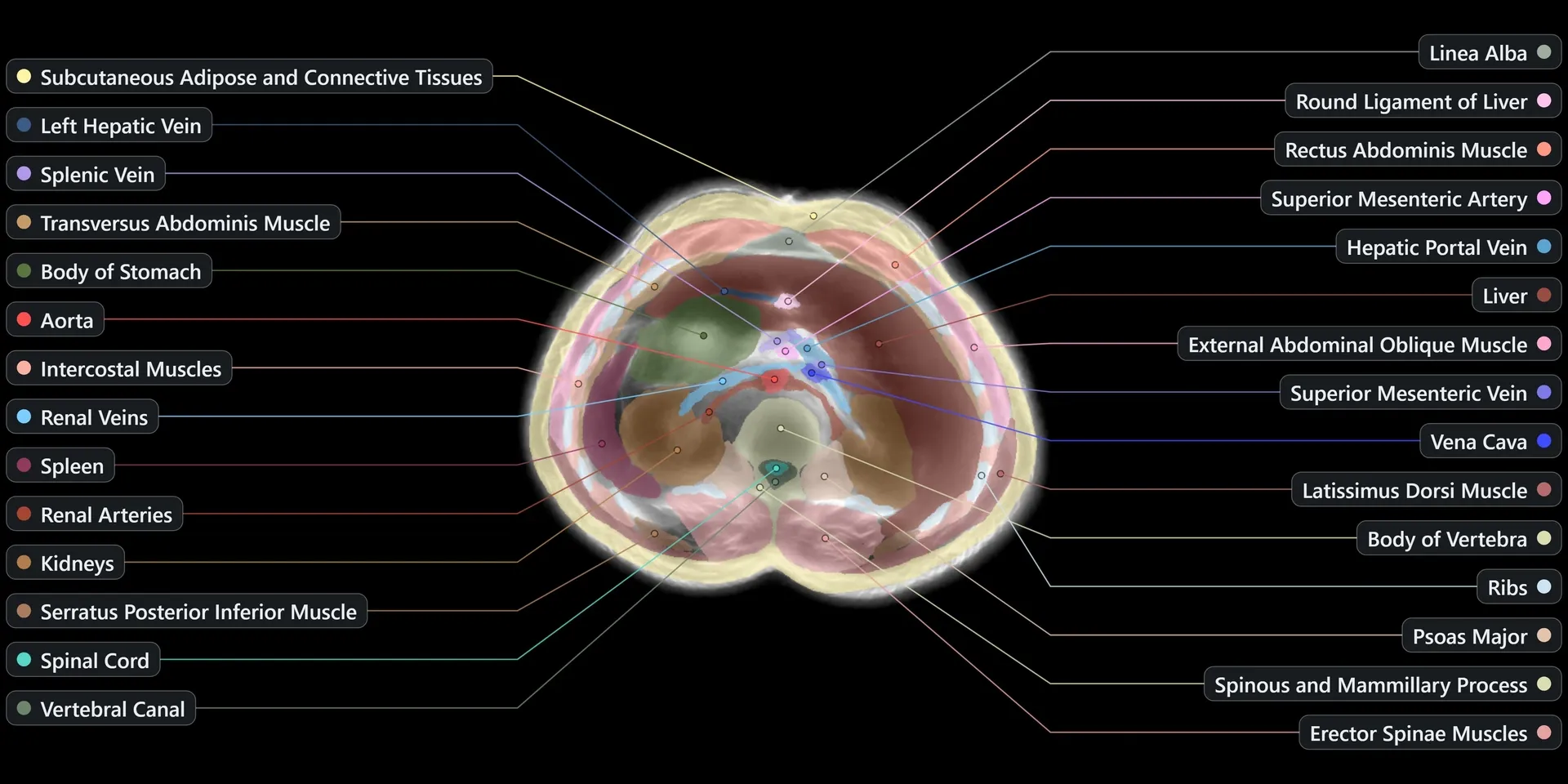
That remains unclear. Holz did not explain how Midjourney's generative AI expertise applies to medical imaging beyond suggesting the company has compute resources to spare. The segmentation overlays shown in demo images hint at AI-assisted image processing, but whether this involves the same diffusion models behind the company's art generator is unknown.
Dr. Sarah Chen, listed as Chief Medical Advisor at Midjourney Medical, said the technology "combines generative AI's reconstruction capabilities with high-density ultrasonic hardware." That phrasing raises questions. Reconstruction from incomplete data is a valid use of AI in medical imaging, but it also opens the door to hallucinated details. Radiologists already worry about AI systems filling in gaps with plausible but incorrect anatomy.
Online reactions have split along predictable lines. Dr. Eric Topol, a cardiologist known for his commentary on health tech, called it "the democratization of full-body imaging." On Hacker News, many commenters questioned whether ultrasound, even with advanced processing, can match the soft-tissue contrast of MRI.
The Midjourney Spa: wellness meets imaging
Midjourney plans to install 10 scanners at a flagship spa in San Francisco's Union Square by the end of 2027. The spa will include a gym, saunas, and cold plunges alongside the scanning rooms. Visitors will enter hot tub-style pools to be imaged.
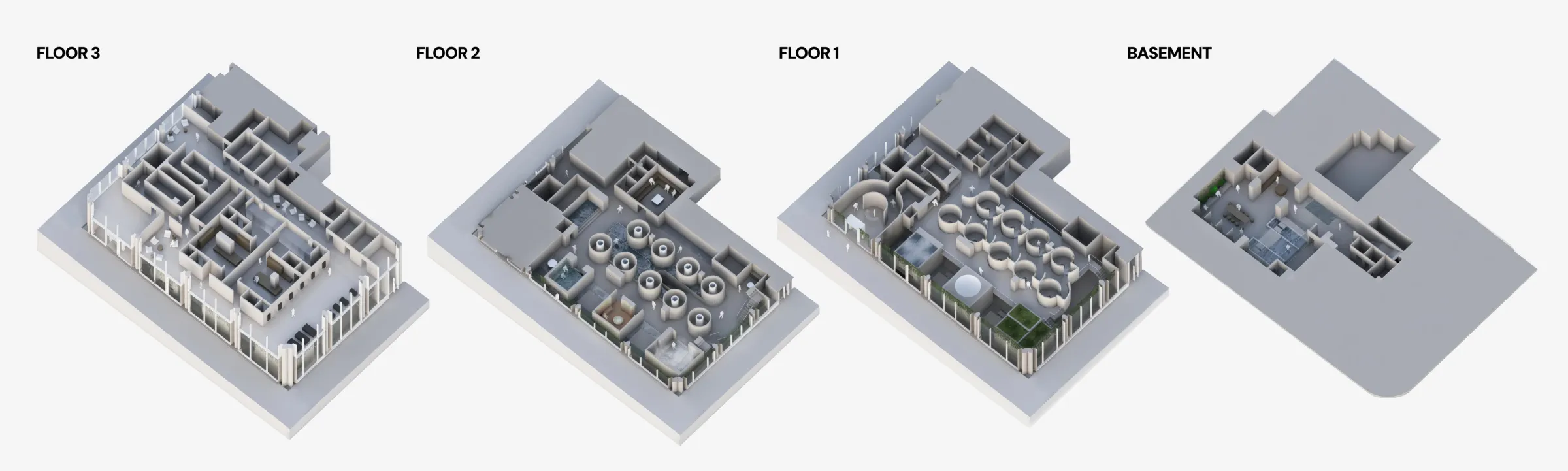
Job listings describe the goal as "bringing safe, fast, and high fidelity preventative scanning to billions via a magical spa experience." The company wants to deploy 50,000 scanners globally over the next six years.
Holz mentioned using the scanner to track how his own body responds to diet and exercise changes, treating it more like a Fitbit for internal organs than a diagnostic tool. That framing is deliberate.
FDA clearance and the regulatory path
Midjourney Medical says its initial product focuses on "body composition maps" rather than diagnostic imaging. Body composition analysis, which measures fat, muscle, and bone distribution, does not require the same FDA clearance as tools that claim to detect tumors or other pathology.
Holz acknowledged that medical applications will need FDA approval. He imagined a future where regulators create a new device class for "weird" things that let companies "just try to get as much data as we can." That is not how the FDA currently works.
The company says users can share their "library of scans" with doctors, AI health tools, or others. Data privacy details will come "as we get closer to launch." For a product that images your internal organs, that is a significant gap.
Skepticism from the medical community
Full-body scanning has a controversial history. In the early 2000s, commercial CT scanning centers marketed full-body scans to healthy people as preventive care. Medical groups pushed back, pointing to high false-positive rates that led to unnecessary biopsies and anxiety. The American College of Radiology still recommends against routine full-body imaging for asymptomatic individuals.
Ultrasound carries no radiation risk, which removes one objection. But the core problem remains: scanning healthy people often finds incidental abnormalities that look alarming but are clinically meaningless. Holz's vision of daily scanning could amplify this issue.
Whether the Midjourney Scanner can actually achieve "image quality comparable to MRI" also remains unproven. Ultrasound excels at certain tasks, like imaging a fetus or checking heart valves, but struggles with air-filled structures like lungs and with deep tissue contrast. Claiming MRI-level performance is a bold statement that the company has not yet substantiated with peer-reviewed data.
Logicity's Take
Midjourney is betting its AI compute infrastructure and brand cachet translate to medical hardware. That is a risky leap. The company's strength is making images that look plausible, not images that are anatomically accurate. If generative AI is reconstructing scan data, the margin for error could matter more in a clinic than in an art gallery. The spa-first, FDA-later approach lets Midjourney sidestep regulatory scrutiny for now, but it also limits the product to wellness metrics rather than anything a doctor could act on.
Frequently Asked Questions
How long does a Midjourney Scanner session take?
The full-body scan takes approximately 60 seconds, compared to 30 to 60 minutes for a traditional MRI.
Does the Midjourney Scanner use radiation?
No. The scanner uses ultrasound waves, which do not involve ionizing radiation.
Is the Midjourney Scanner FDA approved?
Not yet. The company says it will need FDA clearance for diagnostic medical applications. Its initial product focuses on body composition mapping, which has a lower regulatory bar.
When will the Midjourney Spa open?
Midjourney plans to open its San Francisco spa with 10 scanners before the end of 2027.
How much will a Midjourney scan cost?
Pricing has not been announced. The company says the hardware costs 10 times less to produce than an MRI machine.
Context on the compute constraints affecting AI hardware development
Need Help Implementing This?
Building AI applications that process medical or sensor data? Logicity can connect you with specialists in healthcare AI compliance, ultrasound signal processing, and FDA regulatory strategy. Contact our team to discuss your project.
Manaal Khan
Tech & Innovation Writer
Produced with AI assistance and reviewed by the Logicity editorial team. Learn more in our Editorial Policy.




