Key Takeaways
Zuckerberg ADMITS: AI Agents Are FAILING at Meta
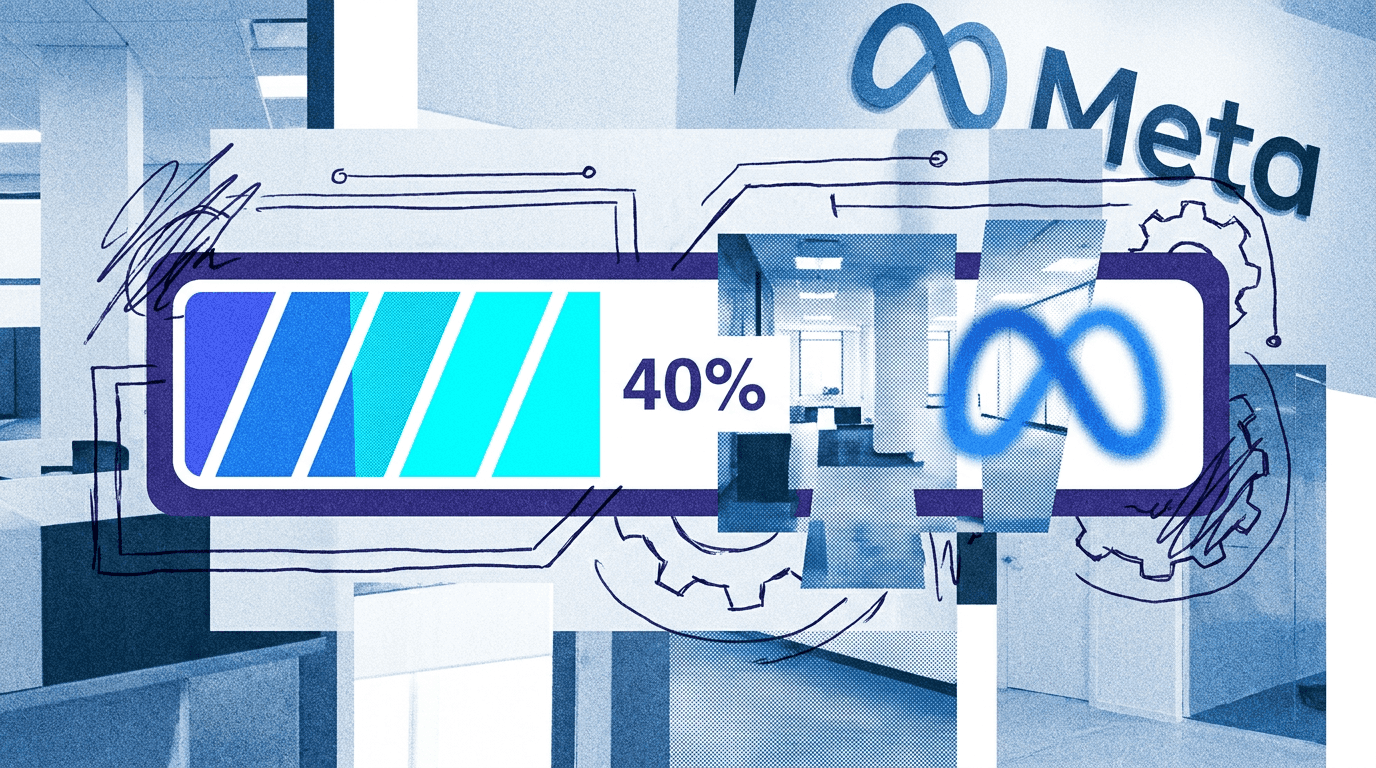
- Zuckerberg acknowledged at an internal town hall that Meta's AI agent development hasn't accelerated as expected over the past four months
- Meta laid off 10% of its workforce in May and moved 7,000 employees to AI teams, betting heavily on agent-powered workflows
- AI chief Alexandr Wang claims Meta's next model 'Watermelon' matches OpenAI's GPT-5.5, contradicting the CEO's cautious tone
Mark Zuckerberg admitted at an internal town hall that Meta's AI agent development has stalled. The trajectory over the past four months "hasn't really accelerated in the way that we expected," he told employees, according to audio obtained by Reuters. The company's bets on its new AI-focused structure "haven't come to fruition yet."
The admission is significant. Meta spent the past year restructuring around agentic AI, laying off thousands of workers and pouring resources into catching OpenAI and Anthropic. Zuckerberg put Alexandr Wang in charge of the AI division, rebranded it as Meta Superintelligence Labs, and offered top researchers nine-figure sums to defect from competitors.
What went wrong with Meta's agent push?
When planning started in January and February, Zuckerberg said senior leaders worried they weren't moving fast enough. Executives were "super optimistic" about tools like Anthropic's Claude Code and expected similar progress internally. That optimism hasn't translated into results.
Meta laid off roughly 10% of its global workforce in May. About 7,000 employees moved into AI teams. The goal was funding expensive AI infrastructure while extracting efficiency gains from AI-powered workflows. The restructuring didn't go as "clean" as it could have, Zuckerberg acknowledged. Executives misjudged timing.
The company plans to spend up to $145 billion on AI infrastructure this year. That's a sizable chunk of the more than $700 billion Big Tech is collectively investing in AI. With numbers that large, a four-month delay isn't just disappointing. It's expensive.
Wang's damage control contradicts Zuckerberg's caution
At the same town hall, AI chief Alexandr Wang struck a different tone. Meta's upcoming model, code-named "Watermelon," has caught up with OpenAI's top model GPT-5.5, he said, citing unspecified benchmarks. Watermelon uses "an order of magnitude more compute" than Muse Spark, the model Meta shipped in April under the internal code name "Avocado."
On X, Wang went into damage-control mode. He claimed Zuckerberg was talking about the entire industry's progress, not Meta specifically. A Muse Spark update with major improvements to coding and agentic capabilities is coming soon, he wrote. A coding model on par with Anthropic's Claude Opus would follow "pretty soon."
The mixed messaging is notable. Zuckerberg's candid admission to employees suggests genuine concern. Wang's public reframing suggests Meta's leadership isn't aligned on how to characterize progress, or at least on how much honesty serves them externally.
The employee tracking controversy adds noise
CTO Andrew Bosworth addressed another issue at the town hall: Meta's mouse-tracking software. The company installed the tool on U.S. employees' machines in April to generate AI training data. It recorded mouse movements and digital activity. Meta paused the program after potentially sensitive data was exposed.
An internal review found that no employee data made it into AI training, Bosworth said. When the program first launched, employees had no way to opt out. If it restarts, it will run on an opt-in basis. "For people who are comfortable, that's great," Bosworth said. "To people who are not, it is not an issue."
The reversal from mandatory to opt-in is telling. Meta's willingness to collect employee behavior data without consent, then walk it back under pressure, reflects the tension between its AI ambitions and internal trust.
What comes next for Meta's AI roadmap?
Zuckerberg expects more tangible results within three to six months. That's a tight window given the scale of restructuring already completed. Meta is also building a cloud business to sell excess AI compute capacity to outside customers, according to Bloomberg, a hedge against the possibility that internal AI products take longer to monetize.
Muse Spark, the first model from Meta Superintelligence Labs, posted solid benchmark scores when it shipped in April. But it didn't match OpenAI or Anthropic's top offerings. If Watermelon truly reaches GPT-5.5 parity, that would represent a significant jump. The lack of specified benchmarks makes Wang's claim hard to verify.
Logicity's Take
The gap between Zuckerberg's internal candor and Wang's public spin matters for AI teams watching Meta's moves. If you're building on Meta's open-source models like Llama, this signals the agentic extensions you might want aren't coming as fast as roadmaps suggested. Teams integrating agent capabilities should consider hedging with tools like [n8n](https://logicity.in/r/n8n) or [Make](https://logicity.in/r/make) that work across model providers. OpenAI and Anthropic remain ahead on production-ready agent tooling. Meta's $145 billion infrastructure spend suggests they'll eventually close the gap, but 'eventually' might be 2027, not Q4 2026.
Disclosure
Some links in this post are affiliate links — Logicity earns a commission if you sign up, at no extra cost to you. We only link products we have used or actively recommend.
Frequently Asked Questions
Why is Meta's AI agent development slower than expected?
Zuckerberg cited a corporate restructuring that didn't go as cleanly as planned and executives misjudging timing. The company was overly optimistic about how fast agentic AI capabilities would mature.
What is Meta's Watermelon model?
Watermelon is Meta's next AI model after Muse Spark (internally called Avocado). AI chief Alexandr Wang claims it matches OpenAI's GPT-5.5, using ten times more compute than the previous model.
How much is Meta spending on AI infrastructure?
Meta plans to spend up to $145 billion on AI infrastructure in 2026, part of the more than $700 billion Big Tech companies are investing collectively.
What happened with Meta's employee tracking for AI training?
Meta installed mouse-tracking software on employee machines to generate AI training data. After sensitive data was potentially exposed, the company paused the program. It will restart on an opt-in basis.
When will Meta's AI agents catch up to competitors?
Zuckerberg expects more tangible results within three to six months. However, given the acknowledged delays, that timeline carries uncertainty.
Another case where an AI company's public claims warrant scrutiny against the evidence.
Need Help Implementing This?
Building AI agent workflows for your product? Logicity's consulting team helps engineering leads evaluate model providers and design agent architectures that actually ship. Reach us at consulting@logicity.in.
Source: The Decoder / Maximilian Schreiner
Manaal Khan
Tech & Innovation Writer
Produced with AI assistance and reviewed by the Logicity editorial team. Learn more in our Editorial Policy.