Key Takeaways
- SK Hynix will sell 17.79 million new shares on Nasdaq at a $28 billion valuation, making it the second-largest share sale after SpaceX's $85.7 billion IPO
- The company's stock has surged 273% this year as it dominates the HBM chip market supplying Nvidia and Google
- SK Hynix plans to invest $64.38 billion in new chip plants, including facilities in the United States
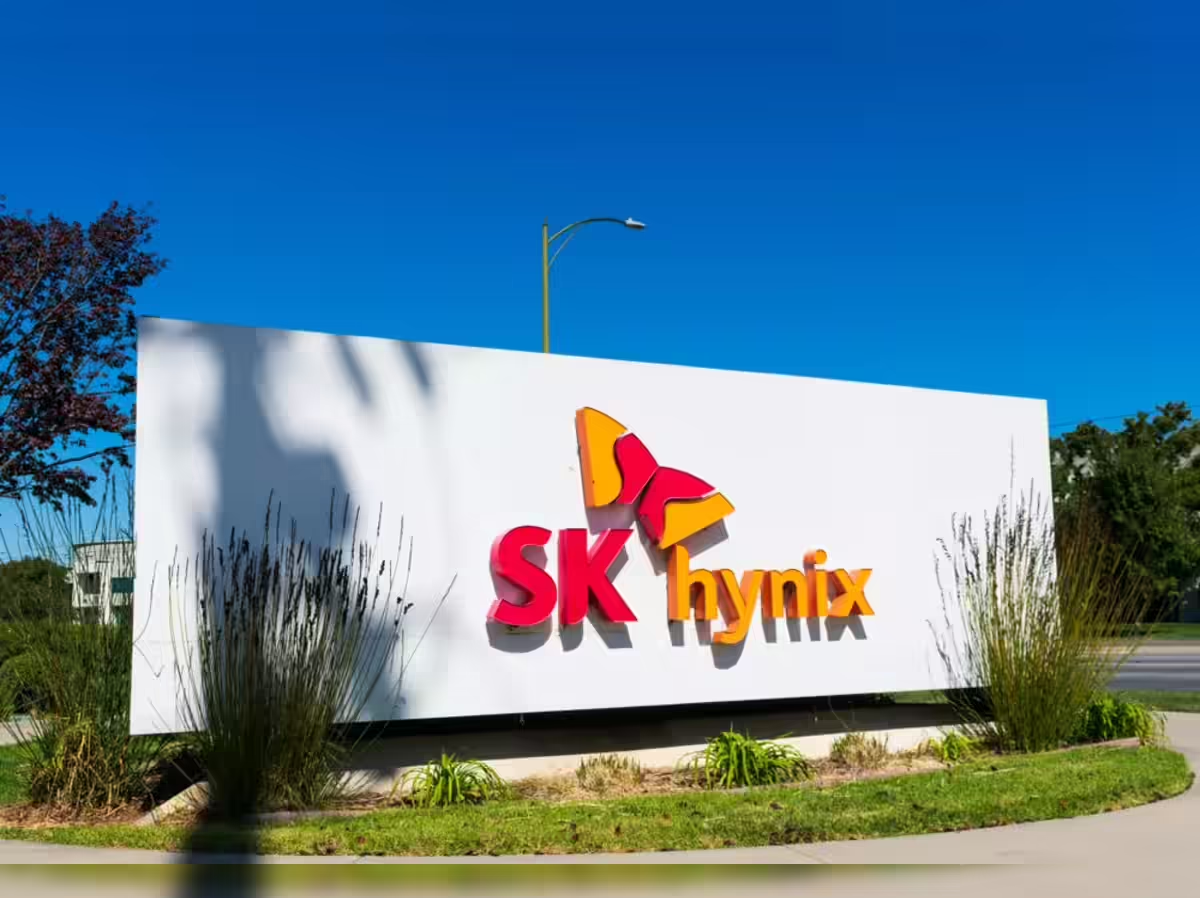
South Korean memory chipmaker SK Hynix launches its $28 billion US listing on Nasdaq on Monday, according to regulatory filings. The company will sell 17.79 million new shares through American Depositary Receipts, with ten ADRs representing one common share. If completed at that valuation, it would rank as the second-largest share sale ever, trailing only SpaceX's record $85.7 billion IPO last month.
The final price will be set Thursday, with trading expected to begin Friday. SK Hynix's management kicks off a global investor roadshow this week. The ADR price range, based on SK Hynix's Seoul trading price, is due to be announced Monday.
Why SK Hynix stock has surged 273% this year
SK Hynix has outperformed rivals Samsung Electronics and Micron by cornering the market for High Bandwidth Memory chips. HBM is the specialized memory that Nvidia's AI accelerators require. Nvidia's H100 and newer chips cannot function without it. Neither can Google's custom AI hardware.
That dependency explains the 273% stock surge. AI infrastructure spending shows no signs of slowing, and SK Hynix controls roughly 90% of the HBM market alongside Samsung. With demand outstripping supply, SK Hynix has pricing power that most chipmakers can only envy.
The Nasdaq listing gives SK Hynix direct access to US capital markets at a moment when American investors are hungry for AI exposure. It also aligns with the company's broader US expansion.
The $64 billion manufacturing bet
Last week, SK Hynix announced it would invest 100 trillion won ($64.38 billion) to build new chip plants, including NAND flash memory facilities. Part of that spending goes toward a chip packaging facility in Indiana, strengthening the company's US manufacturing presence.
This fits a pattern. TSMC, Samsung, and Intel are all racing to build US fabs, driven partly by the CHIPS Act subsidies and partly by geopolitical pressure to reduce reliance on Asian manufacturing. SK Hynix's US listing and Indiana investment position it to capture both capital and political goodwill.
How the deal compares to other mega-listings
At $28 billion, SK Hynix would surpass Saudi Aramco's $25.6 billion IPO in 2019 and Alibaba's similar-sized offering in 2014. Only SpaceX's December 2024 raise at $85.7 billion would rank higher.
The comparison matters. SpaceX, like SK Hynix, sits at the center of a capital-intensive industry where a small number of companies control critical infrastructure. Investors are paying premium multiples for that structural advantage.
SK Hynix's Seoul shares were up 1% in early Monday trading. The broader KOSPI index rose 0.2%.
What this signals for AI infrastructure stocks
The listing is a bet that AI infrastructure demand will remain strong for years. SK Hynix's CEO Kwak Noh-Jung has repeatedly stated the company intends to lead the AI semiconductor era through HBM innovation. The $64 billion capital commitment backs up that claim.
But risks exist. Memory chip markets are cyclical. Samsung is investing heavily to catch up in HBM. And if AI spending slows, even dominant suppliers will feel the squeeze. The question is whether HBM's specialized nature insulates it from the brutal price wars that have historically plagued commodity DRAM.
Logicity's Take
SK Hynix's listing is less about raising capital and more about locking in US investor access before the HBM cycle potentially cools. The company already has cash. What it wants is a dollar-denominated stock that American institutions can hold without friction, plus the credibility that comes with a Nasdaq ticker. For CTOs and procurement teams, this signals that HBM supply constraints will persist. SK Hynix is spending $64 billion on new capacity, but those fabs take years to come online. Plan accordingly.
Frequently Asked Questions
What is SK Hynix's $28 billion Nasdaq listing?
SK Hynix is selling 17.79 million new shares as American Depositary Receipts on Nasdaq. Ten ADRs will represent one common share. The listing values the company at approximately $28 billion and trading is expected to begin Friday.
Why is SK Hynix listing in the US?
The US listing gives SK Hynix direct access to American capital markets where investor appetite for AI-related stocks is high. It also aligns with the company's $15+ billion investment in US chip packaging facilities in Indiana.
What are HBM chips and why do they matter?
High Bandwidth Memory chips are specialized memory components required by AI accelerators like Nvidia's H100. SK Hynix controls roughly 90% of the HBM market alongside Samsung, making it a critical supplier for AI infrastructure.
How does SK Hynix compare to Samsung and Micron?
SK Hynix has outperformed both rivals in the AI boom. While Samsung remains the largest DRAM maker overall, SK Hynix leads in HBM production. Micron is a distant third in AI-specific memory chips.
Is the SK Hynix listing an IPO?
No. SK Hynix is already publicly traded on the Korea Exchange. The Nasdaq listing is a secondary listing through depository receipts, not an initial public offering.
Need Help Implementing This?
Logicity helps technology teams make sense of fast-moving markets. Subscribe to our newsletter for weekly analysis of the deals, products, and trends that matter to builders and buyers.
Source: Tech-Economic Times / ET
Manaal Khan
Tech & Innovation Writer
Produced with AI assistance and reviewed by the Logicity editorial team. Learn more in our Editorial Policy.