Key Takeaways
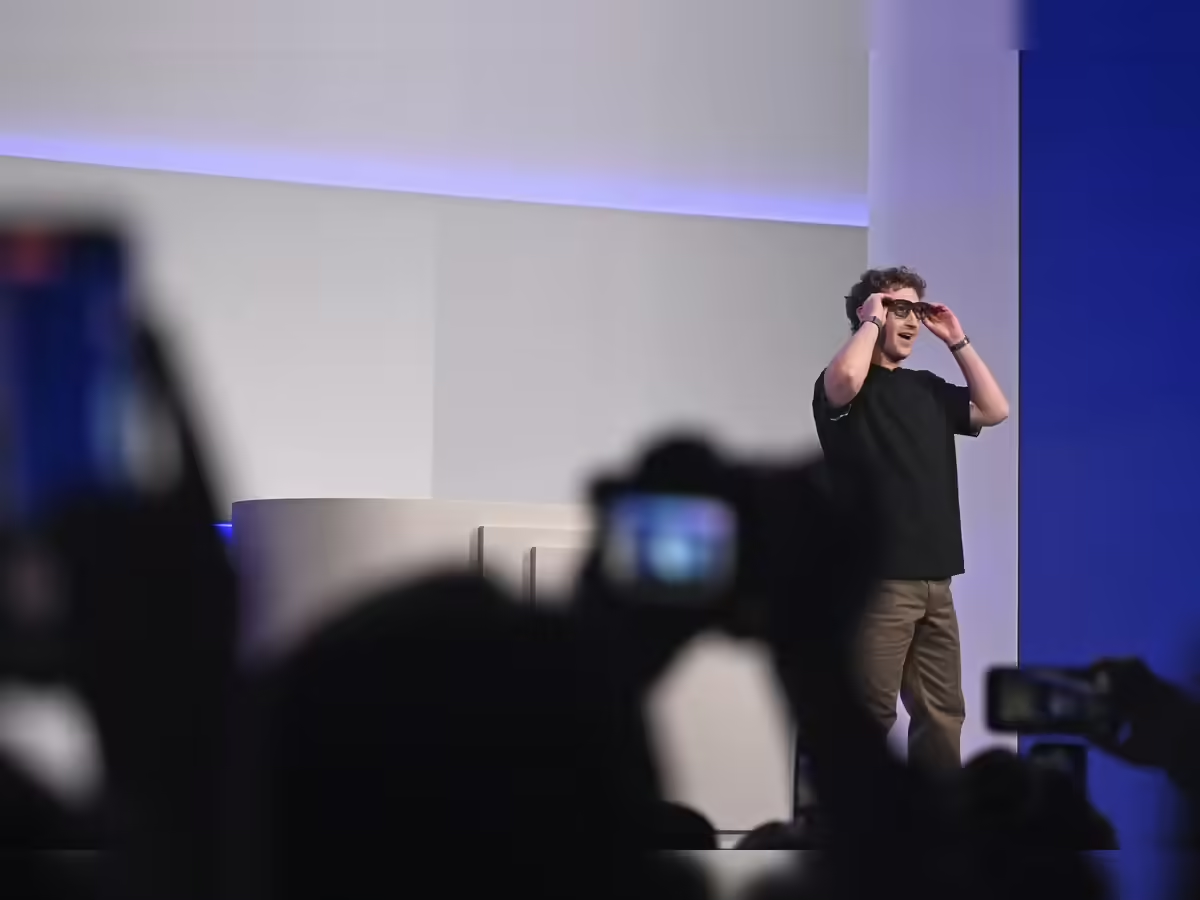
- Meta's new $299 smart glasses are the company's first without Ray-Ban or Oakley branding
- The entry price undercuts the $800 Ray-Ban Display glasses by 63%
- These are Meta's first glasses powered by Muse Spark from its Superintelligence Labs
Meta and EssilorLuxottica announced a new line of AI smart glasses starting at $299, marking the first time Meta has launched smart eyewear without attaching a premium brand like Ray-Ban or Oakley. The move signals a deliberate push toward mass-market pricing after the $800 Ray-Ban Display glasses launched last year.
The new Meta Glasses ship in multiple frame styles, including a rectangular look and a slim oval collection designed with Kylie Jenner. More interesting than the celebrity tie-in: these are the first AI glasses from Meta running on Muse Spark, a model built by the company's recently formed Superintelligence Labs.
Why drop Ray-Ban now?
The Ray-Ban partnership served Meta well. According to International Data Corporation, Meta controlled about 76.1% of global smart glass shipments last year, with total industry volume hitting 9.6 million units. But Ray-Ban glasses carry Ray-Ban prices. The $800 starting point for the Display model kept the product firmly in early-adopter territory.
At $299, Meta can target a different buyer: someone curious about AI wearables but unwilling to pay flagship smartphone prices for a first-generation product. The unbranded approach also gives Meta more control over positioning. It's no longer a tech company borrowing fashion credibility; it's selling Meta hardware outright.
What the glasses actually do
Unlike Snap's $2,195 augmented reality glasses, which overlay digital objects onto your view of the physical world, Meta's glasses focus on text display and AI interaction. The built-in Meta AI assistant handles queries, provides information, and responds to voice commands. Think of it as having a heads-up display for conversational AI rather than a full AR experience.
The Muse Spark integration is notable. Meta has said little about Superintelligence Labs publicly, and this product launch is the first concrete output from that team. Whether Muse Spark offers meaningful improvements over the AI models in previous Ray-Ban Meta glasses remains to be seen, but the branding suggests Meta wants to differentiate the new lineup technically, not just aesthetically.
Competitive pressure is building
Meta has invested more than $20 billion into its Reality Labs division, the unit responsible for AR and VR hardware. That spending has drawn skepticism from investors, but the smart glasses line has actually shown traction. Google and Apple are both reportedly developing competing devices. Snap's new AR glasses, while far more expensive, demonstrate that rival companies see opportunity in face-worn computing.
The $299 price point creates a real problem for competitors. Apple rarely competes on price. Google's hardware efforts have been inconsistent. Snap just launched at $2,195. If Meta can deliver a usable AI assistant in glasses that cost less than AirPods Max, it sets a benchmark others will struggle to match without subsidizing hardware losses.
The EssilorLuxottica factor
EssilorLuxottica controls roughly 70% of the global eyewear market. The company owns Ray-Ban, Oakley, Persol, and dozens of other brands. It also owns LensCrafters and Sunglass Hut. This partnership gives Meta access to manufacturing expertise, retail distribution, and design credibility that no pure tech company could replicate quickly.
The decision to launch unbranded glasses doesn't mean Ray-Ban Meta products are going away. Meta is likely running a two-tier strategy: premium branded glasses for fashion-conscious buyers, cheaper unbranded glasses for volume. Whether EssilorLuxottica is comfortable with that arrangement long-term depends on which tier sells better.
Logicity's Take
Meta's $299 play is less about hardware margins and more about AI distribution. Every pair of glasses running Meta AI is a user locked into Meta's assistant rather than Siri, Google Assistant, or Alexa. For enterprise buyers evaluating AI platforms, this matters: Meta is building an ambient computing presence that could eventually integrate with workplace tools. The company that wins the wearable AI race owns the next interface layer. Snap's $2,195 AR glasses offer more visual capability but can't compete on reach. Apple's rumored smart glasses remain vaporware. Google's track record speaks for itself.
Frequently Asked Questions
What is the price difference between Meta Glasses and Ray-Ban Display glasses?
Meta Glasses start at $299, while the Ray-Ban Display glasses launched in 2024 at $800. The new unbranded model costs 63% less.
Do Meta's new glasses have augmented reality features?
No. Unlike Snap's AR glasses, Meta's new lineup focuses on text display and AI interaction through Meta AI. They don't overlay digital objects onto your real-world view.
What is Muse Spark?
Muse Spark is the first AI model released by Meta's Superintelligence Labs. It powers the Meta AI assistant in the new glasses lineup.
Will Ray-Ban Meta glasses still be available?
Yes. The new unbranded Meta Glasses appear to be a separate product line, not a replacement for the existing Ray-Ban and Oakley collaborations.
How much of the smart glasses market does Meta control?
According to International Data Corporation, Meta held 76.1% of global smart glass shipments in the most recent year measured, when total shipments reached 9.6 million units.
Full coverage of Meta's decision to launch glasses outside its premium brand partnerships
Need Help Implementing This?
If you're evaluating AI wearables for enterprise pilots or exploring how ambient computing fits your product roadmap, reach out to Logicity's advisory team for vendor-neutral guidance.
Source: Tech-Economic Times / ET
Huma Shazia
Senior AI & Tech Writer
Produced with AI assistance and reviewed by the Logicity editorial team. Learn more in our Editorial Policy.




