Key Takeaways
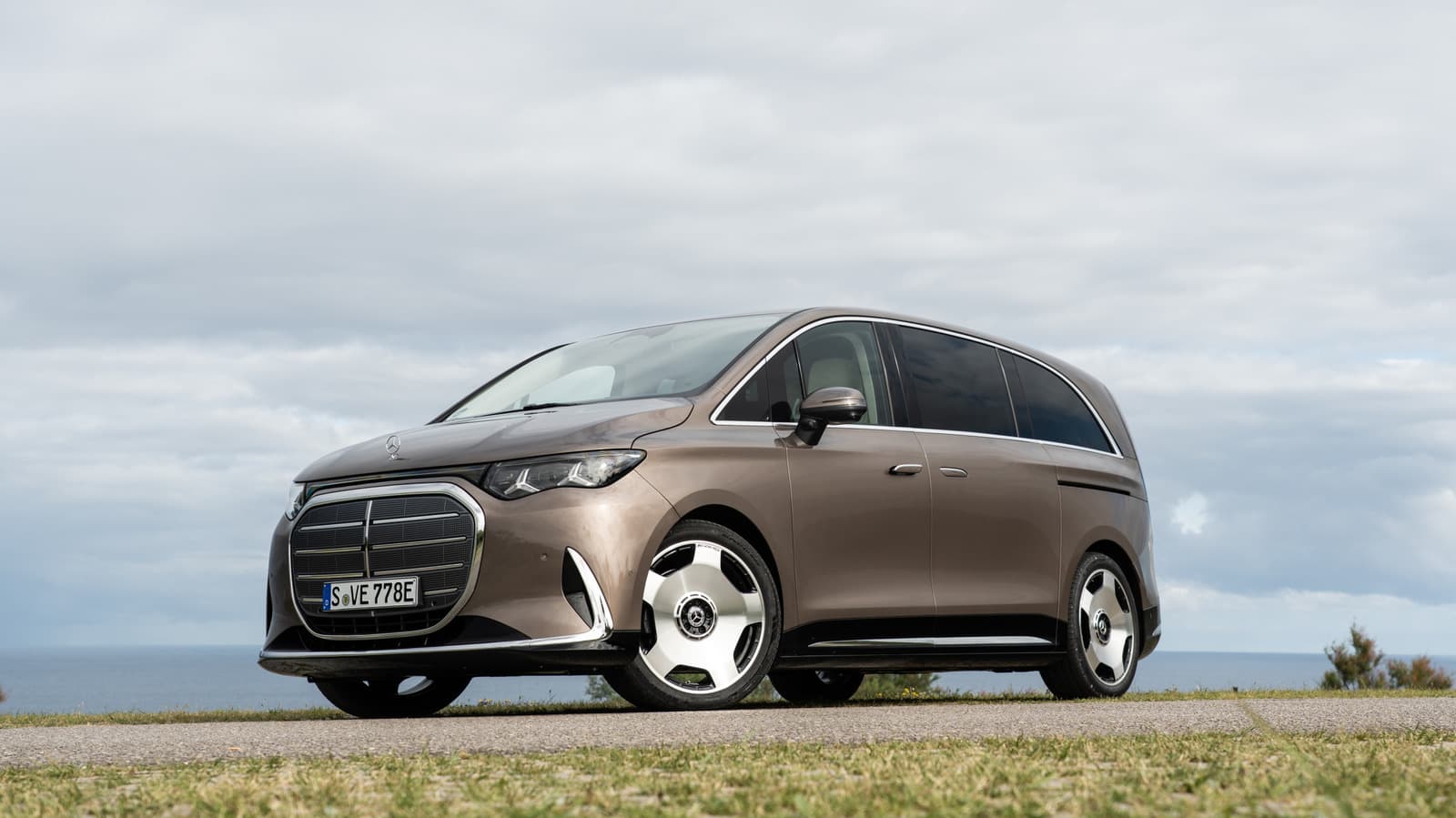
- The VLE offers 350 miles of EPA-estimated range from a 115 kWh battery and charges 200 miles in 15 minutes
- Second-row passengers get a 31.3-inch 8K ultrawide display that splits into dual 4K screens
- Mercedes positions this as a Grand Limousine, not a minivan, priced and sized above the GLS SUV
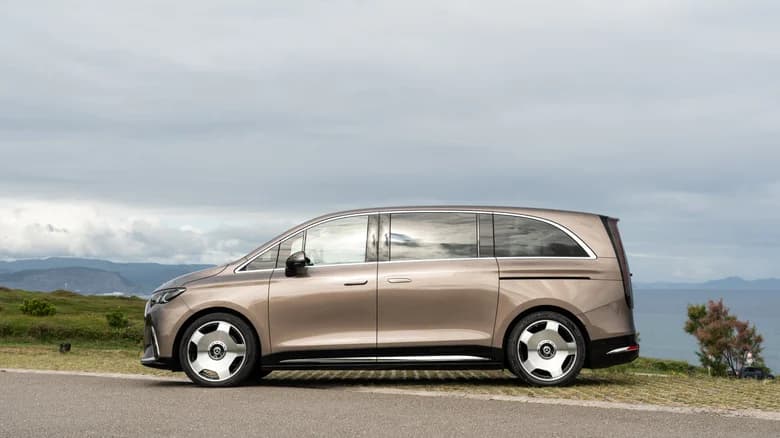
Mercedes-Benz is betting that rich people will buy a minivan if you never call it one. The 2028 VLE, which the company insists on labeling a "Grand Limousine," stretches 216 inches long, packs a 31.3-inch 8K ultrawide screen for rear passengers, and promises 350 miles of real-world range. After spending time in Engadget's first drive, the verdict is clear: this is the most compelling electric people-mover yet built, even if it can't escape its silhouette.
What powertrain options does the VLE offer?
Two configurations cover the range from sensible to spirited. The VLE 300 delivers 272 horsepower through the front wheels. The VLE 400 4MATIC doubles down with a dual-motor, all-wheel-drive setup producing 416 hp. Both share a 115 kWh usable battery pack that spans the floor.
Mercedes quotes 435 miles on the European WLTP cycle. Under the stricter EPA test, expect roughly 350 miles. The 800-volt architecture accepts 300 kW charging, which translates to about 200 miles added in 15 minutes. That's competitive with the fastest-charging EVs on the market today.
The 8K display is the centerpiece
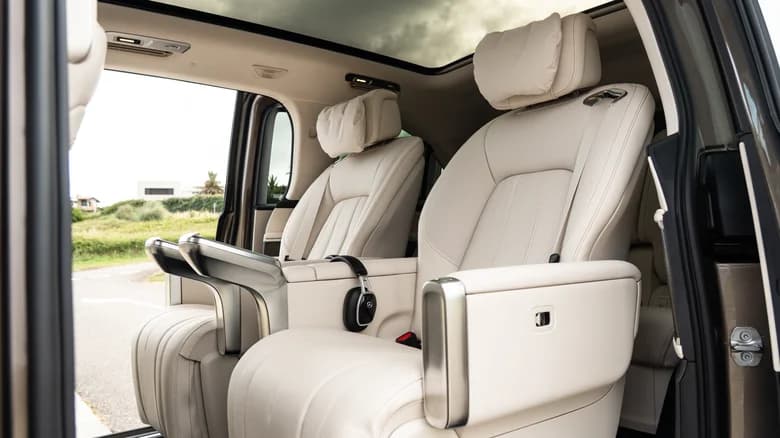
Sit in the second row and you're staring at a 31.3-inch ultrawide screen running at 8K resolution. You can recline in heated, ventilated captain's chairs while streaming YouTube or Disney+. Those are the only two video partners at launch, and neither Chromecast nor AirPlay is supported. An HDMI port exists for BYO content, but running cables across a cabin this luxurious feels like a compromise.
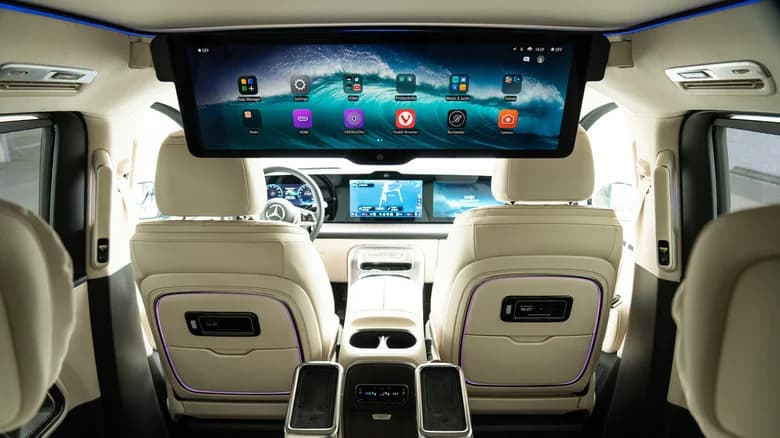
Parents of feuding children get a practical trick: the display splits into two 15-inch 4K screens. The 32:9 ratio means each half becomes a proper 16:9 display, actually better for most video content. Pair that with two Bluetooth headsets and you've solved the eternal backseat argument.
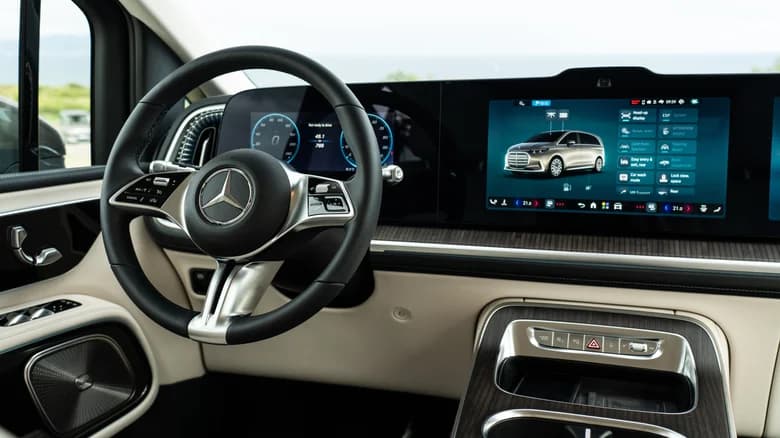
Front occupants aren't forgotten. The MBUX Superscreen arrangement spans the dashboard with a 10.25-inch gauge cluster, a 14-inch main infotainment display, and a 14-inch passenger screen that can also stream video.
How does the audio system perform?
Burmester supplies a 22-speaker 3D sound system with Dolby Atmos support. The clever bit: speakers dynamically reconfigure based on occupancy. Drive alone and they prioritize the driver's position. Fill all eight seats and the system distributes sound evenly.
Engadget's Tim Stevens tested the setup across a range of Atmos-optimized music, from Taylor Swift to Guns N' Roses. His assessment: everything sounded fantastic. That's the bar you'd expect at this price point, but Mercedes cleared it.
Is the VLE comfortable enough to justify the name?
At 10 inches longer than a GLS SUV, with 49 inches of internal ceiling height, the VLE provides genuine limousine space. A six-foot passenger can move around the cabin without crouching. The captain's chairs recline to a reasonable angle, though they stop short of lying flat for crash-safety reasons.
Stevens noted the chairs are somewhat narrow and awkward to enter or exit. Still, he could see himself spending hours in the back without complaint. A glass roof adds to the lounge atmosphere when you're not watching the screen.
The self-driving elephant in the room
Every "living room on wheels" concept from the Cadillac InnerSpace to the Mini Urbanaut has assumed autonomous driving would arrive to justify the design. It hasn't. Waymo and Zoox operate in limited geographies. Consumer vehicles that drive themselves unsupervised remain years away.
Mercedes sidesteps this by accepting that someone still has to drive. The VLE delivers the lounge experience to passengers today, not to a future owner waiting for software that may never ship. It's a pragmatic bet.
Can Mercedes escape minivan stigma?
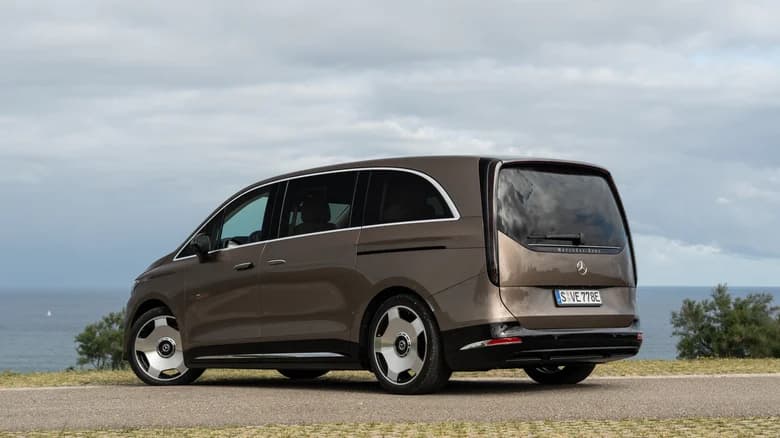
The VLE shares its silhouette with every minivan since the 1984 Dodge Caravan. Mercedes can call it a Grand Limousine, but consumers will see what they see. The real question is whether the interior experience is compelling enough to override that perception.
Early impressions suggest it might be. An 8K screen, Atmos audio, and 350 miles of range create a package that nothing else in the market matches. Whether that translates to sales depends on pricing Mercedes hasn't disclosed, and on whether wealthy buyers can stomach the shape.
Logicity's Take
Mercedes is testing a theory: that the minivan's image problem was about execution, not form factor. The VLE throws enough technology and luxury at the cabin to potentially flip perceptions. If it succeeds, expect BMW and Audi to follow with their own electric people-movers. The autonomous future keeps slipping, but the demand for mobile productivity and entertainment doesn't. Someone was going to build this vehicle. Mercedes moved first.
Frequently Asked Questions
What is the range of the 2028 Mercedes-Benz VLE?
Mercedes quotes 435 miles on the European WLTP cycle. Under the stricter EPA test, expect approximately 350 miles of real-world range.
How fast does the Mercedes VLE charge?
The 800-volt system accepts up to 300 kW charging, adding roughly 200 miles in 15 minutes.
What streaming services work on the VLE's rear display?
YouTube and Disney+ are supported at launch. Chromecast and AirPlay are not available, though an HDMI port allows external devices.
How many passengers can the VLE seat?
The VLE configures for up to eight passengers across three rows, though Mercedes showcases a two-seat captain's chair arrangement in the second row as the premium option.
Does the Mercedes VLE have self-driving capability?
No. Unlike many luxury cabin concepts that depend on autonomous driving, the VLE requires a human driver. The living-room experience is for passengers only.
For context on the autonomous vehicle market Mercedes is sidestepping
Need Help Implementing This?
Logicity covers emerging vehicle technology for CTOs and fleet operators evaluating electrification. Subscribe to our newsletter for weekly analysis of automotive tech shifts affecting enterprise mobility decisions.
Source: Engadget
Manaal Khan
Tech & Innovation Writer
Produced with AI assistance and reviewed by the Logicity editorial team. Learn more in our Editorial Policy.




