Key Takeaways
- Go raised ¥88.6 billion ($553 million) in Japan's largest IPO of 2026, with backing from BlackRock and Wellington Management
- The company will use IPO proceeds for robotaxi R&D and acquisitions to combat Japan's 20% decline in taxi drivers
- Go controls 80% of Japan's taxi app market and has partnered with Waymo for autonomous vehicle development
Go, Japan's dominant taxi-hailing app, raised ¥88.6 billion ($553 million) in the country's largest IPO of 2026. The company went public Tuesday and plans to funnel the capital into robotaxi development and acquisitions. Its target: a structural problem that threatens Japan's entire taxi industry.
Japan is running out of taxi drivers. The number has dropped roughly 20% in recent years, according to data from Japan's Ministry of Land, Infrastructure, Transport and Tourism. The average driver is around 60 years old. With Japan's aging population, this figure will not recover through traditional hiring.
"We intend to use the proceeds from the sale of newly issued shares toward investment in research and development related to robotaxis and investment in business expansions, including strategic mergers and acquisitions in our business inside and outside of the taxi industry," a Go spokesperson told TechCrunch.
Why global investors backed Go's IPO
The listing attracted BlackRock, Wellington Management, and M&G Investment Management. Their participation signals where institutional money sees opportunity in Japan's tech sector during what has been a quiet year for IPOs. The Japanese government has been advising startups to sell themselves rather than go public, making Go's successful listing stand out.
The stock has not held its initial momentum. Shares closed at ¥2,314 on Friday, down about 4% from the ¥2,400 offering price. That pullback reflects broader market caution, not a rejection of Go's thesis.
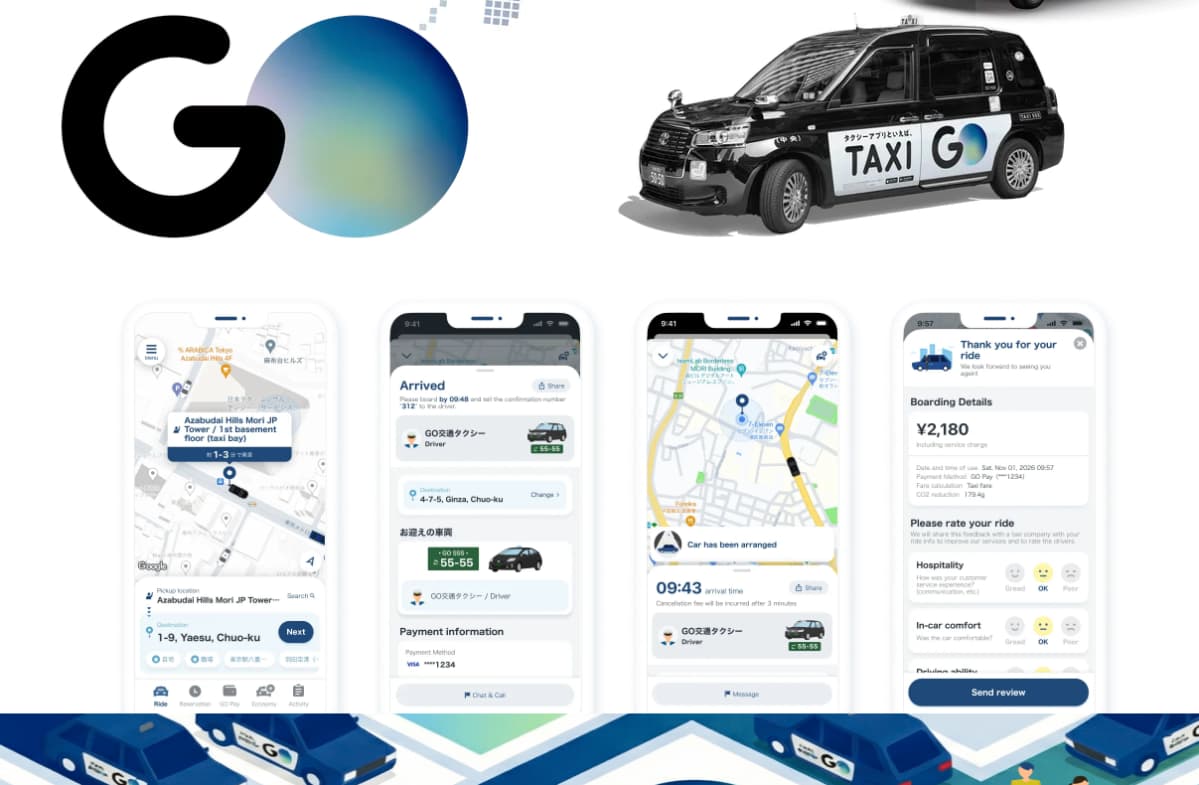
Go's market position is substantial. The company operates Japan's largest ride-hailing app with 35 million downloads and 85,000 partner vehicles. Founded in 1977 as a taxi operator, it merged taxi dispatch technology with consumer mobile apps and now dominates the space.
What's Go's robotaxi strategy with Waymo?
Go has partnered with Waymo, Alphabet's autonomous driving subsidiary, alongside Nihon Kotsu, one of Japan's largest taxi operators. Go handles strategic coordination for the partnership, according to the company spokesperson.
CEO Hiroshi Nakajima has said Go will not build autonomous driving systems itself, per Nikkei Asia. The company is positioning as an integrator and platform, not a technology developer. This approach mirrors how Go built its taxi-hailing business: connecting existing operators through software rather than owning fleets.
Go has not committed to a timeline for fully driverless operations. "We plan to begin driving fully autonomously, without a human specialist present, when we validate our technology and receive approval to do so," the spokesperson said. Regulatory approval in Japan remains uncertain.
Go faces competition from Uber and Nissan
Go is not alone in betting on Tokyo's autonomous future. In March, Uber, Wayve, and Nissan announced plans to pilot robotaxi services in Tokyo by late 2026. This marks Uber's first autonomous vehicle partnership in Japan. The service will use Nissan Leaf electric vehicles powered by Wayve's AI Driver, bookable through the Uber app.
Uber has also partnered with S.Ride to let international visitors book rides through its app. Didi Mobility Japan, a joint venture between SoftBank and Didi Chuxing, has a similar arrangement targeting foreign tourists.
Go is countering by building international payment integrations. The company has partnered with Kakao T, Alipay, and WeChat Pay, allowing travelers from South Korea, China, and Taiwan to hail Go-affiliated taxis directly from their local apps. This addresses a real pain point: foreign visitors who cannot easily use Japanese payment systems.
Why Japan's ride-share restrictions have not solved the driver shortage
Japan launched ride-share services in 2024, but under heavy restrictions. Drivers must be employed by a taxi company. Services are limited to certain areas. These rules protected incumbent operators but did little to address the fundamental supply problem.
The constraints reflect Japan's regulatory approach to new mobility models. Unlike the U.S. or Southeast Asia, where Uber and Grab disrupted taxi industries through independent drivers, Japan has kept tighter control. This makes robotaxis more attractive to Japanese regulators: they can expand capacity without dismantling labor protections.
For Go, the math is straightforward. Every year, more drivers retire than enter the industry. Autonomous vehicles are not a futuristic bet but a survival strategy. The IPO capital buys time and options while the technology matures.
Logicity's Take
Go's IPO is a hedge on two outcomes. If robotaxis work, Go has Waymo integration and the regulatory relationships to deploy them. If they remain years away, Go's 80% market share and international payment partnerships give it room to consolidate traditional taxi operators through M&A. The real risk is Uber and Wayve moving faster in Tokyo while Go waits for Waymo.
Frequently Asked Questions
How much did Go raise in its Japan IPO?
Go raised ¥88.6 billion ($553 million) in Japan's largest IPO of 2026, with investment from BlackRock, Wellington Management, and M&G Investment Management.
When will Go launch robotaxis in Japan?
Go has not set a timeline for fully driverless operations. The company said it will launch when technology validation and regulatory approval are complete.
Who are Go's competitors in Japan's robotaxi market?
Uber, Wayve, and Nissan announced plans to pilot robotaxi services in Tokyo by late 2026. Didi Mobility Japan, backed by SoftBank, also operates in the market.
Why does Japan have a taxi driver shortage?
Japan's taxi driver count has fallen roughly 20% in recent years. The average driver is around 60 years old, and Japan's aging population means the decline will continue.
What is Go's market share in Japan?
Go controls 80% of Japan's taxi app market by usage time, with 35 million downloads and 85,000 partner vehicles across 46 of 47 prefectures.
Need Help Implementing This?
Logicity's advisory team helps mobility and logistics companies navigate autonomous vehicle partnerships and market expansion strategy. Contact us to discuss how your organization can position for transportation technology shifts.
Source: TechCrunch / Kate Park
Huma Shazia
Senior AI & Tech Writer
Produced with AI assistance and reviewed by the Logicity editorial team. Learn more in our Editorial Policy.




