Lucid Uber Robotaxi Deal Expands to 35,000 Vehicles: $500M Investment and New CEO from Elevator Industry
Key Takeaways
- Uber increased its Lucid Gravity SUV order from 20,000 to 35,000 vehicles for robotaxi service
- Total Uber investment in Lucid now sits at $500 million after adding $200 million
- Lucid's new CEO Silvio Napoli spent 30+ years running elevator and escalator companies
- Saudi Arabia's wealth fund is pumping another $500 million into Lucid
- Beta robotaxi service with safety drivers is already running for Uber employees in San Francisco
Read in Short
Uber just expanded its robotaxi partnership with Lucid Motors big time. The original 20,000 vehicle order? Now it's 35,000 Lucid Gravity SUVs. Uber's throwing in an extra $200 million on top of its existing $300 million investment. And Lucid picked a new CEO who spent his career making elevators. Yes, elevators.
The Numbers Keep Getting Bigger
Look, when Lucid, Uber, and Nuro announced their robotaxi partnership last year, it already seemed ambitious. Twenty thousand autonomous SUVs hitting US roads? That's a lot of self-driving cars. But apparently Uber looked at those numbers and said 'not enough.'
The new deal bumps the total order to 35,000 Lucid Gravity vehicles. That's a 75% increase from the original commitment. And Uber isn't just ordering more cars, they're writing bigger checks too.
- Original investment: $300 million
- Additional investment: $200 million
- New total Uber investment: $500 million
- Saudi wealth fund adding: another $500 million
- Nuro has received hundreds of millions separately for self-driving tech development
So we're talking about over a billion dollars flowing into this robotaxi ecosystem between Uber, Saudi Arabia's sovereign wealth fund, and the Nuro partnership. This is huge money for a service that's currently only available to Uber employees in San Francisco. With safety drivers still behind the wheel.
Wait, Why Is an Elevator Guy Running a Car Company?
Here's where things get interesting. Lucid just ended its 14-month CEO search by hiring... the guy who ran one of the world's largest elevator companies? Silvio Napoli is a Swiss-Italian executive who spent more than three decades at Schindler, the elevator and escalator giant. He's relocating from Switzerland to the US to take the job.
“The appointment ends the 14-month search for the permanent replacement to Peter Rawlinson, who stepped down in February of last year.”
— Company announcement
I get it, the optics seem weird. But think about it for a second. Elevators are essentially autonomous vertical transportation. They move people from point A to point B without a human operator. They require incredibly sophisticated safety systems. They need to work reliably millions of times without failure.
Maybe an elevator CEO isn't such a crazy choice for a company pivoting hard into autonomous vehicles. Or maybe Lucid's board just really wanted someone who understands moving people around without killing them. Fair priority, honestly.
Who Is Silvio Napoli?
Napoli spent 30+ years at Schindler, one of the world's largest elevator and escalator manufacturers. The Swiss company moves over a billion people daily through its products. Napoli's experience includes scaling complex mechanical systems with strict safety requirements across global markets.
Tesla's autonomous ambitions in robotics show how EV companies are expanding beyond cars
The Peter Rawlinson Exit
Some context matters here. Peter Rawlinson didn't just work at Lucid. He co-founded the company after serving as chief engineer on the Tesla Model S. That's serious EV credibility. When he stepped down in February 2025, it left a big hole.
Marc Winterhoff, Lucid's chief operating officer, stepped in as interim CEO while the board searched for a permanent replacement. That search took over a year. And they landed on someone with zero electric vehicle experience.
The kicker? Lucid isn't really just an EV company anymore. This Uber deal transforms them into something closer to an autonomous vehicle manufacturer. They're building the hardware that Nuro's self-driving systems will run on. The Gravity SUVs are basically robots on wheels. So maybe hiring someone who thinks about automation and safety systems all day makes more sense than grabbing another car industry lifer.
What's Actually Happening in San Francisco
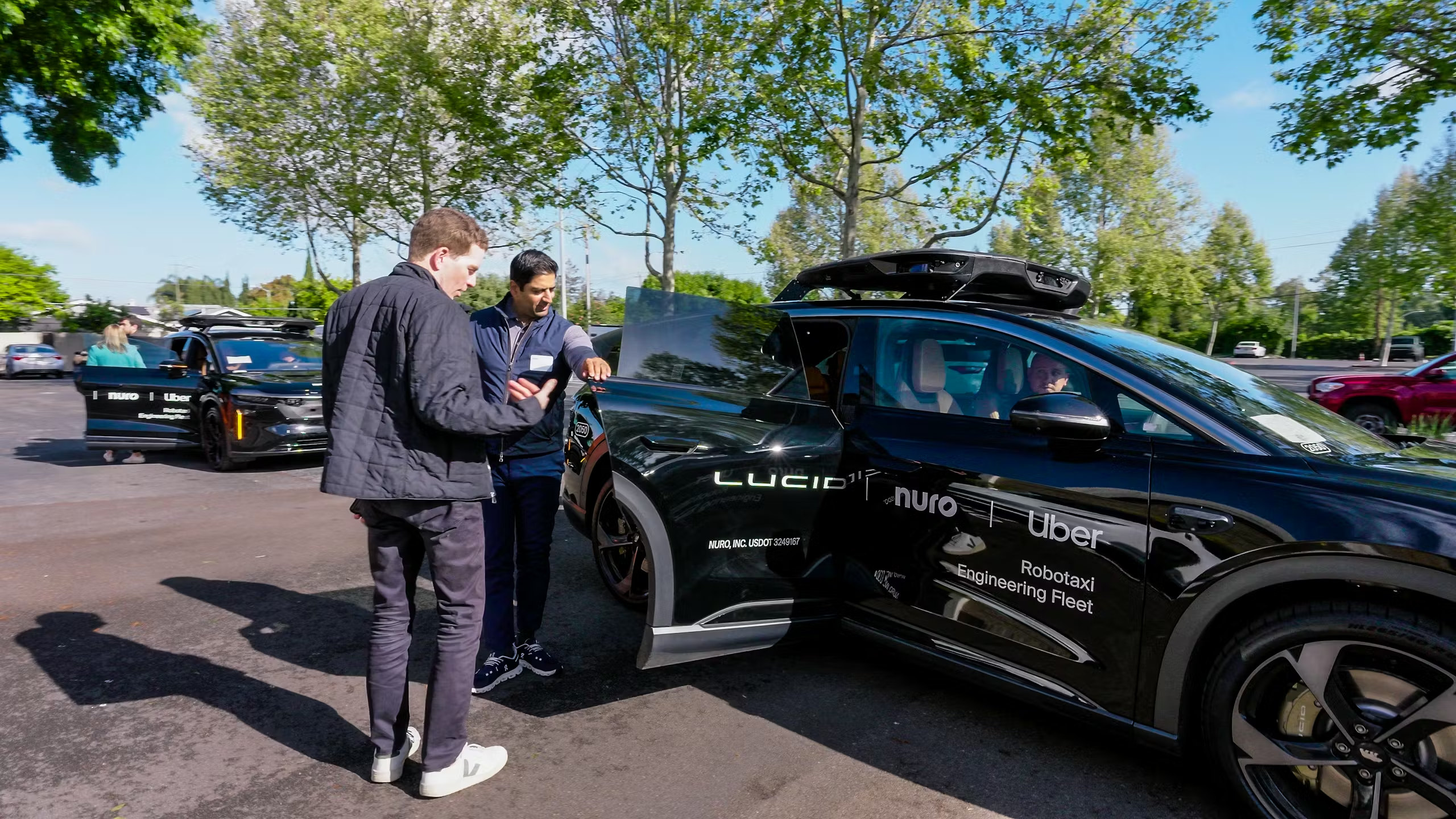
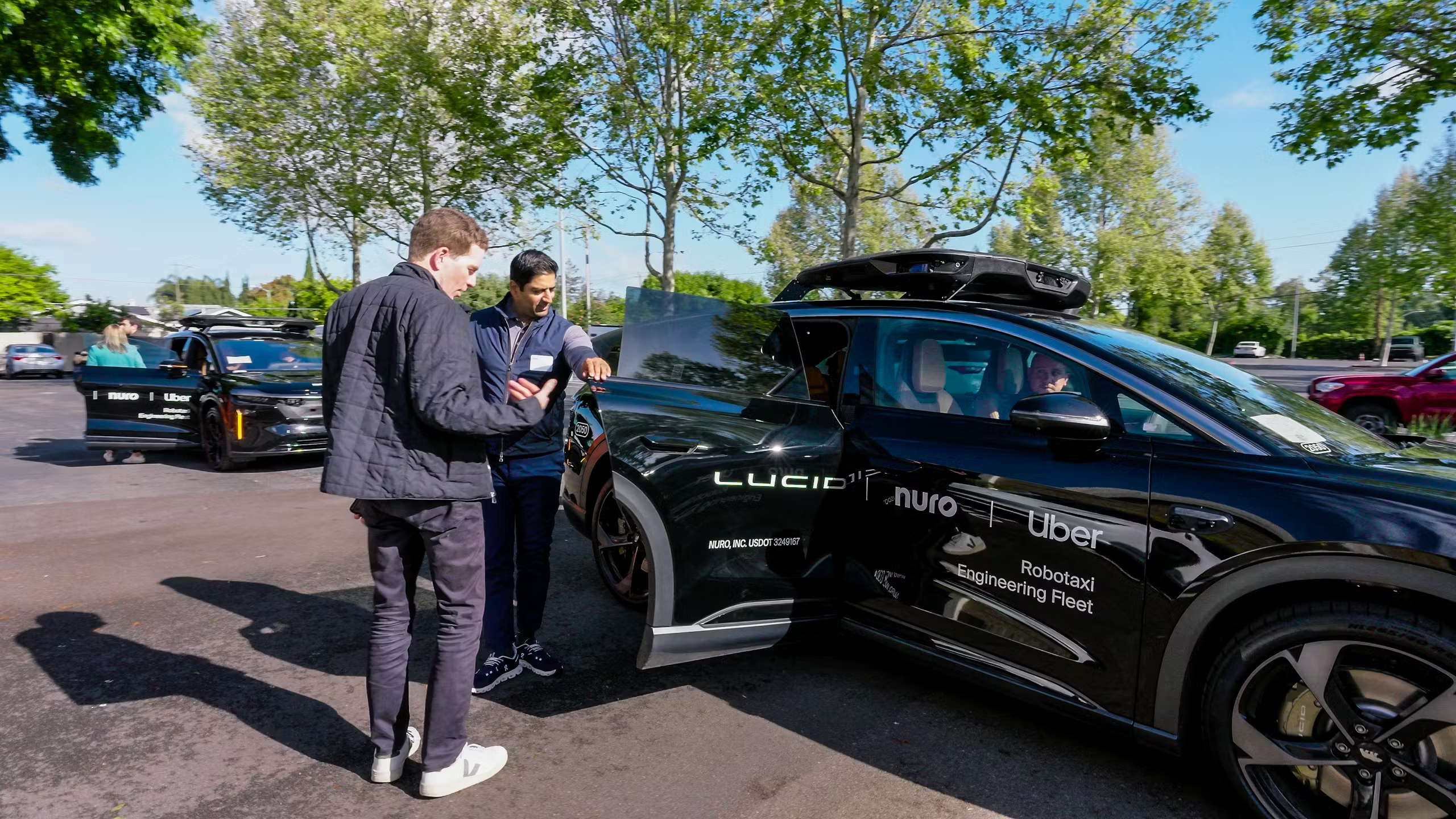
Here's what the robotaxi service looks like right now. Uber and Nuro launched a beta version in the Bay Area. But don't get too excited yet. It's employees only. And every vehicle has a safety driver sitting behind the wheel ready to take over.
The vehicles will be owned either by Uber directly or through third-party fleet management partners. San Francisco is just the starting point. Assuming everything goes well with the beta, you can expect expansion to other major US cities over the next few years.
The Saudi Money Keeps Flowing
We can't talk about Lucid without talking about Saudi Arabia. The kingdom's Public Investment Fund already holds a controlling stake in the company. Now they're adding another $500 million through an affiliate.
So let's count the money on the table. $500 million from Uber. $500 million from Saudi Arabia. Hundreds of millions in Nuro from various investors. Lucid isn't just getting a vote of confidence, they're getting a mountain of cash to actually build these vehicles.
That's the kind of capital you need when you're trying to manufacture 35,000 luxury autonomous SUVs. The Gravity isn't a cheap vehicle to build. Lucid positions itself as a premium brand competing with the likes of BMW and Mercedes. Building at this scale while maintaining quality? That takes serious funding.
Major tech companies are making aggressive acquisition moves to dominate emerging markets
Why This Partnership Structure Actually Makes Sense
Think about what each company brings to this deal. Lucid builds premium electric vehicles. They know batteries, they know luxury interiors, they know how to make a car that doesn't feel like a penalty box. But they don't know autonomy.
Nuro specializes in self-driving technology. They built their reputation on autonomous delivery vehicles, those little robots you might have seen puttering around neighborhoods delivering groceries. Now they're scaling up to full-size passenger vehicles. But they don't manufacture cars.
Uber? They have the platform. The app. The customer base. Millions of people already comfortable hailing rides through their phones. They've been trying to crack autonomous vehicles for years. Remember when they had their own self-driving division? Before that whole pedestrian fatality disaster in Arizona? Yeah, outsourcing the hard parts probably feels smarter now.
- Lucid: Premium EV manufacturing expertise and the Gravity platform
- Nuro: Self-driving software and sensor systems
- Uber: Ride-hailing platform, customer base, and fleet management
- Saudi Arabia: The cash to make it all happen
The Robotaxi Race Is Getting Crowded
This Lucid-Uber-Nuro alliance enters a market that's already heating up. Waymo is expanding. Cruise is trying to recover from its own setbacks. Tesla keeps promising robotaxis are coming any day now. Zoox, owned by Amazon, is testing in multiple cities.
But here's what makes this partnership different. Uber already has massive market penetration for ride-hailing. They don't need to build demand from scratch. They just need the vehicles to show up and work. If these Lucid Gravity robotaxis can deliver reliable service, Uber can flip a switch and offer autonomous rides to its existing user base.
That's a fundamentally different go-to-market strategy than Waymo or Cruise trying to convince people to download yet another app. Uber's betting that their brand recognition and existing customer relationships give them an edge.
What Happens Next
The beta service in San Francisco will be the proving ground. Uber employees are essentially the guinea pigs right now, testing the service before it opens to the public. Those safety drivers aren't going anywhere until the companies can demonstrate the technology works reliably.
Napoli takes over as CEO with a massive task ahead. He needs to scale production for 35,000 vehicles while maintaining Lucid's reputation for quality. He needs to manage the transition from a company that sold cars to individual buyers into one that's basically a supplier for a robotaxi fleet. And he needs to do it all with everyone watching to see if the elevator guy can actually run a car company.
The timeline stretches to 2031 for full deployment. That's five more years of development, testing, regulatory approval, and scaling. A lot can change. But with this much money and this many vehicles committed, the Lucid-Uber-Nuro bet on autonomous transportation just got a lot more serious.
Frequently Asked Questions
When can regular people use these robotaxis?
No public timeline yet. The current beta is employees-only in San Francisco with safety drivers. Public availability depends on successful testing and regulatory approval.
How much does a Lucid Gravity cost?
The consumer version starts around $80,000. The fleet vehicles for Uber may have different pricing and configurations.
Will these robotaxis be fully driverless?
Eventually, that's the goal. Current beta vehicles have safety drivers behind the wheel. True autonomous operation requires additional regulatory approval.
Who develops the self-driving technology?
Nuro handles the autonomous driving systems. Lucid builds the vehicles. Uber operates the ride-hailing platform.
Huma Shazia
Senior AI & Tech Writer
Produced with AI assistance and reviewed by the Logicity editorial team. Learn more in our Editorial Policy.