Key Takeaways
- Tesla VP Wang Hao calls Shanghai factory a 'golden key' for robot mass production
- Tesla shipped fewer than 500 Optimus robots in 2025, according to research firm Omdia
- Company ending production of Model S and Model X to convert Fremont factory for robot production
- Shanghai factory delivered 851,000 EVs in 2025, over half of Tesla's global deliveries
Read in Short
Tesla's top executive in China just dropped a major hint about the company's robotics future. VP Wang Hao says Shanghai's manufacturing expertise will be critical for mass producing Optimus humanoid robots. The company shipped fewer than 500 robots last year, so they've got a long way to go.
Here's something that should catch your attention if you've been following Elon Musk's grand vision for Tesla. The company isn't just an electric car maker anymore. Or at least, that's what they want you to believe.
Wang Hao, Tesla's Vice President and President of Tesla China, made some pretty bold claims during a government-organized tour of the Shanghai factory on Tuesday. He basically said that the same manufacturing muscle that pumps out hundreds of thousands of EVs could be the secret sauce for producing humanoid robots at scale.
“Shanghai manufacturing arm is a golden key to solving this challenge.”
— Wang Hao, Tesla Vice President and President of Tesla China
The challenge he's referring to? Getting robots out of the prototype phase and into actual mass production. It's the same problem that plagued Tesla's early car production days, and honestly, it's where most robotics companies fall flat on their faces.
Why Shanghai Matters More Than You Think
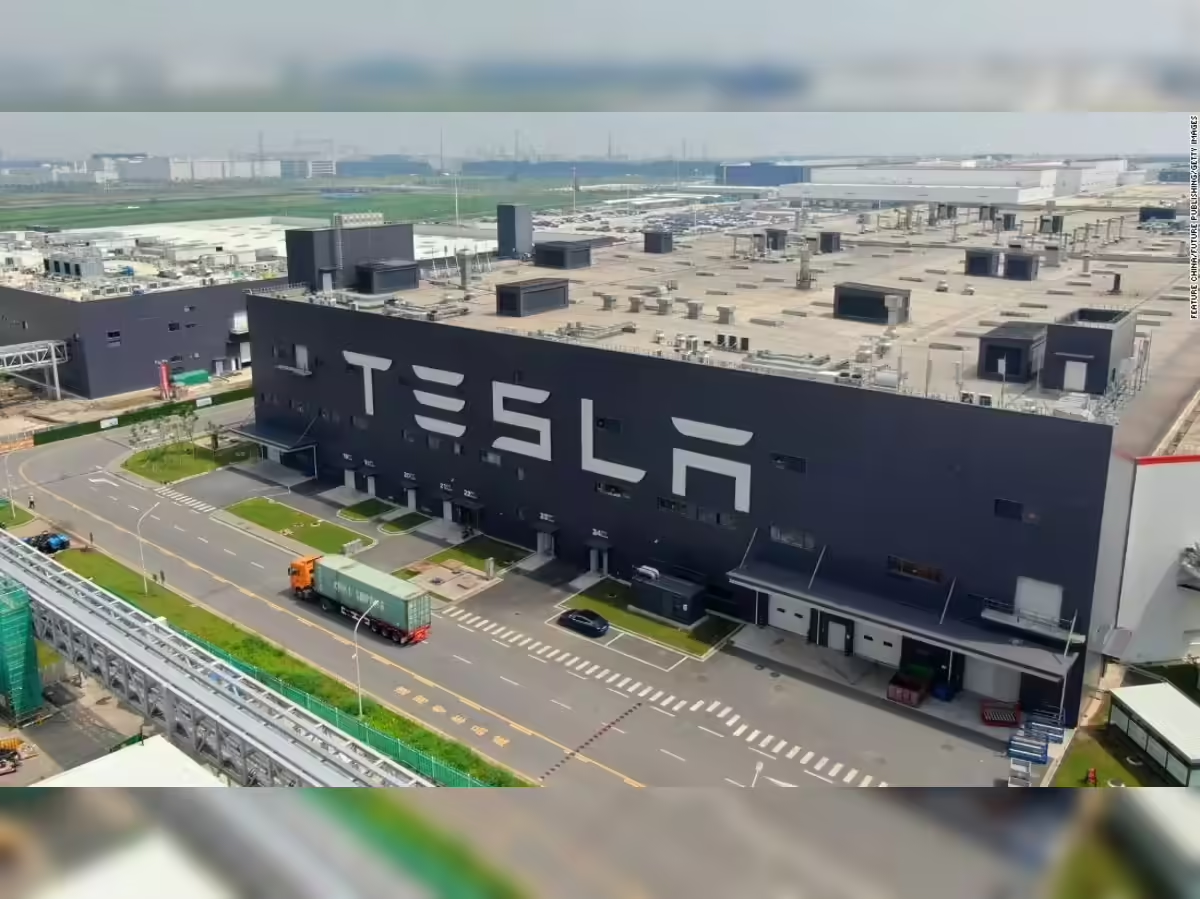
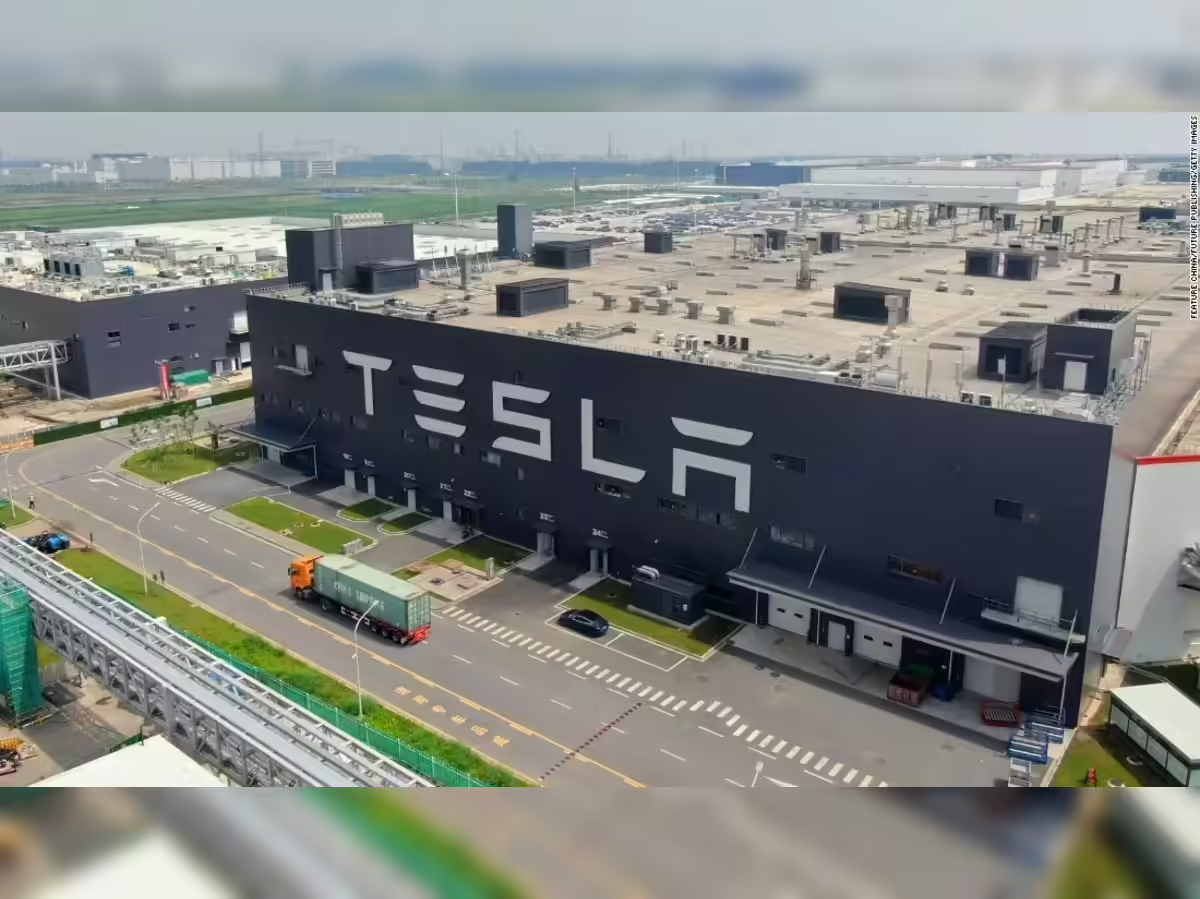
Look, there's a reason Wang is so confident about Shanghai's role. This isn't some secondary facility. The Shanghai Gigafactory delivered more than half of Tesla's entire global vehicle output last year. That's insane when you think about it. A single factory in China is outproducing everything else Tesla has combined.
The factory first started delivering made-in-China vehicles back in late 2019. Since then, it's become arguably the most important manufacturing site in Tesla's entire operation. And now they want to bring that same efficiency to building robots that can water your plants and take care of your elderly parents. Musk's words, not mine.
What Exactly is Optimus?
Optimus is Tesla's humanoid robot project, designed to perform tasks that are boring, repetitive, or dangerous for humans. Standing about 5'8" tall, these robots use the same AI systems Tesla developed for its self-driving cars. Musk has claimed they could eventually be worth more than the entire EV business.
The Numbers Tell a Different Story (For Now)
But here's where we need to pump the brakes a bit. According to Omdia, a London-based tech research firm, Tesla shipped fewer than 500 general-purpose robots in all of 2025. That's... not a lot. Like, at all.
To be fair, Omdia also noted that Tesla is among the companies showcasing industry-leading AI advancements. So the technology seems to be there. The question is whether they can actually build these things at scale without each one costing a fortune.
And that's exactly why Wang's comments matter. He's essentially saying that Tesla's biggest advantage isn't just their AI tech. It's their manufacturing know-how. Anyone can build a cool robot in a lab. Building millions of them affordably? That's a completely different game.
Another major tech company making bold moves with their hardware strategy
Tesla's Big Pivot Is Already Happening
What makes this announcement feel real is that Tesla is already putting their money where their mouth is. Musk recently announced that the company will stop making the Model S and Model X during the second quarter. These are the original Tesla cars. The ones that put the company on the map.
And what are they doing with that freed-up factory space in Fremont, California? Converting it to produce Optimus robots. That's not a small decision. That's Tesla literally choosing robots over their legacy vehicles.
Musk's Vision: Cars Are Just the Beginning
Elon Musk has been pretty clear with investors lately. He wants them to stop obsessing over quarterly car sales numbers. The future, according to Musk, is all about AI. We're talking robotaxis driving millions of people around in cars without steering wheels. Humanoid robots handling household chores and caregiving duties.
Is this realistic? That's the billion-dollar question. Actually, more like the trillion-dollar question if Musk's projections are even close to accurate.
The skeptics will point out that Musk has a history of overpromising on timelines. Full self-driving has been 'almost ready' for years now. But the optimists will counter that Tesla has a track record of eventually delivering on ambitious goals, even if they're late.
What Wang Didn't Say
Here's what bugs me about this whole announcement. Wang called Shanghai a 'golden key' for robot production but didn't actually explain how. Will they be manufacturing robot components? Assembling complete units? Just applying their process expertise to other facilities?
We don't know. And that vagueness is pretty typical of Tesla announcements. They're great at generating excitement but often light on details.
What we do know is that Shanghai has proven itself capable of ramping up production at ridiculous speeds. When other manufacturers were struggling with supply chain issues, Shanghai kept delivering. If that same operational excellence transfers to robot production, Tesla might actually pull this off.
The Energy Storage Angle
Tesla also opened a separate factory in Shanghai in 2025 focused on commercial energy storage manufacturing. This diversification suggests Tesla is betting big on China as a manufacturing hub beyond just cars.
The Bottom Line
Tesla is making a huge bet that their manufacturing expertise, particularly in Shanghai, will translate to the robotics world. It's ambitious. Maybe even a little crazy. But that's kind of Tesla's whole thing.
The company needs to go from shipping hundreds of robots to shipping hundreds of thousands. Or millions, if Musk's vision plays out. Shanghai's track record with EVs suggests they know how to scale. Whether that applies to humanoid robots remains to be seen.
For now, Wang's comments are more promise than proof. But given what Shanghai has already accomplished for Tesla's vehicle business, I wouldn't bet against them. The factory that became Tesla's most productive facility in the world might just become the birthplace of the robot revolution too.
Or it could all be hype. With Tesla, you never really know until it happens. That's part of what makes them so interesting to watch.
Frequently Asked Questions
When will Tesla start mass producing Optimus robots?
Tesla hasn't given a specific timeline, but the Fremont factory conversion for robot production is set for Q2 2026. Actual mass production scale could take several more years.
How many Optimus robots has Tesla sold?
According to research firm Omdia, Tesla shipped fewer than 500 general-purpose robots in 2025.
Why is Tesla ending Model S and Model X production?
Tesla is converting the Fremont factory that produced these vehicles to manufacture Optimus robots instead, signaling a major shift toward robotics.
What tasks are Optimus robots designed to do?
According to Musk, the robots are meant for tasks like household chores, plant care, and even elderly caregiving. They use AI technology similar to Tesla's self-driving systems.
Source: Tech-Economic Times / ET
Huma Shazia
Senior AI & Tech Writer
Produced with AI assistance and reviewed by the Logicity editorial team. Learn more in our Editorial Policy.