
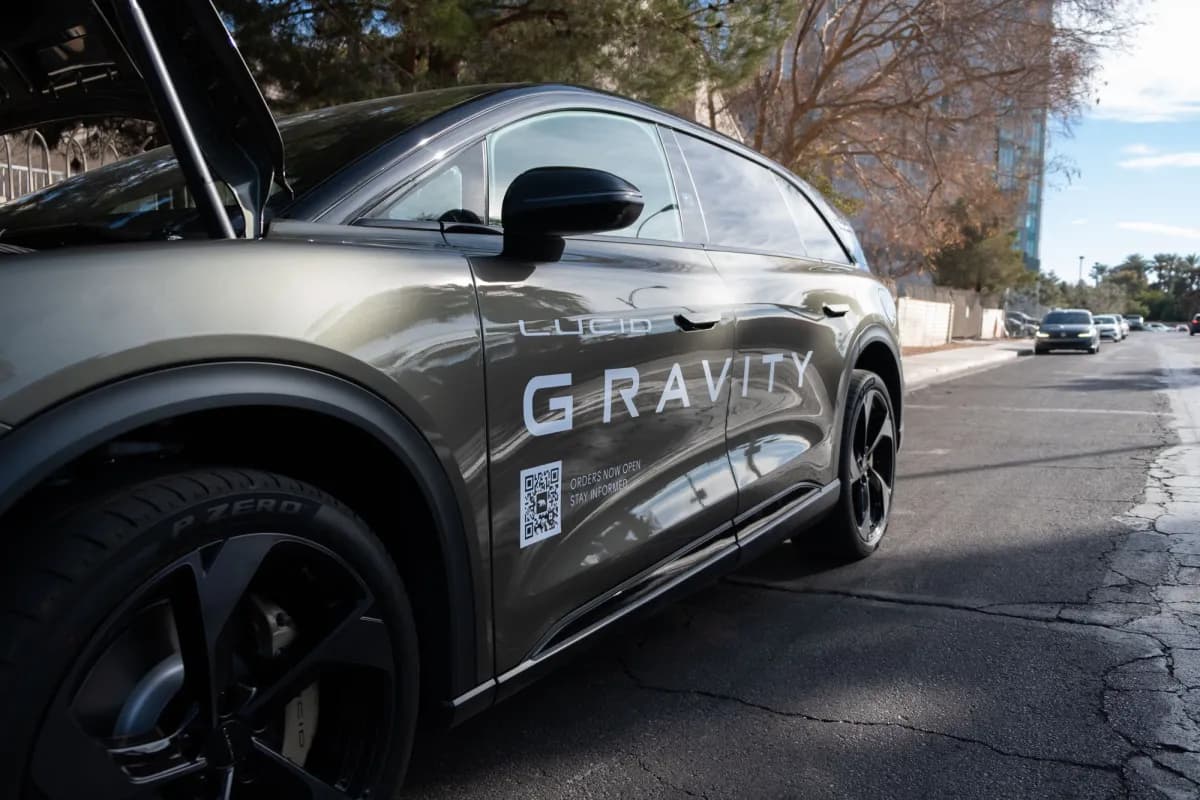
Lucid Group, the luxury electric vehicle maker, has reported a 42% drop in sales for the first quarter of 2026 due to a supplier quality issue. The company blames a problem with its second-row seat supplier, which disrupted deliveries of the Lucid Gravity SUV. Despite this setback, Lucid remains confident in its production goals and is moving forward with its plans to launch a new, lower-cost platform.
Key Takeaways
- Lucid Group's Q1 sales dropped 42% due to a supplier quality issue
- The company blames a problem with its second-row seat supplier for the disruption
- Lucid remains confident in its production goals and is moving forward with its plans
In This Article
- A Speed Bump for Lucid
- The Supplier Problem
- Impact on Production
- Looking to the Future
- What the Experts Say
- Conclusion
A Speed Bump for Lucid
Lucid Group, the luxury electric vehicle maker, had a strong finish to 2025, with sales increasing by 55% and production doubling. However, the company's momentum was disrupted in the first quarter of 2026, with sales dropping by 42%. So, what happened?
- Lucid sold 3,093 vehicles in Q1 2026, a significant drop from the previous quarter
- The company had built over 5,500 vehicles, but deliveries were disrupted due to a supplier issue
The Supplier Problem
According to Lucid, the sales dip was not due to a lack of demand, but rather a quality issue with its second-row seat supplier. The problem was significant enough to prompt a recall of over 4,000 Lucid Gravity SUVs.
- The supplier issue was related to the anchors for the second-row seat belts, which were not properly welded
- Lucid spokesperson Nick Twork confirmed that the issue was caused by an unapproved change made by the supplier
Impact on Production
The supplier issue had a significant impact on Lucid's production plans, with deliveries of the Lucid Gravity SUV disrupted for 29 days. However, the company remains confident that it can still meet its production goals for the year.
- Lucid has reaffirmed its production guidance of between 25,000 and 27,000 vehicles for 2026
- The company built 18,378 EVs in 2025, so it is aiming for an increase of up to 47% this year
Looking to the Future
Despite the setback, Lucid is moving forward with its plans to launch a new, lower-cost platform. The company has announced that its first vehicle on this platform will cost around $50,000, putting it in direct competition with other electric vehicle makers.
- The new platform is aimed at the mass market, with a price point that is significantly lower than Lucid's current offerings
- The company will face competition from other electric vehicle makers, including Rivian and Tesla
What the Experts Say
Lucid spokesperson Nick Twork has commented on the supplier issue and its impact on production. According to Twork, 'following eight record quarters, we showed strong results in both January and March which very nearly achieved year-over-year growth on their own.'
- Twork's comments suggest that the company is confident in its ability to bounce back from the setback
- The supplier issue is seen as a one-time problem, rather than a long-term concern
Conclusion
In conclusion, Lucid Group's Q1 sales drop is a setback, but it is not a disaster. The company remains confident in its production goals and is moving forward with its plans to launch a new, lower-cost platform. With the electric vehicle market continuing to grow, Lucid is well-positioned for future success.
- The company's ability to adapt to challenges and move forward will be key to its success
- The electric vehicle market is becoming increasingly competitive, but Lucid has a strong brand and a loyal customer base
“following eight record quarters, we showed strong results in both January and March which very nearly achieved year-over-year growth on their own”
— Nick Twork, Lucid Spokesperson
Final Thoughts
As the electric vehicle market continues to evolve, Lucid Group is well-positioned for future success. With its strong brand, loyal customer base, and plans for a new, lower-cost platform, the company is ready to take on the competition and come out on top.
Sources & Credits
Originally reported by TechCrunch — Kirsten Korosec
Manaal Khan
Tech & Innovation Writer
Produced with AI assistance and reviewed by the Logicity editorial team. Learn more in our Editorial Policy.




