Key Takeaways
- Lime sold 6.68 million shares at $25 each, raising $167 million in its Nasdaq debut
- Revenue grew 29% to $886.7 million in 2025, though net losses widened to $59.3 million
- Uber plans to purchase up to $20 million in shares, reinforcing its strategic bet on micromobility
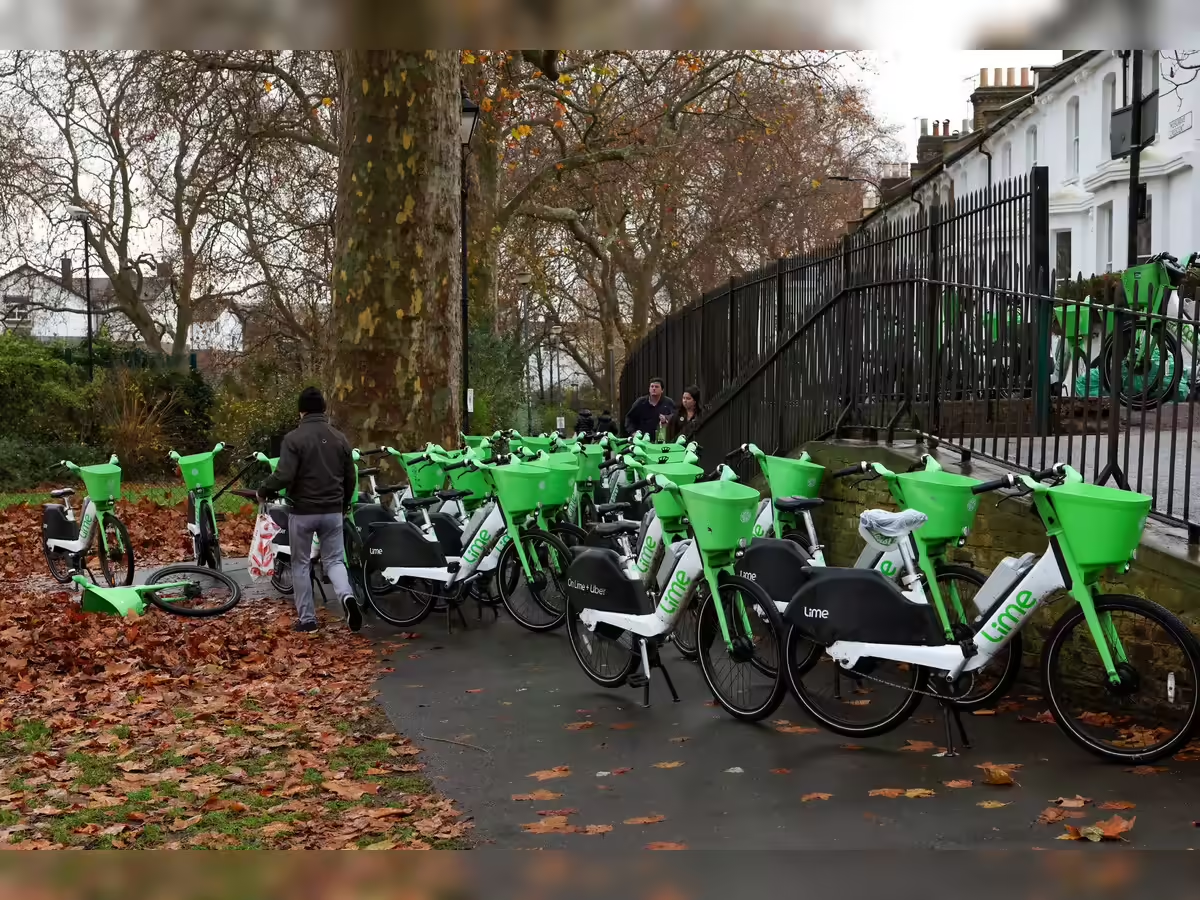
Lime, the Uber-backed electric scooter and bike rental company, raised $167 million in its US initial public offering. The San Francisco company sold 6.68 million shares at $25 each, landing at the midpoint of its marketed range. Trading begins Wednesday on Nasdaq under ticker LIME.
This is the first major micromobility IPO since Bird's disastrous SPAC merger in 2021. That company eventually went bankrupt. Lime's traditional IPO route signals both its relative financial health and renewed investor appetite for new listings after volatility from the Iran conflict earlier this year.
How has Lime performed financially?
The numbers tell a mixed story. Revenue jumped nearly 30% year-over-year to $886.7 million in 2025, up from $686.6 million. But losses widened. Net loss hit $59.3 million, up from $33.9 million the prior year.
That widening loss during a period of strong revenue growth raises questions. Operating costs remain high in micromobility. Scooters get damaged, stolen, or tossed in rivers. Maintenance crews work around the clock. Cities impose regulatory fees and operational restrictions.
Still, Lime stands out in an industry littered with failures. The company claimed profitability in 2022, a rarity among scooter operators. Whether that holds as the company scales remains the central question for public market investors.
What's Uber's role in Lime's business?
Uber led a 2020 funding round for Lime, folding its own Jump bike-sharing business into the company in exchange for a significant equity stake. That deal valued Lime at roughly $510 million, a steep drop from its $2.4 billion valuation in 2019 before the pandemic crushed urban transportation demand.
The partnership runs deep. A significant portion of Lime's revenue comes from integration with Uber's ride-hailing app, which surfaces Lime scooters as a transportation option alongside cars. Uber has indicated it will buy up to $20 million in shares through the IPO, reinforcing its commitment.
For Uber, the bet makes strategic sense. Micromobility fills the gap for short urban trips where summoning a car is overkill. Control a scooter network and you own more of the urban transportation stack.
Why is the IPO market heating up now?
The broader IPO market has regained momentum. After volatility triggered by geopolitical tensions, companies have revived listing plans as equity markets stabilized. A string of high-profile offerings has restored investor confidence.
Goldman Sachs, J.P. Morgan, and Jefferies are underwriting Lime's offering. The choice of top-tier banks suggests institutional investors see the deal as credible, not a speculative flyer.
Lime operates in over 230 cities worldwide. Commuters in densely populated urban centers have increasingly turned to shared e-bikes and scooters for short trips. The value proposition is straightforward: cheaper and often faster than cars for distances under a few miles.
What are the risks for investors?
High operating costs remain the fundamental challenge. Every scooter requires charging, maintenance, and redistribution. Vandalism and theft eat into margins. Cities can change regulations overnight, imposing new fees or capping fleet sizes.
Lime's dependence on Uber cuts both ways. The partnership drives substantial revenue, but it also creates concentration risk. If Uber deprioritizes the integration or builds competing capabilities, Lime's business could suffer.
The widening net loss despite revenue growth suggests the unit economics haven't fully clicked. Scaling a scooter business means scaling problems. More scooters, more maintenance headaches, more regulatory complexity across more cities.
Logicity's Take
Lime's IPO is a test of whether public markets have forgiven micromobility's early sins. Bird's implosion made investors wary of the entire category. Lime's traditional IPO, backed by real underwriters and Uber's continued investment, signals this is a different kind of company. But the core challenge hasn't changed: making money renting scooters at scale requires operational excellence that most startups can't sustain. Watch the next two earnings reports. If losses keep widening as revenue grows, the unit economics story falls apart. If they narrow, Lime might actually prove the model works.
Frequently Asked Questions
What is Lime's ticker symbol?
Lime trades on Nasdaq under the ticker symbol LIME, beginning Wednesday.
How much did Lime raise in its IPO?
Lime raised $167 million by selling 6.68 million shares at $25 per share.
What is Uber's stake in Lime?
Uber became a major investor in 2020 when it merged its Jump bike business into Lime. The company plans to purchase up to $20 million in additional shares through the IPO.
Is Lime profitable?
Lime claimed profitability in 2022, but its 2025 results show a net loss of $59.3 million despite $886.7 million in revenue.
How many cities does Lime operate in?
Lime operates electric scooters and bikes in over 230 cities worldwide.
Need Help Implementing This?
Analyzing transportation and mobility investments for your portfolio? Our team tracks micromobility, ride-hailing, and urban tech trends. Contact Logicity for briefings on market-moving IPOs and strategic investment signals.
Source: Tech-Economic Times / ET
Huma Shazia
Senior AI & Tech Writer
Produced with AI assistance and reviewed by the Logicity editorial team. Learn more in our Editorial Policy.