Key Takeaways
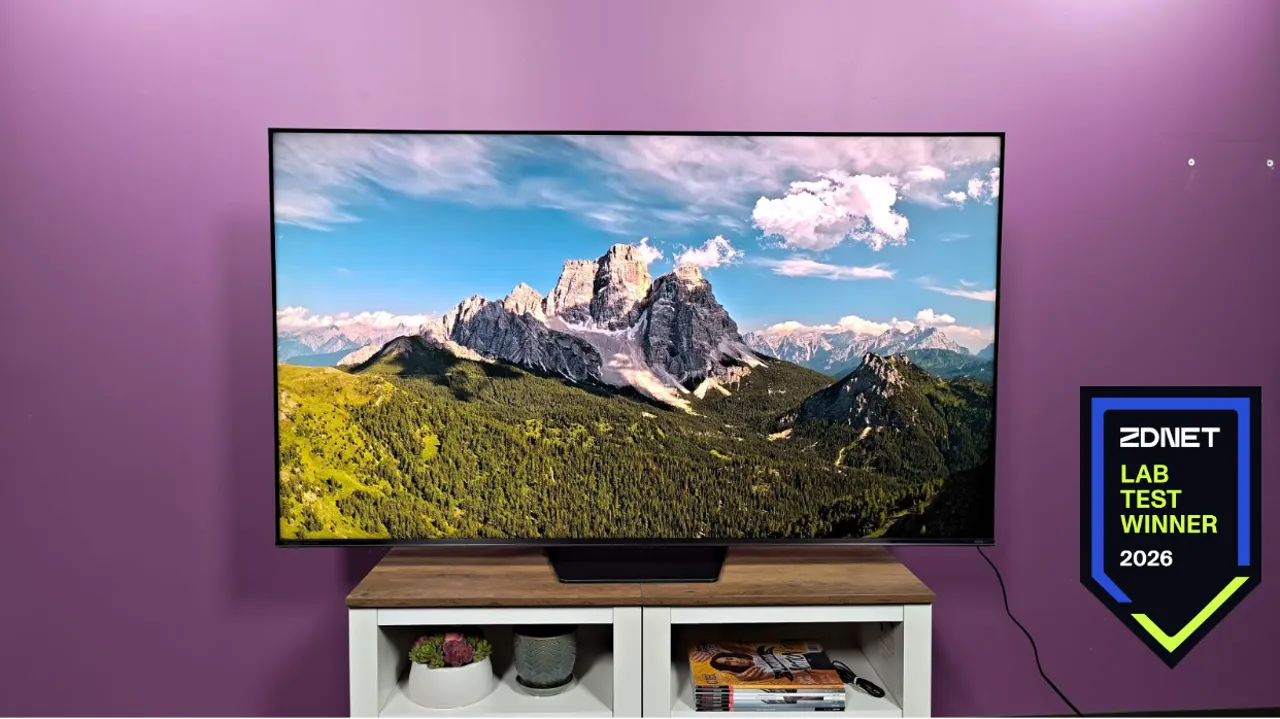
- LG C6 delivered the most accurate SDR color reproduction in Filmmaker mode
- Hisense U8 won for HDR color accuracy, beating Sony and Samsung flagships
- Color gamut and Delta E scores differ significantly between SDR and HDR modes
ZDNET's lab tested seven flagship TVs from Samsung, LG, Sony, TCL, and Hisense for color reproduction accuracy. The winners surprised everyone: LG's C6 took the SDR crown, while Hisense's U8 delivered the best HDR color accuracy. Neither Sony nor Samsung placed first in either category.
The tests used Portrait Displays' Calman software, the same calibration tool Hollywood studios and broadcast networks rely on to validate color accuracy. Results were measured in Filmmaker mode (or each brand's equivalent), since that mode typically offers the least processing and most accurate color output.
How the lab measured TV color accuracy
ZDNET's Louisville lab evaluated two distinct metrics: color gamut and color accuracy. These sound similar but measure different things.
Color gamut measures the total range of colors a TV can display, expressed as a percentage of a reference standard. For SDR content, that standard is rec.709. For HDR, it's rec.2020. A TV hitting 100% of rec.709 can display every color in the standard definition palette. HDR's rec.2020 is a much wider space, so even flagship panels rarely cover it completely.
Color accuracy measures how precisely a TV reproduces a specific color sent to it. The lab used Delta E 2000 (dE2000) for SDR and Delta E ITP (dEITP) for HDR. In both cases, lower numbers mean better accuracy. A score under 1 is generally imperceptible to the human eye. A score above 3 becomes noticeable.
Calman identifies where a perfect red, green, or blue should fall on the color space, then measures where the TV's output actually lands. The gap between intended and actual is the Delta E score.
SDR results: LG C6 wins
For standard dynamic range content, the LG C6 delivered the most accurate color reproduction among all seven tested models. The C6's Filmmaker mode hit the tightest Delta E 2000 scores, meaning its reds looked like reds, not slightly orange approximations.
This matters for anyone watching broadcast TV, older films, or streaming content that hasn't been mastered in HDR. Most streaming libraries still contain a significant percentage of SDR content, and SDR remains the default for live sports and news.
Samsung and Sony, despite their flagship pricing, did not top the SDR rankings. The lab did not publish exact Delta E scores for every model, but the C6's margin was clear enough to earn the award outright.
HDR results: Hisense U8 takes it
HDR content pushes panels harder. The wider color space and higher brightness demands expose weaknesses that SDR testing might miss. Here, the Hisense U8 outperformed every competitor.
The U8's Delta E ITP scores in HDR mode beat both Sony and Samsung flagships. For buyers prioritizing HDR movie watching, this result is notable because Hisense typically prices its TVs well below Sony and Samsung at equivalent screen sizes.
The lab separated SDR and HDR awards deliberately. These are distinct picture formats calculated differently, and a TV that excels at one doesn't automatically win the other. The LG C6 and Hisense U8 split the honors for that reason.
Which TV should you buy?
That depends on what you watch. If your viewing habits skew toward broadcast, cable, or older streaming content, the LG C6's SDR accuracy gives it an edge. If you're primarily watching HDR films and prestige streaming shows, the Hisense U8 delivers better color fidelity at a lower price point than Sony or Samsung.
| TV Model | Best For | Accuracy Metric | Price Tier |
|---|---|---|---|
| LG C6 | SDR content (broadcast, older films) | Lowest dE2000 in Filmmaker mode | Premium |
| Hisense U8 | HDR content (movies, streaming) | Lowest dEITP in HDR mode | Mid-range |
| Samsung (tested models) | Neither category winner | Competitive but not top | Premium |
| Sony (tested models) | Neither category winner | Competitive but not top | Premium |
| TCL (tested models) | Neither category winner | Not specified | Budget to mid-range |
A caveat: the lab tested only Filmmaker mode or its equivalent. If you watch TV in Vivid, Sports, or Game mode, your results will differ. Those modes intentionally boost saturation or adjust processing in ways that sacrifice accuracy for perceived punch.
Logicity's Take
These results matter most for buyers who care about color accuracy over raw brightness or gaming features. The Hisense U8 win is the bigger surprise. It undercuts Sony and Samsung by hundreds of dollars at most screen sizes while delivering measurably better HDR color. For office AV setups or conference room displays where accurate color matters, this data suggests Hisense deserves a look. The LG C6 remains the safer all-around pick for mixed SDR/HDR use, but it carries the OLED price premium.
What the lab didn't test
Color accuracy is one metric. The lab didn't publish results for motion handling, input lag, peak brightness, or black levels. A TV that nails color accuracy might still struggle with sports motion blur or feel sluggish for gaming.
Viewing angle also matters. OLED panels like the C6 maintain color accuracy off-axis better than most LED-backlit sets. If you're mounting a TV in a wide living room or conference space, that factor might outweigh raw test scores.
The tested models also span different panel technologies. LG's C6 uses OLED. Hisense's U8 uses Mini-LED with local dimming. Comparing them purely on color accuracy ignores trade-offs in burn-in risk, brightness ceiling, and price.
Readers evaluating flagship displays may also want to track phone launches with updated screens
Still, the lab's methodology is sound. Calman is the standard for a reason. If accurate color is your priority, the LG C6 and Hisense U8 are the two models to consider first.
Frequently Asked Questions
What is Delta E and why does it matter for TVs?
Delta E measures the difference between a target color and the color a display actually produces. Lower scores mean more accurate color. A Delta E under 1 is imperceptible to humans; above 3 becomes noticeable.
Why did ZDNET test in Filmmaker mode?
Filmmaker mode disables most image processing, giving the most accurate representation of the source content. Other modes (Vivid, Sports) intentionally alter colors for effect.
Is the Hisense U8 better than Sony or Samsung?
For HDR color accuracy specifically, yes. The U8 scored better in this lab test. For other factors like brightness, motion handling, or gaming features, results may differ.
Need Help Implementing This?
If you're outfitting a conference room, studio, or office AV setup and need help evaluating display options, reach out to Logicity for vendor-neutral guidance on enterprise display decisions.
Source: Latest news
Manaal Khan
Tech & Innovation Writer
Produced with AI assistance and reviewed by the Logicity editorial team. Learn more in our Editorial Policy.