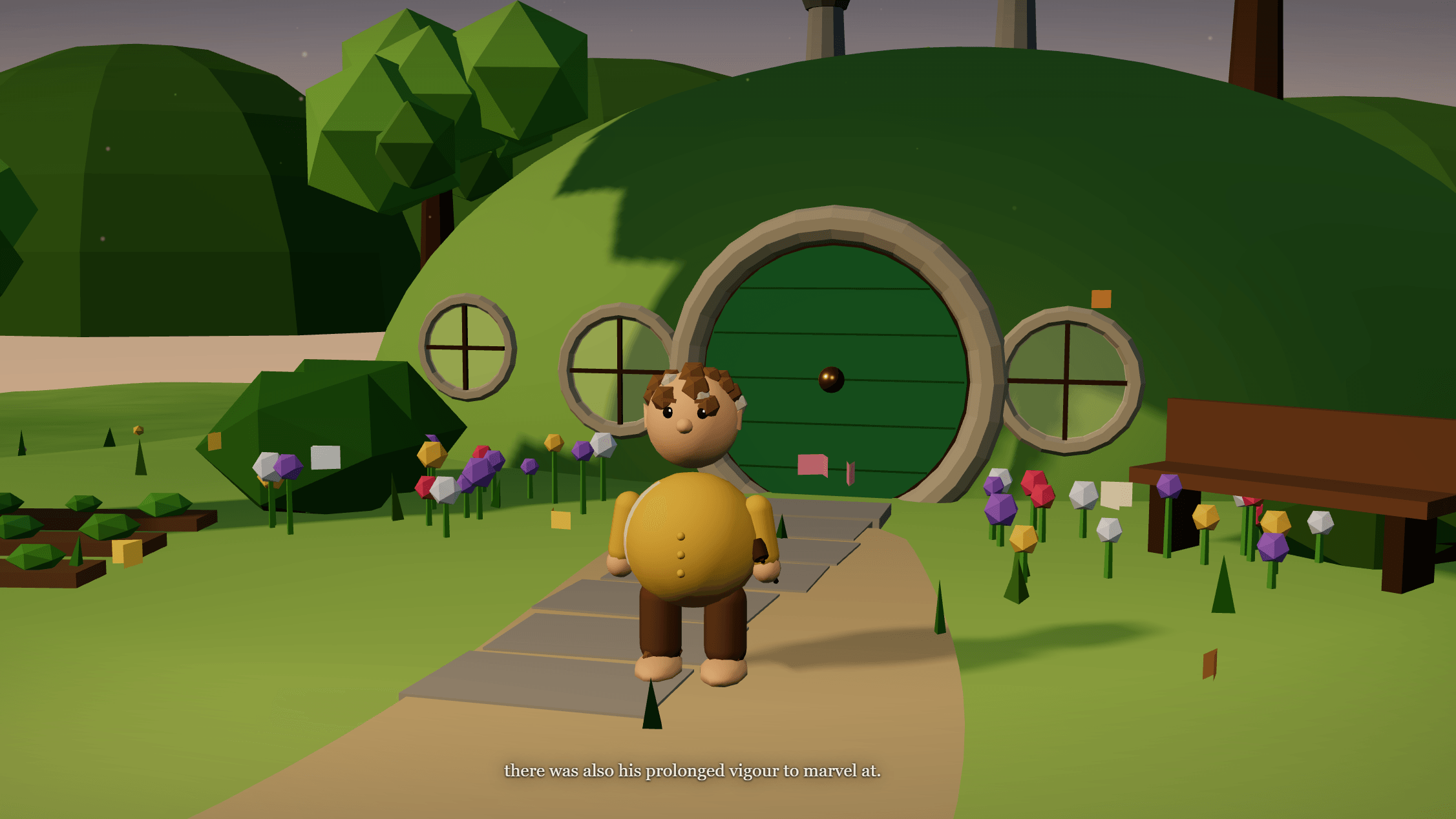
Andrej Karpathy fed Claude Opus 5 a single paragraph from The Lord of the Rings and asked it to build a 3D browser scene. Two hours and roughly $10 later, the model had written 5,500 lines of Three.js code, placed animated objects, and rendered a playable Tolkien diorama. Karpathy, who joined Anthropic's pre-training research team in May 2026 after co-founding OpenAI, argues this kind of stress test exposes capabilities that simple benchmarks miss.
Why pelicans and unicorns are no longer enough
RLVR, Ghosts, and Vibe Coding: Karpathy’s 2025 LLM Year in Review
Karpathy's premise: the existing quick tests for generative models are hitting their ceiling. Simon Willison's pelican test, which asks a model to draw an SVG of a pelican riding a bicycle, was designed to be absurd enough that the subject wouldn't already exist in training data. It worked as a rough spatial-reasoning check. Microsoft took a similar approach in 2023, prompting GPT-4 to draw a unicorn in TikZ for its "Sparks of AGI" paper.
Those prompts tested whether a text-only model could reason about shapes. But frontier models are now multimodal, trained on images and video as well as text. A pelican on a bike is no longer exotic. Karpathy wants a harder assignment: generate thousands of lines of executable 3D code, animate the scene, and do it cheaply enough that disposable custom worlds become practical.
What the demo actually produced
Karpathy gave Claude Opus 5 a one-million-token budget. The model rendered the scene in Three.js, a JavaScript library for WebGL graphics. Eleven Labs supplied the audio. Karpathy posted the source code publicly so others can fork or extend the scene.
He calls the result "rough but fun." Nobody would hand-author a world this way, he notes, but at roughly ten dollars per attempt, the economics shift. Teams could spin up bespoke game environments on demand, dropping users in as protagonists or background characters.
The limitation Karpathy flagged
Claude Opus 5 cannot watch its own video output. The model debugged by examining screenshots instead. That constraint introduced errors. Karpathy is clear: the demo is a vibe check, not a hard benchmark. It shows directional capability, not production reliability.
Other users have since pushed Opus 5 to write entire browser games, from first-person shooters to Minecraft clones. None of these outputs carry rigorous metrics. They serve as public probes of model limits, a form of crowdsourced stress testing that labs cannot easily replicate internally.
Logicity's Take
Vibe tests like this matter because they reveal failure modes that curated benchmarks often hide. A model that aces HumanEval can still produce broken scene graphs or hallucinate object positions. For product teams building AI-generated content pipelines, the real question is debugging: until models can observe and correct their own rendered output in real time, human review stays in the loop. Expect tooling startups to chase that gap.
Karpathy's trajectory
Karpathy co-founded OpenAI and later led AI at Tesla, overseeing Autopilot's neural-network stack. He left Tesla in 2022 and launched Eureka Labs, an education startup. In May 2026 he joined Anthropic to work on pre-training research. The LOTR demo is not an official Anthropic project; Karpathy posted it as a personal experiment.
Covers AI agent reliability issues relevant to autonomous code generation
The question Karpathy leaves open: what happens when models can watch, not just screenshot, their own renders? That feedback loop would let them iterate without human prompting. For now, vibe tests remain exactly that, a gut check on whether the model can hold a complex task together long enough to ship something usable.
Need Help Implementing This?
If you're exploring AI-generated 3D content or game-world pipelines for your product, Logicity's consulting team can help you scope the stack and evaluate model options. Get in touch at consult@logicity.in.
Source: The Decoder / Maximilian Schreiner
Manaal Khan
Tech & Innovation Writer
Produced with AI assistance and reviewed by the Logicity editorial team. Learn more in our Editorial Policy.