Key Takeaways

- Jio Platforms filed its DRHP with SEBI, planning to issue 27 crore new shares and use Rs 27,500 crore to repay debt
- Indian IT stocks including TCS, Infosys, and Wipro fell 5-8% after Accenture trimmed FY26 revenue guidance to 3-4%
- Meta's infrastructure head confirmed major India investments including the Jamnagar data centre and Project Waterworth subsea cable
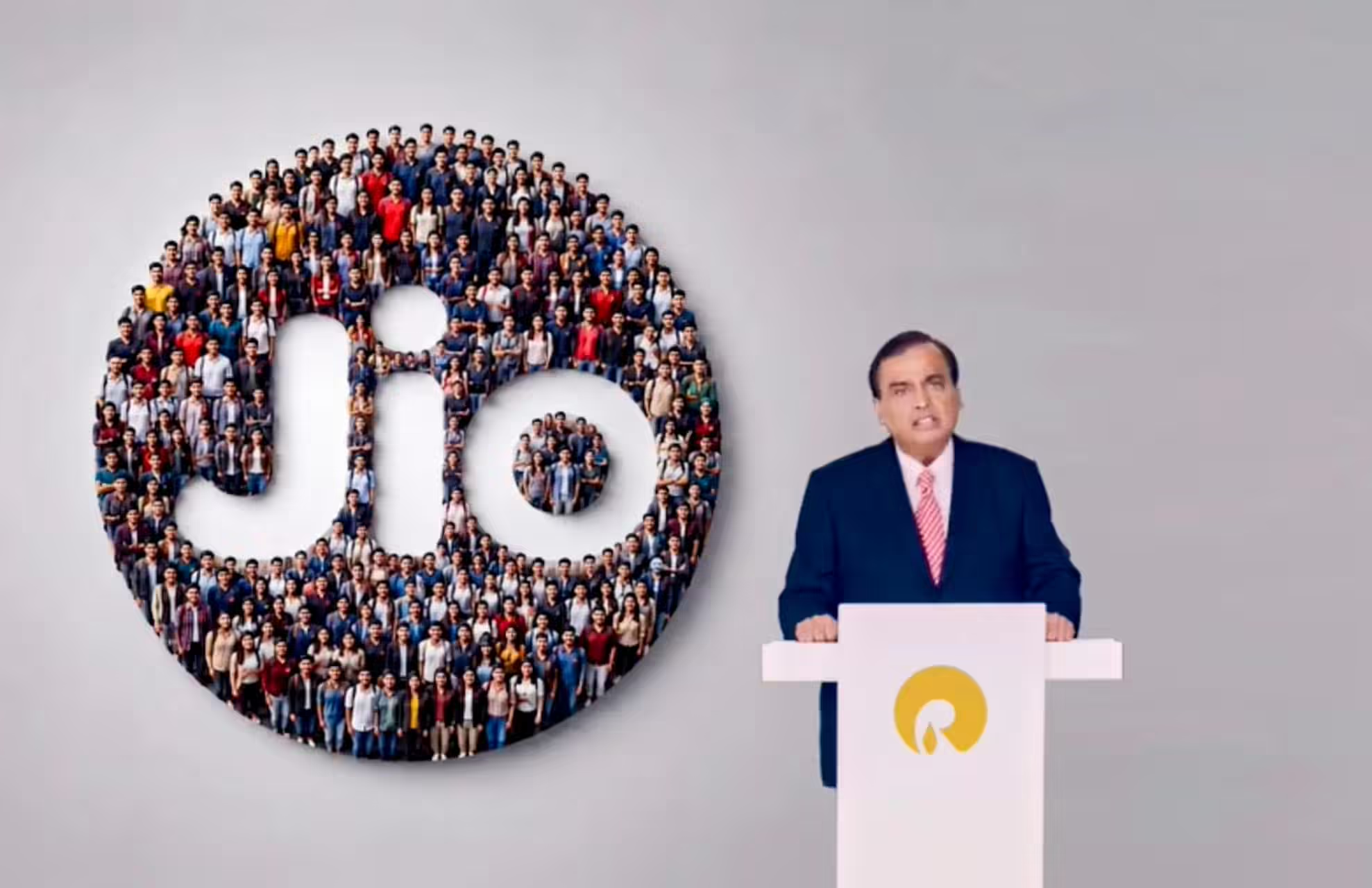
Jio Platforms filed its draft red herring prospectus with SEBI on Friday, setting in motion what could be one of India's largest IPOs. Hours earlier, Reliance Industries chairman Mukesh Ambani announced the listing at the company's annual general meeting, promising it would unlock significant value for investors.
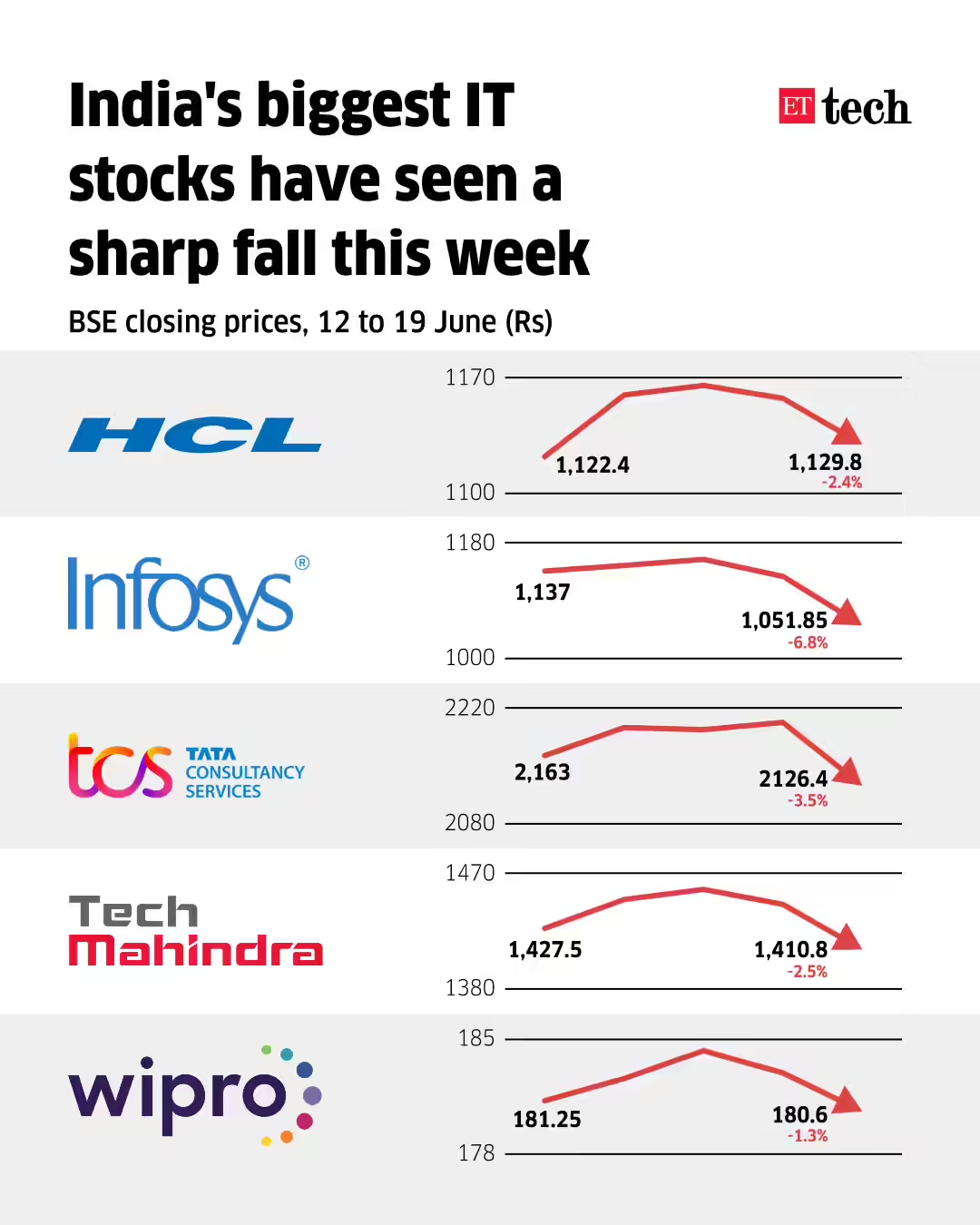
The same day delivered a gut punch to Indian IT services. Shares of TCS, Infosys, Wipro, HCL Technologies, and Tech Mahindra dropped between 4% and 8% after Accenture slashed the upper end of its annual revenue growth forecast. The contrast was stark: telecom's crown jewel racing toward public markets while the IT sector scrambled to digest yet another warning about discretionary spending.
What does Jio's IPO filing reveal?
The DRHP shows Jio will issue 27 crore new shares to investors. Reports estimate the offer size at roughly $3 billion. Most of that capital has a clear destination: debt reduction. The company has earmarked around Rs 27,500 crore to repay loans, in full or in part.
Reliance Industries held 66.43% of Jio Platforms' pre-issue paid-up equity share capital on the filing date. That structure matters. A fresh issue dilutes all shareholders proportionately as the company creates new shares, rather than simply funding an exit for existing backers.
Market analysts view this as a clear positive. The proceeds flow into the business rather than out of it, which typically lifts sentiment. Investors see the capital as fuel for growth rather than a cash-out. Analysts also expect the IPO to help assign a cleaner, standalone valuation to Jio's core telecom and digital businesses, separating them from the broader Reliance conglomerate.
Why did IT stocks crash after Accenture's guidance cut?
Accenture trimmed its FY26 revenue growth guidance to 3%-4% from 3%-5%. That looks like a small adjustment, but the market read it as confirmation that discretionary tech spending remains under pressure. Accenture shares plunged 11% in the US, and the contagion spread quickly to Indian IT.
The damage on Indian exchanges was swift. TCS fell 5.4% to Rs 2,083 on the BSE. Infosys dropped 8% to Rs 1,041. Wipro, HCL Technologies, and Tech Mahindra each shed between 4% and 5%. By close, the bleeding had slowed slightly, but the message was clear.
Accenture also projected Q4 revenue of $17.75 billion to $18.4 billion, marginally below Wall Street's $18.47 billion estimate according to LSEG data. The outlook signals continued caution regarding IT consulting and digital transformation spending, even as companies continue investing in artificial intelligence and cybersecurity.
What is Meta building in India?
Meta's global head of infrastructure, Santosh Janardhan, laid out sweeping plans in an interview with ET. The company recently announced a data centre project in Jamnagar. It's also building Project Waterworth, described as the world's longest and most sophisticated subsea cable system, with India as a major node.
“We have engineers there doing highly specialised work that, frankly, the rest of the world cannot do. Our ambitions in India over the next 5-10 years are enormous.”
— Santosh Janardhan, Meta's global head of infrastructure
Janardhan also addressed Meta's chip strategy. When dealing with tens or hundreds of gigawatts of compute, no single silicon provider can satisfy all requirements. Meta works with Nvidia, AMD, and others while running its own silicon programme. The Bengaluru operation builds custom silicon, and Janardhan holds his internal teams to the same standards as external vendors.
Delhi High Court upholds Telegram ban
The Delhi High Court on Friday upheld the Centre's temporary restriction on Telegram until June 22. The court called it a justified step to curb fake NEET (UG) 2026 re-exam papers and exam fraud ahead of the June 21 re-test. Telegram's petition was dismissed.

The ban highlights ongoing tensions between platform operators and regulators over content moderation during high-stakes events. NEET exam leaks have become a recurring scandal, and authorities are taking increasingly aggressive measures to prevent cheating.

What does this mean for Indian markets?
Two narratives are colliding. Jio's IPO represents India's telecom and digital infrastructure story, now mature enough to command a standalone public valuation. The IT services sector, by contrast, remains tethered to global spending cycles it cannot control.
The divergence isn't accidental. Jio disrupted Indian telecom starting in 2016 with free calls and cheap data, forcing consolidation and bringing hundreds of millions online. It now commands over 490 million subscribers. That domestic dominance offers insulation from the spending hesitancy plaguing IT services firms dependent on Western enterprise budgets.
Frequently Asked Questions
How much is Jio planning to raise in its IPO?
Reports estimate the Jio IPO at approximately $3 billion through the issuance of 27 crore new shares. The company plans to use around Rs 27,500 crore to repay debt.
Why did TCS and Infosys stocks fall on Friday?
Indian IT stocks fell after Accenture cut its FY26 revenue growth guidance to 3%-4% from 3%-5%, signaling continued weakness in discretionary tech spending. Infosys dropped 8% and TCS fell 5.4%.
What is Reliance's stake in Jio Platforms?
Reliance Industries held 66.43% of Jio Platforms' pre-issue paid-up equity share capital on the DRHP filing date.
Why is Telegram banned in India?
The Delhi High Court upheld a temporary restriction on Telegram until June 22 to prevent the spread of fake NEET 2026 re-exam papers ahead of the June 21 re-test.
What is Meta building in India?
Meta is building a data centre in Jamnagar, extending Project Waterworth subsea cables to India, and operating a custom silicon design centre in Bengaluru.
Logicity's Take
The timing of Jio's IPO filing is calculated. Reliance is capitalizing on a moment when digital infrastructure commands premium valuations while IT services face skepticism. By using proceeds primarily for debt reduction rather than expansion, Jio signals confidence in its existing cash flows. The real question is whether a standalone Jio valuation forces a re-rating of Reliance itself, or whether the sum-of-parts discount simply migrates elsewhere in Ambani's empire.
Another major tech IPO story with cross-border investment implications
Need Help Implementing This?
Tracking Indian tech markets or building financial data pipelines? Logicity covers the technical infrastructure behind these market moves. Subscribe for daily analysis on the intersection of technology and business strategy.
Source: Tech-Economic Times
Huma Shazia
Senior AI & Tech Writer
Produced with AI assistance and reviewed by the Logicity editorial team. Learn more in our Editorial Policy.




