Key Takeaways
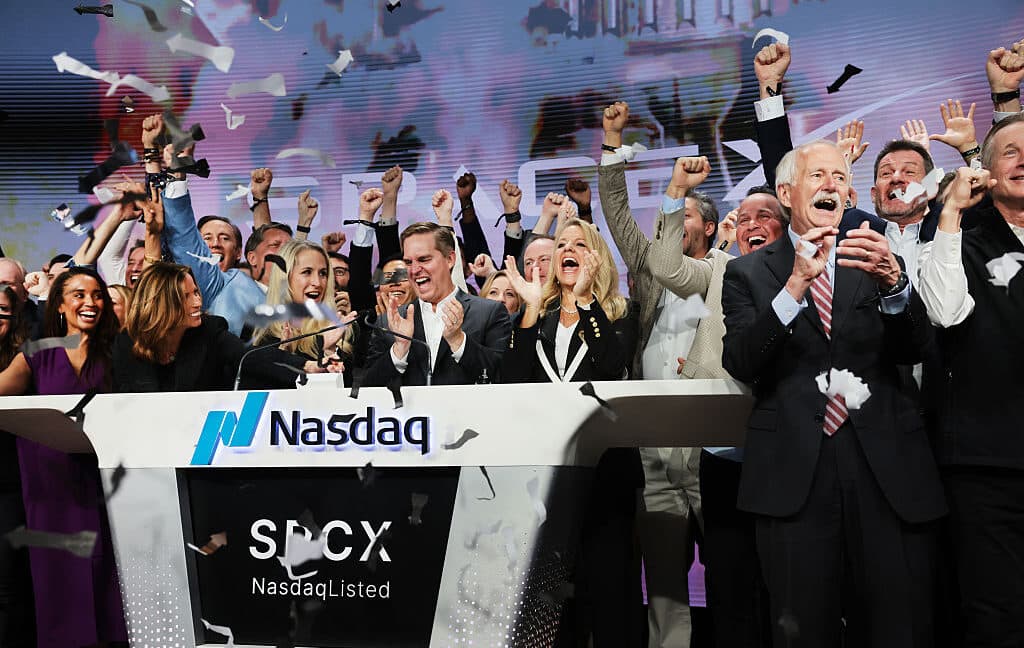
- At least a dozen investors from China, Hong Kong, and Russia acquired SpaceX stakes through US firm Tomales Bay Capital between 2018 and 2021
- One investor, David Su, has ties to Chinese space companies later sanctioned by the US for allegedly assisting the Wagner Group and Iran
- SpaceX barred Chinese and Hong Kong investors from its record IPO last week, citing regulatory and compliance risks
Chinese investors with ties to military contractors secretly acquired stakes in SpaceX while it was still private, according to documents obtained by ProPublica. The investments, made through a US middleman firm, raise questions about foreign access to America's most sensitive rocket company just as its record IPO made Elon Musk the world's first trillionaire.
The investor list, unsealed in a Delaware corporate dispute this month, shows at least a dozen investors with addresses in mainland China, Hong Kong, or Russia who bought into SpaceX between 2018 and 2021 through Tomales Bay Capital, a US-based firm. The stakes ranged from $800,000 to $40 million.
SpaceX built its business on sensitive government contracts, including building spy satellites for the Pentagon. While Chinese investment in US military contractors is not banned outright, it faces heavy regulatory scrutiny. The company acknowledged the sensitivity by barring investors from China and Hong Kong from its IPO last week, citing "regulatory and compliance risks."
Who are the Chinese investors in SpaceX?
One notable investor is David Su, co-founder of Beijing venture capital firm MPCi. An entity he owns invested $15 million in a SpaceX fund in 2020. Su's investment history draws particular attention because of his broader involvement in the space sector.
MPCi has backed several of SpaceX's Chinese competitors. Two satellite companies in Su's portfolio were sanctioned by the US government for allegedly assisting the Wagner Group, the Russian mercenary organization. One of those companies, Spacety, was sanctioned again last month for allegedly helping Iran attack US military forces. Spacety has denied providing support to Wagner.
MPCi also works with Chinese government investment funds. In 2025, China's Ministry of Science and Technology named Su's firm as a partner in a state-backed effort to develop the country's aerospace industry.
In a statement, MPCi said Su "has not received any nonpublic information of SpaceX." The firm described Su as "a Singapore citizen who resides in Singapore," though a 2024 profile noted he "spent almost 100 percent of his time in China over the last 20 years."
What national security concerns does this raise?
The US government has long alleged that China uses investments in sensitive industries for espionage and technology access. The question from a national security perspective is whether Chinese investors gained access to nonpublic information about SpaceX's technology or strategies.
“If an investor has conflicts of interests with other companies in China—if they could feed that information to competitors—it could be a national security concern.”
— Sarah Bauerle Danzman, Indiana University professor and former State Department advisor
Tomales Bay Capital's lawyer, Ryan Stonerock, denied any improper information sharing. He said the firm "has not provided any non-public, sensitive information regarding SpaceX to investors." The investors are passive limited partners who receive only quarterly valuations and fund financials, he said.
Stonerock also pushed back on characterizations of the investors' nationality: "The vast majority, if not all, of the investors included on the unsealed Tomales Bay investor list are not citizens of any foreign adversary." Some investors "may have mailing addresses listed" in Russia or China but are actually "citizens and residents of the United States or other countries," he said.
How did these documents become public?
The investor list emerged from a corporate dispute in Delaware involving Tomales Bay Capital. Court records were unsealed this month after ProPublica moved to make them public, assisted by attorneys from the Reporters Committee for Freedom of the Press and the law firm Shaw Keller.
Beyond China-linked investors, the documents also show an entity tied to the Qatari royal family took a stake in SpaceX. All the investors ProPublica identified from China or Russia appeared to be wealthy businesspeople or their children.
SpaceX did not respond to questions from ProPublica.
Musk's broader China exposure
The revelation adds complexity to Musk's already tangled relationship with China. Tesla manufactures many of its vehicles in Shanghai, giving Beijing significant leverage over Musk's largest business by revenue. His role as a major government contractor through SpaceX has already drawn scrutiny over potential conflicts of interest.
The timing matters too. SpaceX's IPO last week was the largest in history. The company's decision to exclude Chinese and Hong Kong investors from that offering suggests awareness of the regulatory and political sensitivities. But these earlier investments, made years before the public listing, apparently faced no such restrictions.
Frequently Asked Questions
Did SpaceX know about the Chinese investors?
The documents do not clarify what SpaceX knew about the ultimate investors. The investments were made through Tomales Bay Capital, a US middleman firm. SpaceX did not respond to ProPublica's questions.
Is Chinese investment in US defense contractors illegal?
No, but it is heavily regulated. The Committee on Foreign Investment in the United States (CFIUS) reviews such transactions for national security risks. The specific structure of these investments through a US intermediary raises questions about whether they received proper scrutiny.
What information did the Chinese investors receive?
According to Tomales Bay Capital's lawyer, the investors received only quarterly valuations and fund financials as passive limited partners. Both the middleman firm and MPCi deny that any nonpublic SpaceX information was shared.
Why did SpaceX bar Chinese investors from its IPO?
SpaceX cited "regulatory and compliance risks" when blocking investors from China and Hong Kong from its initial public offering, according to Bloomberg. This suggests the company was aware of the sensitivity around foreign investment.
Logicity's Take
The structure here is the story. Chinese investors did not buy SpaceX shares directly. They bought into a US-based fund that held SpaceX shares. This layered approach is common in private markets and makes tracking ultimate beneficial ownership difficult. Whether CFIUS reviewed these specific transactions remains unclear. The fact that SpaceX explicitly excluded Chinese investors from its IPO suggests the company and its bankers recognized the regulatory exposure. The earlier investments through intermediaries apparently faced no such barriers.
Need Help Implementing This?
If your company is navigating foreign investment compliance or CFIUS review processes, our team tracks these regulatory developments daily. Subscribe to Logicity Pro for real-time analysis of technology policy that affects your business decisions.
Source: Ars Technica
Manaal Khan
Tech & Innovation Writer
Produced with AI assistance and reviewed by the Logicity editorial team. Learn more in our Editorial Policy.




