Key Takeaways
- IREN raised its annual AI cloud revenue target from $3.7B to over $4B after signing $2.8B in new contracts
- Customers are prepaying 45% of GPU capital expenditures upfront to secure scarce AI compute capacity
- This prepayment model is becoming standard, turning AI developers into project co-investors
IREN announced $2.8 billion in new multi-year AI cloud contracts and raised its year-end annualized run-rate revenue target from $3.7 billion to more than $4 billion. The deals come with a twist: customers are prepaying roughly 45% of the GPU capital expenditures tied to those deployments. That structure reduces IREN's net funding burden and signals a broader shift in how AI infrastructure gets financed.
Why are AI customers prepaying for data center capacity?
GPU compute remains scarce. Training large language models and running inference at scale requires clusters of high-end chips that simply do not exist in sufficient quantity. When demand outstrips supply this dramatically, customers stop waiting for finished capacity. They put capital down early to guarantee their spot.
An IREN spokesperson told Data Center Knowledge that prepayments are now "an increasingly common feature of AI cloud contracts." Dave McCarthy, research vice president of cloud and edge infrastructure services at IDC, framed it more bluntly: "When AI labs and developers pay 45% upfront, they are essentially acting as project co-investors to lock down guaranteed capacity."
This is not charity. The AI developers get priority access to capacity that might otherwise go to competitors. The infrastructure provider gets cheaper capital than debt or equity markets would offer. Both sides share construction risk.
How does this change the economics of AI infrastructure?
Traditional data center builds rely on a mix of debt, equity, and operating cash flow. The operator assumes most of the construction risk. If demand softens before the facility fills, the operator absorbs the loss.
The prepayment model flips that. When a customer commits 45% of capex upfront, the infrastructure provider's equity check shrinks. The cost of capital drops. And the customer's locked-in commitment reduces demand risk almost to zero for those contracted megawatts.
IREN is not the only company benefiting from this dynamic. TSMC recently expanded its Arizona campus commitment to $265 billion as AI chip demand surges. Spain is building a $3.4 billion AI campus with on-site power generation. The scale of these projects makes traditional financing impractical. Customer prepayments fill the gap.
What does IREN actually operate?
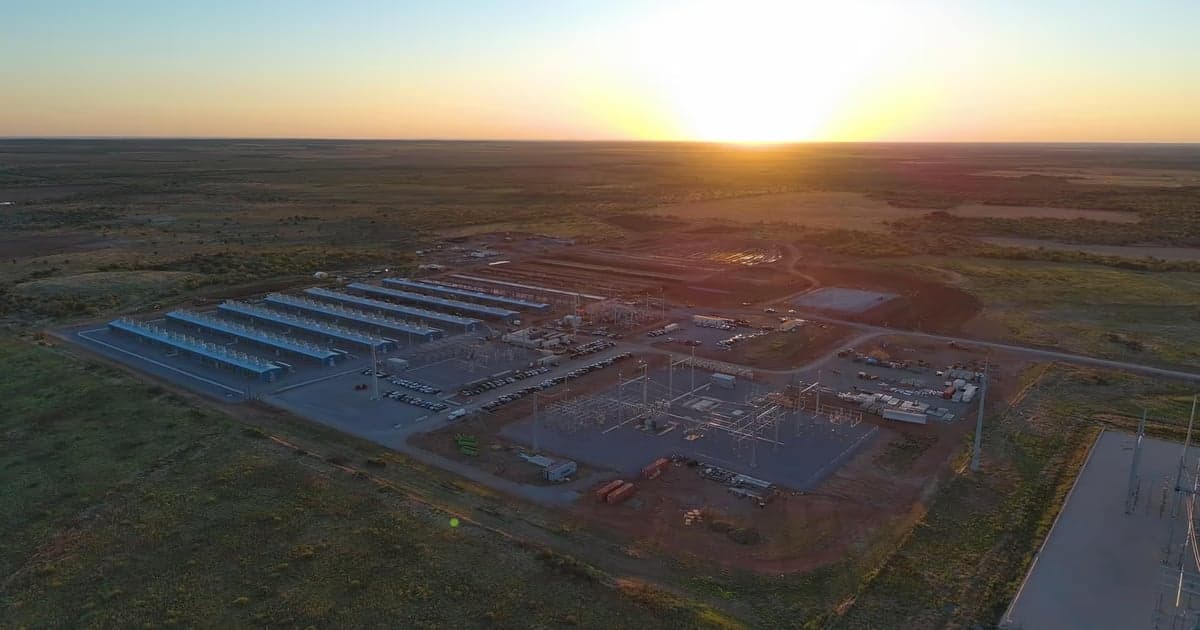
IREN, formerly Iris Energy, is an Australia-founded, NASDAQ-listed company that runs data centers powered by renewable energy. The company originally focused on Bitcoin mining but has pivoted aggressively toward AI and high-performance computing workloads. It operates facilities in Texas and British Columbia, with roughly 510 megawatts of operational power capacity and plans to scale past 2 gigawatts.
The pivot makes financial sense. Bitcoin mining margins fluctuate with crypto prices. AI compute contracts offer multi-year visibility, premium pricing, and customers willing to co-invest. For a company with renewable power infrastructure already in place, the switch to AI workloads is a matter of swapping out hardware and signing different contracts.
Who else is using this funding model?
The prepayment structure is spreading. Hyperscalers have long used similar arrangements for custom chip orders, reserving TSMC or Samsung foundry capacity years in advance. Now the pattern is moving downstream to data center operators.
CoreWeave, Lambda Labs, and other GPU cloud providers have reportedly negotiated similar terms with major AI labs. The specifics vary. Some contracts involve equity warrants. Others include take-or-pay clauses. But the underlying logic is consistent: AI developers need capacity badly enough to share the upfront cost.
What are the risks?
Customer concentration is the obvious one. IREN did not disclose how many customers account for that $2.8 billion. If two or three AI labs represent most of the contracted revenue, a strategic shift at any of them could leave IREN with stranded capacity.
Technology risk matters too. GPU architectures evolve quickly. A facility optimized for NVIDIA's current chips may need retrofitting when the next generation arrives. Prepayment contracts typically span multiple years. Both parties are betting that today's hardware choices will remain relevant.
Power constraints are another wildcard. IREN's renewable energy positioning is a selling point, but scaling to multiple gigawatts requires securing grid connections, generation assets, or both. Permitting delays have stalled data center projects across the US. The PJM grid operator issued its first backup-generator warnings during a recent heat wave, a reminder that power reliability is not guaranteed.
Logicity's Take
For SaaS founders, the IREN deal structure is worth studying even if you never touch data center hardware. The core lesson: when your product is scarce and customers are desperate, you can shift capital risk onto them. Enterprise SaaS companies increasingly demand annual prepayments, multi-year commitments, or upfront implementation fees. Infrastructure players are simply doing the same thing at billion-dollar scale. If you run a B2B product with genuine supply constraints, capacity pricing, or long sales cycles, consider whether prepayment terms could improve your cash efficiency without alienating customers.
Frequently Asked Questions
What is IREN's AI cloud revenue target?
IREN raised its year-end AI cloud annualized run-rate revenue target from $3.7 billion to more than $4 billion following the $2.8 billion in new contracts.
How much are AI customers prepaying for infrastructure?
IREN's recent contracts include customer prepayments covering roughly 45% of the GPU capital expenditures associated with those deployments.
Why are AI companies prepaying for data center capacity?
Demand for GPU compute far exceeds supply. Prepaying allows AI developers to secure guaranteed access to scarce capacity while reducing the infrastructure provider's funding requirements.
Is IREN still involved in Bitcoin mining?
IREN originated as a Bitcoin mining company but has pivoted significantly toward AI and high-performance computing workloads, which offer more predictable revenue and higher margins.
Context on the scale of AI infrastructure investment driving demand for GPU capacity
Need Help Implementing This?
Building infrastructure-intensive products or negotiating enterprise contracts with prepayment terms? Reach out to the Logicity team for guidance on capital-efficient growth strategies.
Source: datacenterknowledge
Huma Shazia
Senior AI & Tech Writer
Produced with AI assistance and reviewed by the Logicity editorial team. Learn more in our Editorial Policy.