Key Takeaways
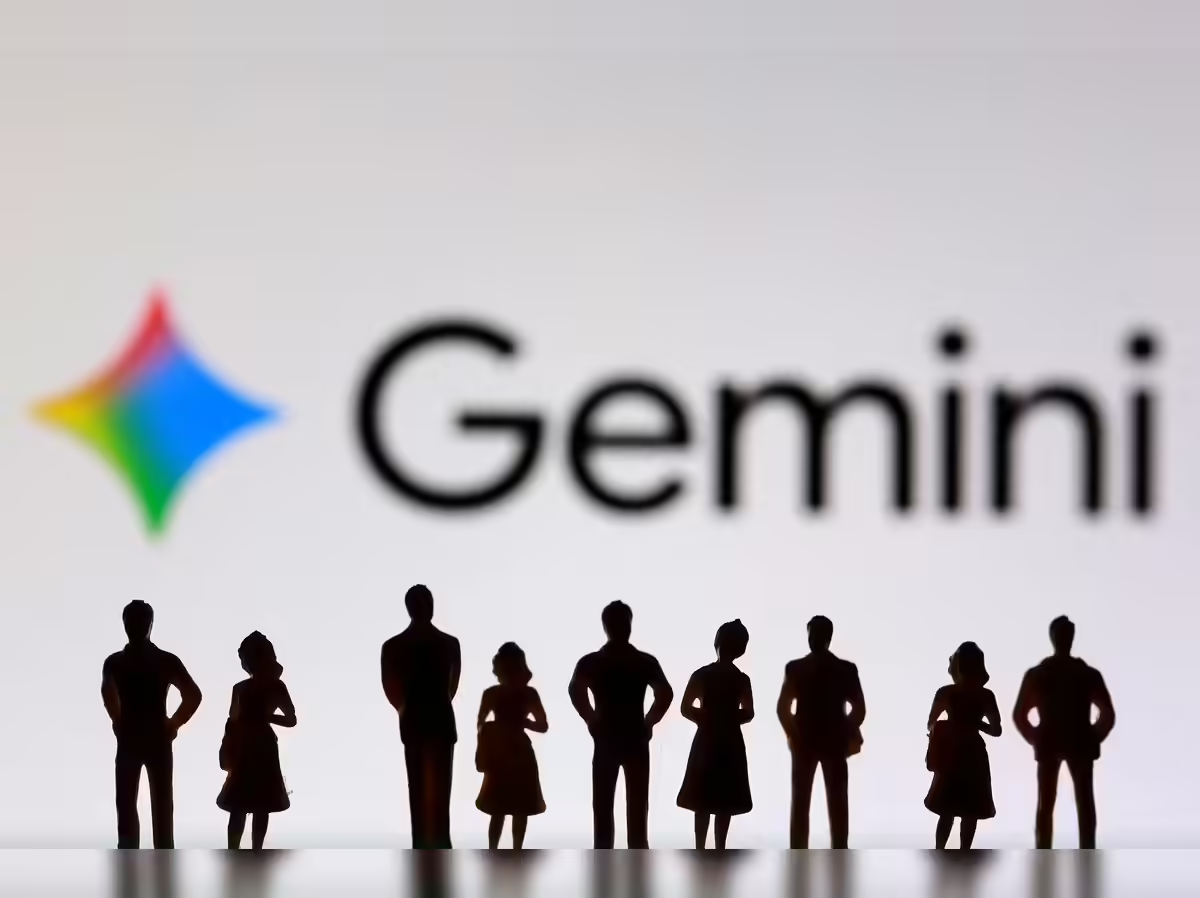
- Alphabet delayed Gemini 3.5 Pro, its flagship AI model targeting coding tools and agentic AI, past its June launch window
- The company raised 2026 CapEx guidance to $180-190 billion, with plans to raise $85 billion including a Berkshire Hathaway investment
- Cloud revenue is expected to grow 64% in Q2, but shares have dropped 9% since April amid AI spending concerns
Alphabet postponed the launch of Gemini 3.5 Pro, its next flagship AI model designed to compete in coding tools and autonomous AI tasks. The delay, originally slated for June, arrives just as the company prepares to report second-quarter results on Wednesday. Investors are watching closely, and not just for revenue numbers.
The bigger question: when will Alphabet's massive AI infrastructure bets start paying off?
Why Gemini 3.5 Pro matters for Alphabet's AI strategy
Gemini 3.5 Pro was built specifically to catch up in two high-stakes markets: AI-powered coding assistants and agentic AI, systems that can complete complex multi-step tasks autonomously. Both areas have become intensely competitive. OpenAI, Anthropic, and a growing crop of Chinese open-source models are all chasing the same enterprise customers.
The timing of this delay is awkward. Alphabet posted a 63% jump in cloud sales in late April, raising expectations that the company had found its footing in the AI race. Since then, shares have dropped about 9%, underperforming other Magnificent Seven stocks. The Gemini setback reinforces a narrative that Google is struggling to convert its technical capabilities into shipped products.
Personnel losses compound the problem. Noam Shazeer, co-lead of the Gemini project, left for a competitor. So did John Jumper, a Nobel laureate and key Google DeepMind executive. Losing senior talent during a flagship product delay sends a signal.
The spending question Wall Street keeps asking
Alphabet raised its 2026 capital expenditure guidance to between $180 billion and $190 billion in April. The company also announced plans to raise about $85 billion through equity offerings, including an investment from Berkshire Hathaway. That is a staggering amount of capital directed at data centers, custom AI chips, and infrastructure.
The investment thesis is straightforward: build the infrastructure now, monetize it through cloud services and AI products later. But investors are growing impatient with the timeline. Chinese open-source models from labs like DeepSeek are challenging American frontier models at a fraction of the training cost. If competitors can match performance while spending less, the ROI on these data center bets gets harder to justify.
“While Google is missing the boat on AI coding and that's a very real growing concern ... Google's strategy is all about the ecosystem.”
— Dave Wagner, portfolio manager at Aptus Capital Advisors
Wagner's point hints at Alphabet's structural advantage. The company controls Android, Chrome, Gmail, YouTube, and Search. That distribution network reaches billions of users daily. The question is whether ecosystem dominance translates into AI product adoption, or whether specialized players will capture the most valuable enterprise use cases first.
What Q2 earnings will reveal
Analysts expect Alphabet to report $116.93 billion in revenue for the April-June quarter, a 21.3% increase from the same period last year. Cloud sales are projected to grow at a similar 64% pace as Q1. Ad revenue, still the core business, should expand at a slower 13.7%.
The cloud growth rate is the number to watch. Google Cloud has secured major deals to supply custom AI chips to Meta Platforms and Anthropic. If that momentum continues, it validates the infrastructure investment. If growth decelerates significantly, expect questions about whether Alphabet is overbuilding capacity.
Despite recent weakness, Alphabet shares remain nearly 13% higher for the year, making it the second-best performer among the Mag 7 group. The company is not in crisis. But a delayed flagship model, combined with executive departures and competitor pressure, creates a narrative that management will need to address.
The Chinese open-source threat
One dynamic worth watching: Chinese labs are releasing capable open-source models that undercut American pricing models. For enterprise customers evaluating AI coding tools or workflow automation, the choice is no longer just between Google, Microsoft, and OpenAI. DeepSeek, Qwen, and others offer viable alternatives at lower cost.
This puts pressure on Alphabet's premium positioning. If Gemini 3.5 Pro does not ship with clear performance advantages, customers have cheaper options. The delay gives competitors more runway to capture enterprise accounts.
Logicity's Take
Alphabet's problem is not capability but cadence. DeepMind produces breakthrough research; the Gemini team builds competitive models. But shipping delays and talent departures suggest internal execution issues that research excellence cannot mask. For CTOs evaluating AI infrastructure partners, the practical question is whether Google Cloud's chip deals with Anthropic and Meta translate into better developer tools. If you are building agentic workflows today, Anthropic's Claude and OpenAI's Codex remain the defaults. Alphabet needs Gemini 3.5 Pro in production, not in development, to change that.
Frequently Asked Questions
Why did Alphabet delay Gemini 3.5 Pro?
Alphabet has not disclosed specific reasons, but the model was designed to compete in AI coding tools and agentic AI tasks. Delays typically indicate performance gaps, safety testing requirements, or integration challenges with existing products.
How much is Alphabet spending on AI infrastructure in 2026?
Alphabet raised its 2026 capital expenditure guidance to between $180 billion and $190 billion. The company also plans to raise about $85 billion through equity offerings, including an investment from Berkshire Hathaway.
Is Google Cloud still growing despite the Gemini delay?
Yes. Analysts expect Google Cloud revenue to grow approximately 64% in Q2 2026, driven by custom AI chip deals with Meta Platforms and Anthropic.
Which executives has Alphabet lost from its AI teams?
Notable departures include Gemini co-lead Noam Shazeer and Nobel laureate John Jumper, a key Google DeepMind executive. Both left for competing organizations.
How does Alphabet compare to other Magnificent Seven stocks in 2026?
Alphabet shares are up nearly 13% for the year, making it the second-best performer among Mag 7 stocks. However, shares dropped about 9% since late April amid AI spending concerns.
See where AI infrastructure and enterprise software are attracting the most capital
Need Help Implementing This?
Evaluating AI infrastructure for your organization? Logicity works with technical teams to assess cloud provider options, benchmark model performance, and build procurement strategies. Contact us to discuss your AI roadmap.
Source: Tech-Economic Times / ET
Huma Shazia
Senior AI & Tech Writer
Produced with AI assistance and reviewed by the Logicity editorial team. Learn more in our Editorial Policy.