Key Takeaways
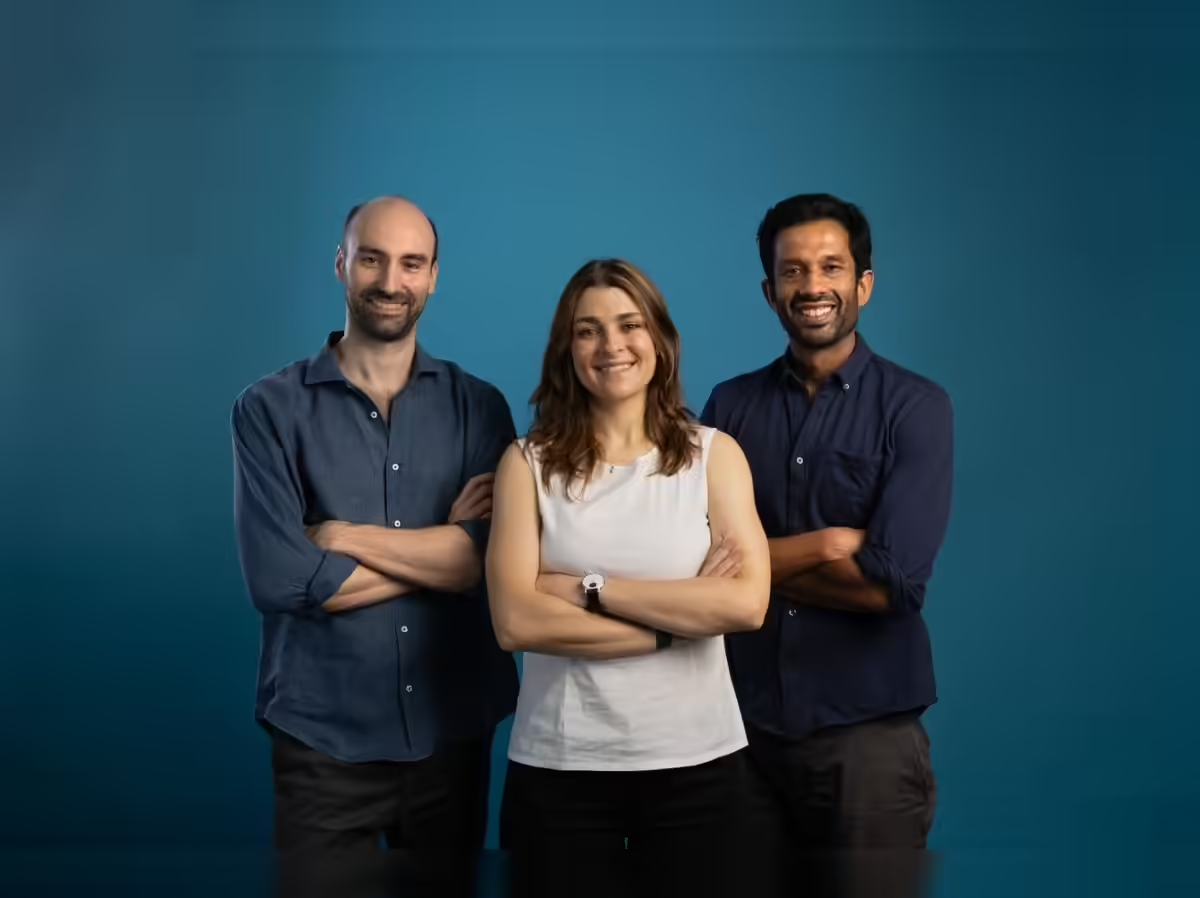
- Even Healthcare is negotiating a $50 million Series B led by Khosla Ventures, with Alpha Wave Global also participating
- The round would value the company at $300 million, up from $153 million in January 2024
- Even plans to open four to five new hospitals by year-end, with projected FY26 revenue of Rs 120-130 crore
Even Healthcare, the Bengaluru-based subscription healthcare startup, is in talks to raise $50 million in a Series B round that would value the company at roughly $300 million. That's nearly double its January 2024 valuation of $153 million, a jump achieved in under a year.
Khosla Ventures, which first backed Even in its $5 million seed round in 2021, is leading the round. Alpha Wave Global, which co-led Even's last funding tranche, will also participate. Even declined to comment on the fundraise.
Why investors keep doubling down
Khosla Ventures has participated in every round since seed. That kind of repeat conviction from a top-tier Silicon Valley firm signals more than passive follow-on. According to Tracxn, Even has raised $72.5 million across five rounds. Lightrock holds the largest external stake at 15.7%, followed by Khosla at 10.4% and Alpha Wave at 7.2%.
The company's model bundles health insurance with primary care. Members pay a monthly subscription and get access to Even's in-house doctors for virtual and in-clinic consultations, diagnostics, and tests. It's an integrated approach aimed at fixing the misaligned incentives that plague India's fragmented healthcare system.
Even currently covers 50,000 to 60,000 members in Bengaluru and 200,000 to 300,000 patients across India through individual and corporate health plans.
Hospital expansion and financial trajectory
Even opened its first hospital in Bengaluru last year and plans to add four to five more by year-end. The company claims its hospitals show lower readmission rates, shorter stays, and better patient outcomes than industry norms. These metrics matter: they directly affect the economics of a subscription model where the company bears the cost of care.
The financials tell a growth story with familiar startup trade-offs. Even reported Rs 27 crore in revenue for FY25 against a net loss of Rs 90 crore. Sources say FY26 revenue is projected at Rs 120-130 crore, roughly a 4x jump. The loss burn rate relative to that revenue growth will determine how far the $50 million extends.
Where Even fits in the healthtech funding wave
The round comes during a broader uptick in Indian healthtech funding. Medicine delivery startup Plazza, genomics company 4basecare, and at-home diagnostics firm Orange Health have all raised capital recently. So far in 2024, 84 healthtech startups have raised $432 million, matching last year's pace despite fewer deals (115 startups raised the same amount in the same period of 2023).
The competitive landscape is active. Plum focuses on group health insurance for companies. Loop Health offers a similar integrated model. Nova Benefits targets SMEs with benefits management. Even's differentiation rests on owning the care delivery infrastructure itself, not just the insurance wrapper.
What's driving the valuation jump?
A valuation nearly doubling in eight months demands explanation. Three factors likely contribute. First, the revenue growth trajectory from Rs 27 crore to Rs 120-130 crore shows the subscription model is scaling. Second, the hospital network gives Even tangible infrastructure that's harder to replicate than a software layer. Third, Khosla's willingness to lead again at a higher price signals insider confidence that outside investors often price in.
India's healthcare market is projected to reach $637 billion by 2025. With only about 5% health insurance penetration, the addressable opportunity is enormous. But the path from opportunity to capture is littered with failed attempts. Vertical integration, the strategy Even is pursuing, requires more capital and operational complexity than pure-play insurance or pure-play care.
Logicity's Take
Even's bet is that owning hospitals will give it better unit economics than competitors who pay third-party providers. That's the right structural thesis, but execution risk is high. Building hospitals is capital-intensive, and healthcare operations are notoriously difficult to scale. The 4x revenue jump projected for FY26 will test whether Even can grow the care side as fast as the subscription side. If the $50 million closes, watch whether it goes primarily to hospital expansion or member acquisition. That allocation will reveal how confident management is in the current model's profitability trajectory.
Frequently Asked Questions
What is Even Healthcare's business model?
Even offers a subscription-based healthcare service that combines health insurance with primary care. Members pay monthly for access to in-house doctors, virtual consultations, in-clinic visits, and diagnostics through Even's own hospitals.
Who are Even Healthcare's main investors?
Lightrock holds the largest external stake at 15.7%, followed by Khosla Ventures at 10.4% and Alpha Wave Global at 7.2%. Other investors include Sharrp Ventures, Rainmatter, 8VC, and Lachy Groom.
How many people does Even Healthcare cover?
Even covers 50,000 to 60,000 members in Bengaluru and 200,000 to 300,000 patients across India through individual and corporate health plans.
How much has Even Healthcare raised in total?
Even has raised $72.5 million across five funding rounds according to Tracxn. If the $50 million Series B closes, total funding would exceed $120 million.
Need Help Implementing This?
If you're building in healthtech or evaluating subscription healthcare models for your organization, reach out to the Logicity team for analysis on market positioning and funding trends.
Source: Tech-Economic Times / ET
Manaal Khan
Tech & Innovation Writer
Produced with AI assistance and reviewed by the Logicity editorial team. Learn more in our Editorial Policy.