Key Takeaways
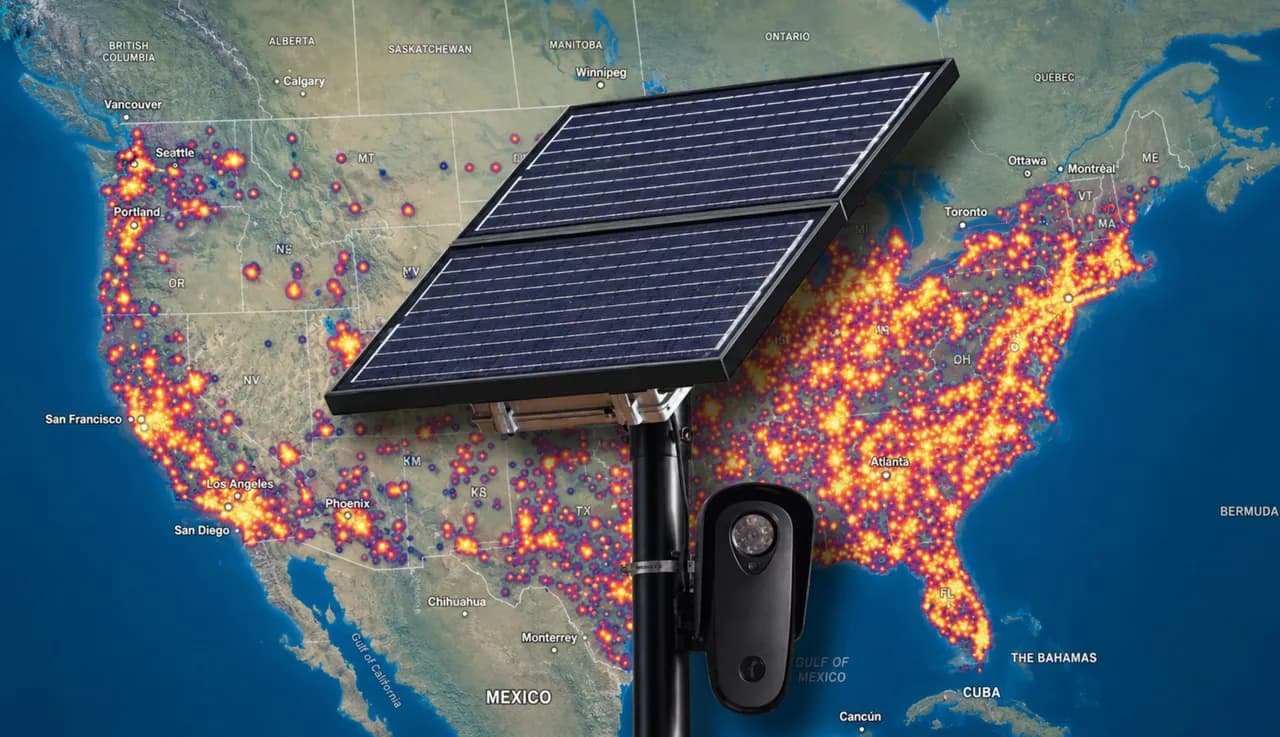
- 90,000 Flock cameras operate across the US, capturing plates, vehicle details, and travel patterns
- Data feeds into a shared network that lets police track movements across cities and states
- Many communities installed cameras without public hearings or resident consent
Flock Safety's AI-powered cameras have spread to roughly 90,000 locations across the United States, capturing license plates and vehicle details on roads, intersections, and neighborhoods. Most residents had no idea the cameras were installed until they spotted the small black boxes mounted on utility poles. In many towns, there was no public hearing, no vote, and no clear consent.
The company says over 12,000 customers now use its products, including police departments, businesses, schools, and homeowners associations. But the real concern isn't any single camera. It's the network. When thousands of cameras feed data into the same searchable system, they create a record of where people go, where they've been, and when.
What do Flock cameras actually capture?
Flock's Falcon cameras don't measure speed. Instead, they take six to twelve still images each time a vehicle passes. The company's automated license plate recognition software and machine learning then extract details: the plate number, make, model, color, body type, direction of travel, visible damage, aftermarket wheels, and even bumper stickers.
"The software analyzes images of vehicles and extracts characteristics such as license plates and other distinguishing features," Trevor Horwitz, co-founder and chief information security officer of cybersecurity firm TrustNet, told ZDNet. "Those become searchable, allowing investigators to look for a vehicle even if they don't have a complete license plate number."
None of this data stays on the roadside camera. All images and metadata transmit over cellular networks to Flock's cloud, where authorized users search records through a dashboard. Police can set alerts for plates tied to stolen vehicles, missing persons, or arrest warrants.
Why the network matters more than any single camera
One camera captures one moment. A vehicle passed this intersection at 3:14 PM. That's no different from what a pedestrian might see. But Flock cameras don't operate in isolation. They feed into a shared network spanning cities and states. Over time, that network builds a comprehensive record of someone's movements, whether or not they're suspected of any crime.
“A single plate hit reveals nothing more than what an ordinary person could see unaided, that a car is at a particular place at a particular time. A network is different, particularly when it involves lots of cameras, because over time it will become a comprehensive record of someone's movements.”
— Catherine Crump, clinical professor of technology law, UC Berkeley
Drive past a camera near a store, another near a school, another on the highway. Each image alone seems harmless. Combined, they reveal patterns: where you work, who you visit, which doctor's office you frequent, what time you come home.
Who can access the data?
Police aren't the only users. Businesses and HOAs can install Flock cameras on private property and access their own footage. But the system's real power comes from data sharing between agencies. A police department in one state can query records from cameras installed hundreds of miles away if both agencies participate in Flock's network.
Flock also integrates with cameras from partner manufacturers like Motorola. Those cameras don't run Flock's software natively, but data flows through platforms like Motorola's CommandCentral Aware and shared APIs. This lets law enforcement view records from both networks in one place.
Some towns pushed back. Most didn't.
In Saranac Lake, a village in upstate New York, residents protested after learning about the cameras last spring. Officials were forced to reconsider. The village ultimately voted to cancel its Flock contract, and the cameras came down.
That outcome is rare. In most communities, Flock cameras went up quietly. Residents learned about them only by spotting the hardware or reading about it later. The cameras are easy to miss, often resembling ordinary traffic equipment. They're battery or solar-powered and connect via cellular service, so they don't require the visible infrastructure of traditional surveillance systems.
A tool called DeFlock, created by privacy advocates, attempts to map known Flock camera locations. But coverage is incomplete, and new cameras appear regularly.
What are the risks?
Several concerns have emerged as the network scales:
- AI-powered searches: Investigators can query vehicles by partial plates, color, damage, or modifications, potentially surfacing innocent people who happen to match a description.
- Cloud storage and access: All data lives in Flock's cloud. Breaches, unauthorized access, or policy changes could expose millions of records.
- False alerts: The system can flag plates erroneously linked to warrants or stolen vehicle reports. A wrong match could lead to a traffic stop for someone who has done nothing wrong.
- Mission creep: Cameras installed for one purpose, like finding stolen cars, can be repurposed for broader tracking without additional oversight.
How to check if your city uses Flock cameras
Start with DeFlock, which compiles public records and reports of camera installations. You can also search your local government's meeting minutes or contracts for mentions of Flock Safety. Some police departments publicize the technology; others don't.
If you spot a small black box on a utility pole with a solar panel and no visible wires, it may be a Flock camera. The company's branding isn't always visible, so look for the distinctive rectangular housing.
Logicity's Take
Flock's rapid expansion exposes a gap in how cities procure surveillance technology. Most jurisdictions treat these as routine equipment purchases, not the infrastructure-level decisions they actually are. For tech leaders advising municipalities or managing fleet operations, the takeaway is clear: understand what data flows where before signing. Alternatives like community-owned ALPR systems with strict retention policies exist but require upfront governance work most buyers skip. The $2,500-$3,500 per camera annual cost looks cheap until you factor in the liability of storing millions of plate reads in a third-party cloud.
Frequently Asked Questions
Do Flock cameras record video?
No. Flock Falcon cameras capture still images, typically six to twelve per vehicle. They do not record continuous video.
How long does Flock store license plate data?
Retention varies by agency contract, but 30 days is a common default. Some agencies negotiate longer or shorter periods.
Can Flock cameras track my location in real time?
Not in real time, but the network can reconstruct your movements after the fact by querying historical plate reads across multiple cameras.
Are Flock cameras legal?
Yes, in most US jurisdictions. License plates are generally considered public information when visible on public roads. However, some states have laws restricting how long ALPR data can be retained.
Can I opt out of being tracked by Flock cameras?
No. If you drive on a road covered by a Flock camera, your plate will be captured. There is no opt-out mechanism for individuals.
Need Help Implementing This?
If your organization is evaluating surveillance, fleet tracking, or data governance tools, Logicity can connect you with experts who understand both the technology and the policy landscape. Reach out to our team for vendor-neutral guidance.
Source: Latest news
Huma Shazia
Senior AI & Tech Writer
Produced with AI assistance and reviewed by the Logicity editorial team. Learn more in our Editorial Policy.