Key Takeaways
- Apple's iPhone Air 2 will reportedly feature dual rear cameras, adding an ultrawide sensor to address the original model's single-camera limitation
- The device is codenamed V62 internally and expected to launch in Spring 2027 alongside the standard iPhone 18
- iPhone Air 2 will reportedly use Apple's A20 Pro chip, the same processor expected in iPhone 18 Pro models
Apple is developing a second-generation iPhone Air with dual rear cameras and improved battery life, according to Bloomberg's Mark Gurman. The device, codenamed V62 internally, will reportedly launch in Spring 2027 alongside the standard iPhone 18. This marks Apple's first attempt to address the primary criticism of the original iPhone Air: its single-camera setup.
The report, citing people familiar with Apple's plans, claims the iPhone Air 2 will add an ultrawide camera alongside the primary sensor. The original iPhone Air launched in September 2025 with extreme thinness as its defining feature, but that came at the cost of camera versatility. Apple appears to have heard the complaints.
What's new in the iPhone Air 2?
Gurman reports the iPhone Air 2 will retain a design similar to the current model. The thin form factor isn't changing. What's changing is what Apple packs inside it.
Beyond the dual-camera system, Apple is reportedly targeting improved battery life. The report doesn't specify whether this comes from a physically larger battery, more efficient chipset architecture, or software optimizations. It could be all three.
The processor is perhaps the most interesting detail. The iPhone Air 2 will reportedly run Apple's A20 Pro chip, the same silicon expected to debut in the iPhone 18 Pro models. This represents a shift from the typical Apple strategy of reserving Pro chips for Pro devices. Putting flagship silicon in the Air line suggests Apple sees this as a premium product category, not a budget alternative.
Why is Apple launching in Spring?
September has been Apple's iPhone month for over a decade. A Spring 2027 launch for the iPhone Air 2, alongside the standard iPhone 18, signals something bigger: Apple is diversifying its release calendar.
The move makes strategic sense. Apple's Q2 and Q3 have historically been weaker quarters for iPhone sales, with customers either recovering from holiday spending or waiting for September announcements. A Spring flagship launch gives Apple a revenue boost during the traditional mid-year lull.
There's precedent here. Apple already staggers iPad and Mac releases throughout the year. Applying the same logic to the iPhone lineup could smooth out quarterly revenue volatility, something Wall Street would appreciate.
Can Apple keep the Air thin with dual cameras?
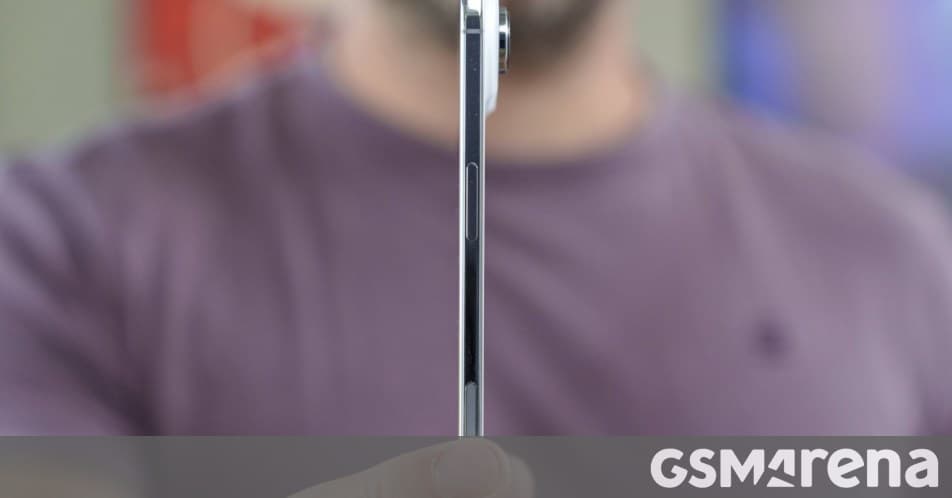
This is the engineering challenge Apple faces. The original iPhone Air's thinness required compromises. Adding a second camera module increases thickness requirements. Adding battery capacity for longer life increases them further.
Reddit's r/apple community is skeptical. Users there question whether Apple can maintain the "ultra-thin" marketing angle while cramming in more hardware. The math is difficult: camera sensors need depth, batteries need volume.
Apple's solution likely involves the A20 Pro's efficiency gains. If the chip draws less power than its predecessors, Apple can achieve better battery life without proportionally increasing battery size. The ultrawide camera could also use a smaller sensor than what's found in Pro models, trading some image quality for physical space savings.
How does this affect Apple's product lineup?
Apple now has four distinct iPhone tiers: the standard model, the Plus, the Air, and the Pro/Pro Max. The Air occupies an unusual position. It's not the cheapest, it's not the most capable, and it's not the largest. Its value proposition is pure design: the thinnest iPhone Apple makes.
Giving the Air 2 an A20 Pro chip and dual cameras narrows the gap with Pro models. The differentiators become telephoto lenses, ProMotion displays, and larger screens rather than raw performance. That's a tighter product strategy than Apple typically runs.
HackerNews discussion has focused on whether this complexity helps or hurts consumers. Apple's lineup is now five models deep (standard, Plus, Air, Pro, Pro Max), each with different trade-offs. That's a far cry from Steve Jobs' four-quadrant product matrix.
Timeline: The iPhone Air evolution
Frequently Asked Questions
When will the iPhone Air 2 be released?
According to Bloomberg's Mark Gurman, Apple plans to launch the iPhone Air 2 in Spring 2027, alongside the standard iPhone 18.
What cameras will the iPhone Air 2 have?
The iPhone Air 2 will reportedly feature dual rear cameras: a primary sensor and an ultrawide camera, up from the single camera on the original iPhone Air.
What chip will power the iPhone Air 2?
Reports indicate the iPhone Air 2 will use Apple's A20 Pro chip, the same processor expected in the iPhone 18 Pro models.
Will the iPhone Air 2 be thicker than the original?
Gurman reports the design will be similar to the current model, though it's unclear how Apple will accommodate dual cameras and improved battery life without adding thickness.
What is the iPhone Air 2's internal codename?
Apple is reportedly using the codename V62 for the iPhone Air 2 internally.
Logicity's Take
Apple's decision to put A20 Pro silicon in the Air line suggests the company views thinness as a premium feature worth flagship pricing, not a compromise for budget buyers. If the iPhone Air 2 ships with Pro-level performance and dual cameras, the remaining Pro differentiators (telephoto, 120Hz displays) start looking thin themselves. Apple may be testing whether customers will pay Pro prices for design alone.
Need Help Implementing This?
If your organization is evaluating mobile device strategy or fleet management for upcoming Apple releases, Logicity can connect you with enterprise mobility consultants. Contact our team for vendor-neutral guidance on hardware refresh cycles and procurement timing.
Source: GSMArena.com / Siddharth
Huma Shazia
Senior AI & Tech Writer
Produced with AI assistance and reviewed by the Logicity editorial team. Learn more in our Editorial Policy.