Key Takeaways
- Intel exited the NUC mini PC market in July 2023, handing the product line to ASUS under a non-exclusive license.
- ASUS discontinued the modular NUC Extreme series, ending the most upgradeable version of the tiny PC.
- Existing Intel NUCs remain capable machines for streaming, home labs, or secondary workstations with some maintenance.
Intel's NUC line, the tiny PCs beloved by tinkerers and IT departments alike, hasn't died. But the version that made enthusiasts excited, the modular NUC Extreme, is gone for good. ASUS took over Intel's mini PC business in 2024 after Intel's surprise exit, and while you can still buy NUCs with the ROG branding, the 7.5-liter modular chassis that could fit a real GPU is no longer part of the roadmap.
The NUC, short for Next Unit of Computing, shipped its first units in 2013. Intel positioned it as a boring, reliable alternative to full-sized desktops. Mobile processors. A 4x4 inch motherboard. Enough ports for office work. It was never meant to compete with gaming rigs. But over time, Intel experimented. Skull Canyon brought better graphics. Hades Canyon paired an Intel CPU with an AMD GPU, the only NUC to do so. And the Extreme line introduced a modular chassis where you could slot in a desktop GPU.
Why did Intel abandon the NUC?
In July 2023, Intel announced it was exiting the mini PC business entirely. The company wanted to refocus on its core semiconductor manufacturing, a move that made financial sense given the competitive pressure from AMD and the capital requirements of its foundry ambitions. Building and selling consumer hardware was a distraction.
Rather than kill the product line outright, Intel signed a non-exclusive licensing agreement with ASUS. The deal gave ASUS the rights to manufacture, sell, and support existing NUC models spanning the 10th to 13th generation Intel processors, plus the ability to develop future systems under the NUC brand.
What ASUS kept and what it killed
ASUS kept the standard NUC form factor alive. You can buy ASUS-branded NUCs today, though stock has been inconsistent. The ROG NUC targets gamers who want something compact, and it performs well enough for the audience it's chasing.
What ASUS killed was the NUC Extreme, specifically the Raptor Canyon variant. That 7.5-liter modular chassis was the closest Intel ever got to building a truly upgradeable tiny PC. You could swap out the GPU. You could expand storage. It was the enthusiast's answer to the Mac Mini, except you could actually open it up and make it yours.
The decision makes business sense. Modular designs are expensive to manufacture and support. The market for people who want a PC smaller than a shoebox but also want to install their own graphics card is narrow. ASUS likely looked at the numbers and decided the ROG NUC could capture most of the high-performance mini PC demand without the complexity.
What made the original NUC worth keeping?
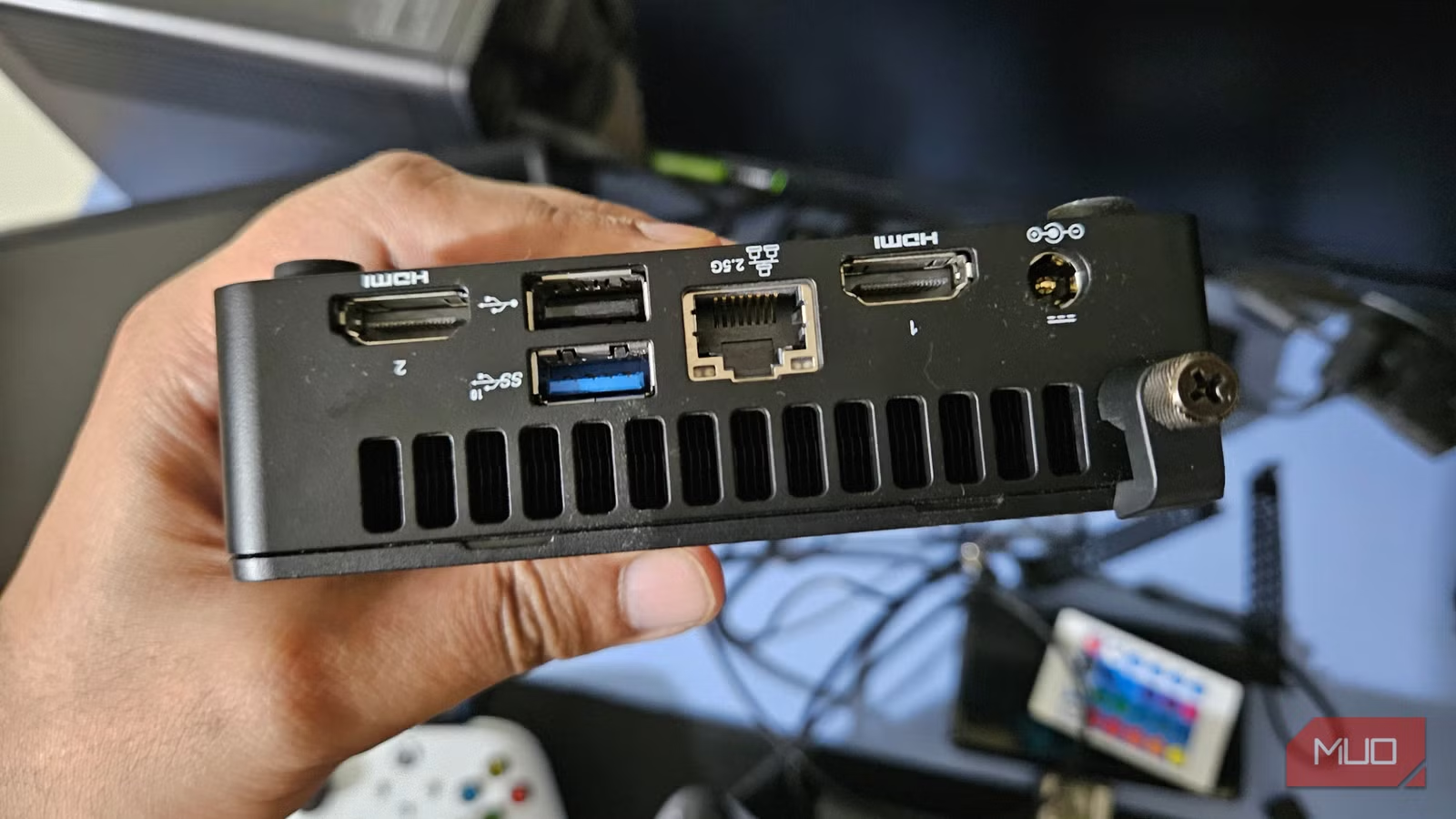
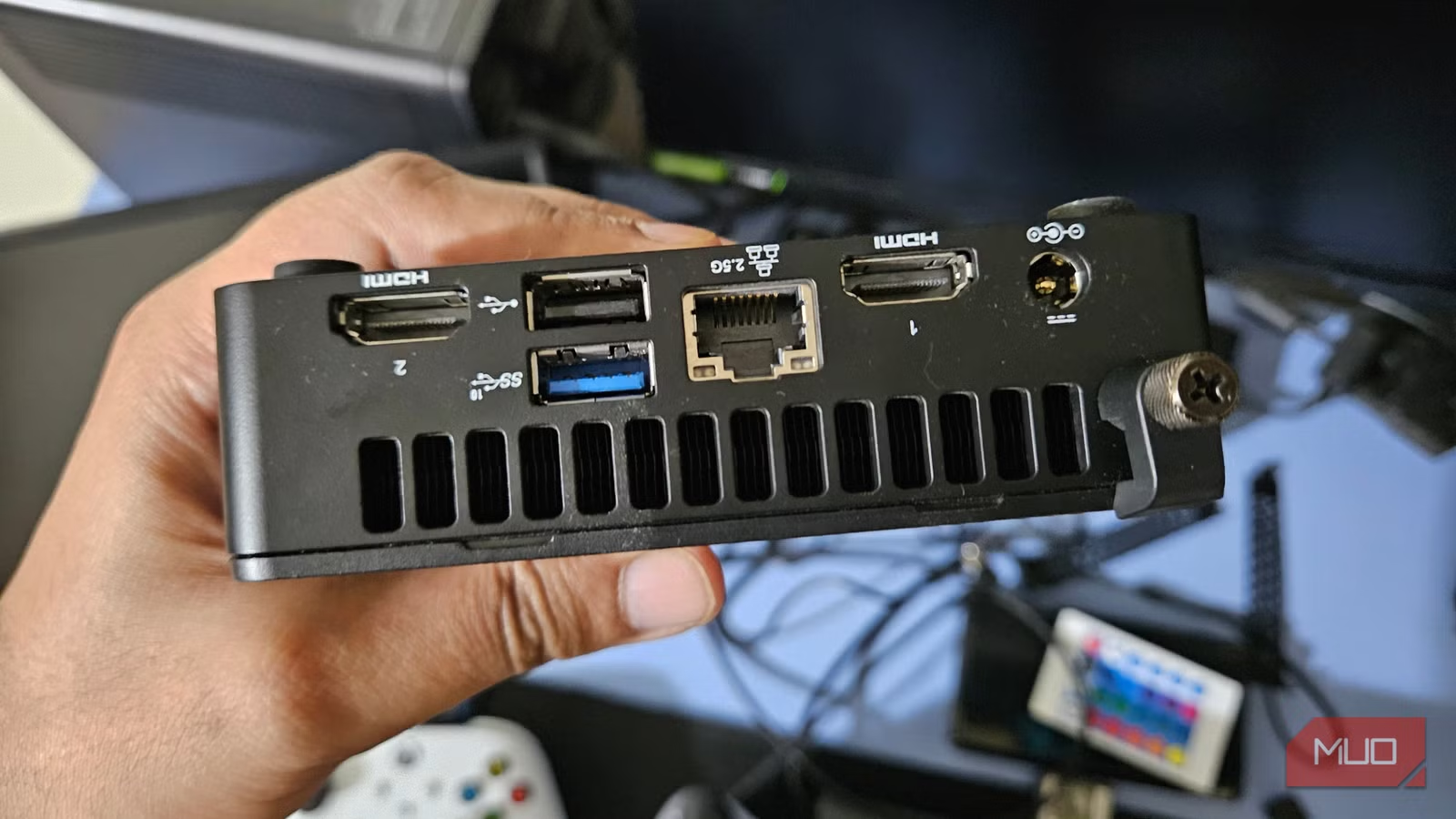
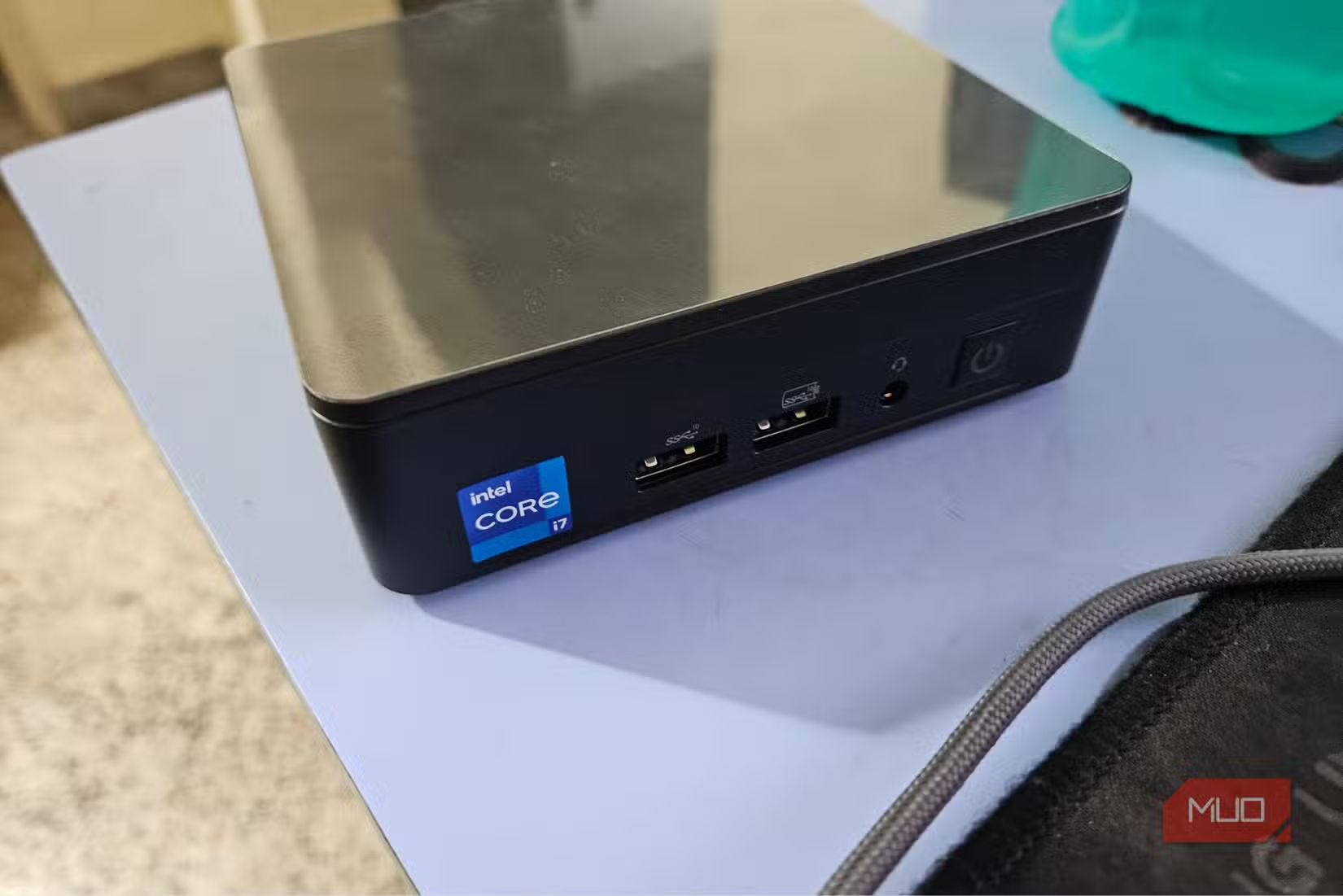
For a machine built on a 4x4 inch motherboard, the NUC was surprisingly upgradeable. Most models included SODIMM RAM slots, a replaceable Wi-Fi card, and multiple storage options. Many shipped with Thunderbolt ports, which opened the door for external GPUs. Some included 2.5 Gigabit Ethernet, making them appealing for home lab setups.
The CPU was soldered, as were the graphics in most cases. But for a machine this size, the upgrade path was generous. You could double your RAM, swap in a faster NVMe drive, and keep the machine relevant for years.
What to do with an old Intel NUC
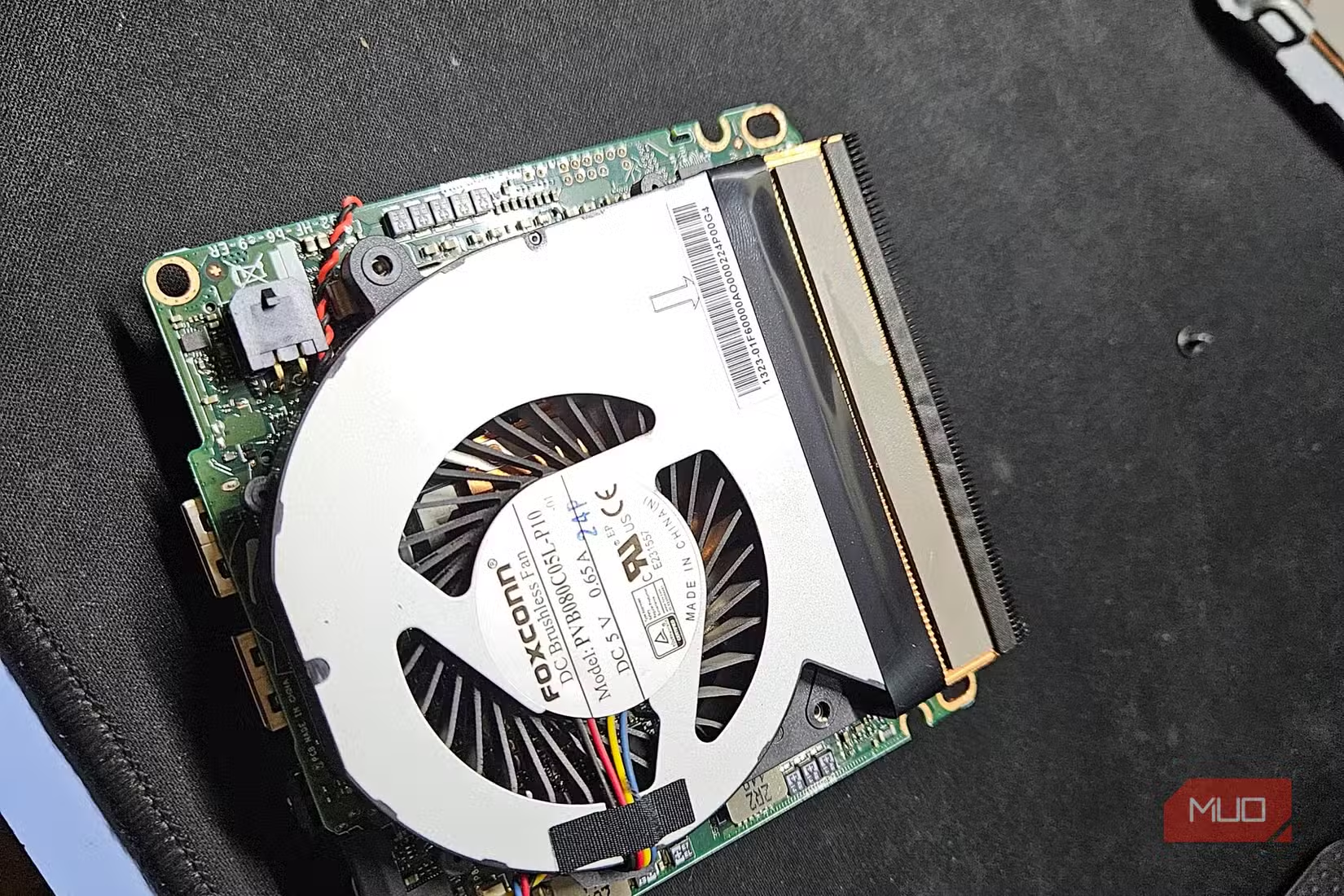
If you still have an Intel NUC sitting in a drawer, it's worth reviving. Start by disassembling it and cleaning out the dust. A fresh application of thermal paste can drop temperatures noticeably on these compact machines.
From there, the use cases are straightforward. Intel's integrated graphics support a wide range of video codecs, which makes older NUCs excellent streaming boxes, especially running Linux. They also work well as secondary PCs for browsing and office tasks, or as lightweight servers for home automation and network storage.
The Hackintosh community used to prize NUCs for their compatibility with macOS. That era ended when Apple moved to its own silicon. But for Linux or Windows workloads, the hardware holds up.
The broader trend: niche products don't survive inside big companies
Discussions on Hacker News after the Intel exit announcement kept returning to the same theme. Large tech companies routinely kill niche products that have devoted followings but don't move the revenue needle. Intel needed to focus on chips. The NUC, for all its fans, was a distraction.
The non-exclusive license model offers a middle path. ASUS gets to keep the brand alive. Third-party manufacturers can still build compatible systems. But the quirky experimental designs, the ones that made the NUC Extreme interesting, require a company willing to take risks on small markets. That's not ASUS's business model with this acquisition.
Another compact computing option for enthusiasts building small form factor systems.
Logicity's Take
The NUC's fate illustrates a recurring pattern in tech hardware: products built for enthusiasts rarely survive inside companies optimizing for scale. Intel's exit was financially rational. ASUS's decision to drop the Extreme line was equally rational. The losers are the small number of users who wanted a modular tiny PC and are now stuck buying used hardware or waiting for a smaller manufacturer to fill the gap. That gap may stay unfilled.
Frequently Asked Questions
Can you still buy Intel NUC mini PCs?
Yes. ASUS holds the license and sells NUCs under its own brand, including the gaming-focused ROG NUC line. Stock availability varies by region.
Why did Intel stop making NUCs?
Intel exited the mini PC market in July 2023 to refocus on semiconductor manufacturing, its core business facing competition from AMD and capital demands from foundry expansion.
Is the NUC Extreme still available?
No. ASUS discontinued the modular NUC Extreme line, including the 7.5-liter Raptor Canyon chassis that supported desktop GPUs.
What can I do with an old Intel NUC?
Older NUCs work well as streaming boxes, home lab servers, or secondary PCs for light tasks. Clean the internals, apply fresh thermal paste, and install Linux or Windows depending on your needs.
Are third-party NUC alternatives still being made?
Yes. Intel's license to ASUS is non-exclusive, so other manufacturers can build compatible systems. However, options have been declining.
Need Help Implementing This?
If you're evaluating mini PCs for your office, home lab, or edge computing deployments, reach out to the Logicity team. We can help you identify which current ASUS NUC models or third-party alternatives fit your specific workload and budget requirements.
Source: MakeUseOf
Manaal Khan
Tech & Innovation Writer
Produced with AI assistance and reviewed by the Logicity editorial team. Learn more in our Editorial Policy.