India's Parliamentary Standing Committee on Finance has proposed creating a self-regulatory organisation to oversee virtual digital assets, marking the first concrete step toward a crypto framework beyond taxation. The recommendation arrives as weekly startup funding dropped 26% to $209 million, and ShareChat signals an IPO after turning profitable.

What the parliamentary panel actually proposed
OECD- CARF 2027 II New Crypto Tax Rule in india- No more Non FIU Transactions
The panel wants an interim SRO to operate under a designated regulator, filling the gap left by excluding virtual digital assets from securities law. It also seeks clarity on tokenised securities and crypto investment products under the proposed Securities Markets Code, 2025.
India's current approach is blunt: a 30% tax on crypto gains and mandatory transaction reporting. No market structure exists. Startups and investors operate in a grey zone where compliance requirements exist but clear rules do not.
Crypto executives see this as progress. The conversation has moved beyond punitive taxation toward investor protection and distinguishing between different digital asset classes.
But industry leaders want a split regulatory model. Tokenised securities should fall under SEBI, payment-linked assets under RBI, and a dedicated framework should govern crypto-native assets. They also want the SRO's powers limited to audits, standards and grievance redressal, with licensing and enforcement staying with the regulator.
Funding slump: who got the biggest cheques
Indian startups raised $209 million across 14 deals in the week ending July 26, down from $281 million across 24 deals the week before. Zetwerk led with $52 million, followed by Veriqus at $40 million.
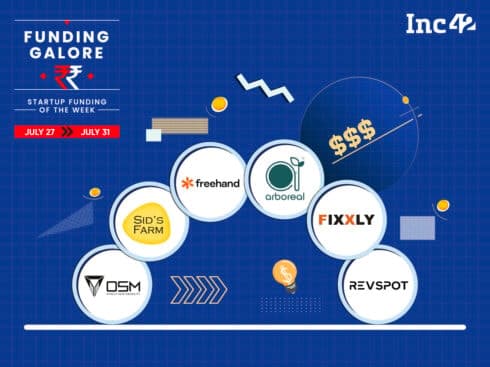
Manufacturing topped the sectors at $52 million. SaaS followed with $50 million across two deals. AI startups managed just $259,000, a 60% weekly decline.
Early-stage activity was thin. Seed-stage startups raised $1.8 million across three deals, while Series A rounds totalled $31.7 million across three rounds. Norwest was the most active investor, backing two startups.
Startup stocks: 43 of 59 ended in the red
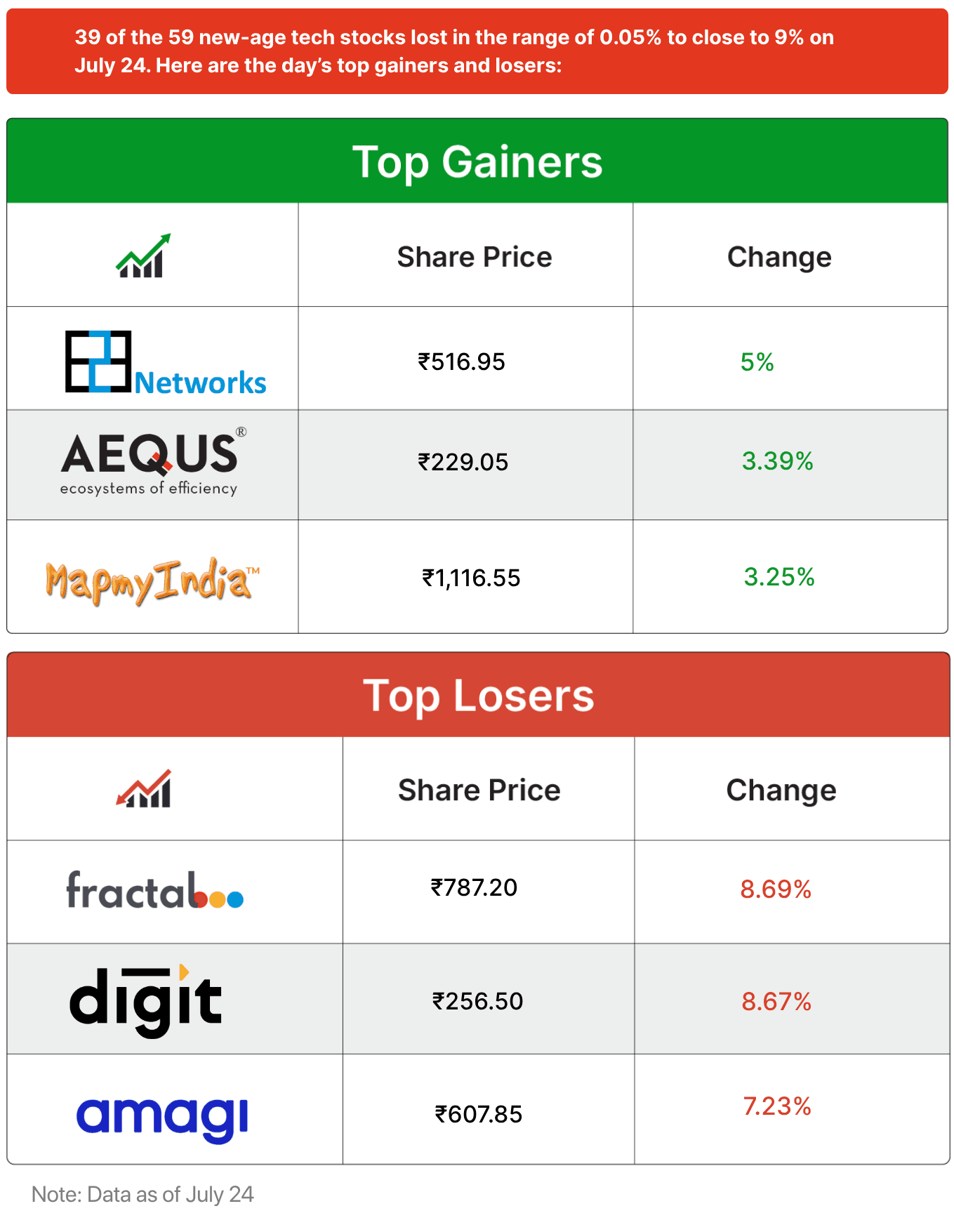
Of 59 new-age tech stocks tracked by Inc42, only 16 gained ground last week, rising between 0.15% and 29%. The other 43 fell between 0.03% and over 9%.
BlueStone and E2E Networks posted the biggest gains. Swiggy and Ather were the biggest losers. Combined market capitalisation of the 59 companies fell from $142.41 billion to $138.25 billion.
Markets will watch the US Federal Reserve's policy decision, crude oil prices, domestic macro data and Q1 FY27 earnings for direction.
Another Indian startup IPO facing market pressure on valuation
ShareChat's path to a $400M IPO
ShareChat crossed ₹1,000 crore in top line in FY26 and reported profitability in Q1 FY27. The social media company is now preparing for a $400 million IPO next year.
The turnaround came from stronger unit economics and sharper priorities. Microdramas contributed 25% of FY26 revenue. The company is also using AI to improve content distribution and engagement.
This is a different company from the one that spent years fighting slowing growth, layoffs and monetisation struggles.

Contrast in IPO readiness and profitability among tech companies
FY26 scorecard: profits rising, but losses persist
Of 65 startups that have released FY26 numbers, 49 generated combined net profits of ₹12,016 crore. The remaining 16 reported cumulative losses of ₹14,932.4 crore.
The 65 companies generated ₹2.58 lakh crore in operating revenue in FY26, up 50% from ₹1.7 lakh crore in FY25. Scale is growing. Sustainable profitability remains uneven.
Logicity's Take
The parliamentary panel's SRO proposal is significant, but execution details will determine whether it brings clarity or creates another layer of bureaucracy. The split regulatory model industry leaders want makes sense, but coordinating between SEBI, RBI and a new crypto regulator could slow rulemaking further. For fintech teams watching this space, the 30% tax isn't changing soon, but the market structure gap might finally close. Startups building crypto products should track the Securities Markets Code, 2025 closely.
Need Help Implementing This?
Logicity's fintech coverage helps teams track regulatory shifts, funding trends and market moves. Subscribe to our newsletter for weekly briefings or reach out for partnership inquiries.
Source: Inc42 Media / Team Inc42
Huma Shazia
Senior AI & Tech Writer
Produced with AI assistance and reviewed by the Logicity editorial team. Learn more in our Editorial Policy.