India's leading mutual funds have rejected Zepto's proposed IPO valuation of $4-5 billion, demanding a 30-40% discount before they'll participate. The pushback forces the quick-commerce startup to scramble for alternative investors with its target launch just two weeks away.

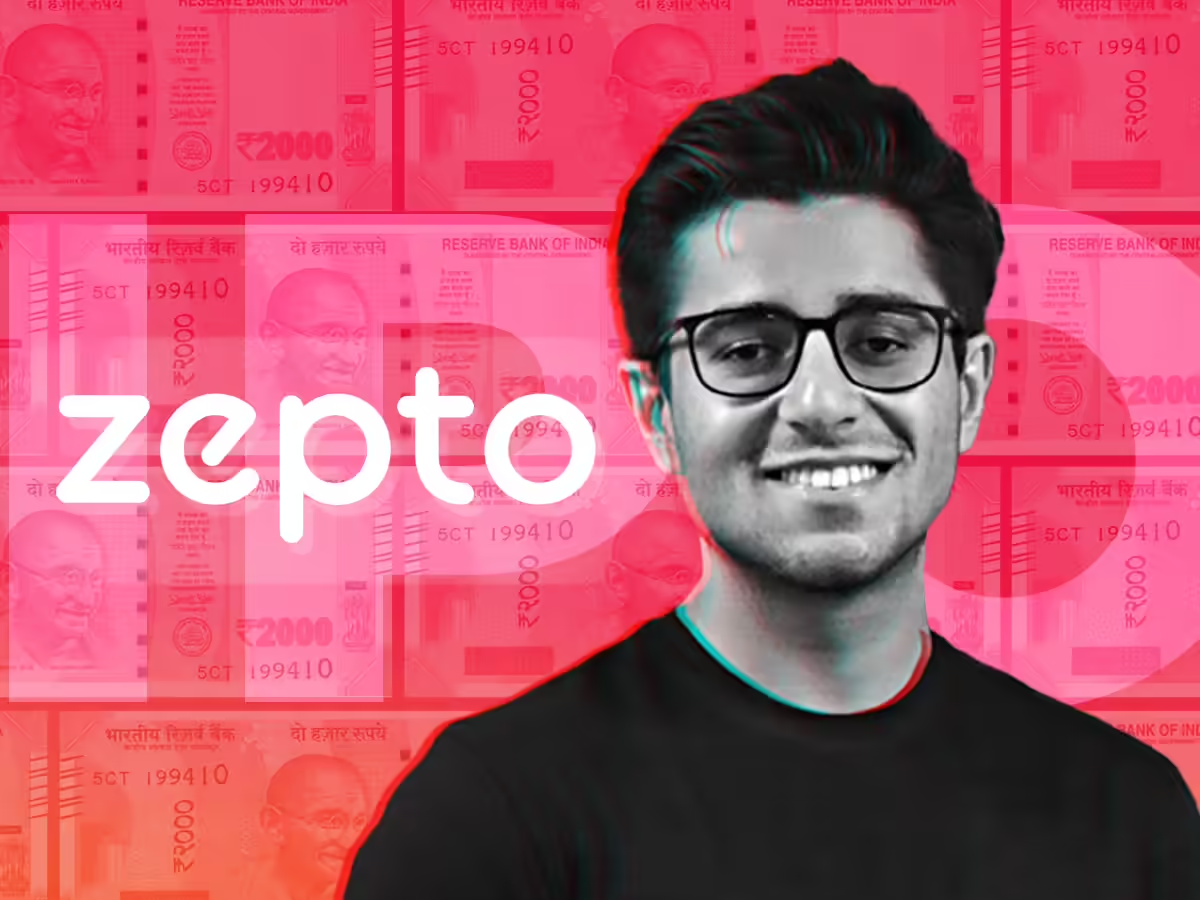
The standoff marks a significant reality check for Zepto, which raised $450 million from US pension fund Calpers at a $7 billion valuation in October 2025. In nine months, the company has already halved its expectations. Mutual funds want it halved again.
What's driving the mutual fund resistance?
Domestic MFs Push Back On Zepto's IPO Valuation: Sources
Zepto's bankers and key investors have responded by intensifying discussions with money managers while simultaneously courting high net worth individuals and large family offices. The company hopes to wrap up negotiations with asset managers by Tuesday, though no mutual fund has accepted its proposal yet.
"What we are saying is if you can get the participation of the majority of the other big funds, we will also look into it again," a top official at a large mutual fund told Economic Times. Translation: nobody wants to be first through the door at this price.
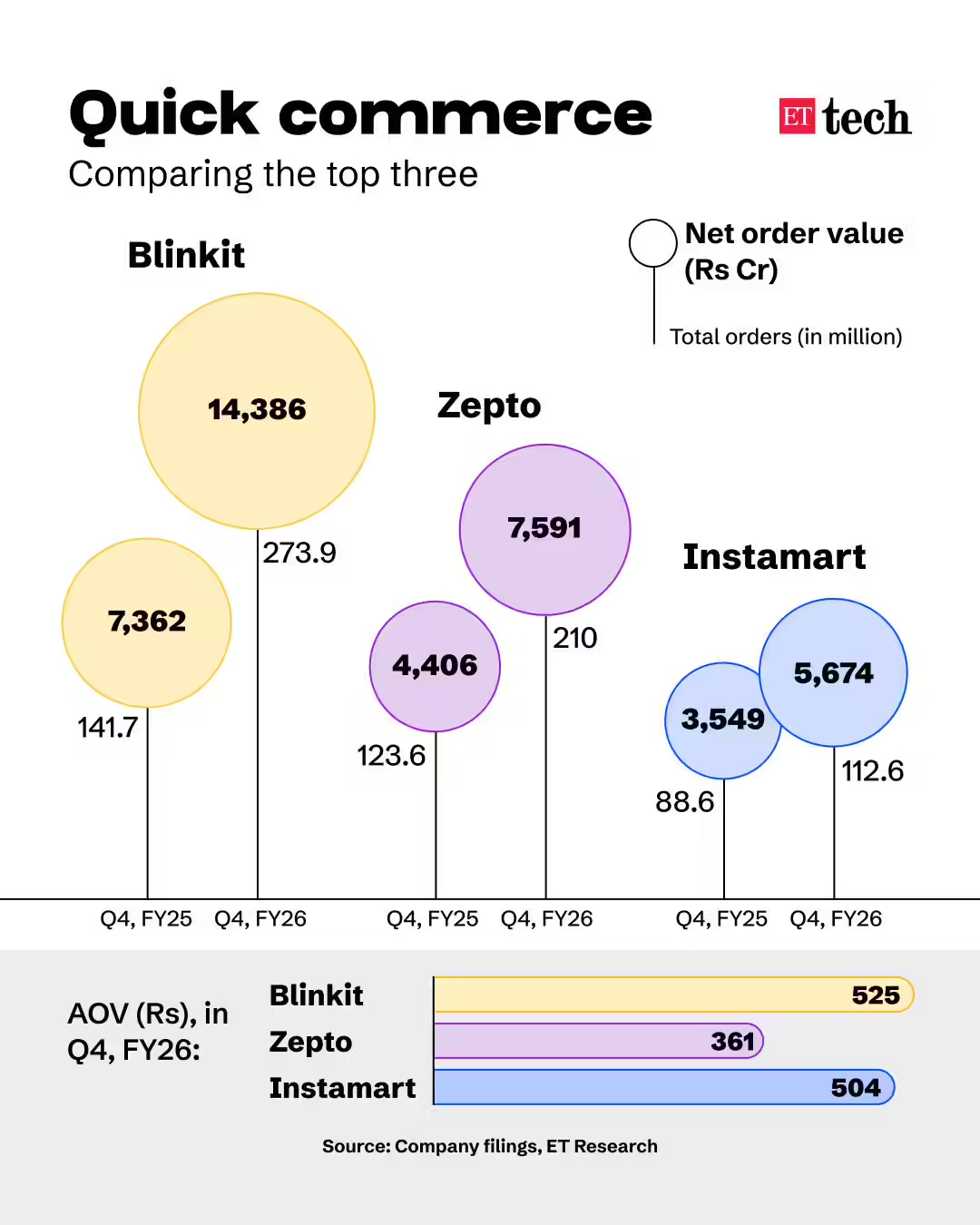
The company may also shrink its IPO size. ET reported on July 17 that Zepto could raise $650-700 million in fresh capital instead of the originally planned $850 million. A smaller raise at a lower valuation would limit dilution, but it signals weakened momentum heading into public markets.
PE firms pivot hard from IT services to AI
While Zepto negotiates, private equity firms are rewriting their India tech playbook entirely. Capital is flowing out of traditional IT services and software toward AI-native startups, particularly those automating workflows at the application layer.

Kedaara Capital has planned a $30-40 million investment in healthcare AI startup RapidClaims at a valuation of $150-160 million. EQT Partners is in talks to invest $100-120 million in enterprise AI integration startup UnifyApps. Creaegis and A91 Partners have backed AI startups Emergent and Deccan AI.
The numbers tell the story clearly. AI-native companies accounted for 59% of software and AI deal value across PE and VC transactions in H1 2026, up from 19% a year earlier, according to DC Advisory. Deal value for non-AI software companies dropped 40% over the same period.
"A large part of India's opportunity will be in AI enablement and applications that use domain expertise, proprietary data and workflow ownership to solve real business problems," said Neeraj Shrimali, managing director at Avendus Capital. The focus is on businesses where AI creates durable competitive advantage, not generic wrapper products.
Related AI company funding and IPO decision
Other signals from Indian tech
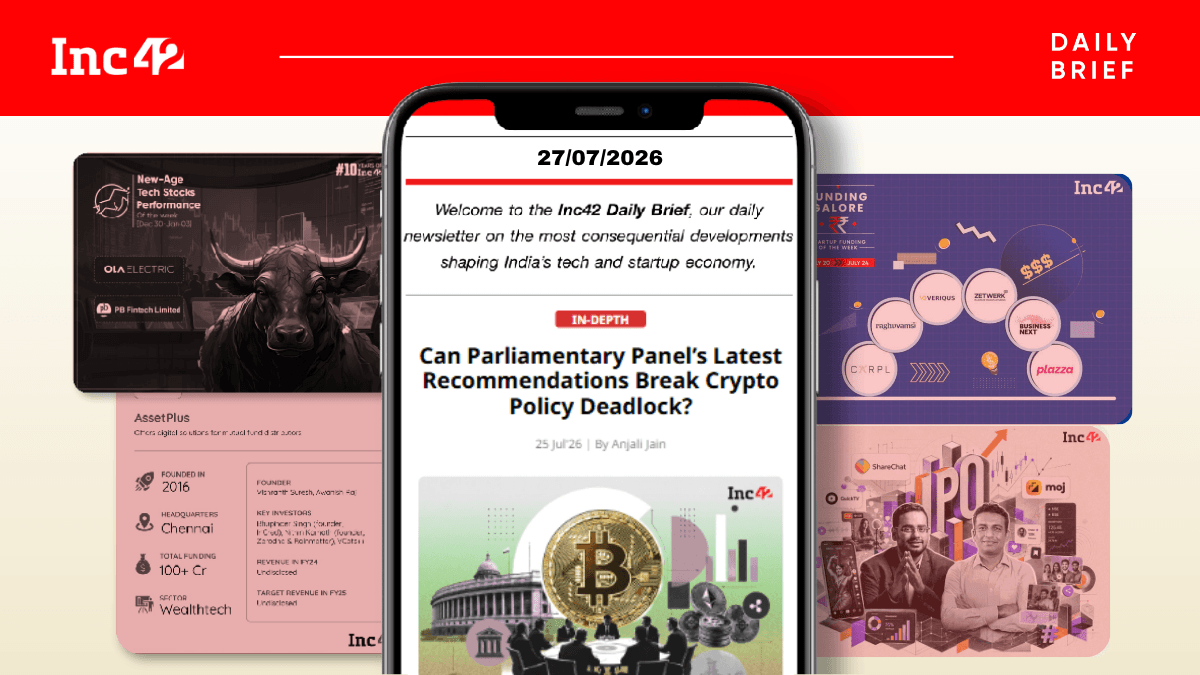
The newsletter also flagged price pressure hitting Infosys as IT services face commoditization. PhonePe released its FY26 report, though specifics weren't detailed in the dispatch.

The Cockroach Janta Party protests, which ended Sunday after union minister Dharmendra Pradhan resigned, exposed a gap between brand cause marketing and actual political engagement. Most brands stayed silent, with experts noting that bad timing on a political post can damage reputation faster than no response at all.


Logicity's Take
Mutual funds demanding 30-40% haircuts on Zepto's already-reduced valuation reflects broader skepticism about quick-commerce unit economics, not just one company's pricing. For founders watching this play out: public market investors are done paying private market premiums. The PE pivot to AI-native startups also signals where growth capital sees defensibility. Companies building on proprietary data and workflow automation will attract investment; thin wrappers on foundation models will not.
What happens next for Zepto
Zepto's Tuesday deadline with asset managers will determine whether the company can launch its IPO on the original timeline. If mutual funds hold firm, Zepto faces a choice: accept a valuation around $3 billion, delay the IPO, or lean heavily on HNIs and family offices who may demand even more favorable terms.
The outcome will set expectations for other Indian startups considering public listings. Swiggy went public in late 2024 and has traded below its IPO price since. Mutual funds remember that.
Another major company navigating IPO challenges
Need Help Implementing This?
For founders and finance teams tracking the Indian startup ecosystem, staying ahead of market shifts matters. Reach out to Logicity for coverage requests or deep-dive analysis on specific companies.
Source: Tech-Economic Times
Huma Shazia
Senior AI & Tech Writer
Produced with AI assistance and reviewed by the Logicity editorial team. Learn more in our Editorial Policy.