Key Takeaways
IDCA Data Center Standards Framework
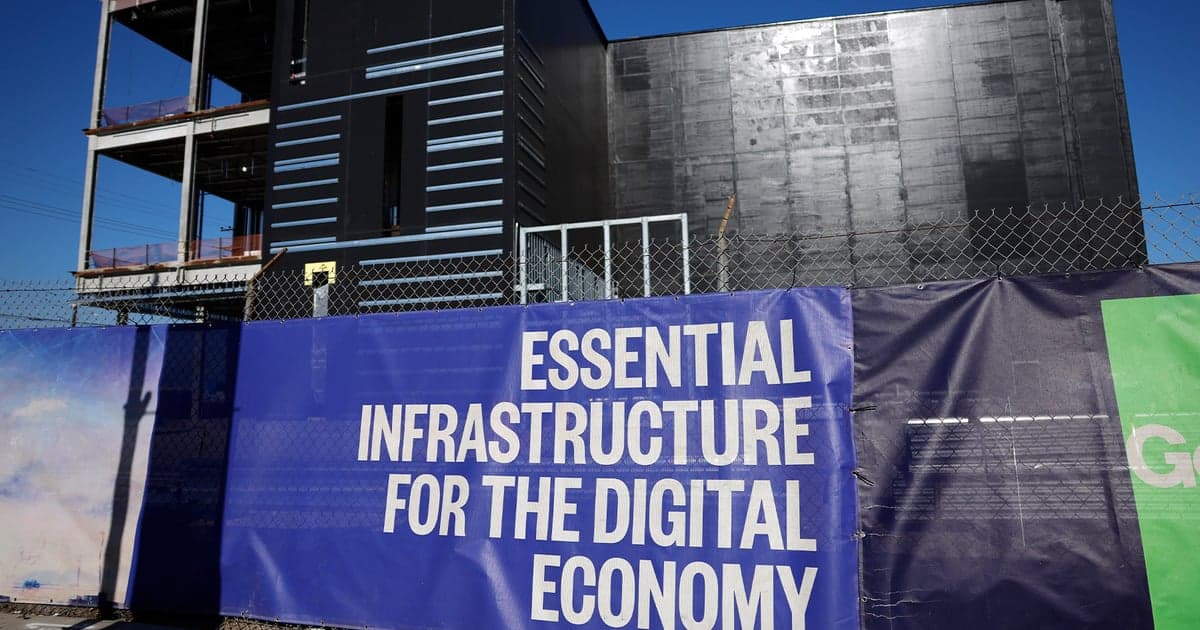
- IDCA CEO Mehdi Paryavi says fragmented national policies threaten to slow data center expansion needed for AI infrastructure
- Global data centers now consume nearly 68 GW of electricity, with AI workloads driving accelerating demand
- The organization is calling for harmonized standards on permitting, energy policy, and infrastructure planning
The International Data Center Authority is pushing for a unified global approach to data center development, warning that patchwork national regulations could bottleneck the AI infrastructure buildout. IDCA CEO Mehdi Paryavi told Data Center Knowledge that fragmented permitting, energy policy, and planning frameworks across countries now pose a genuine threat to meeting AI-driven capacity demands.
The call comes with some urgency. According to IDCA's latest report, published July 15, digital infrastructure facilities worldwide now draw nearly 68 GW of electricity. That figure is climbing fast as hyperscalers and enterprises race to deploy AI workloads at scale.
Why national policies create friction
Every country takes a different approach to approving new data center projects. Permitting timelines vary from months to years. Energy procurement rules differ. Environmental review processes follow separate tracks. For operators building global capacity, this means navigating dozens of regulatory regimes simultaneously.
Paryavi argues this fragmentation slows development at exactly the wrong moment. AI training clusters require enormous power allocations. Inference workloads, while individually lighter, are multiplying across every industry. The infrastructure gap between what companies need and what exists is widening.
The problem compounds for organizations trying to meet both performance and sustainability targets. A data center operator might find one jurisdiction offers fast permitting but limited renewable energy access, while another has clean power but a three-year approval queue. Optimizing for all constraints simultaneously becomes a strategic headache.
What the IDCA wants
The IDCA is not calling for a single global regulator. That would be politically unrealistic. Instead, Paryavi wants nations to adopt common baseline standards for sustainability, security, and operational practices. Think mutual recognition agreements, harmonized environmental metrics, and standardized certification frameworks.
The model resembles what international aviation achieved decades ago. Countries retain sovereignty over their airspace, but ICAO standards ensure planes built anywhere can fly everywhere. The IDCA envisions something similar for data centers: local control, global interoperability.
Whether this gains traction depends on whether governments see value in coordination. Right now, many countries view data center capacity as a strategic asset. The US, EU, and China are all pursuing sovereign AI infrastructure strategies. Convincing them to harmonize rules means convincing them that cooperation accelerates their own goals.
The AI infrastructure math
The scale of the buildout underway provides context for the IDCA's urgency. TSMC recently expanded its Arizona campus commitment to $265 billion, driven almost entirely by AI chip demand. Hyperscale data center capacity is growing at 40% or more annually in major markets. The projected global data center market will exceed $250 billion by 2028.
Energy consumption is the critical constraint. Data centers already account for roughly 2-4% of global electricity use. With AI growth, that share could double by 2030. Grid operators in many regions simply cannot deliver power fast enough to meet announced projects.
Palm Beach County, Florida, recently denied a major data center development. The decision signals that even in growth-friendly jurisdictions, AI infrastructure faces limits. Wall Street had priced in aggressive buildout assumptions. Those assumptions now look less certain.
Who benefits from standardization
Global operators like AWS, Google, and Microsoft would gain the most from harmonized frameworks. They build capacity across dozens of countries. Reducing regulatory complexity saves time and money.
Enterprise CIOs also have a stake. Companies increasingly distribute workloads across regions for latency, compliance, and resilience reasons. Predictable standards make multi-region deployments easier to plan and execute.
Smaller nations could benefit too. A country with limited technical expertise might adopt IDCA standards rather than developing its own framework from scratch. That lowers the barrier to attracting data center investment.
The skeptic's view
Not everyone buys the consensus pitch. Some argue industry associations like the IDCA push for global standards that serve their largest members while marginalizing local priorities. Environmental groups worry that harmonization could weaken protections by defaulting to the least restrictive common denominator.
There is also a timing problem. Building global consensus takes years. AI infrastructure needs to scale now. By the time any framework reaches adoption, the immediate capacity crunch may have passed, or worsened beyond what coordination alone can address.
Logicity's Take
Paryavi's call makes strategic sense for IDCA members but faces a basic political obstacle: major powers want infrastructure leverage, not coordination. The US CHIPS Act, EU Data Act, and China's domestic cloud mandates all push in the opposite direction. CIOs should plan for continued fragmentation rather than imminent harmonization. Multi-cloud strategies using platforms like AWS, Azure, and Google Cloud remain the practical hedge against jurisdictional complexity. The real pressure point is energy, not permitting paperwork.
Frequently Asked Questions
What is the IDCA?
The International Data Center Authority is a global organization that develops standards, certifications, and best practices for data center operations. It works with operators, governments, and industry stakeholders to promote consistent quality and sustainability metrics.
How much electricity do data centers use globally?
According to the IDCA, data centers now consume nearly 68 GW of electricity worldwide. This represents roughly 2-4% of global electricity use, a figure expected to grow significantly as AI workloads expand.
Why is AI driving data center demand?
AI model training requires massive compute clusters drawing substantial power. Inference at scale, while less intensive per query, multiplies across millions of users. Both phases require purpose-built infrastructure beyond what traditional enterprise workloads demanded.
What would global data center standards cover?
The IDCA proposes harmonization across permitting processes, energy procurement and sustainability reporting, security requirements, and operational certification. The goal is mutual recognition rather than a single global regulator.
Are countries likely to adopt unified standards?
Near-term adoption looks unlikely. Major economies including the US, EU, and China are pursuing sovereign AI infrastructure strategies that prioritize domestic control over international coordination.
Explores how AI adoption is reshaping enterprise infrastructure decisions
Need Help Implementing This?
If your organization is planning multi-region infrastructure or evaluating data center strategies for AI workloads, Logicity's consulting team can help you navigate regulatory complexity and vendor selection. Contact us at consulting@logicity.in.
Source: datacenterknowledge
Manaal Khan
Tech & Innovation Writer
Produced with AI assistance and reviewed by the Logicity editorial team. Learn more in our Editorial Policy.