Key Takeaways
- Information agents run continuously in the background, monitoring topics and sending push notifications
- Users create agents through AI Mode in Search using natural language prompts
- Available this summer first to Google AI Pro and Ultra subscribers in the U.S.
Google revealed information agents at its 2026 I/O keynote. The feature represents a shift from reactive search to proactive monitoring. Instead of typing the same query every morning, you create an AI agent that watches a topic for you and pings your phone when something happens.
The company describes this as the next evolution of Google Alerts, the notification service it launched in 2003. But where Alerts sent links, information agents synthesize information from multiple sources, explain why something matters, and compare perspectives.
What Information Agents Actually Do
Traditional search waits for you to ask. Information agents work 24/7 in the background. They monitor your specified topics and send push notifications through the Google app when something relevant appears.
Google gave the example of someone following the stock market. An information agent could track specific companies, share prices, or economic trends. It would monitor market activity throughout the day, track breaking news, summarize earnings reports, and alert users when major changes happen.
The agents handle everyday tasks too. Google listed several use cases: tracking flight prices for upcoming trips, monitoring sports teams and live events, following breaking news, watching housing or job market trends, and tracking weather or traffic.
How to Set Up an Information Agent
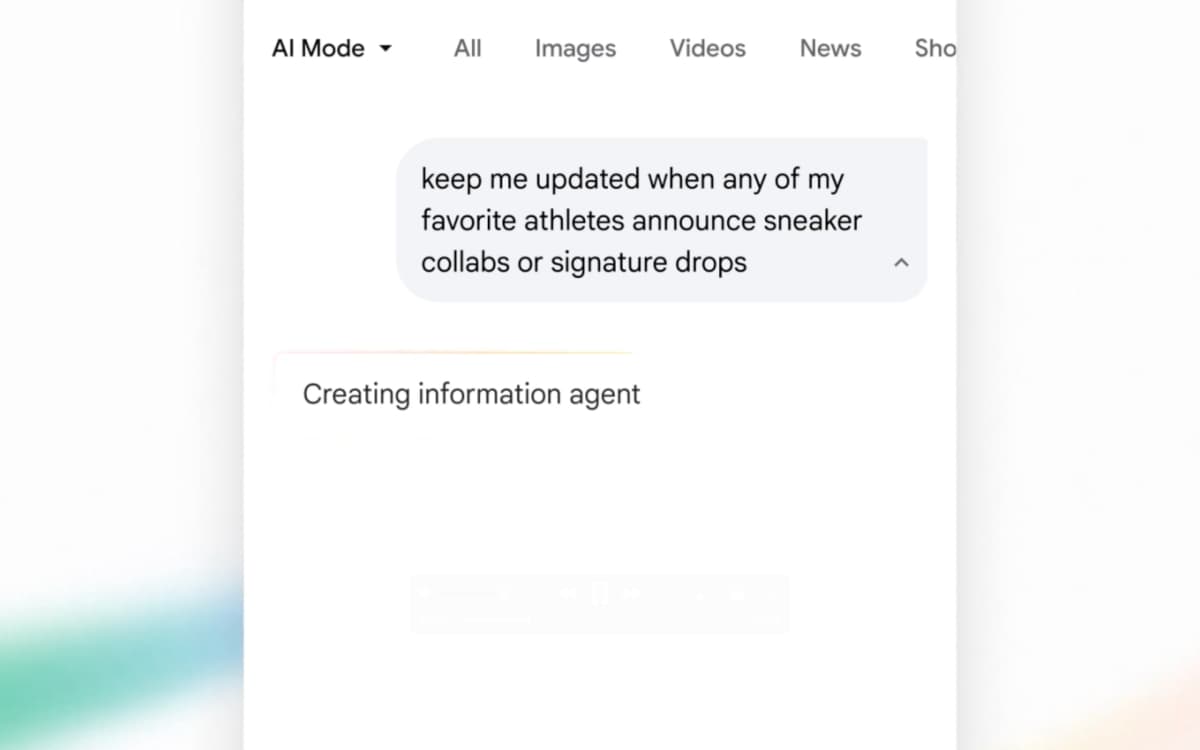
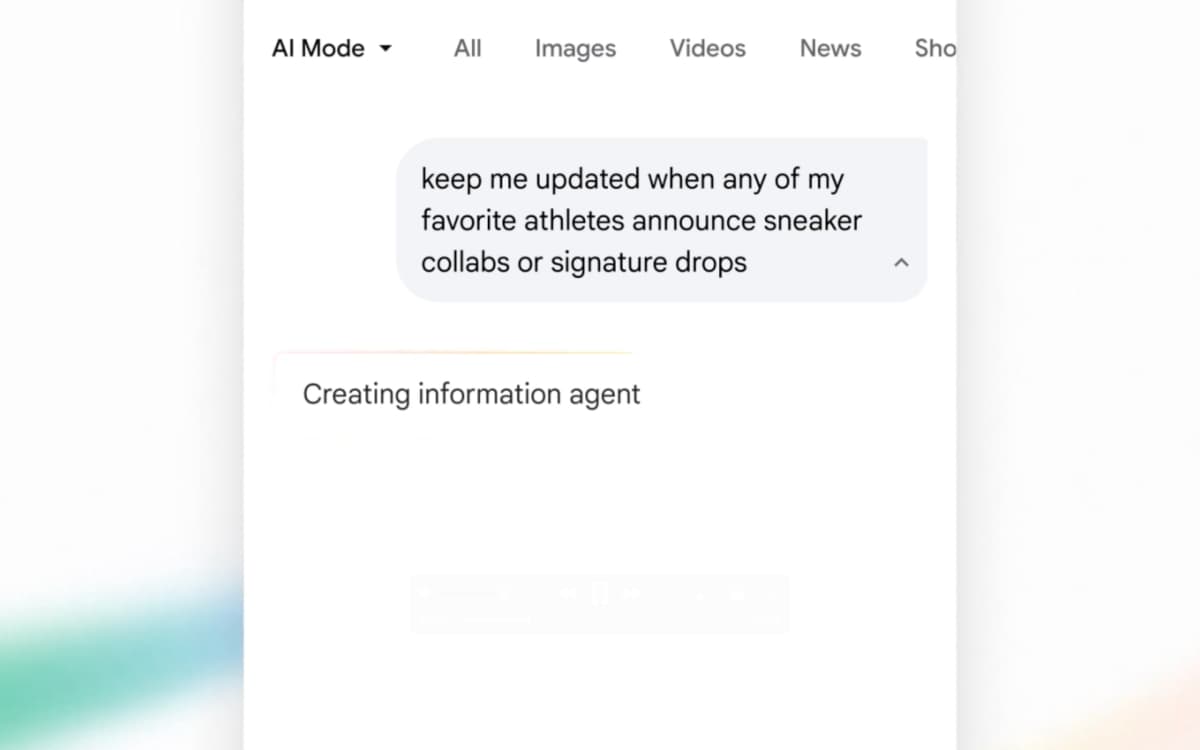
The setup process uses natural language. Open AI Mode in Google Search and type what you want to track. Google's example prompt: "keep me updated on nearby movie tickets for 'The Mandalorian and Grogu'."
When the agent finds something relevant, the Google app sends a push notification. Your active tracked topics appear in your AI Mode history. From there you can manage them, refine the parameters, or turn off alerts.
- Open AI Mode in Google Search
- Enter a natural language prompt describing what to track
- Receive push notifications when relevant information appears
- Manage active agents in AI Mode history
Availability and Rollout
Information agents launch this summer. Google is rolling them out first to Google AI Pro and Ultra subscribers in the U.S. Additional markets will follow later.
The announcement came alongside a major Search redesign. Google described it as its biggest change to Search in more than 25 years. The new interface includes what the company calls a reimagined "intelligent search box" designed for longer, conversational queries. A new AI-powered query suggestion system goes beyond traditional autocomplete to help users craft more nuanced searches.
Full coverage of Google I/O 2026 announcements
Information Agents vs. Google Alerts
Google Alerts sends you links. You still have to read through multiple articles to understand what happened. Information agents do that work for you. They pull from multiple sources, summarize the key points, and explain the significance.
The difference is processing versus forwarding. Alerts tells you something was published. Information agents tell you what it means and why you should care.
Logicity's Take
Context on AI adoption challenges in organizations
Frequently Asked Questions
When do Google information agents launch?
This summer, first for Google AI Pro and Ultra subscribers in the U.S., with additional markets following later.
How do I create a Google information agent?
Open AI Mode in Google Search and type a natural language prompt describing what you want to track, like "keep me updated on flight prices to Tokyo."
Are Google information agents free?
The initial rollout is limited to Google AI Pro and Ultra subscribers. Google has not announced pricing or free tier availability.
What's the difference between Google Alerts and information agents?
Google Alerts sends links to new content. Information agents synthesize information from multiple sources, explain significance, and provide actionable insights.
What can Google information agents track?
Stock prices, flight costs, sports teams, breaking news, housing trends, job markets, weather, traffic, and any topic you describe in your prompt.
Need Help Implementing This?
Source: TechCrunch / Lauren Forristal
Manaal Khan
Tech & Innovation Writer
Produced with AI assistance and reviewed by the Logicity editorial team. Learn more in our Editorial Policy.