Key Takeaways
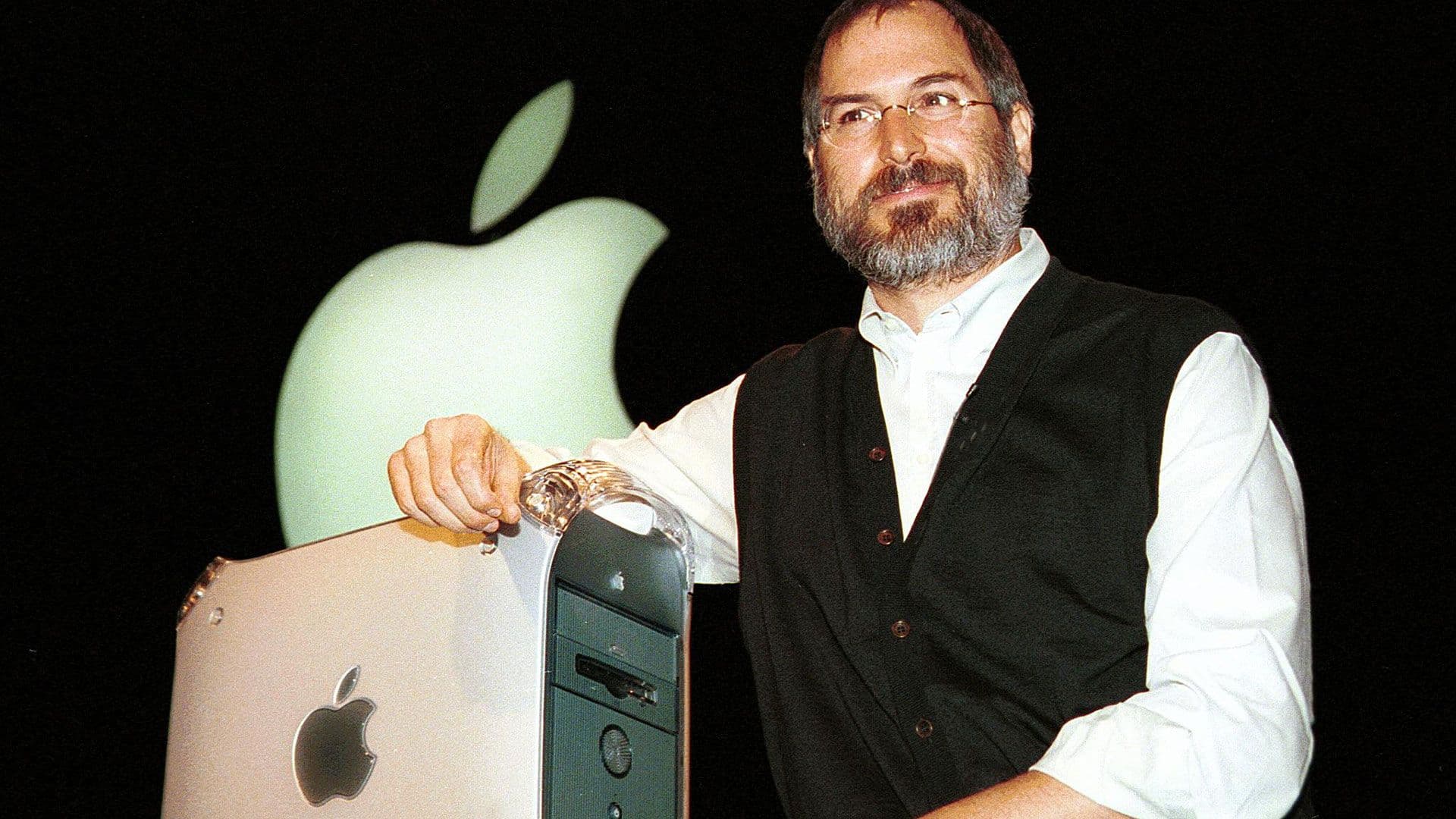
- The Power Mac G4 was the first consumer PC classified as a supercomputer under US export law
- Steve Jobs turned the Pentagon's export restrictions into a marketing campaign mocking Intel
- The 1-gigaflop threshold that triggered the ban is now exceeded by every smartphone on the market
In the summer of 1999, Apple launched the Power Mac G4 with a claim that seemed like typical marketing hyperbole: over 1 billion calculations per second. The Pentagon took the claim seriously. Too seriously, it turned out, for 50 countries around the world.
Under Cold War-era export controls, any computer capable of exceeding 1 gigaflop (one billion floating-point operations per second) was legally classified as a supercomputer. That classification made the Power Mac G4 a munition in the eyes of the US government, banned from export to dozens of nations without special approval.
Steve Jobs, then Apple's interim CEO, saw the restriction not as a problem but as an opportunity. The result was a 30-second television spot that remains one of the most clever tech advertisements ever produced.
The Ad That Mocked Intel
The commercial opened with dramatic narration set to the theme from The Great Escape, the classic 1963 war film about Allied prisoners breaking out of a Nazi POW camp. The messaging was deliberately provocative.
“For the first time in history, a personal computer has been classified as a weapon by the U.S. government... the Pentagon wants to ensure that the new Power Macintosh G4 does not fall into the wrong hands. As for Pentium PCs, well, they're harmless.”
— Apple Power Mac G4 television commercial, 1999
The closing jab at Intel was pure Jobs. At a time when Apple was fighting for relevance against the Wintel duopoly, positioning the Mac as literally too powerful for the government to allow its export was a stroke of competitive genius.
The Technical Reality
The Power Mac G4 earned its classification honestly. The machines, codenamed Yikes!, used Motorola's PowerPC G4 processor and were marketed as offering double the performance of their G3 predecessors and triple that of comparable Pentium III systems clock-for-clock.
According to Low End Mac, the 400 MHz entry-level model delivered between 0.8 and 3.2 gigaflops of floating-point performance. By the government's own 1999 definition, even the cheapest G4 qualified as a supercomputer. The faster 450 MHz and 500 MHz models were also covered by the ban.
Apple naturally lobbied to have the restrictions lifted. In January 2000, the Clinton administration raised the export threshold to 6.5 gigaflops, and Apple resumed unrestricted G4 sales worldwide.
Why This Matters Now
The Power Mac G4 story has resurfaced because today's tech export debates look remarkably similar. The US has restricted Nvidia GPU sales to certain countries. AI model exports are under scrutiny. Anthropic's Claude model faces questions about international availability.
The parallel is uncomfortable for regulators. The 1-gigaflop threshold that seemed reasonable in 1999 is now exceeded by every smartphone, smartwatch, and cheap tablet on the market. A modern iPhone delivers roughly 1,000 times the floating-point performance of the original G4.
Online communities have noticed the pattern. Reddit and Hacker News discussions are drawing explicit comparisons between the G4 classification and current AI restrictions, arguing that attempts to control powerful technology through export bans consistently lag behind the pace of consumer hardware innovation.
The Marketing Lesson
Jobs understood something that many companies still miss: regulatory friction can be repositioned as proof of product superiority. The government didn't want the G4 in foreign hands because it was too powerful. For a company trying to convince creative professionals to pay a premium for Macs, that was better than any benchmark.
The ad worked because it was technically true. Apple didn't exaggerate the restriction or invent the classification. The company simply pointed at a genuine government action and asked customers to draw the obvious conclusion.
Logicity's Take
Another example of government regulation colliding with fast-moving tech companies
The modern state of Mac vs PC performance debates
Frequently Asked Questions
Why was the Power Mac G4 classified as a weapon?
Under Cold War-era US export laws, any computer exceeding 1 gigaflop of performance was legally classified as a supercomputer and restricted as a potential weapon. The G4's 400 MHz processor crossed that threshold.
How many countries was the G4 banned from?
The Pentagon initially banned export of the 400 MHz, 450 MHz, and 500 MHz Power Mac G4 models to over 50 countries.
When did Apple resume unrestricted G4 exports?
The Clinton administration raised the export threshold to 6.5 gigaflops in January 2000, allowing Apple to sell the G4 worldwide without restrictions.
How does the G4's power compare to modern devices?
Modern smartphones deliver roughly 1,000 times the floating-point performance of the original Power Mac G4, making the 1999 supercomputer threshold seem absurd by today's standards.
What was the G4 'Tank' commercial?
A 30-second Apple ad featuring narration over The Great Escape theme, positioning the G4 as too powerful for foreign governments to own and mocking Intel Pentium PCs as 'harmless.'
Need Help Implementing This?
Source: Latest from Tom's Hardware
Manaal Khan
Tech & Innovation Writer
Produced with AI assistance and reviewed by the Logicity editorial team. Learn more in our Editorial Policy.