Key Takeaways
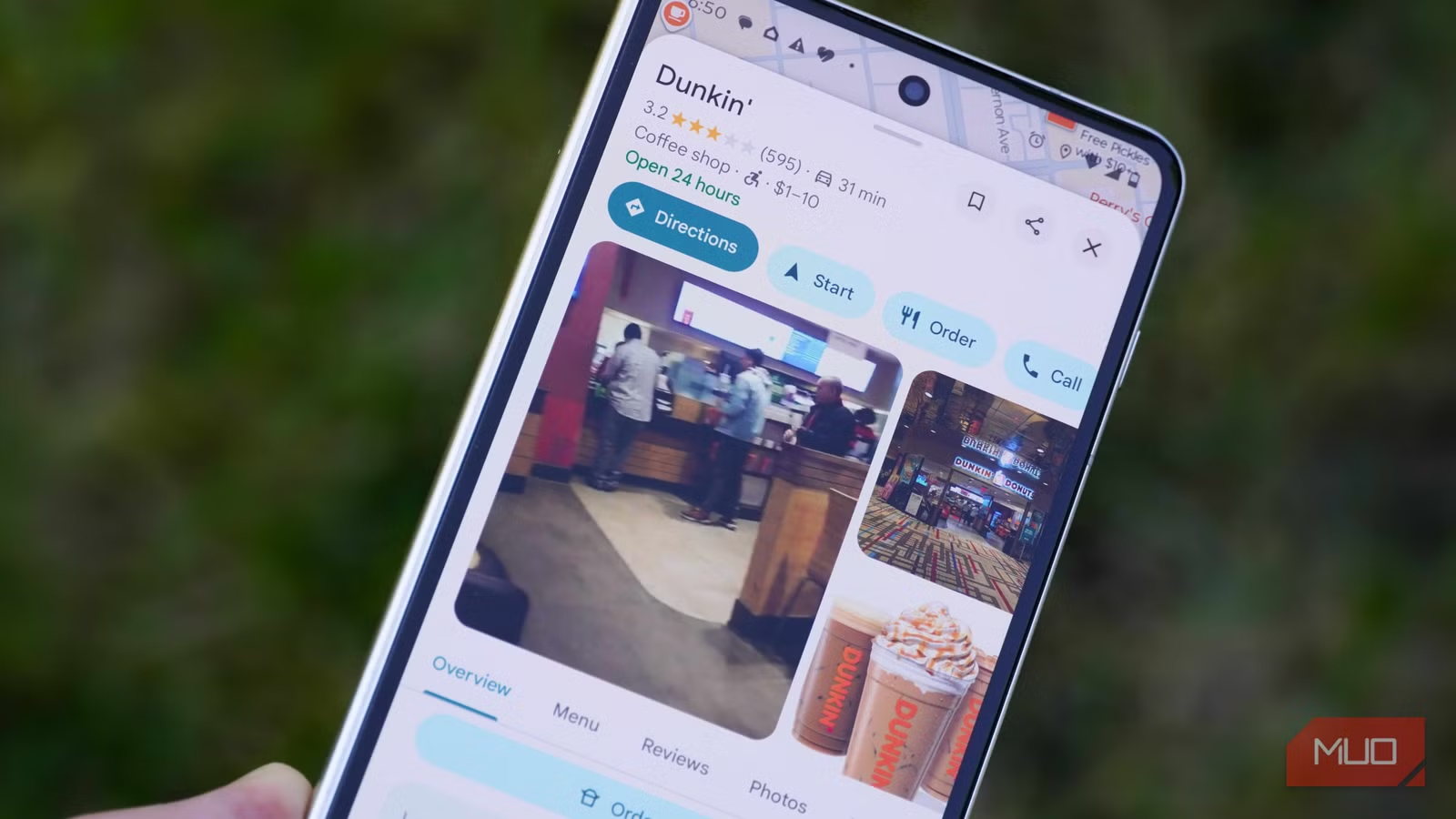
- Google Maps published 999 million reviews in 2024, making it the largest repository of crowdsourced business data
- 81% of consumers check Google Maps reviews before visiting a local business
- You can search reviews by keyword (parking, seating, vibe) to answer specific questions before you visit
Google Maps reviews remain the platform's most valuable feature, not Gemini AI or 3D navigation. With over two billion monthly users contributing ratings, photos, and written feedback, the app has built a crowdsourced database that competitors cannot replicate. Apple Maps, which offloads reviews to Yelp, reaches roughly half that user base. The gap in review volume and freshness makes Google Maps the default choice for anyone trying to evaluate a business before showing up.
Brady Snyder, a technology journalist at MakeUseOf, argues that no alternative comes close. "The best Google Maps feature has nothing to do with Gemini or navigation," he writes. "It's the authentic, unfiltered feedback from other people." That feedback adds up: Google Maps published 999 million reviews in 2024 alone, and 120 million Local Guides actively contribute photos, ratings, and tips.
Why Google Maps reviews matter more than star ratings
Star ratings alone tell you almost nothing. A 4.2-star coffee shop could have great espresso and terrible parking, or vice versa. The value is in the reviews themselves, specifically the details people share about their actual experience. Snyder uses them to "get the lay of the land, figure out the parking situation, or see what the indoor seating is like" before he visits anywhere.

Consumer trust data backs this up. Fifty-nine percent of consumers distrust star ratings unless a business has at least 20 to 100 reviews. The sheer volume of feedback on Google Maps, combined with photos and topic summaries, gives users enough signal to filter out outliers and spot patterns.
How to search Google Maps reviews by keyword
Most people scroll through reviews chronologically. That's inefficient. Google Maps lets you search reviews by keyword, which answers specific questions in seconds.
- Find the place you want to evaluate in Google Maps
- Tap the place card to open the full listing
- Switch to the Reviews tab
- Tap the Search button and enter a keyword like "parking," "outdoor seating," or "wait time"
- Browse the filtered results to find answers to your question
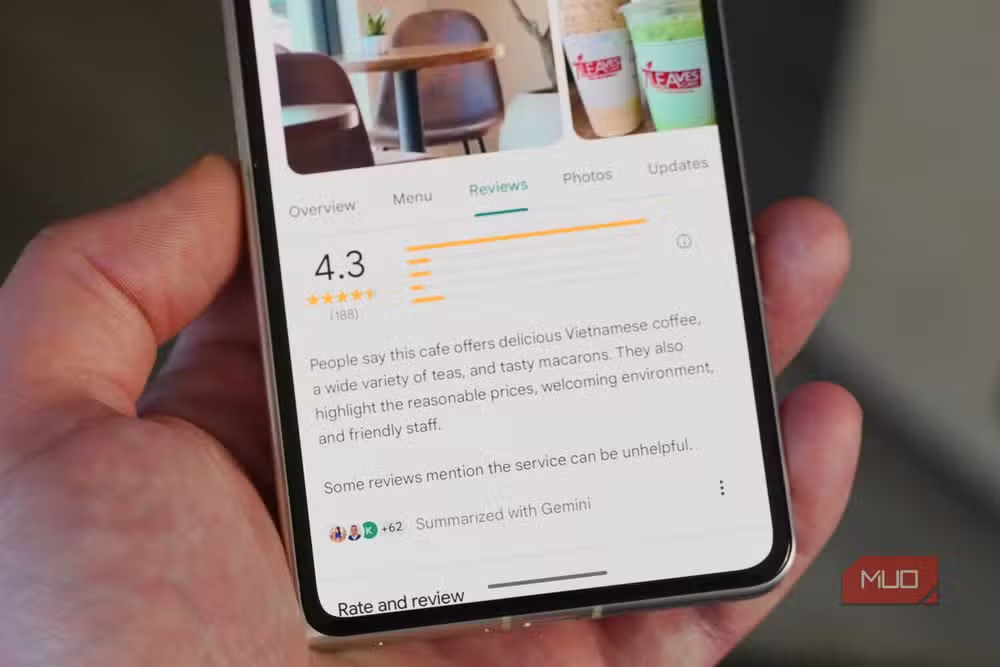
The platform also surfaces Topics, which aggregate frequently mentioned phrases. If "lake view" appears in 117 reviews for your local coffee shop, you can trust that it's a real feature of the place. One-off complaints are easier to dismiss.
Google Maps review filters you should actually use
Beyond keyword search, Google Maps offers sorting options that most users ignore:
- Newest: See recent reviews to check if quality has changed
- Highest: Find what people love most about the place
- Lowest: Surface complaints before you experience them
- Most relevant: Google's algorithm weighs recency and helpfulness
Google Maps also offers a Gemini-generated summary at the top of the Reviews tab. Snyder recommends ignoring it. The summary compresses nuance into generic statements; the raw reviews contain the specifics you actually need.
The fake review problem Google hasn't solved
Google Maps reviews are useful because they're plentiful. They're also vulnerable to manipulation. On Reddit's r/googlemaps, users complain about the "enshittification" of the review system, citing low-quality or obviously fake reviews that the platform struggles to remove. Hacker News discussions focus on the systemic power Google holds over small businesses: a single algorithm change or spam campaign can determine whether a shop thrives or closes.
Google has started addressing this. The platform now displays a public shaming banner for businesses caught using fake reviews. But enforcement remains inconsistent, and small business owners have limited recourse when competitors flood their listings with one-star ratings.
Apple Maps and Waze can't compete on reviews
Apple Maps relies on Yelp for business reviews, which fragments the user experience. You need two apps to do what Google Maps handles in one. Waze, which Google also owns, focuses on real-time traffic and navigation. It lacks the place card depth that makes Google Maps useful for pre-trip research.
The network effect compounds over time. More users mean more reviews. More reviews mean better data. Better data attracts more users. Apple's one billion active device owners haven't closed the gap, and Waze's driving-focused user base doesn't generate the same volume of business feedback.
What this means for local businesses
For small businesses, Google Maps reviews are existential. "Trust is the currency of the digital economy," one independent analyst notes. "A business without a vibrant review profile is essentially invisible to the modern consumer." The 81% of consumers who check reviews before visiting are making decisions based on what strangers wrote, not on advertising or brand recognition.
This creates both opportunity and risk. A well-reviewed shop can outcompete larger chains. A poorly reviewed one, even if the complaints are outdated, may never recover.
Another practical use of AI tools for organizing personal collections
Frequently Asked Questions
How do I search Google Maps reviews by keyword?
Open the place card, go to the Reviews tab, and tap the Search button. Enter a keyword like "parking" or "seating" to see only reviews mentioning that topic.
Are Google Maps reviews more reliable than Yelp?
Google Maps has roughly double the monthly user base of Apple Maps, which uses Yelp. Higher review volume generally provides a more accurate picture, though both platforms struggle with fake reviews.
How many reviews does a business need to be trustworthy?
Research shows 59% of consumers distrust star ratings unless a business has at least 20 to 100 reviews. More reviews help filter out outliers.
Does Google Maps show fake reviews?
Yes. Google has added warnings for businesses caught using fake reviews, but enforcement is inconsistent. Check review patterns and read multiple entries to spot manipulation.
Should I trust Google Maps' Gemini review summaries?
The AI summaries compress nuance into generic statements. Reading the actual reviews gives you specifics that summaries miss.
Logicity's Take
Google's AI investments in Maps grab headlines, but the company's real moat is boring: two billion people leaving reviews. That dataset compounds in ways AI features don't. Gemini can summarize existing reviews, but it can't generate the lived experience that makes those reviews useful. For competitors, catching up on navigation is tractable. Catching up on crowdsourced data is nearly impossible.
Need Help Implementing This?
If you're building a local business strategy or need help optimizing your Google Maps presence, reach out to Logicity's consulting team. We help businesses improve their digital footprint and customer engagement.
Source: MakeUseOf
Manaal Khan
Tech & Innovation Writer
Produced with AI assistance and reviewed by the Logicity editorial team. Learn more in our Editorial Policy.