Key Takeaways

- GoldenEye Recomp v1.0 converts the unreleased Xbox 360 version of GoldenEye 007 into a native Windows executable without emulation
- The port adds online multiplayer, widescreen support, post-processing filters, and stable 60 FPS gameplay
- Users must source the original Xbox 360 game files themselves, as the project contains no copyrighted assets
Developer SunJaycy has released GoldenEye Recomp v1.0 on GitHub, converting the cancelled Xbox 360 version of GoldenEye 007 into a native Windows executable. The project uses static recompilation to translate the original PowerPC machine code into C++, bypassing emulation entirely. "No emulator — the game runs as a real native executable," SunJaycy states on the project page.
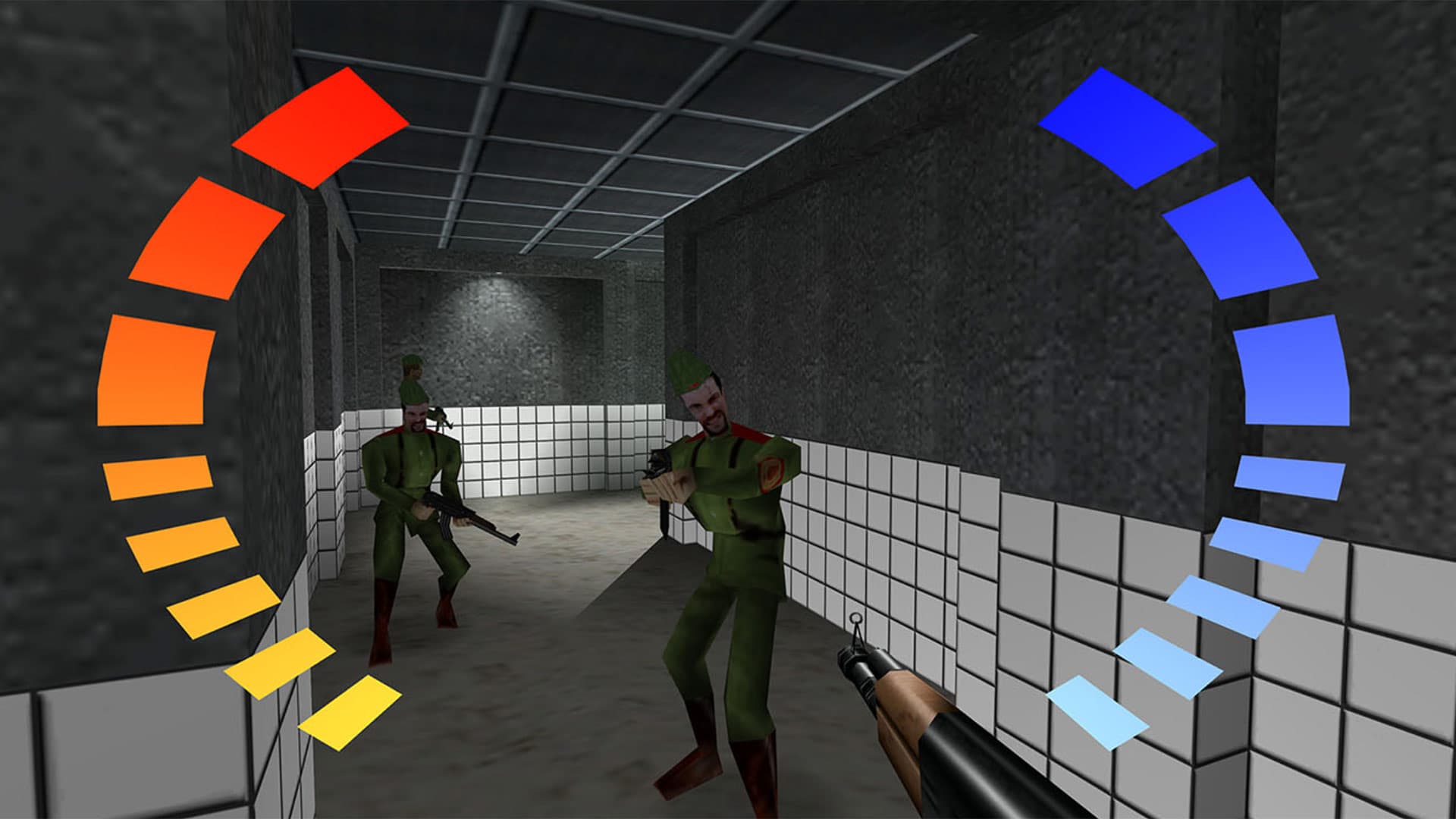
The Xbox 360 remaster of GoldenEye 007 was completed by Rare around 2008 but never shipped. A tangle of licensing disputes between Nintendo (which owned publishing rights to the N64 original), Microsoft (Rare's new owner), and MGM (holder of the James Bond IP) killed the project. For 17 years, the only way to play this version was through leaked builds running on Xbox 360 emulators. GoldenEye Recomp changes that.
What does static recompilation actually do?
Unlike emulation, which interprets foreign machine code instruction by instruction at runtime, static recompilation analyzes the entire binary ahead of time and outputs equivalent code for the target platform. SunJaycy's project uses the ReXGlue SDK to convert Xbox 360 PowerPC instructions into C++, then compiles that C++ into a standard Windows .exe file.
The result is a program that Windows treats like any other native application. There's no emulation overhead, no BIOS requirement, and no dependency on reverse-engineered Xbox 360 hardware behavior. Frame timing issues that plagued the original game have been fixed through GPU-pacing adjustments, delivering a stable 60 FPS.
What features does the PC port add?
- Online multiplayer via LAN, Hamachi, playit.gg, or public servers
- Modern controller support for Windows gamepads
- Widescreen and arbitrary resolution support
- Post-processing filters including brightness, contrast, saturation, and vignette presets
- In-game pause menu with video and network settings
These additions address the main complaints players had with the original N64 release: the split-screen-only multiplayer, the 4:3 aspect ratio, and the choppy frame rate. The Xbox 360 version already included updated graphics, but it was still locked to console limitations. This PC port removes those constraints.
Where do you get the game files?
Here's the catch. The GitHub repository contains only the recompilation wrapper, menus, hooks, online code, and build configuration. No game assets ship with it. SunJaycy explicitly states: "You must find the game files yourself. This game was never released publicly."
This puts users in murky legal territory. The Xbox 360 build leaked years ago and circulates on file-sharing sites, but downloading it is piracy of a copyrighted work, regardless of whether Rare ever sold it. The developer's hands-off approach protects the project from direct copyright liability, but it doesn't protect users.
Community forums have noted the irony. One commenter on Tom's Hardware wrote: "It's like saying you discovered how to make infinite energy and will release it for everyone, then to turn around and go 'oh and you need to do all the formulas yourself or what I release won't work.'"
Why does GoldenEye 007 still matter?
GoldenEye 007 proved that first-person shooters could work on consoles. Before its 1997 release, the genre belonged almost exclusively to PCs with keyboard and mouse controls. Rare's work on the N64 demonstrated that analog sticks could deliver precise, responsive aiming. The game sold over 8 million copies and spawned a multiplayer culture that persists to this day.
Its influence shaped Perfect Dark, Timesplitters, Halo, and Call of Duty's console dominance. The Xbox 360 remaster would have introduced the game to a new generation with modern graphics and controls. That it was shelved for licensing reasons, not technical failures, made it a symbol of IP gridlock in gaming.
Community response and future ports
Reception has been enthusiastic. The GitHub repository reportedly gained over 15,000 stars in its first 48 hours. Players who grew up with the N64 version have called it the "definitive" way to experience the game.
Demand for a Linux port, particularly for Steam Deck compatibility, is already high. Static recompilation projects tend to be platform-specific, so a Linux version would require additional work. SunJaycy hasn't announced plans either way.
Some observers worry the project's visibility could invite legal action. Nintendo, Microsoft, and MGM have all defended their respective IP aggressively. Whether they target a tool that contains no copyrighted code remains to be seen.
The release coincides with renewed interest in James Bond games. The new 007 First Light launched recently on PC and current-gen consoles, and Nvidia is bundling it with GeForce RTX 50-series purchases. GoldenEye nostalgia runs deep, and this project taps directly into it.
Logicity's Take
Static recompilation represents a significant evolution in game preservation. Unlike emulation, which requires constant maintenance as host hardware changes, recompiled ports become self-contained executables that run like any other software. If this approach scales, it could preserve cancelled and abandoned games far more reliably than emulators. The legal ambiguity around sourcing unreleased game files remains the biggest obstacle to mainstream adoption.
Frequently Asked Questions
Is GoldenEye Recomp legal to download?
The recompilation tool itself contains no copyrighted game assets and is legal. However, obtaining the unreleased Xbox 360 game files it requires would involve downloading a leaked build, which is piracy.
Does GoldenEye Recomp work on Steam Deck?
Not currently. The v1.0 release is Windows-only. A Linux port would require additional development, and the developer has not announced plans for one.
What is static recompilation?
Static recompilation converts machine code from one platform into source code for another, then compiles it natively. Unlike emulation, which interprets code at runtime, recompiled programs run as native executables with no performance overhead.
Why was the Xbox 360 version of GoldenEye 007 cancelled?
Rare completed the remaster around 2008, but licensing conflicts between Nintendo, Microsoft, and MGM prevented its release. The three parties couldn't agree on terms for a game that crossed their respective IP holdings.
Can I play GoldenEye Recomp online with friends?
Yes. The port adds online multiplayer support via LAN, Hamachi, playit.gg, or public servers, replacing the original's local-only split-screen mode.
Need Help Implementing This?
Logicity tracks developments in game preservation, retro computing, and emerging platforms. Subscribe to our newsletter for technical breakdowns and industry analysis delivered to your inbox.
Source: Latest from Tom's Hardware
Huma Shazia
Senior AI & Tech Writer
Produced with AI assistance and reviewed by the Logicity editorial team. Learn more in our Editorial Policy.