Key Takeaways
- E-bikes under $300 now offer 500W motors and 45-mile range, making commuter programs cost-effective
- At $262, an e-bike pays for itself in 2-3 months of avoided fuel costs for a typical commuter
- Companies adding e-bike subsidies to benefits packages see higher talent retention in urban markets
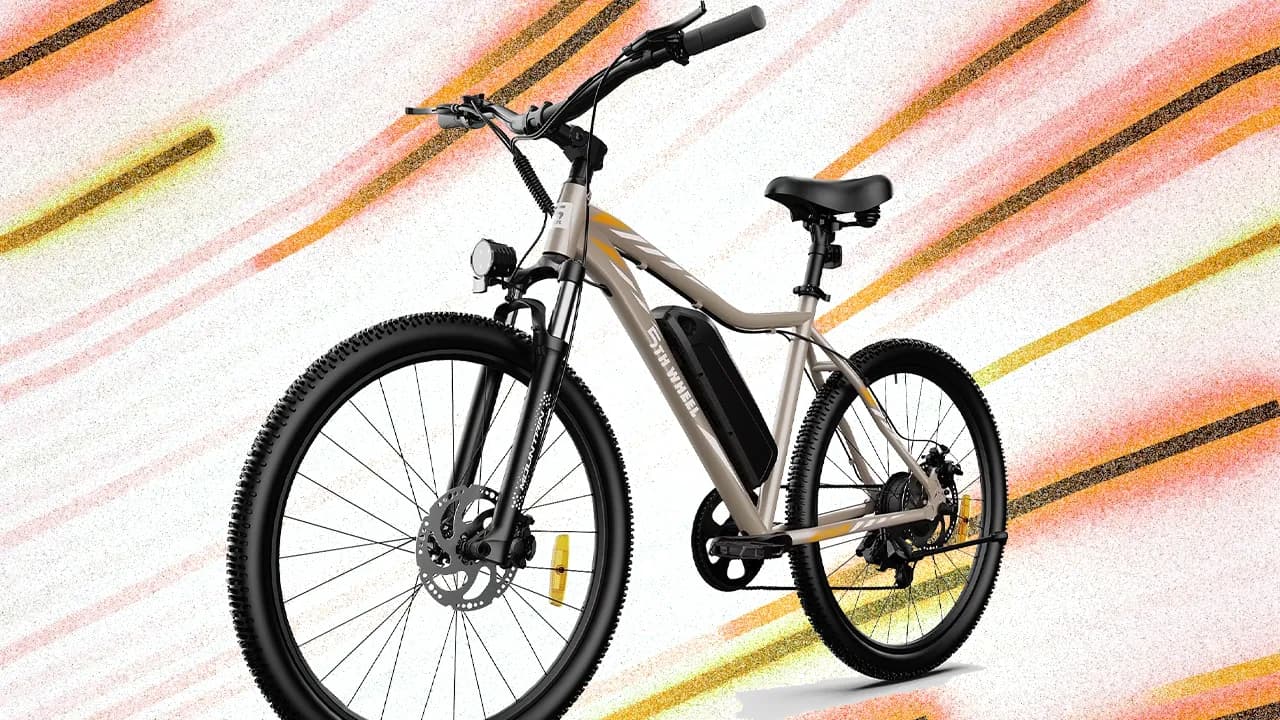
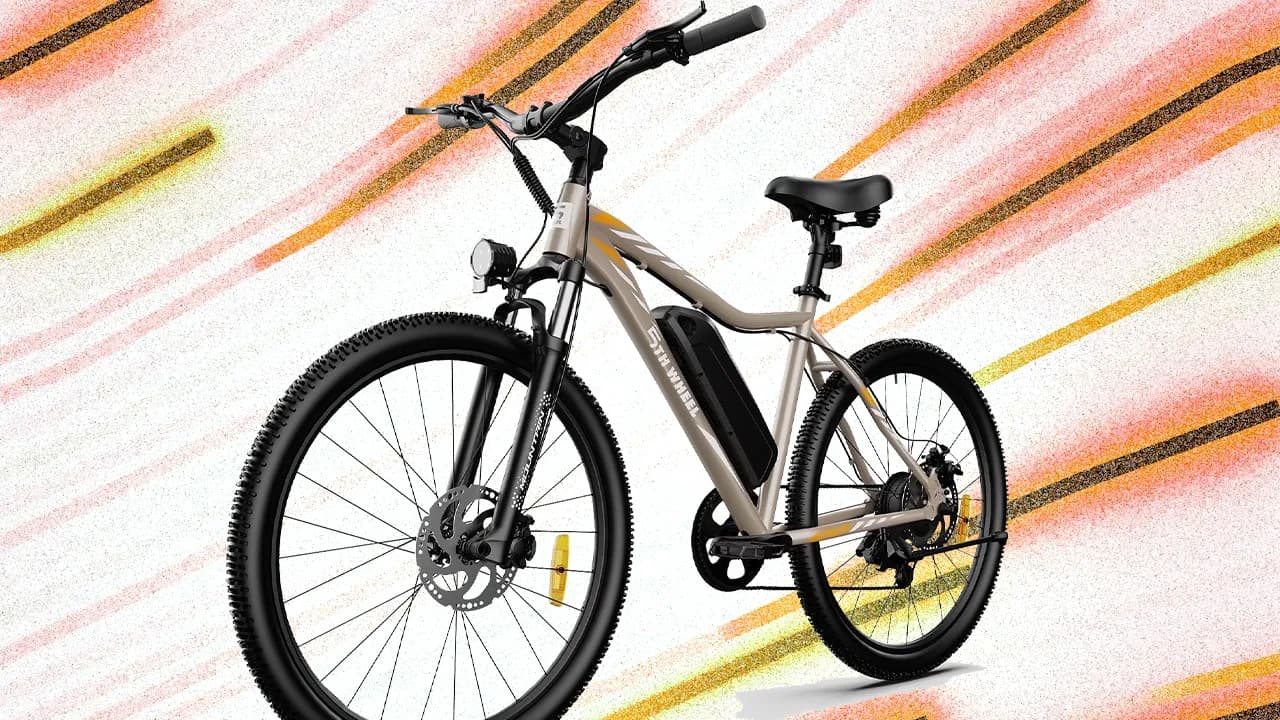
According to [IGN](https://www.ign.com/articles/best-5th-wheel-electric-bike-deal-for-april-2026-updated), the 5th Wheel AB17 electric bike has dropped to $262 with free shipping, marking a new low for 500W adult e-bikes with meaningful range and safety certification.
Here's why that number matters beyond the consumer deal: when a UL-certified electric bike costs less than two months of fuel for the average car commuter, the math on corporate mobility benefits changes completely. This isn't about gadget deals anymore. It's about operational strategy.
Why Should Business Leaders Care About $262 E-Bikes?
The short answer: employee commuting is a hidden cost center that most companies ignore until it hurts retention. In urban markets like Austin, Denver, and increasingly Hyderabad and Bangalore, traffic congestion adds 45-90 minutes to daily commutes. That's productivity lost before your team even logs in.
At enterprise scale, some companies have experimented with shuttle services or transit subsidies. But those programs run $200-500 per employee per month. A one-time $262 e-bike subsidy that lasts 2-3 years suddenly looks like smart capital allocation.
The Executive Summary
E-bikes under $300 have crossed the quality threshold for reliable commuting. Companies considering last-mile mobility benefits now have a defensible ROI case: $262 upfront vs $150-200/month in parking subsidies or transit passes. The question isn't whether e-bikes make sense. It's whether your HR team has modeled the numbers.
What Does the 5th Wheel AB17 Actually Deliver?
Let's be clear: this isn't a premium e-bike. The carbon steel frame weighs 50 pounds. You won't win any races. But for the use case that matters, getting employees 5-15 miles to work without arriving drenched in sweat, the specs are more than adequate.
- 500W motor (700W peak) with 23mph top speed
- 375Wh lithium battery: 25 miles electric-only, 45 miles pedal-assist
- 265-pound weight capacity covers most riders
- UL 2849 certified, which matters for corporate liability concerns
- Ships 85% preassembled from US warehouses with 1-year warranty
The UL certification is the detail that matters most for business buyers. When you're subsidizing equipment for employees, you need documentation that the product meets safety standards. That's the difference between a defensible benefits program and a liability exposure.
Electric Bike Commuting ROI: Running the Numbers
Here's the calculation that should interest CFOs. The average American commuter spends $150-200 per month on fuel for a 10-mile each-way commute. Add $100-300 for monthly parking in urban cores. That's $250-500 per month in commuting costs.
| Cost Category | Car Commute (Monthly) | E-Bike Commute (Monthly) | Annual Savings |
|---|---|---|---|
| Fuel/Charging | $150-200 | $3-5 | $1,740-2,340 |
| Parking | $100-300 | $0 | $1,200-3,600 |
| Maintenance | $75-100 | $10-15 | $780-1,020 |
| Insurance (commute portion) | $50-75 | $0 | $600-900 |
| Total | $375-675 | $13-20 | $4,320-7,860 |
Even if you're conservative and assume half the projected savings, the payback period is under 5 months. For a benefits program, that's exceptional ROI compared to gym memberships or meal subsidies that cost more annually and show no measurable productivity impact.
How Are Companies Using E-Bike Programs in 2026?
The most sophisticated implementations aren't just subsidizing purchases. They're integrating e-bikes into broader mobility strategies.
- Last-mile connection: Employees park at suburban transit hubs and e-bike the final 3-5 miles, avoiding downtown parking costs
- Wellness benefits positioning: E-bike subsidies count toward wellness program requirements while delivering actual utility
- Sustainability metrics: Each car commute replaced by e-bike eliminates roughly 4,600 pounds of CO2 annually, relevant for ESG reporting
- Campus mobility: Tech parks and corporate campuses use e-bike fleets for inter-building transit
The companies doing this well treat e-bikes as infrastructure, not perks. They provide secure parking, charging stations, and maintenance stipends. The total program cost per employee runs $400-600 in year one, then drops to $100-150 annually for maintenance and replacement parts.
If you're rethinking employee equipment investments, office chairs offer similar ROI logic.
What Are the Limitations of Budget E-Bikes?
Transparency matters here. The 5th Wheel AB17 isn't competing with $2,000 Rad Power or $4,000 Specialized e-bikes. Here's what you give up at the $262 price point:
✅ Pros
- • Price-to-performance ratio is unmatched in the market
- • UL certification provides liability coverage for corporate programs
- • US warehouse shipping means 7-day delivery, not 6-week waits
- • 1-year warranty covers manufacturing defects
❌ Cons
- • Carbon steel frame adds weight, making it harder to carry upstairs
- • No domestic customer support infrastructure for complex repairs
- • Battery replacement parts may be harder to source in 2-3 years
- • Limited upgradeability compared to modular e-bike platforms
For individual employees who want a premium riding experience, this isn't the bike. For companies who want to test an e-bike program without major capital commitment, it's the right starting point. You can always upgrade the fleet once you've proven the model works.
How Does This Fit Into Broader Mobility Trends?
The $262 e-bike is a symptom of a larger shift. Electric micromobility has been waiting for a price breakthrough that makes it accessible beyond enthusiasts. We're now there.
The implications extend beyond commuting. Delivery and logistics companies are testing e-bike fleets for urban last-mile delivery. Real estate developers are building bike rooms instead of parking floors. Cities are expanding protected bike lane networks because the ridership now justifies the investment.
For business leaders, the question is whether to be early or late to this shift. Early movers in employee mobility programs are already seeing benefits in urban talent markets where commute quality directly affects offer acceptance rates.
Another example of how consumer price drops create enterprise opportunities.
Implementation: What Would a Corporate E-Bike Program Look Like?
If you're a facilities manager or HR director reading this, here's the practical playbook:
The key insight from companies that have done this: don't over-engineer the program initially. Start with purchase subsidies and secure parking. Add complexity only when participation rates justify additional investment.
Frequently Asked Questions
Frequently Asked Questions
How much does a corporate e-bike program cost per employee?
Year one costs run $400-600 per participating employee, including the bike subsidy, secure parking contribution, and basic maintenance allowance. Annual costs drop to $100-150 for ongoing maintenance. Compare this to $2,400-6,000 annually for parking subsidies or transit passes in urban markets.
Is a $262 e-bike reliable enough for daily commuting?
For commutes under 10 miles each way, yes. The 5th Wheel AB17's 45-mile pedal-assist range handles 2-3 days of typical commuting per charge. The UL 2849 certification addresses safety concerns. Main limitation is the 50-pound weight, which makes it impractical for employees who need to carry it up stairs.
What's the liability exposure for companies subsidizing e-bikes?
This varies by jurisdiction, but UL-certified bikes reduce risk significantly. Most companies structure subsidies as taxable benefits rather than company-owned equipment, shifting liability to the employee. Consult your legal team, but the precedent from bicycle commuter benefits generally applies.
How long do budget e-bikes last before replacement?
With regular use and basic maintenance, expect 2-3 years before battery degradation affects range significantly. Battery replacement costs $100-200 if parts are available. The frame and motor typically outlast the battery. Budget for 50% fleet replacement every 3 years in your program costs.
Are there tax benefits for corporate e-bike programs?
In the US, e-bike subsidies don't qualify for the same tax treatment as traditional bicycle commuter benefits under current IRS rules. However, they can count toward wellness program spending, and several states have introduced e-bike specific tax credits. Check your state and local incentives, as this is evolving rapidly.
For tech leaders evaluating infrastructure decisions with long-term ROI implications.
Logicity's Take
We're an AI and web development agency based in Hyderabad, so we won't pretend to be e-bike engineering experts. But we've watched this pattern before in our own market. When good-enough technology drops below a price threshold, adoption curves go vertical. We saw it with cloud hosting, with no-code tools, and now with AI development APIs. The $262 e-bike represents the same inflection point for physical mobility that $20/month GPT access represented for knowledge work. For Indian tech companies specifically, this is worth watching. Urban commutes in Bangalore, Hyderabad, and Pune are brutal. Companies that figure out last-mile mobility for their employees, whether through e-bike programs, shuttle optimization, or hybrid work policies, will have a genuine edge in talent acquisition. The hardware is now cheap enough that the bottleneck is implementation creativity, not capital. That's where the opportunity sits.
The Bottom Line for Business Leaders
A $262 e-bike isn't transformative by itself. What's transformative is what it signals: the cost barrier to electric micromobility has effectively disappeared. The question for companies isn't whether e-bikes make financial sense anymore. They clearly do.
The question is whether your organization is positioned to capture the benefits, better talent retention in urban markets, reduced parking costs, sustainability metrics that actually mean something, or whether you'll wait until competitors have already built the infrastructure and recruited the employees who care about commute quality.
The deal on AliExpress with code USAFF35 expires eventually. The underlying market shift won't. E-bikes at this price point are the new normal. Plan accordingly.
Need Help Implementing This?
At Logicity, we help companies build systems that turn strategic ideas into operational reality. Whether you're automating employee benefit workflows, building internal tools for program tracking, or need AI-powered analysis of your mobility data, we bring the technical execution to match your business vision. Reach out to explore how we can help.
Source: IGN All
Manaal Khan
Tech & Innovation Writer
Produced with AI assistance and reviewed by the Logicity editorial team. Learn more in our Editorial Policy.