Key Takeaways
- Valkey is 20-33% cheaper than Redis OSS with identical functionality for most use cases
- Replication multiplies your bill: a 3-shard cluster with replicas costs 6x a single node
- Idle clusters cost the same as busy ones. There's no scale-to-zero option
Read in Short
Your ElastiCache bill is probably 20-33% higher than it needs to be. The fix? Switch from Redis OSS to Valkey (same code, lower price), audit your replication topology, and kill idle clusters. A 12-node cluster saves $768/month just by changing engines.
Why Does ElastiCache Cost More Than Expected?
ElastiCache looks simple on paper. Pick a node type, maybe add a replica for uptime, and you're done. Then the invoice arrives and finance wants answers.
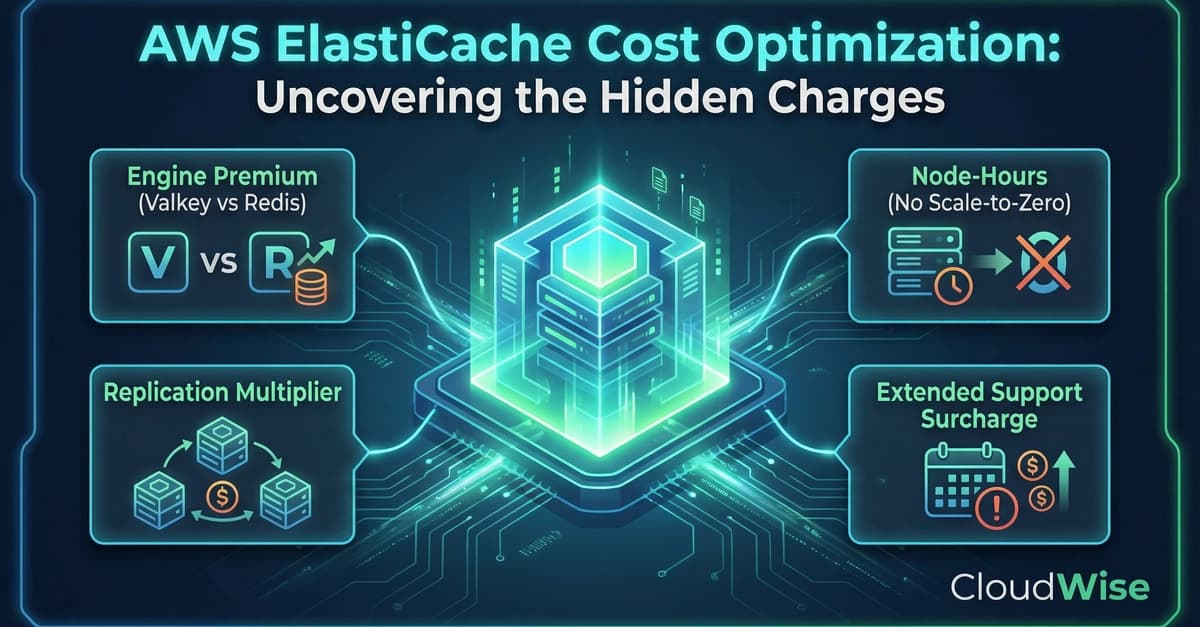
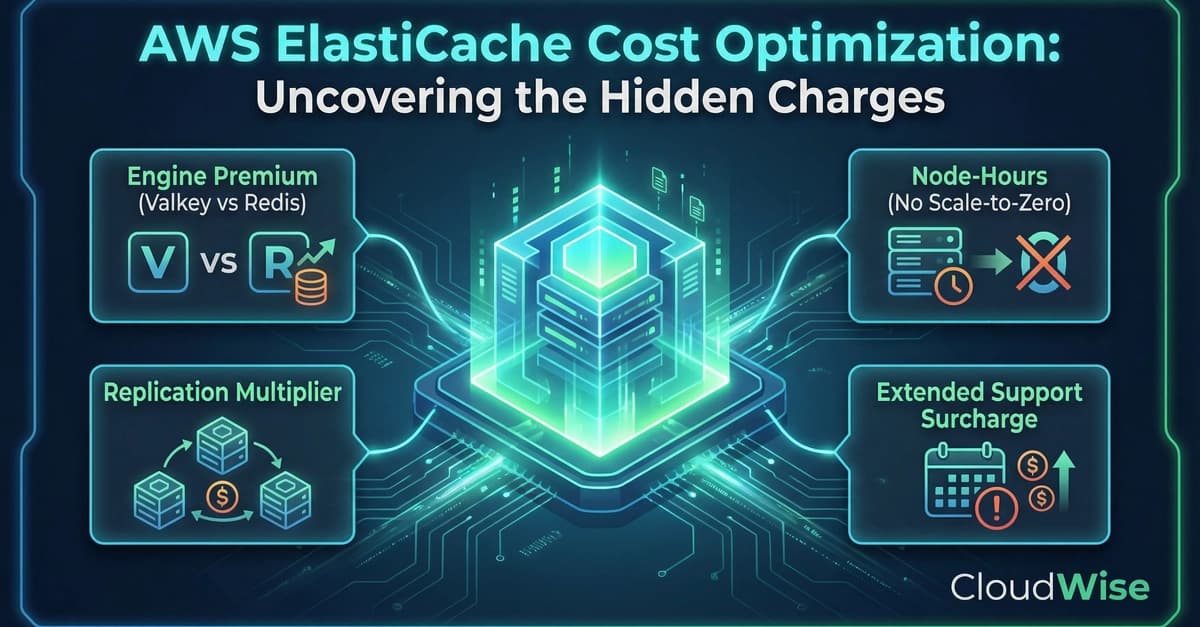
The gap between your mental math and the actual bill usually comes from five places: engine choice, replication topology, extended support fees, idle clusters that nobody remembered to terminate, and oversized nodes that were never right-sized after launch.
For CTOs and engineering managers, this matters because caching infrastructure often runs 24/7 across multiple environments. A 20% savings on one node becomes a six-figure annual reduction when you're running production, staging, and dev clusters across regions.
ElastiCache Pricing: Three Engines at Different Price Points
AWS offers three caching engines through ElastiCache: Valkey, Redis OSS, and Memcached. Most teams pick Redis because it's familiar. That familiarity has a price tag.
Valkey costs 20% less than Redis OSS for node-based clusters and 33% less on ElastiCache Serverless. This isn't a promotional rate or a limited-time offer. It's the permanent pricing structure AWS launched when they added Valkey support.
| Engine | Hourly Rate (cache.r7g.xlarge) | Monthly Cost (730 hrs) | Savings vs Redis |
|---|---|---|---|
| Valkey | $0.3496 | ~$255 | 20% cheaper |
| Redis OSS | $0.437 | ~$319 | Baseline |
| Memcached | $0.437 | ~$319 | Same as Redis |
That $64/month difference per node adds up fast. A typical production setup with 12 nodes across shards and replicas saves $768 monthly. Over a year, that's $9,216 back in your infrastructure budget without changing a single line of application code.
Should You Switch to Valkey?
If your application uses standard Redis commands and doesn't rely on Redis-specific modules or features that Valkey doesn't support, the migration is straightforward. Valkey is a drop-in replacement for most Redis workloads. Test in staging first, but expect compatibility.
How Does Node-Based ElastiCache Pricing Work?
ElastiCache charges per node-hour from the moment you launch until you terminate. Partial hours bill as full hours. There is no scale-to-zero option.
This is the part that catches development teams off guard. A cache.t3.micro sitting completely idle costs the same $12/month as one handling thousands of requests per second. The meter runs on time, not usage.
| Node Type | Memory | Monthly Cost (On-Demand) | Best For |
|---|---|---|---|
| cache.t3.micro | 0.5 GiB | ~$12 | Dev/test environments |
| cache.m5.large | 6.38 GiB | ~$114 | Small production workloads |
| cache.r7g.xlarge | 26.32 GiB | ~$319 | Medium production workloads |
| cache.r6g.16xlarge | 419.09 GiB | ~$3,835 | High-memory requirements |
One technical detail that affects capacity planning: AWS recommends reserving 25% of node memory for replication buffers and OS overhead. That cache.r7g.xlarge with 26.32 GiB actually gives you about 19.74 GiB of usable cache space.
Why Replication Multiplies Your ElastiCache Bill
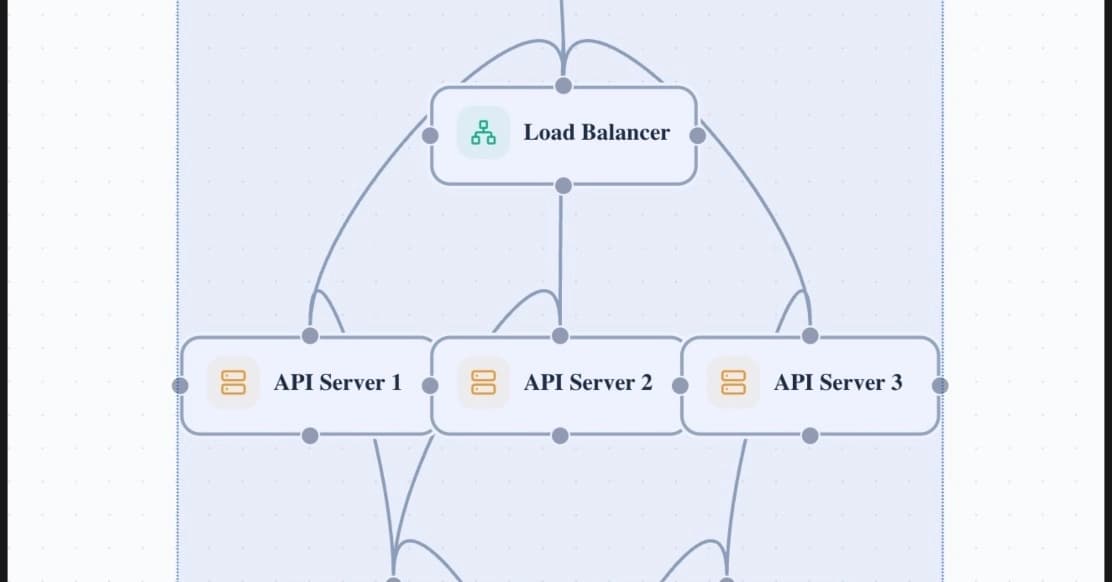
Production deployments need high availability. With ElastiCache, that means replication groups: a primary node plus one or more replicas per shard. Every replica is a full node charged at the same hourly rate as the primary.
Here's where the math gets expensive. A three-shard cluster with one replica per shard using Valkey cache.r7g.xlarge nodes:
- 3 shards × 2 nodes per shard = 6 nodes
- 6 nodes × $0.3496/hour = $2.10/hour
- Monthly cost: approximately $1,531
Need a second replica for read scaling? Now you're at 9 nodes and $2,297/month. The jump from a single node at $255/month to a production-ready cluster at $1,531/month is a 6x multiplier that doesn't show up in the basic pricing calculator.
Multi-AZ replication adds another cost layer. Cross-AZ data transfer runs $0.01 per GiB in each direction. For high-throughput caches handling heavy traffic, this becomes a meaningful line item.
Inefficient code patterns drive cache load higher than necessary
Where Are the Hidden ElastiCache Costs?
Beyond the obvious node and replication charges, several cost drivers hide in the details:
- Idle development clusters: That staging environment nobody uses on weekends still bills 24/7. Consider scheduled scaling or termination for non-production clusters.
- Oversized nodes: Teams often provision for peak load and never revisit. A cache.r7g.xlarge running at 15% utilization should probably be a cache.r7g.large.
- Extended support charges: Running older Redis versions that AWS no longer actively supports incurs additional fees. Stay current.
- Data transfer: Cross-AZ replication and data egress add up for high-throughput workloads. Architect for data locality where possible.
- Reserved Instance mismatch: Buying the wrong Reserved Instance size or engine type wastes money instead of saving it.
Quick Win: Audit Your Idle Clusters
Run a CloudWatch query for cache clusters with less than 5% CPU utilization over the past 30 days. These are candidates for termination, downsizing, or consolidation. Most teams find at least one forgotten cluster burning money.
How to Reduce ElastiCache Costs Without Sacrificing Performance
Cost optimization doesn't mean accepting slower cache responses or less reliability. The biggest savings come from architectural decisions, not compromises:
- Switch to Valkey: 20-33% instant savings for compatible workloads. Test your application's Redis commands against Valkey compatibility documentation.
- Right-size nodes: Use CloudWatch metrics to identify overprovisioned clusters. Memory utilization below 60% suggests room to downsize.
- Reserved Instances: For stable production workloads, 1-year reserved pricing saves roughly 30% versus on-demand. 3-year terms save more but reduce flexibility.
- Consolidate environments: Multiple small caches often cost more than one properly-sized cluster with namespace separation.
- Serverless for variable workloads: ElastiCache Serverless charges based on data stored and compute consumed. For bursty traffic patterns, it can cost less than always-on nodes.
Better code quality reduces cache invalidation bugs that waste resources
ElastiCache Pricing Comparison: On-Demand vs Reserved
For production workloads that run continuously, Reserved Instances change the economics significantly:
| Pricing Model | cache.r7g.xlarge Monthly | Commitment | Savings |
|---|---|---|---|
| On-Demand (Redis OSS) | ~$319 | None | Baseline |
| On-Demand (Valkey) | ~$255 | None | 20% |
| 1-Year Reserved (Valkey) | ~$179 | 12 months | 44% |
| 3-Year Reserved (Valkey) | ~$128 | 36 months | 60% |
The combination of Valkey plus reserved pricing delivers substantial savings. A 12-node cluster drops from $3,828/month (Redis On-Demand) to approximately $1,536/month (Valkey 3-Year Reserved). That's over $27,500 in annual savings on a single cluster.
ElastiCache Pricing FAQ: What Business Leaders Ask
Frequently Asked Questions
How much does ElastiCache actually cost per month?
It depends heavily on your configuration. A minimal dev setup starts around $12/month. A production-ready 6-node Valkey cluster with replication runs approximately $1,531/month. Enterprise deployments with large memory requirements and multiple replicas can exceed $10,000/month. The engine choice alone creates a 20-33% variance.
Is switching from Redis to Valkey worth the effort?
For most teams, yes. Valkey is API-compatible with Redis for standard operations. The migration effort is typically a few hours of testing, and the payoff is 20% lower costs permanently. If you use Redis-specific modules or features, evaluate Valkey compatibility first.
Should we use ElastiCache Serverless or node-based?
Serverless works best for unpredictable or bursty workloads where you'd otherwise overprovision. Node-based clusters are more cost-effective for steady, predictable traffic. Run the numbers for your specific usage pattern. Many teams use Serverless for dev/staging and node-based for production.
How long does it take to migrate from Redis OSS to Valkey?
The technical migration is straightforward since Valkey is a Redis fork with high compatibility. Most teams complete testing in 1-2 days and production migration in a maintenance window. The main work is validating your specific command usage against Valkey's supported feature set.
What's the fastest way to cut our ElastiCache bill by 25%?
Switch from Redis OSS to Valkey for an immediate 20% reduction. Then audit for idle or oversized nodes. Most teams achieve 25%+ savings within a week through these two actions alone, without any application changes.
Financial modeling skills help you build the business case for infrastructure changes
The Bottom Line on ElastiCache Pricing
AWS ElastiCache billing complexity creates opportunities. Teams that understand where the money goes can cut 20-60% from their cache infrastructure costs without sacrificing performance or reliability.
Start with the quick wins: audit for idle clusters, evaluate Valkey migration for Redis workloads, and right-size overprovisioned nodes. Then build the business case for Reserved Instances on stable production clusters.
The cache layer often gets less attention than compute or database costs, but for data-intensive applications, it's a significant budget line. A few hours of analysis typically reveals thousands in annual savings.
Need Help Optimizing Your AWS Costs?
Infrastructure cost optimization requires deep knowledge of AWS pricing models and architectural best practices. If your team needs guidance on ElastiCache right-sizing, engine migration, or broader cloud cost reduction, Logicity's technical advisory services can help you build a data-driven optimization roadmap.
Source: DEV Community
Manaal Khan
Tech & Innovation Writer
Produced with AI assistance and reviewed by the Logicity editorial team. Learn more in our Editorial Policy.