Key Takeaways
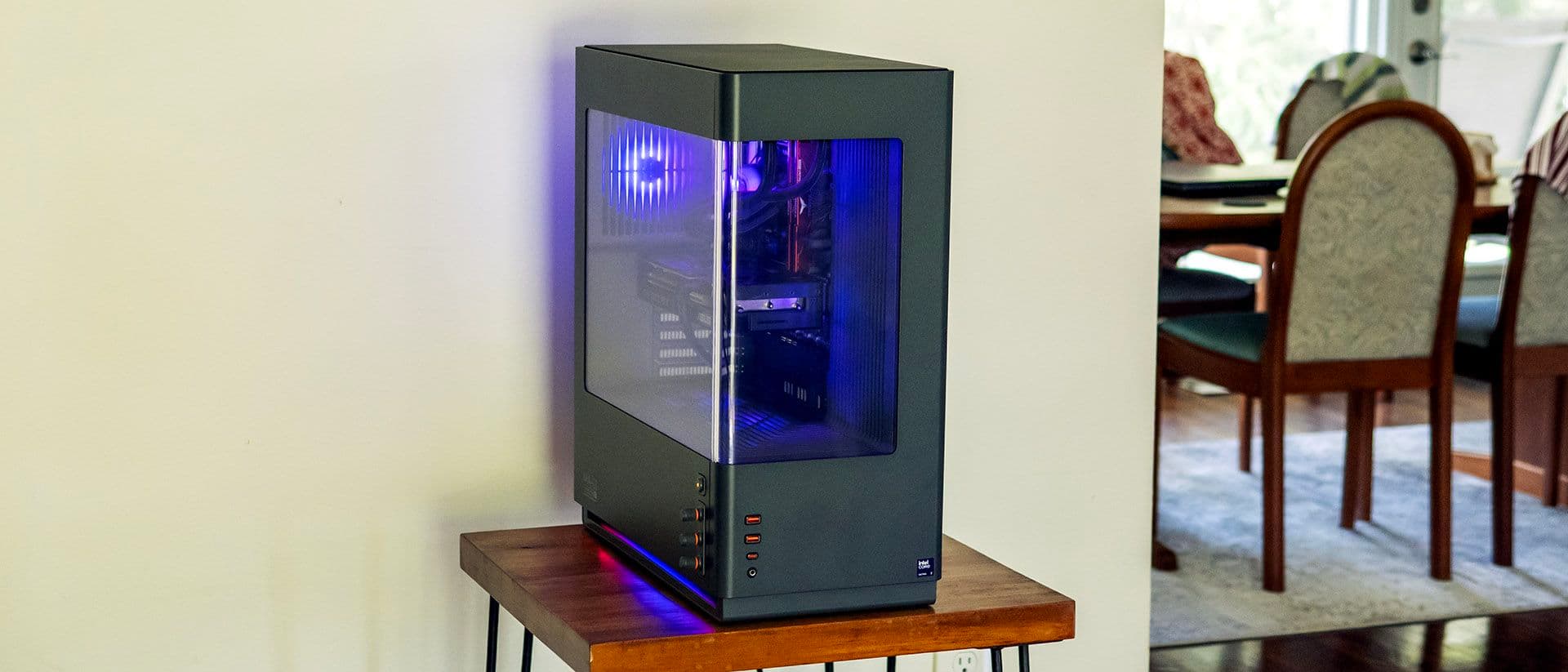
- The GXi3800BSTV2 pairs Intel's Arrow Lake Core Ultra 7 270K with Nvidia's RTX 5070 for $2,310, competitive with DIY builds.
- Physical analog RGB controls eliminate the need for bloated lighting software, a feature Reddit communities have praised.
- Budget concessions include a plastic side panel, no USB4/Thunderbolt 4, and outdated Wi-Fi 6.
CyberPowerPC's new GXi3800BSTV2 gaming desktop combines Intel's latest Arrow Lake processor with Nvidia's RTX 5070 graphics card inside a chassis designed for display cases, not desk shadows. At $2,310, it undercuts what most buyers would spend building an equivalent system themselves. Tom's Hardware's review finds a machine that nails performance and aesthetics while cutting corners in predictable places.
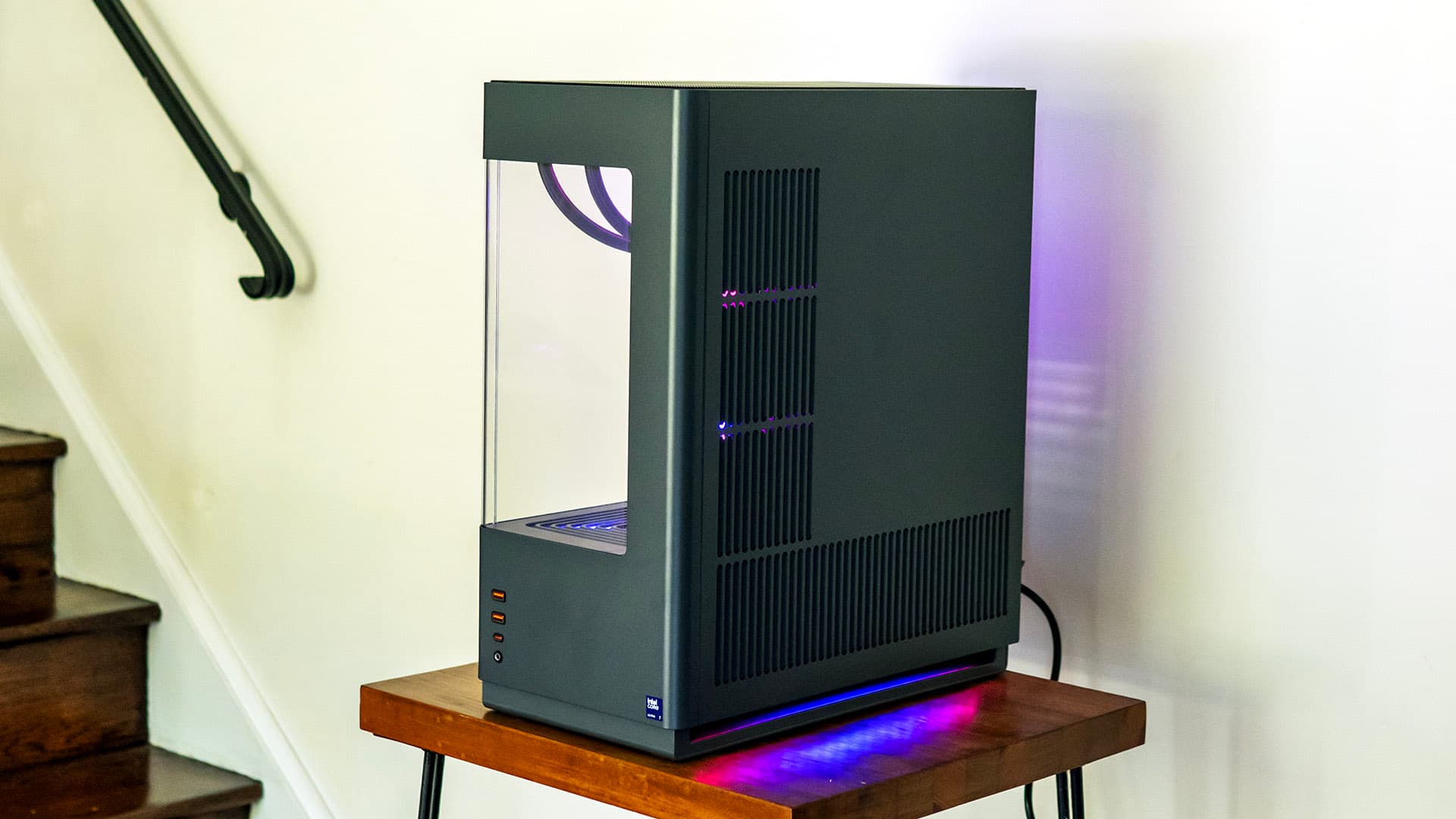
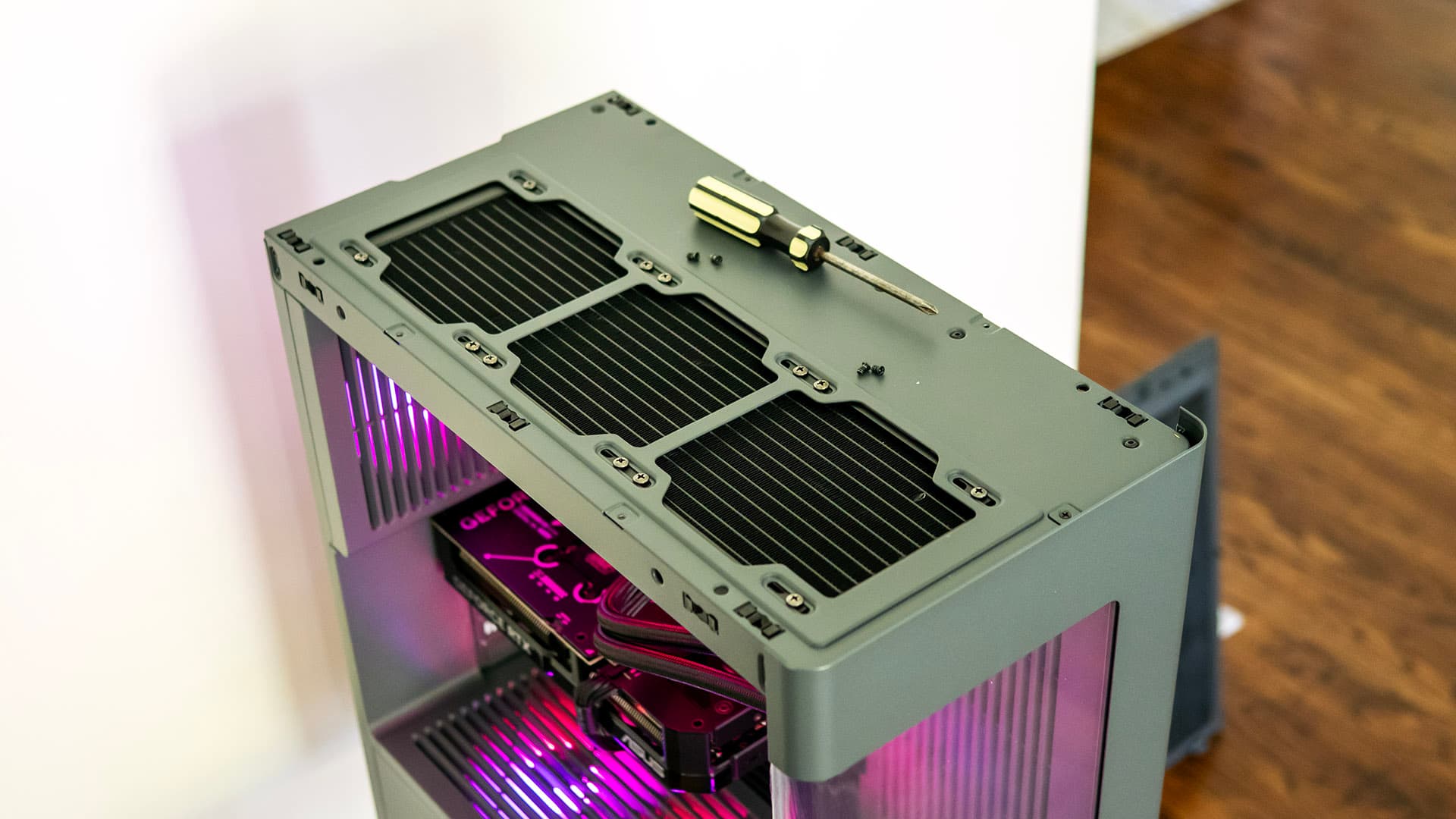
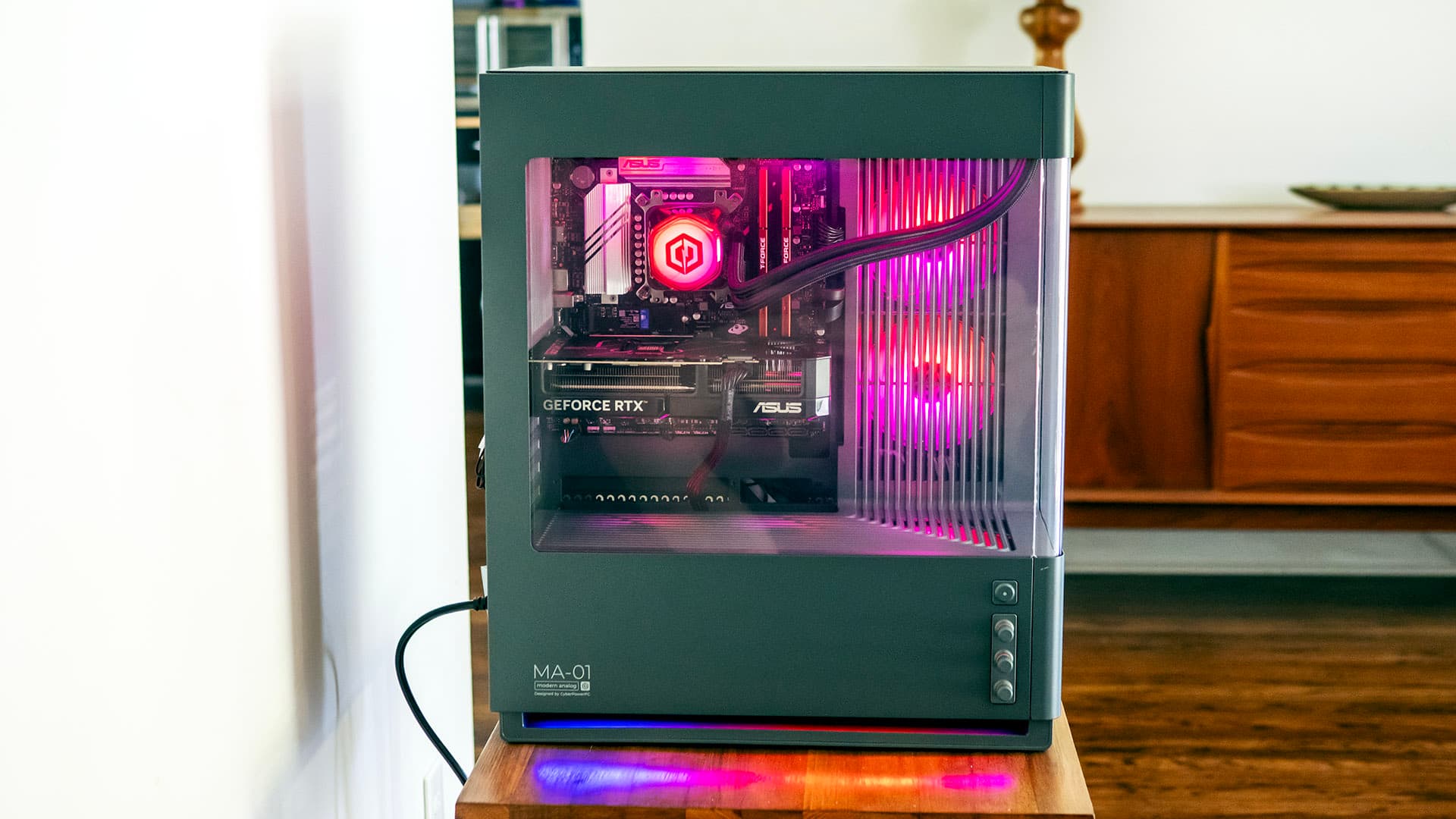
The real hook here is the MA-01 case. CyberPowerPC hid its fans and radiator behind plastic grates, creating clean interior lines that look almost too tidy for a gaming rig. Three unlabeled analog dials on the front panel control RGB color, brightness, and patterns. Twist a knob and the lighting changes in real time. No app required.
What hardware powers this CyberPowerPC build?
The GXi3800BSTV2 runs an Intel Core Ultra 7 270K Plus, the mid-range chip in Intel's Arrow Lake desktop lineup. It pairs with 32GB of DDR5-6400 memory and an Asus Dual Gaming OC variant of Nvidia's GeForce RTX 5070, which carries 12GB of GDDR7 video memory. Storage is a 2TB WD Blue SN5000 PCIe 4.0 SSD. An 850W non-modular power supply handles the load.
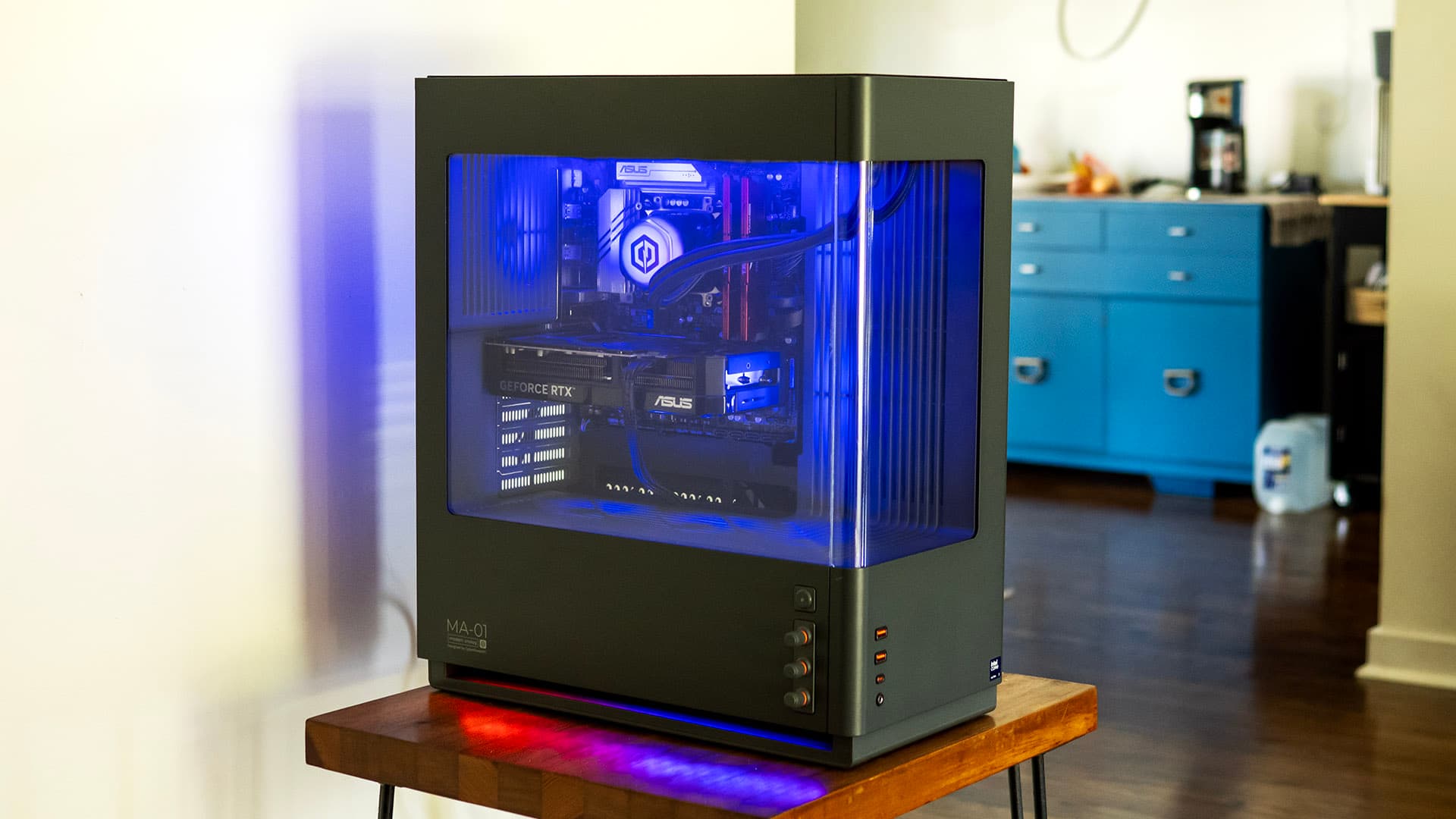
The motherboard is an Asus B860M Max Gaming AX, a micro-ATX board inside a mid-tower case measuring 9.5 x 17.7 x 20.9 inches. Cooling comes from a CyberPowerPC-branded 360mm AIO liquid cooler, which kept the CPU at an average of 48°C during sustained gaming sessions, per Tom's Hardware's testing.
Does the analog RGB control actually work?
Yes, and it is the feature drawing the most positive attention. The three physical dials let users change lighting on the fly without opening any software. Reddit communities on r/buildapc and r/pcmasterrace have called the approach a welcome relief from what some describe as "bloated, spyware-like" lighting apps common in prebuilt systems.
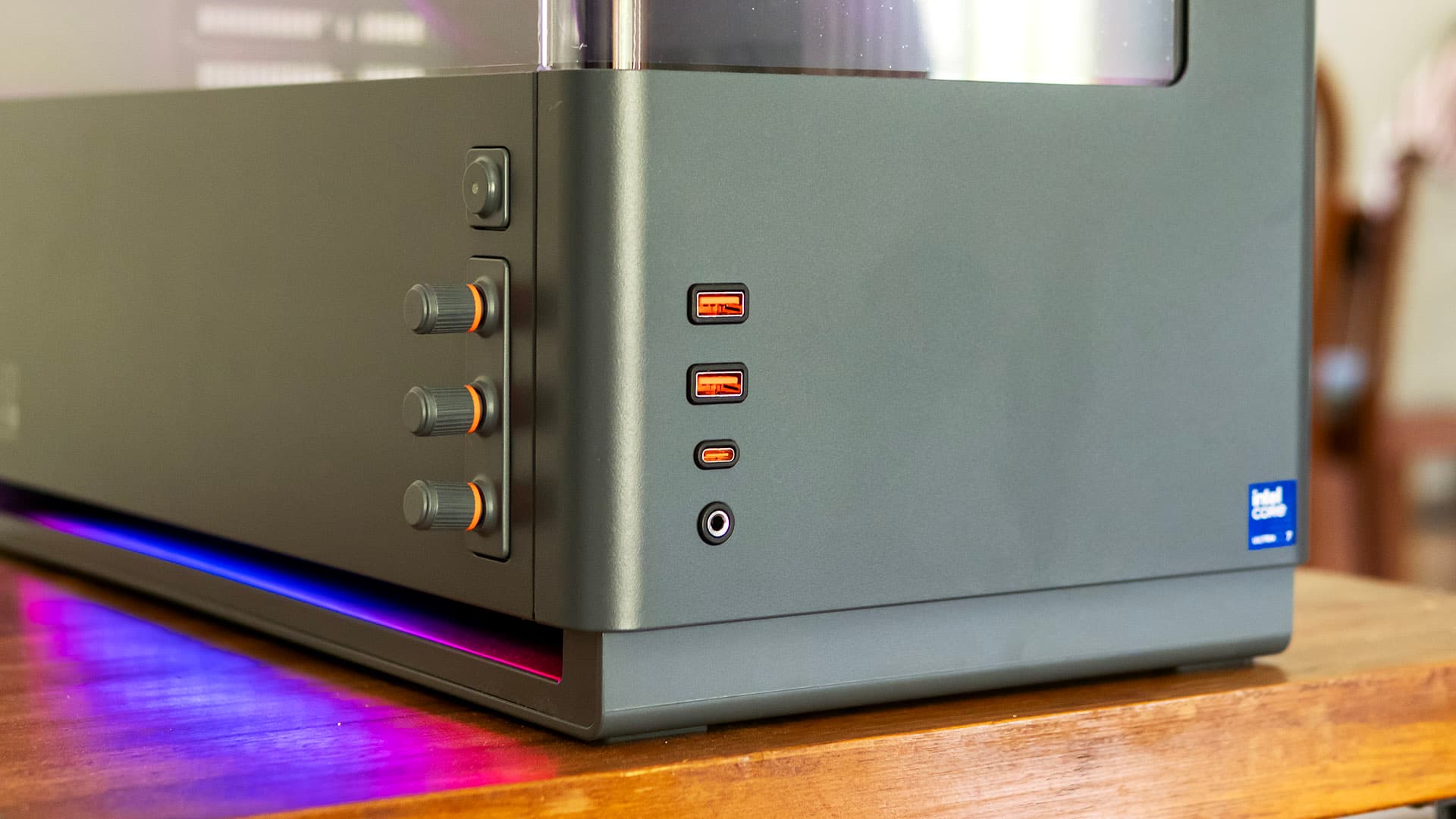
There is a catch. The RGB elements register only as a generic RGB strip in Asus Armoury Crate, so software customization is not possible. CyberPowerPC also skipped RGB-lit memory sticks, a minor missed opportunity given the case's showroom ambitions.
Where did CyberPowerPC cut costs?
Three areas stand out. First, the viewing panel is plastic, not tempered glass. Multiple reviewers and enthusiasts have called this choice "cheap" for a machine over $2,000. Second, there are no USB4 or Thunderbolt 4 ports. The fastest option is a single USB-C running at 20 Gbps. Third, the built-in RealTek RTL8851BE wireless card supports only Wi-Fi 6, now several years behind Wi-Fi 6E and Wi-Fi 7.
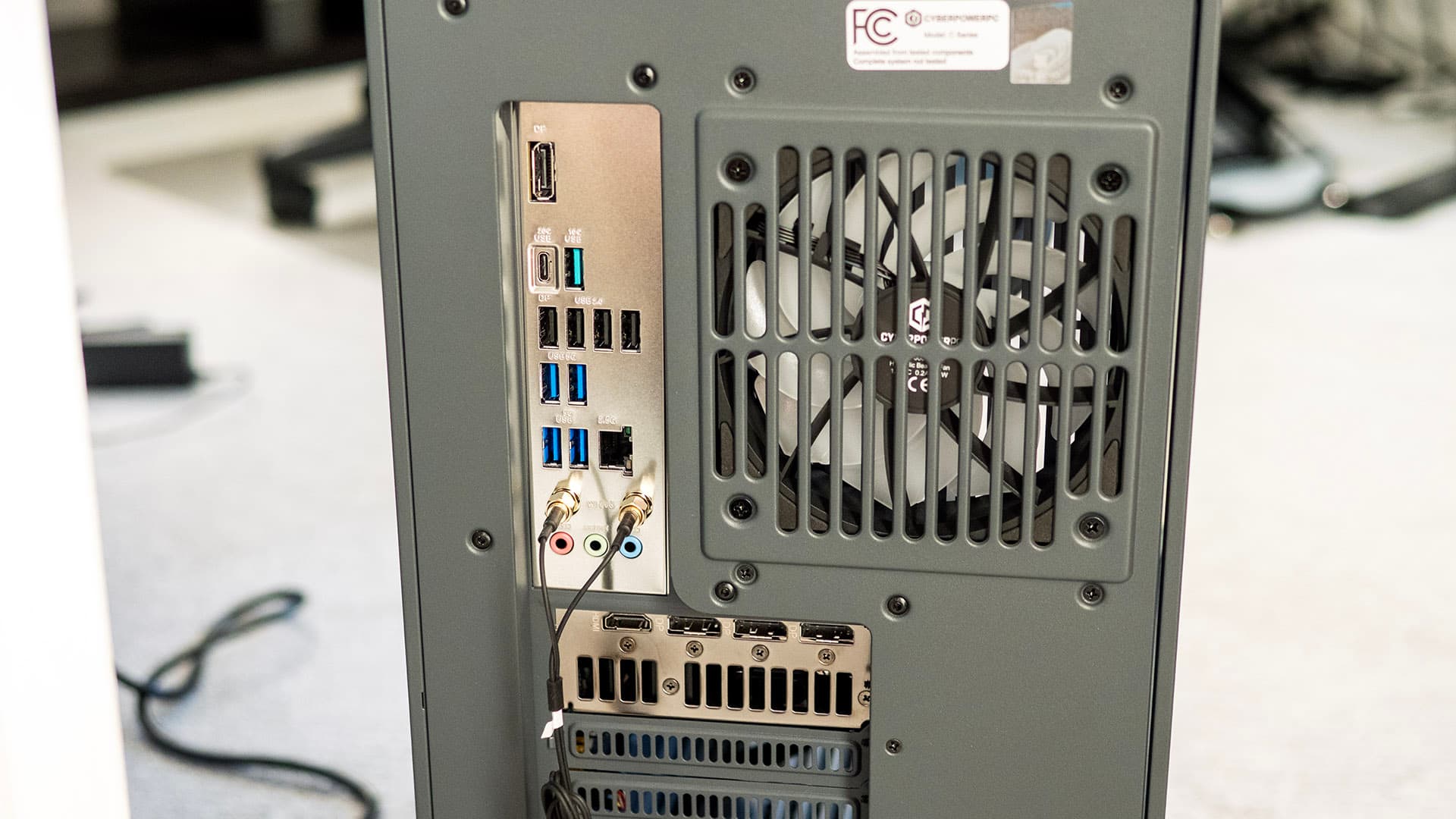
Build quality shows some budget touches too. The rolled steel panels feel thin, and Tom's Hardware noted the bottom analog knob tended to fall off during testing.
✅ Pros
- • Strong 1440p gaming performance from RTX 5070
- • Clean MA-01 case with physical RGB controls
- • 360mm AIO keeps CPU temps at 48°C under load
- • Competitive pricing versus custom builds
❌ Cons
- • Plastic side panel instead of tempered glass
- • No USB4 or Thunderbolt 4 connectivity
- • Wi-Fi 6 only, no Wi-Fi 6E or 7 support
- • Analog knobs feel cheap, prone to detaching
How does gaming performance hold up?
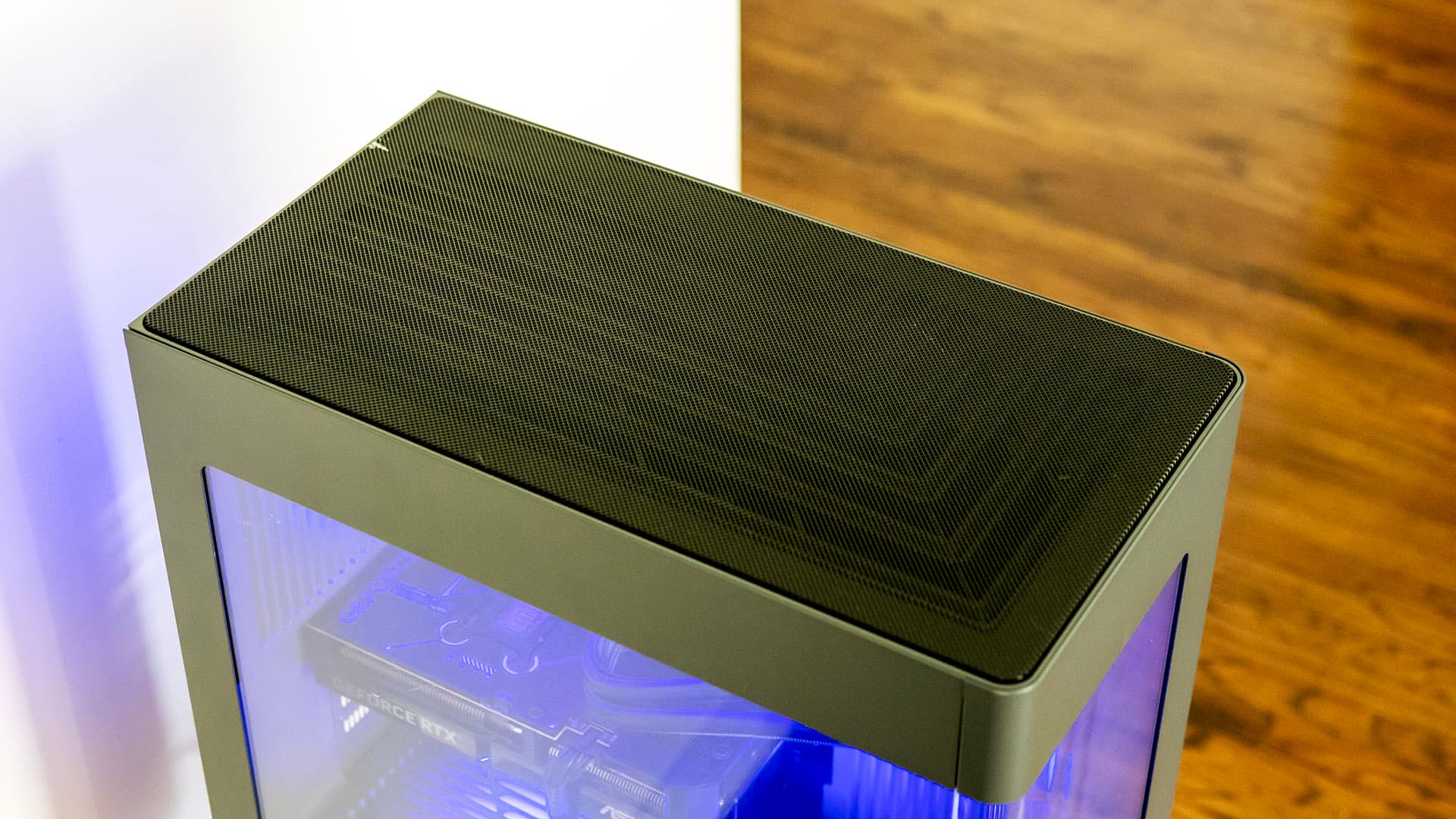
The RTX 5070's 12GB of GDDR7 hits a sweet spot for 1440p gaming. Native 4K at ultra settings will push against that memory ceiling, but for the target audience, a 1440p high-refresh panel, this configuration delivers. The Arrow Lake CPU handles modern titles without bottlenecking the GPU.
“The best gaming desktops don't just chase raw speed — they deliver the right balance of power, style, and value.”
— Tom's Hardware, Expert Review Team
Tom's Hardware awarded this system their Editor's Choice badge, citing strong thermal performance and overall value. The 360mm radiator does its job. The chassis, for all its visual polish, moves enough air.
Is the $2,310 price competitive?
Analysts note that building an equivalent custom rig, sourcing the same CPU, GPU, memory, storage, AIO cooler, and a comparable case, would likely cost more than $2,310 before accounting for time and labor. Prebuilts carry a markup, but CyberPowerPC compressed it here. The company absorbs component sourcing and assembly costs at scale.
For buyers who want a capable 1440p gaming machine without the research and build process, this makes a reasonable case. The compromises, plastic panel, dated Wi-Fi, no Thunderbolt, are real but not disqualifying.
What about upgradeability?
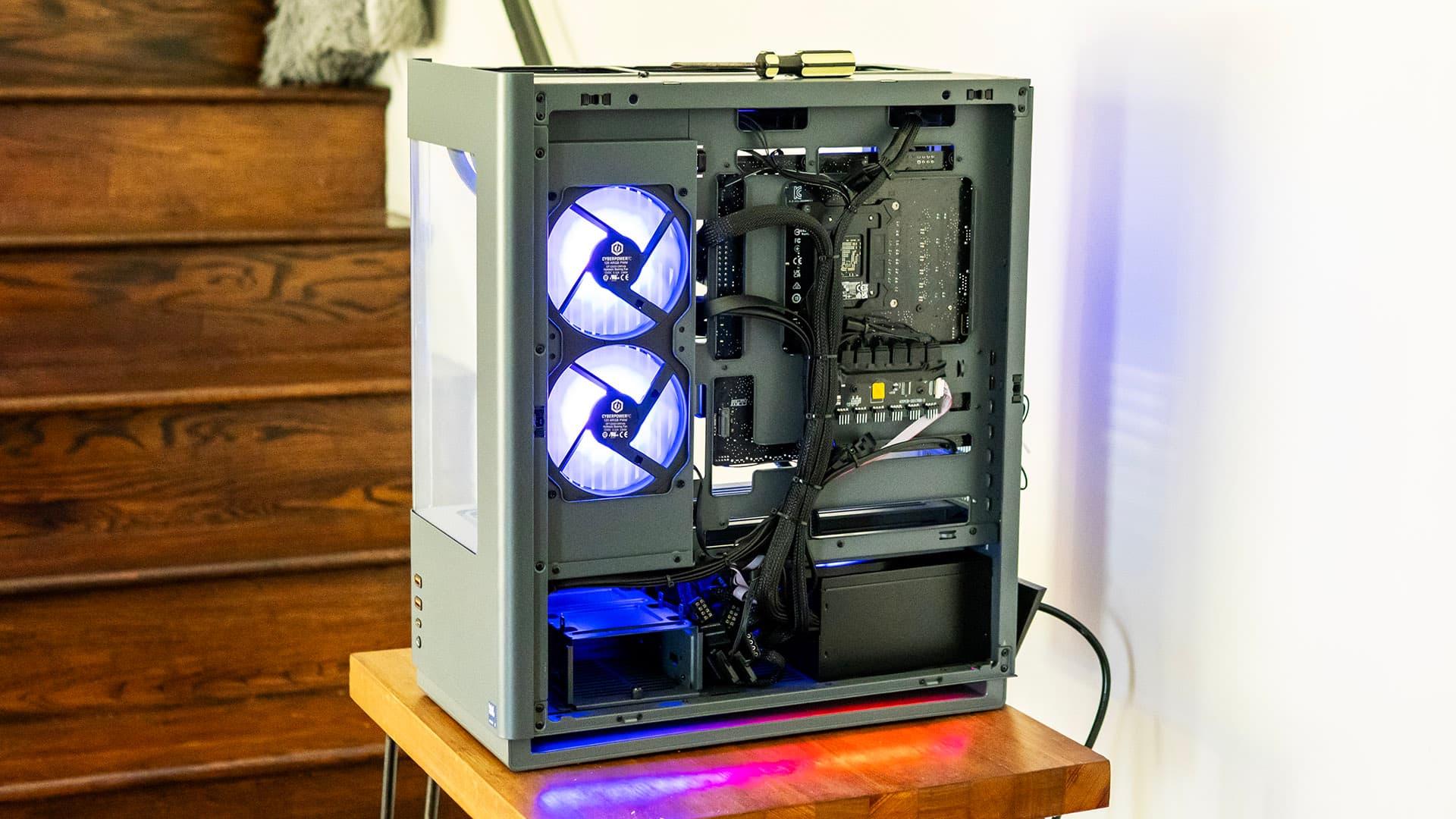
The micro-ATX motherboard limits expansion slots, but DDR5 memory and a socketed LGA 1851 CPU mean future upgrades are possible. Getting inside the case is not straightforward. Both side panels look removable but require some effort. The non-modular 850W PSU adds cable clutter that the hidden-fan aesthetic cannot fully mask.
Storage expansion is limited to what the motherboard supports, one M.2 slot is occupied by the 2TB drive. Plan accordingly if you need additional NVMe capacity.
Logicity's Take
CyberPowerPC made smart tradeoffs. The physical RGB dials solve a genuine annoyance in the prebuilt market, where lighting software often runs at startup, phones home, and eats system resources. Skipping tempered glass and modern Wi-Fi kept the price competitive. Whether those cuts matter depends on your priorities: if you never move the machine near a window and your router is wired, you won't notice. If you care about tactile build quality or plan to use Wi-Fi 7 soon, the compromises sting.
Frequently Asked Questions
What GPU does the CyberPowerPC GXi3800BSTV2 use?
It uses an Asus Dual Gaming OC variant of Nvidia's GeForce RTX 5070 with 12GB of GDDR7 memory.
Does the CyberPowerPC GXi3800BSTV2 have Wi-Fi 6E or Wi-Fi 7?
No. It includes only a RealTek RTL8851BE Wi-Fi 6 card, which is several years behind current standards.
Can you control the RGB lighting without software?
Yes. Three analog dials on the front panel control color, brightness, and lighting patterns without any app.
Is the side panel tempered glass?
No. The viewing panel is plastic, which multiple reviewers have noted feels less premium than glass.
How much does the CyberPowerPC GXi3800BSTV2 cost?
The tested configuration retails for $2,309.99 in the United States.
Another new device pushing performance boundaries at a competitive price point.
Need Help Implementing This?
Looking to spec out a gaming or workstation build for your team? Contact us at hello@logicity.in for vendor-neutral recommendations.
Source: Latest from Tom's Hardware
Manaal Khan
Tech & Innovation Writer
Produced with AI assistance and reviewed by the Logicity editorial team. Learn more in our Editorial Policy.