Key Takeaways
- Correlation analysis can predict how price changes affect sales volume before you test in market
- Companies using data correlation in pricing decisions see 2-8% revenue improvements
- Understanding variable relationships helps identify which metrics actually drive your business outcomes
Read in Short
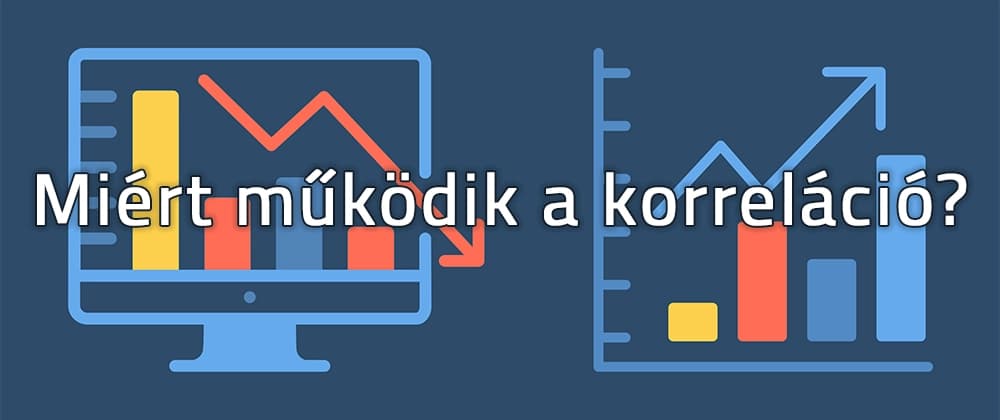
Correlation analysis measures how strongly two business variables move together. A correlation of +1 means perfect positive relationship (price goes up, sales go up). A correlation of -1 means perfect inverse relationship (price goes up, sales go down). For business leaders, this means you can predict outcomes before making expensive changes to pricing, marketing spend, or operations.
What Is Correlation Analysis and Why Should CEOs Care?
Your CFO mentions that marketing spend and revenue seem connected. Your sales director insists that pricing changes killed last quarter's numbers. Your operations team claims inventory levels predict customer satisfaction scores. Everyone has theories. Correlation analysis tells you who's actually right.
Correlation is a standardized statistical measure that quantifies the relationship between two variables. It produces a number between -1 and +1. The closer to +1 or -1, the stronger the relationship. Zero means no relationship exists.
Here's the business reality: companies that understand correlation between their key metrics make better decisions. A McKinsey study found that data-driven organizations are 23 times more likely to acquire customers and 6 times more likely to retain them. Correlation analysis is one of the foundational tools that makes this possible.
How Does Correlation Analysis Work in Business Decisions?
Let's break this down with a practical example that mirrors what the original technical analysis demonstrated. Imagine you're analyzing the relationship between product pricing and sales volume.
You have five products with prices of 1, 2, 3, 4, and 5 units. Their sales volumes are 2, 4, 6, 8, and 10 units respectively. Even without running the math, you can see a pattern: every time price increases by 1, sales increase by 2.
The Three Components of Correlation
To calculate correlation, you need: (1) Standard deviation of your independent variable (like price), (2) Standard deviation of your dependent variable (like sales volume), and (3) Covariance between the two variables. The formula divides covariance by the product of both standard deviations, giving you a normalized score between -1 and +1.
In this example, the correlation equals exactly +1.0. That's a perfect positive correlation. In the real world, you'll rarely see perfect correlations. But correlations above 0.7 or below -0.7 are considered strong enough to inform business decisions.
Correlation Analysis for Pricing Strategy: Real Applications
The pricing and sales example above illustrates positive correlation, but most businesses face the opposite scenario. Typically, when prices go up, sales volume goes down. That's negative correlation, and understanding its strength helps you optimize your pricing strategy.
| Correlation Strength | Value Range | Business Implication |
|---|---|---|
| Strong Positive | +0.7 to +1.0 | Variables move together. Increasing one reliably increases the other. |
| Moderate Positive | +0.4 to +0.7 | Some relationship exists but other factors matter significantly. |
| Weak/None | -0.4 to +0.4 | No meaningful relationship. Don't base decisions on assumed connection. |
| Moderate Negative | -0.7 to -0.4 | Inverse relationship with other influencing factors. |
| Strong Negative | -1.0 to -0.7 | Variables move opposite. Increasing one reliably decreases the other. |
Here's where it gets valuable for executives: if your price-to-sales correlation is -0.9, you know price increases will significantly hurt volume. But if it's only -0.3, you have pricing power. You can raise prices without proportional sales drops.
Beyond Pricing: Where Business Leaders Use Correlation
- Marketing ROI: Correlate ad spend by channel with conversion rates to find your highest-performing investments
- Customer Success: Correlate support response times with churn rates to justify staffing decisions
- Operations: Correlate inventory levels with fulfillment speed to optimize working capital
- HR: Correlate employee engagement scores with productivity metrics to prove culture investments work
- Product: Correlate feature usage with retention to prioritize your development roadmap
The pattern across all these applications is the same. You're taking two things people assume are connected and proving whether that assumption holds up in your specific business context.
AI tools can automate correlation analysis and surface insights from your business data faster
The Critical Limitation: Correlation Is Not Causation
Every business leader needs this tattooed somewhere visible: correlation does not prove causation. Just because two variables move together doesn't mean one causes the other.
“Ice cream sales and drowning deaths are highly correlated. Both increase in summer. But ice cream doesn't cause drowning. A third variable (hot weather) drives both.”
— Classic statistics example
In business contexts, this matters enormously. You might find that companies with ping pong tables have higher revenue growth. The correlation could be strong. But the ping pong table didn't cause growth. More likely, well-funded companies can afford both ping pong tables and talented employees who drive growth.
Executive Decision Rule
Use correlation to identify relationships worth investigating further. Use controlled experiments (A/B tests, pilot programs) to prove causation before making major strategic bets.
How to Implement Correlation Analysis in Your Organization
- Identify your key business questions. What relationships do you suspect but haven't proven?
- Gather clean data. Correlation analysis is only as good as your data quality.
- Start with simple two-variable correlations before attempting multivariate analysis.
- Use tools your team already knows. Excel can calculate correlation with a single function.
- Present findings visually. Scatter plots make correlation intuitive for non-technical stakeholders.
- Always ask: what third variable might be driving both? Challenge your own findings.
Most business intelligence tools include correlation capabilities. If you're using Tableau, Power BI, or even Google Sheets, you can run correlation analysis without hiring a data scientist. The math is straightforward. The hard part is asking the right questions.
AI assistants can help analyze data patterns and explain statistical relationships in plain language
What's the ROI of Better Correlation Analysis?
Quantifying the return on statistical analysis is tricky, but consider this: every pricing decision, marketing budget allocation, and operational change involves assumptions about variable relationships. When those assumptions are wrong, you lose money.
A company doing $50 million in annual revenue that improves pricing decisions by just 3% through better correlation analysis adds $1.5 million to the top line. The analysis itself costs almost nothing once you have the data.
Common Mistakes in Business Correlation Analysis
✅ Pros
- • Analyzing sufficient data points (minimum 30+ observations for reliability)
- • Testing correlations across different time periods to confirm stability
- • Combining correlation with domain expertise and common sense
- • Using correlation as a starting point for deeper investigation
❌ Cons
- • Drawing conclusions from small sample sizes
- • Assuming correlation means you can change one variable to affect another
- • Ignoring potential third variables that might explain both
- • Over-relying on historical correlations that may not hold in changed conditions
The 2008 financial crisis provides a cautionary tale. Many risk models assumed historical correlations between asset classes would hold. When market conditions changed, correlations shifted dramatically, and models failed catastrophically.
Frequently Asked Questions About Correlation Analysis
Frequently Asked Questions
How much does correlation analysis cost to implement?
Basic correlation analysis is essentially free if you have the data. Excel, Google Sheets, and most BI tools include built-in correlation functions. More sophisticated multivariate analysis might require specialized software ($100-500/month) or data science expertise ($80-200/hour consulting rates). Most businesses can start with free tools.
How long does it take to see results from correlation analysis?
You can run a correlation calculation in seconds once your data is organized. The real time investment is in data preparation (days to weeks depending on data quality) and in designing meaningful questions to analyze. Most organizations can complete an initial correlation analysis project in 2-4 weeks.
Is correlation analysis worth the investment for small businesses?
Yes, arguably more so than for large enterprises. Small businesses have tighter margins and fewer resources to waste on bad assumptions. Understanding which activities actually correlate with revenue helps small teams focus limited resources on what works.
What correlation strength should trigger business action?
Generally, correlations above 0.7 or below -0.7 are considered strong enough to warrant attention. However, context matters. A 0.5 correlation in a noisy industry might be highly significant, while a 0.8 correlation that's already well-understood adds less value. Focus on correlations that challenge assumptions or reveal new insights.
Can AI tools automate correlation analysis?
Yes, modern AI and machine learning tools can identify correlations across hundreds of variables simultaneously, flagging relationships humans might miss. Tools like automated ML platforms can surface unexpected correlations, though human judgment remains essential for determining which correlations are meaningful versus spurious.
Data security matters when running analytics on sensitive business information
Moving From Correlation to Competitive Advantage
Correlation analysis is a starting point, not an endpoint. The real competitive advantage comes from building a culture where decisions are tested against data, assumptions are challenged, and insights lead to action.
Start simple. Pick one business question you've been debating. Gather the relevant data. Run the correlation. You might confirm what everyone suspected. You might discover the assumed relationship doesn't exist. Either way, you'll make a better decision than you would have made based on intuition alone.
The companies that win aren't necessarily the ones with the most data or the fanciest tools. They're the ones that ask better questions and actually use the answers. Correlation analysis is one of the simplest, most accessible tools for getting there.
Need Help Implementing Data Analytics?
Logicity helps business leaders turn raw data into actionable insights. Whether you need help setting up your first correlation analysis or building a comprehensive analytics strategy, our team combines technical expertise with business acumen. Contact us to discuss your specific challenges.
Source: DEV Community
Manaal Khan
Tech & Innovation Writer
Produced with AI assistance and reviewed by the Logicity editorial team. Learn more in our Editorial Policy.