Key Takeaways
- Claude Science launches in beta as Anthropic's first research-specific Claude variant
- Dario Amodei pushed back his 'compressed 21st century' prediction from 5-10 years to possibly a decade away
- Pharma executives from Bristol Myers Squibb, Novartis, and Genentech participated, signaling serious enterprise interest
Anthropic launched Claude Science, a research-focused version of its Claude AI, at a San Francisco event on June 30. The beta product ships with tools designed specifically for scientists: richer interfaces for finding, manipulating, and understanding research data. It's Anthropic's clearest signal yet that the company sees specialized AI models, not just general chatbots, as the path to real scientific value.
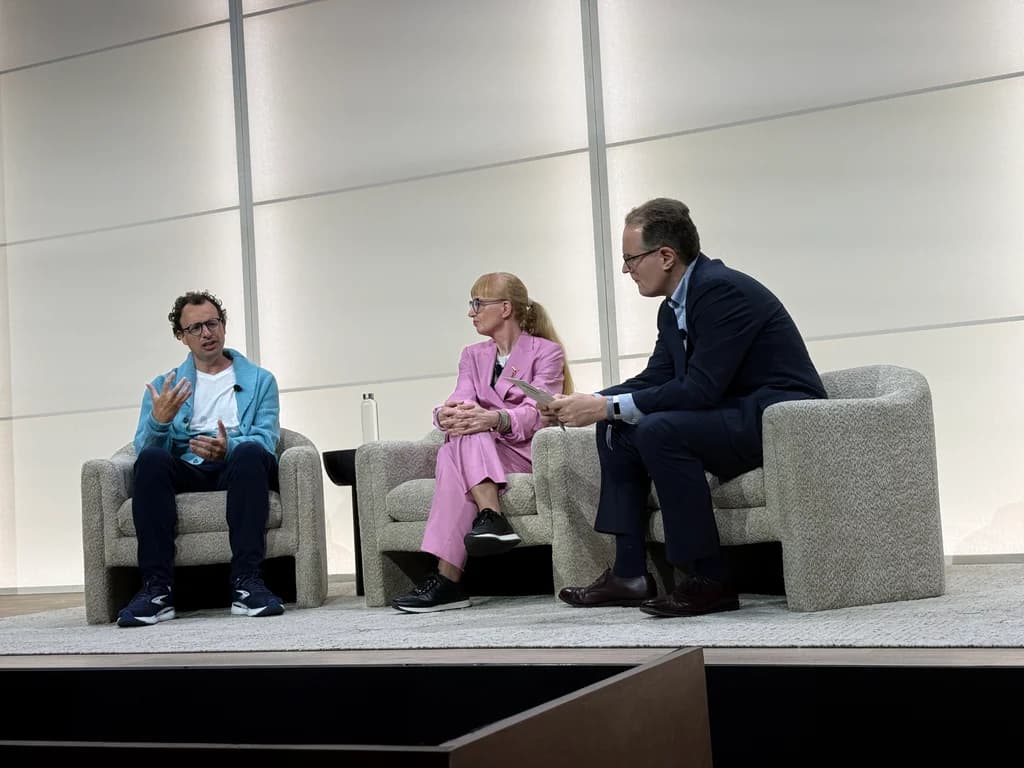
The event, titled "The Briefing: AI for Science," also featured CEO Dario Amodei walking back one of his boldest predictions. In his October 2024 essay "Machines of Loving Grace," Amodei wrote that AI would compress 50-100 years of biological progress into 5-10 years. At Yerba Buena Center, he was more cautious. He said he doesn't expect this "compressed 21st century" to arrive in the next couple of years. It "might" happen around 2036.
What does Claude Science actually do?
Alexander Tarashansky, who led development on Claude Science, demoed the product on stage. The interface retains Claude's chatbot feel but adds a richer toolkit for research workflows. Scientists can query datasets, manipulate information, and explore findings in ways that standard Claude doesn't support.
Fast Company's Harry McCracken, who attended the event, called the demo impressive. "It has the basic feel of a chatbot but also a much richer set of tools for finding, manipulating, and understanding information," he wrote. The product targets researchers in biology and related sciences, though Anthropic hasn't disclosed pricing or availability beyond the beta.
For product teams building AI-assisted research tools, Claude Science represents a new competitive benchmark. Teams using Perplexity for research workflows or building custom solutions on top of Claude's API now have a specialized option to evaluate.
Disclosure
Some links in this post are affiliate links — Logicity earns a commission if you sign up, at no extra cost to you. We only link products we have used or actively recommend.
Why did Amodei soften his timeline?
Amodei's original essay was aggressively optimistic. He predicted AI would achieve in a decade what would otherwise take biologists a century. That claim attracted attention and skepticism in equal measure.
At the June 30 event, he hedged. The compression effect isn't coming in "the next couple of years." It might arrive around 2036. In AI timelines, 2036 feels distant. But Amodei's shift matters less as a prediction and more as positioning. Anthropic is telling enterprise customers and scientific partners to expect steady progress, not miracles next quarter.
The panel discussions reinforced this realism. Participants included GLP-1 drug inventor Lotte Knudsen, Bristol Myers Squibb CEO Chris Boerner, Novartis CEO Vas Narasimhan, and Genentech EVP Aviv Regev. McCracken noted the conversations "were surprisingly substantive, acknowledging that even rapidly improving AI can do only so much to advance fields such as drug discovery."
Who showed up, and why it matters
The guest list tells a story. Knudsen's GLP-1 research led to drugs like Ozempic. Boerner runs a $100+ billion pharma company. Narasimhan has publicly discussed AI investments at Novartis. Regev oversees research at Genentech, one of biotech's most storied names.
These aren't AI enthusiasts on the conference circuit. They're decision-makers evaluating whether Anthropic's tools fit into billion-dollar R&D pipelines. Their presence suggests Anthropic has moved past proof-of-concept conversations into serious enterprise discussions.
Drug discovery is a brutal test case for AI claims. Timelines stretch for decades. Most candidates fail. Regulatory approval adds years. Any AI company promising to compress that process needs credibility with people who understand the constraints. Anthropic appears to be building that credibility.
What this means for AI product teams
Claude Science's launch confirms a trend: foundation model companies are moving toward specialized variants. OpenAI has done this with GPT-4 fine-tunes and custom GPTs. Google has domain-specific models in healthcare. Anthropic is now doing the same for science.
For teams building AI-assisted workflows, the implication is clear. General-purpose models remain useful, but specialized models will increasingly outperform them in domain-specific tasks. If you're building research tools, you'll need to evaluate these specialized options against general APIs and custom fine-tunes.
The event also signals that Anthropic is pursuing enterprise revenue more aggressively. Inviting pharma CEOs to a showcase event isn't about research collaboration alone. It's about sales cycles.
Logicity's Take
Claude Science is Anthropic's clearest admission that chatbots alone won't win enterprise deals. Specialized models are now table stakes for big accounts. For AI builders, the strategic question shifts: do you build on top of these specialized variants, or do you fine-tune general models yourself? The former is faster; the latter gives you more control. With Amazon's $4 billion backing and Google's $2 billion, Anthropic has the runway to keep shipping specialized products. Expect more vertical-specific Claude variants over the next year.
The compressed 21st century, delayed
Amodei's original essay remains influential. The phrase "compressed 21st century" has become shorthand for AI's potential to accelerate scientific discovery. But the timeline shift matters.
Pushing the prediction to 2036 gives Anthropic room to deliver incremental progress without being judged against an impossible benchmark. It also reflects genuine uncertainty. Drug discovery timelines depend on clinical trials, regulatory processes, and biological complexity that AI can't fully shortcut.
McCracken's assessment of the event captures the tone: optimism prevailed, but "it wasn't unbridled." That balance, claiming ambition while acknowledging limits, may be exactly what enterprise customers need to hear.
Frequently Asked Questions
What is Claude Science?
Claude Science is a research-tuned version of Anthropic's Claude AI, currently in beta. It includes specialized tools for scientists to find, manipulate, and understand research data, going beyond standard chatbot capabilities.
When will Claude Science be publicly available?
Anthropic launched Claude Science in beta on June 30, 2025. The company has not announced pricing or general availability dates.
What is the compressed 21st century?
A concept from Dario Amodei's October 2024 essay predicting AI will compress 50-100 years of biological research progress into 5-10 years. At Anthropic's June 2025 event, Amodei suggested this might happen around 2036.
Which pharma companies are working with Anthropic?
Anthropic's event included CEOs from Bristol Myers Squibb and Novartis, plus executives from Genentech and GLP-1 pioneer Lotte Knudsen. Specific partnership details were not disclosed.
How does Claude Science compare to other AI research tools?
Claude Science competes with specialized research AI tools and general-purpose models like GPT-4 and Perplexity. Its differentiation lies in features designed specifically for scientific workflows, though detailed benchmarks aren't yet public.
Another look at how AI companies are competing for talent and positioning for long-term enterprise value
Need Help Implementing This?
Building AI-assisted research workflows? Contact Logicity's consulting team to evaluate Claude Science, fine-tuning options, and integration strategies for your product roadmap.
Source: Fast Company / Harry McCracken
Anthropic تستخدم Claude Science داخلياً لأبحاث الأمراض النادرة
The new article reveals that Anthropic will use Claude Science internally for its own research into drugs for rare, neglected diseases. It also provides a clearer comparison stating that Claude Science works similarly to Claude Code but for scientific research, with tools specifically for computational biology and drug development.
Huma Shazia
Senior AI & Tech Writer
Produced with AI assistance and reviewed by the Logicity editorial team. Learn more in our Editorial Policy.