Key Takeaways
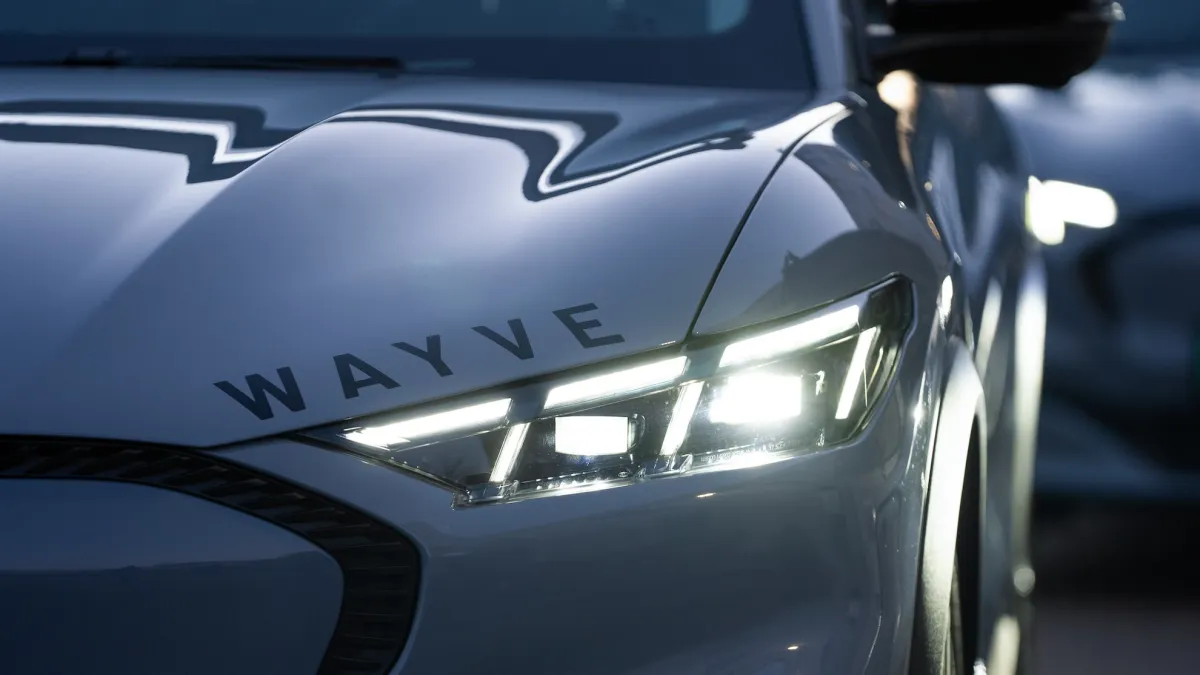
- Wayve is running an $85M tender offer at its $8.5B valuation, letting employees sell vested equity to existing and new investors
- This is Wayve's second liquidity event, part of a growing trend among AI startups using tender offers as retention tools
- The company has doubled headcount to 1,200 employees and plans robotaxi pilots with Uber later this year
Wayve, the UK autonomous driving company, is giving employees a chance to cash out $85 million in vested equity. The tender offer, led by existing and new investors, holds the company's valuation at $8.5 billion, the same price set during its $1.2 billion Series D in February.
This is Wayve's second employee liquidity event. The first came alongside its $1.05 billion Series C in May 2024. Both signal a company confident enough in its trajectory to let early employees take money off the table without forcing a full exit.
Why AI startups are running tender offers now
Wayve is not alone. A wave of AI startups has turned to tender offers as a retention mechanism. The logic is straightforward: if employees can sell a portion of their shares at a fair price, they have less incentive to leave for a competitor or start their own company the moment their options vest.
Decagon, which builds customer service AI agents for Duolingo and Hertz, recently completed a tender. So did ElevenLabs, the voice-generation company behind much of the internet's synthetic speech. Linear, a project management tool for engineering teams, ran one too. Clay, a sales automation platform, has done two in the past nine months.
The common thread: investors want in. These companies are growing fast enough that existing backers, plus new ones eager for allocation, will pay a premium for equity even outside a formal funding round. They are betting these businesses will be worth more later.
What makes Wayve different from other self-driving companies
Most autonomous vehicle programs rely on high-definition maps and LIDAR sensor arrays, combined with rule-based programming. Waymo's robotaxis, for example, operate in geofenced areas where every curb and lane marking has been pre-mapped.
Wayve takes a different approach. Its software is an end-to-end neural network that learns to drive from data alone, primarily using cameras rather than expensive LIDAR setups. The founders, Alex Kendall and Amar Shah, argue this mimics how humans learn to drive through experience rather than memorizing maps.
The bet is that this approach generalizes better. A system trained on UK roads should, in theory, adapt to German highways or Japanese cities without starting from scratch. That flexibility is what Wayve is selling to automakers.
Wayve's commercial roadmap: Uber and Nissan
Wayve has two major partnerships in progress. The company is targeting robotaxi pilot launches with Uber later this year. Separately, it plans to integrate its AI software into Nissan's next-generation driver-assist systems starting in 2027.
The Nissan deal points to Wayve's B2B strategy. Rather than building its own fleet of robotaxis like Waymo or Cruise, Wayve wants to license its software to carmakers. "This is about building technology that can work with any car manufacturer, not just custom robotaxis," CEO Alex Kendall has said.
To execute on both fronts, the company has more than doubled its headcount to 1,200 employees over the past year. That rapid hiring makes employee retention, and the tender offer as a retention tool, particularly important.
The investors backing Wayve's valuation
The February Series D that set the $8.5 billion valuation was led by Eclipse, Balderton, and SoftBank Vision Fund 2. Strategic investors included Microsoft, NVIDIA, and Uber. Ontario Teachers' Pension Plan and Baillie Gifford also participated.
That mix matters. Microsoft and NVIDIA bring cloud compute and chip expertise. Uber provides a potential distribution channel for robotaxi deployments. The pension funds and asset managers provide patient capital willing to wait years for an exit.
What the tender offer means for Wayve's timeline
Tender offers are not exits. They let employees take partial liquidity while keeping their remaining equity tied to the company's future. For Wayve, this buys time. The company does not need to rush toward an IPO or acquisition to reward early team members.
That matters in autonomous driving, where commercialization has taken longer than anyone predicted a decade ago. Waymo has been at this since 2009. Cruise, after billions from GM, pulled its robotaxis off the road in 2023 following an accident. The path to profitability is long.
By offering liquidity now, Wayve can keep its team intact through the Uber pilots and Nissan integration without promising an imminent public offering or sale.
Logicity's Take
Wayve's tender offer is smart timing. The company is about to enter its most public phase with Uber pilots, which will invite scrutiny of its tech in ways that testing on UK streets has not. Keeping experienced engineers through that transition matters more than the $85 million price tag. The B2B licensing model also positions Wayve differently than Waymo or Tesla. If the software works, it could end up in millions of Nissans rather than thousands of robotaxis. That is a very different scale of impact, and a very different revenue model.
Frequently Asked Questions
What is a tender offer for startup employees?
A tender offer is a structured opportunity for employees to sell some of their vested shares to investors, typically at the company's most recent valuation. It provides liquidity without requiring a full company exit like an IPO or acquisition.
How much is Wayve worth in 2026?
Wayve is valued at $8.5 billion, a figure set during its $1.2 billion Series D in February 2026. The current tender offer maintains that same valuation.
Who are Wayve's main investors?
Wayve's backers include SoftBank Vision Fund 2, Microsoft, NVIDIA, Uber, Eclipse, Balderton, Ontario Teachers' Pension Plan, and Baillie Gifford.
When will Wayve's robotaxis launch with Uber?
Wayve is targeting robotaxi pilot launches with Uber later in 2026. Separately, its AI software will integrate into Nissan driver-assist systems starting in 2027.
How does Wayve's self-driving tech differ from Waymo?
Wayve uses end-to-end neural networks and primarily camera-based perception, learning to drive from data. Waymo relies on pre-built HD maps, LIDAR arrays, and rule-based programming for its geofenced robotaxi zones.
Need Help Implementing This?
If you're evaluating autonomous vehicle partnerships or AI licensing deals, Logicity can connect you with analysts who track this market. Reach out via our contact page for introductions.
Source: TechCrunch / Marina Temkin
Huma Shazia
Senior AI & Tech Writer
Produced with AI assistance and reviewed by the Logicity editorial team. Learn more in our Editorial Policy.




