Key Takeaways

- Claude Opus 4.8 runs 2.5x faster than previous versions with a new Fast Mode
- Effort Control lets users trade reasoning depth for speed on simpler tasks
- Internal benchmarks show a 4x reduction in missed coding errors versus Opus 4.7
Anthropic has released Claude Opus 4.8, the latest version of its flagship AI model. The update brings a 2.5x speed improvement in a new Fast Mode, a feature called Effort Control that lets users adjust how hard the model thinks, and significant gains in coding accuracy. For developers and enterprises already using Claude, the release addresses two long-standing complaints: Opus was smart but slow, and you couldn't tell it to spend less effort on simple questions.
The release marks a strategic shift for Anthropic. Claude is no longer just a chatbot you talk to. It's becoming what the company calls an "agentic workspace," capable of coordinating hundreds of sub-tasks to solve problems that previously required days of human effort.
“With Claude 4.8, we aren't just making a smarter chatbot; we are building an agentic workspace that can coordinate hundreds of sub-tasks to solve problems that previously took days.”
— Dario Amodei, CEO of Anthropic
What's New in Claude Opus 4.8
Three changes define this release: speed, control, and coding performance.
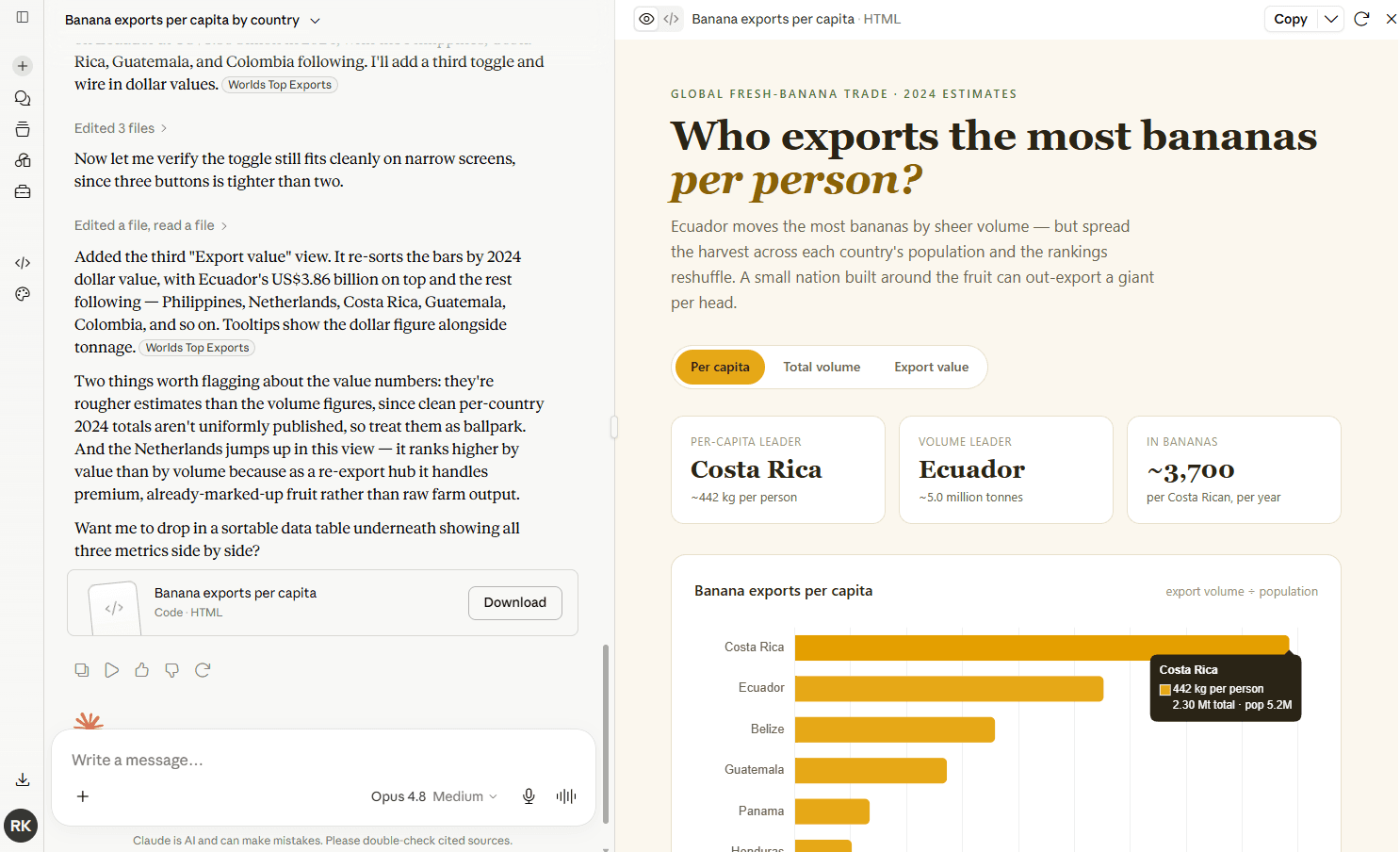
The new Fast Mode delivers responses 2.5x faster than previous Opus versions. Anthropic also claims a 3x reduction in cost for high-speed operations when using this mode. For teams running Claude at scale, that translates to real savings on API bills.
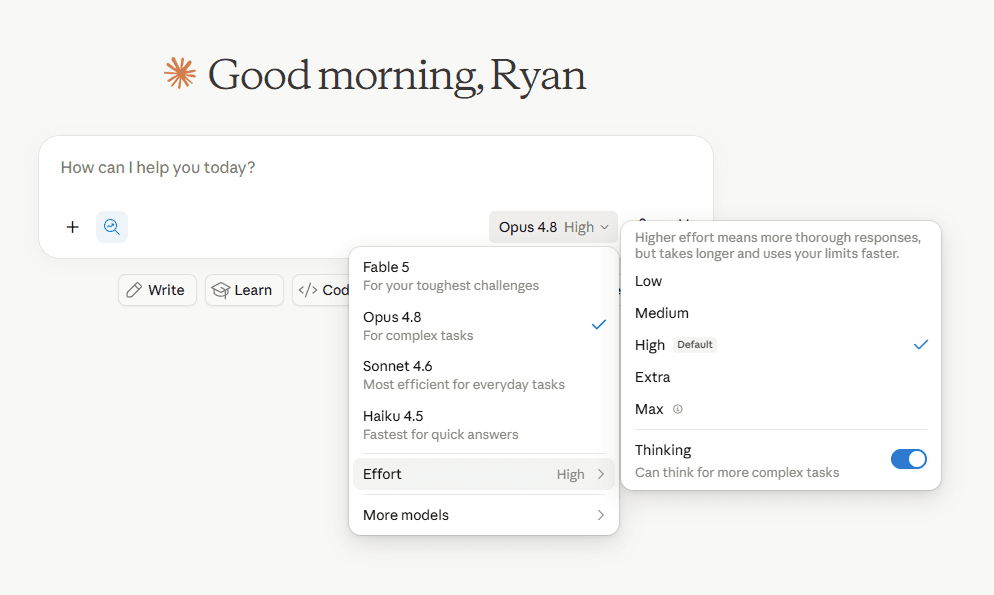
Effort Control is the feature that's generating the most discussion. It lets users specify how much reasoning power they want Claude to apply to a given task. Need a quick answer to a simple question? Dial down the effort. Working through a complex architectural decision? Max it out.
“The new effort control settings finally give users the ability to balance the trade-off between the depth of reasoning they need for a task and the speed of the output they receive.”
— Dr. Daniela Amodei, President and Co-founder of Anthropic
On agentic coding benchmarks, Opus 4.8 scored 69.2%, up from 64.3% in previous versions. That 5-point jump matters for teams using Claude to write, refactor, or debug production code.
Claude's Model Lineup: Opus, Sonnet, and Haiku
Anthropic maintains three model tiers, each suited to different use cases and budgets.
Claude Opus 4.8 sits at the top. At $5 per million input tokens and $25 per million output tokens, it's the most expensive option. Anthropic positions it for complex coding tasks, research, and enterprise applications where accuracy matters more than cost.
Claude Sonnet 4.6 is now Anthropic's recommended default for most users. It costs $3 per million input tokens and $15 per million output tokens. Anthropic says it delivers strong all-around performance. Unless you're doing genuinely complex work, Sonnet is probably what you should use.
Claude Haiku 4.5 is the speed and affordability option. At $1 per million input tokens and $5 per million output tokens, it's well-suited for customer service applications or processing large volumes of data where you don't need deep reasoning.
| Model | Best For | Input Price (per 1M tokens) | Output Price (per 1M tokens) |
|---|---|---|---|
| Opus 4.8 | Complex coding, research, enterprise | $5 | $25 |
| Sonnet 4.6 | General-purpose tasks, most users | $3 | $15 |
| Haiku 4.5 | Speed, high-volume processing | $1 | $5 |
The Pivot to Agentic AI
Anthropic's release notes emphasize a shift from "conversational AI" to "agentic AI." The difference matters. A conversational AI answers your questions. An agentic AI executes multi-step workflows with minimal human oversight.
The company has previewed features like Dynamic Workflows and Claude Code, which let the model orchestrate sub-agents to tackle large projects. Give Claude a codebase refactoring task, and it can break that into dozens of smaller tasks, execute them, and report back when it needs human input.
This is what Dario Amodei means by "problems that previously took days." Instead of you managing the project and asking Claude for help at each step, Claude manages the project and asks you for help when it gets stuck.
Community Reactions
On Hacker News, engineers are cautiously excited about Dynamic Workflows and Claude Code. The potential to automate large refactoring tasks is appealing. The concern is reliability. Can you trust Claude to orchestrate dozens of sub-agents without supervision? Most commenters want to see more production data before betting their codebases on it.
Reddit users are more enthusiastic about Effort Control. The ability to get quick answers without waiting for a full-power Opus response makes the model more practical for everyday use. One commenter called it "the feature I didn't know I needed."
How Claude Compares
Claude's main competition is OpenAI's GPT-4 and Google's Gemini. Each has strengths. GPT-4 has the largest ecosystem and mindshare. Gemini integrates tightly with Google's tools. Claude's edge has historically been its personality (users find it more pleasant to interact with) and its Constitutional AI approach, which aims to make responses safer and more honest.
With Opus 4.8, Anthropic is adding performance to that list. The 4x improvement in catching coding errors and the 69.2% score on agentic benchmarks are competitive numbers. Whether they hold up in real-world use is another question.
Anthropic also claims Opus 4.8 is more honest about its capabilities than previous versions. If it doesn't know something or can't do something, it's more likely to tell you instead of guessing. That's a small detail that matters a lot if you're relying on Claude for critical work.
Logicity's Take
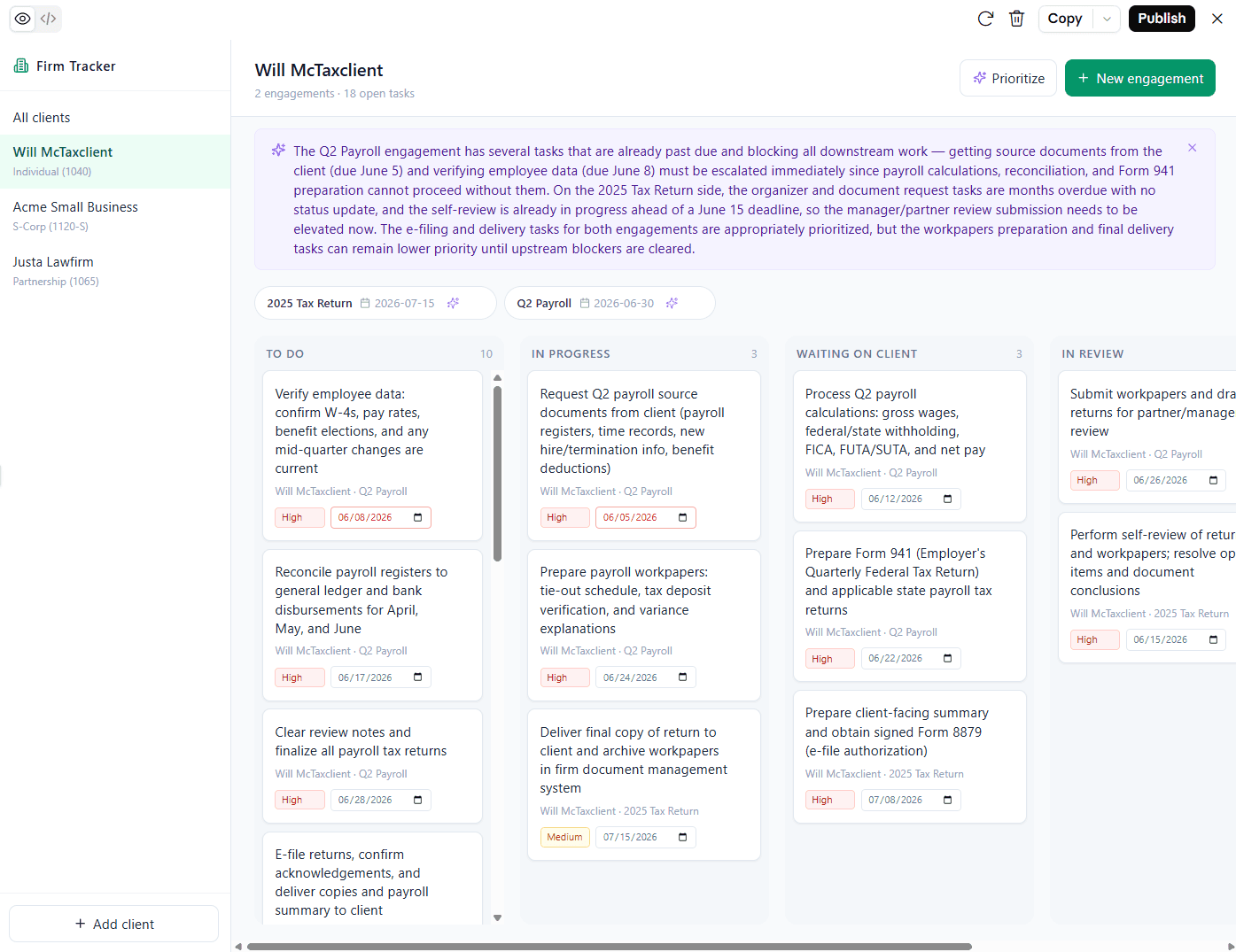
Effort Control is the real story here. Speed improvements and benchmark gains are incremental. The ability to tell an AI model how hard to think is a new category of control that changes how you interact with it. It's also a smart way for Anthropic to make Opus practical for everyday tasks without cannibalizing Sonnet and Haiku.
Getting Started with Claude
You can try Claude through Anthropic's web interface at claude.ai. A free tier is available with usage limits. Pro subscriptions unlock higher limits and priority access to new features.
For developers, the Claude API provides programmatic access to all three model tiers. Pricing is per-token, with the rates listed above. Anthropic also offers enterprise plans with custom limits and support.
If you're evaluating Claude for a team or company, start with Sonnet 4.6. It's the best balance of capability and cost. Reserve Opus for tasks where you've measured that the extra capability actually changes outcomes.
AI tools like Claude can help with content creation, but you still need the right plugins to get that content ranking
Frequently Asked Questions
What is Claude Opus 4.8?
Claude Opus 4.8 is Anthropic's most capable AI model, released in 2026. It features 2.5x faster response times, a new Effort Control setting, and improved coding accuracy compared to previous versions.
How much does Claude Opus 4.8 cost?
Claude Opus 4.8 costs $5 per million input tokens and $25 per million output tokens through the API. Anthropic also offers Claude Sonnet at $3/$15 and Claude Haiku at $1/$5 for users who need lower costs.
What is Claude's Effort Control feature?
Effort Control lets users specify how much reasoning power Claude should apply to a task. Lower effort means faster, cheaper responses for simple questions. Higher effort means deeper reasoning for complex problems.
Is Claude better than ChatGPT?
It depends on your use case. Claude Opus 4.8 scores 69.2% on agentic coding benchmarks and users often find it more pleasant to interact with. ChatGPT has a larger ecosystem and more integrations. Both are capable for general tasks.
What is agentic AI?
Agentic AI refers to AI systems that can execute multi-step workflows with minimal human oversight, breaking large tasks into sub-tasks and coordinating their completion. Anthropic is positioning Claude 4.8 as an agentic workspace rather than just a chatbot.
Need Help Implementing This?
If you're evaluating Claude for your team or need help integrating AI tools into your workflows, we'd like to hear from you. Reach out to the Logicity team for guidance on getting started with enterprise AI adoption.
Source: The Zapier Blog
Anthropic Announces Upcoming 'Claude Mythos' Model
The new article introduces Claude Mythos, a separate, upcoming large language model from Anthropic with advanced cybersecurity capabilities. It also notes that Mythos has raised concerns among executives and world leaders regarding its potential impact.
Huma Shazia
Senior AI & Tech Writer
Produced with AI assistance and reviewed by the Logicity editorial team. Learn more in our Editorial Policy.