Key Takeaways
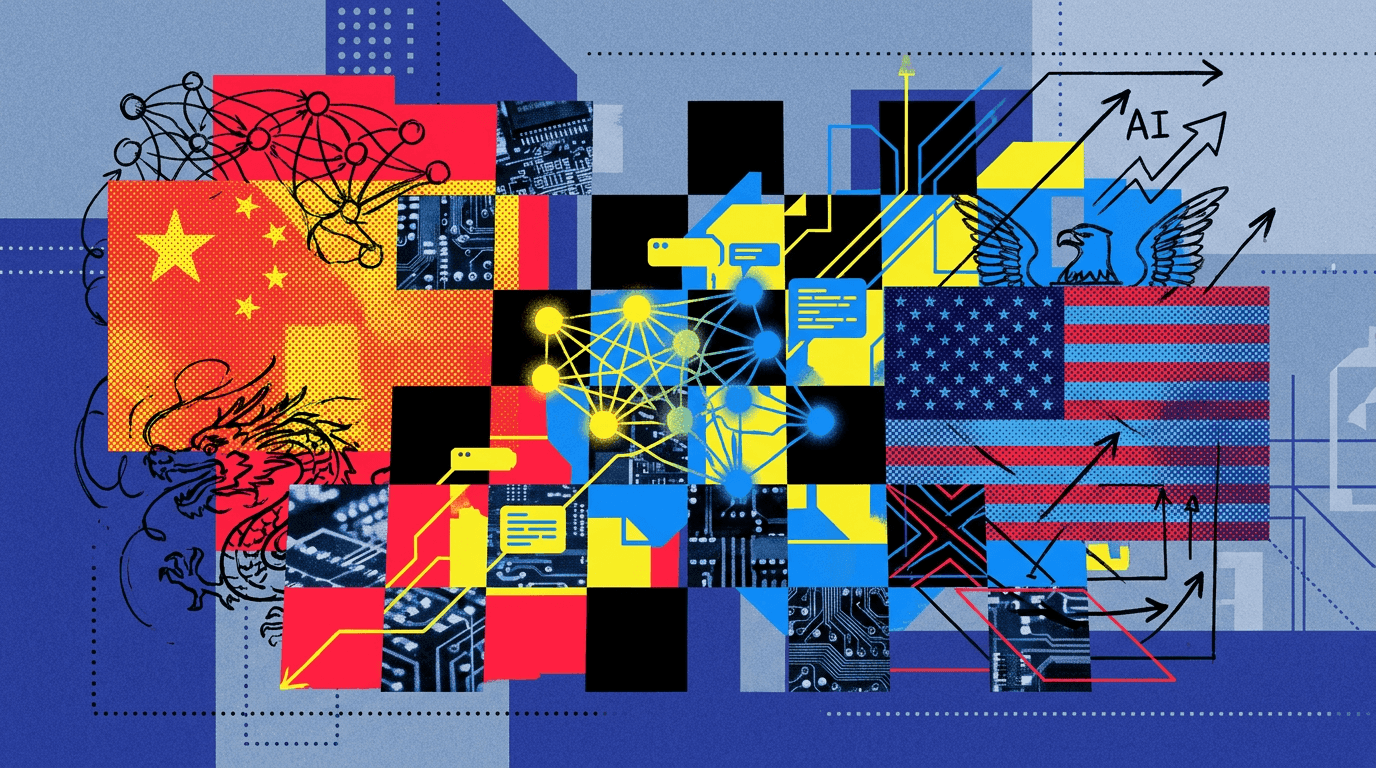
- Chinese models reached 46% of OpenRouter traffic at peak, versus 11% average last year
- DeepSeek and similar models cost 60-90% less than OpenAI and Anthropic alternatives
- Startup Lindy switched entirely from Claude to DeepSeek, saving millions in costs
Chinese AI models now command over 30 percent of weekly traffic on OpenRouter, the API aggregation platform that gives developers a single interface to dozens of models. At peak, that share hit 46 percent. Last year's average was 11 percent. The shift is almost entirely about price: DeepSeek, Z.ai, and other Chinese open-source models run 60 to 90 percent cheaper than comparable offerings from OpenAI and Anthropic.
The data comes from OpenRouter employee Justin Summerville, who told CNBC that the cost gap has made Chinese models irresistible for cost-conscious startups and enterprises. The trend has held steady since February 8, 2026, suggesting this is not a temporary spike but a structural shift in how developers allocate their inference budgets.
How big is the cost difference?
Summerville's 60 to 90 percent figure matches what developers have observed across multiple use cases. DeepSeek's R1 model, for instance, prices input tokens at roughly $0.14 per million. OpenAI's comparable models cost several times that, and Anthropic's Claude sits in a similar range. For applications that process millions of tokens daily, the savings compound fast.
Lindy, a startup building AI automation tools, provides the clearest case study. CEO Flo Crivello told CNBC the company shifted all of its traffic from Anthropic's Claude to DeepSeek. The switch, he said, saves millions. That is not hyperbole. At scale, even a 60 percent reduction in per-token cost translates to seven-figure annual savings for companies running continuous inference workloads.
The economics matter more as AI becomes operational infrastructure rather than experimental technology. When a model powers customer support, code review, or content generation around the clock, inference cost becomes the dominant line item. A model that is "good enough" at half the price often wins.
Are Chinese models actually competitive?
The capability gap exists, but it is narrower than many assume. Kyle Chan at the Brookings Institution estimates Chinese models trail US leaders by six to nine months. A May report from the Center for AI Standards and Innovation (CAISI) landed on eight months, based on benchmarks across cybersecurity, software development, math, science, and abstract reasoning.
For many production use cases, an eight-month lag matters less than the sticker price. Customer service chatbots, summarization pipelines, and code completion do not require frontier reasoning. They require consistent output at predictable cost. If DeepSeek handles 90 percent of a workflow while costing 70 percent less, the business case writes itself.
The remaining question is whether US providers will close the price gap or cede the cost-sensitive market. OpenAI and Anthropic have invested heavily in larger models and safety research. Those priorities carry overhead that Chinese open-source projects do not bear. The pricing pressure from DeepSeek may force a reckoning.
What this means for AI product teams
Product teams now face a genuine choice. The default of "use Claude or GPT-4" is no longer obvious. OpenRouter's traffic data shows that developers are actively experimenting with Chinese alternatives, and many are sticking with them.
The practical implication: teams should benchmark DeepSeek and similar models against their actual workloads, not just public leaderboards. A model that scores lower on abstract reasoning benchmarks may perform identically on structured tasks like form extraction or FAQ generation. The only way to know is to run the test.
For teams building on automation platforms like Zapier, Make, or n8n, the model choice ripples through the entire stack. Lower inference costs unlock use cases that were previously margin-negative. A workflow that queries an LLM for every incoming email suddenly becomes viable when the per-call cost drops by 80 percent.
Disclosure
Some links in this post are affiliate links — Logicity earns a commission if you sign up, at no extra cost to you. We only link products we have used or actively recommend.
Security and compliance considerations
Cost is not the only variable. Some enterprises remain wary of routing sensitive data through Chinese-origin models, regardless of where they are hosted. OpenRouter abstracts the provider layer, but the underlying model still processes the tokens. For regulated industries, finance, healthcare, legal, that matters.
The counterargument: many of these models run on US infrastructure when accessed through OpenRouter or self-hosted deployments. The code is open source and auditable. Still, compliance officers will want documentation, and not every organization will approve the switch.
The middle path is a tiered approach. Use cheaper Chinese models for low-stakes, high-volume tasks. Reserve Claude or GPT-4o for sensitive operations where vendor provenance matters. This hybrid strategy captures most of the cost savings while satisfying risk requirements.
Logicity's Take
This is not about nationalism or model quality. It is about price discovery. For two years, OpenAI and Anthropic set prices with limited competition. DeepSeek changed that. The 46 percent share on OpenRouter is a market signal: developers will move fast when economics justify it. AI product teams should treat model selection like cloud procurement, not brand loyalty. Run cost-per-task analysis across at least three providers. The winners will be those who match model capability to task requirements, not those who default to the most expensive option.
DeepSeek's chip ambitions could further lower costs and reduce dependence on Nvidia hardware
US providers are responding to competitive pressure with subsidized compute for startups
Frequently Asked Questions
Why are Chinese AI models gaining market share so quickly?
Price is the primary driver. Chinese open-source models like DeepSeek cost 60 to 90 percent less than comparable US alternatives while delivering competitive performance for most production use cases.
How far behind are Chinese AI models compared to US leaders?
Estimates from Brookings Institution and CAISI put the gap at six to nine months across benchmarks including math, science, coding, and cybersecurity.
Is it safe to use Chinese AI models for enterprise applications?
It depends on your compliance requirements. Many models are open source and can run on US infrastructure. Regulated industries should evaluate data handling policies and consider a tiered approach using different models for different sensitivity levels.
What is OpenRouter and why does its traffic data matter?
OpenRouter is an API aggregation platform that lets developers access multiple AI models through a single interface. Its traffic data reveals actual developer preferences when models are directly comparable on price and performance.
Will OpenAI and Anthropic lower their prices in response?
Unclear. Both companies carry significant R&D and safety overhead. They may differentiate on capability and trust rather than compete on price, or they may introduce cheaper tiers for commodity tasks.
Need Help Implementing This?
Evaluating AI model costs across your stack? Logicity helps product teams benchmark model performance against real workloads. Reach out to discuss your architecture.
Source: The Decoder / Maximilian Schreiner
Huma Shazia
Senior AI & Tech Writer
Produced with AI assistance and reviewed by the Logicity editorial team. Learn more in our Editorial Policy.