Key Takeaways
- First gaming keyboard with ultra-wideband wireless, reducing interference from other 2.4 GHz peripherals
- 8,000 Hz polling rate works over both wired and wireless connections
- 70% layout with 6,000 mAh battery claiming up to 1,100 hours of use
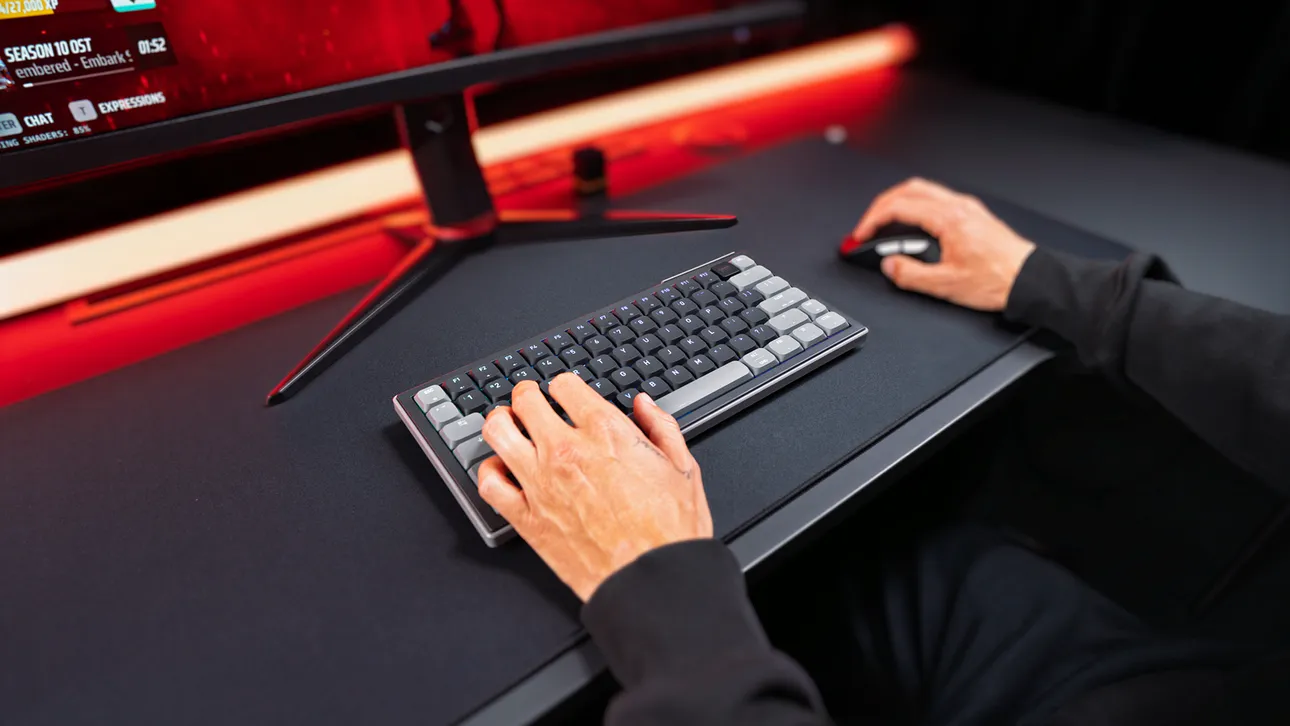
Cherry XTRFY announced the K63W Pro at Computex 2026, marking the first gaming keyboard to ship with ultra-wideband wireless technology. The keyboard pairs this interference-resistant wireless tech with 8,000 Hz polling. It will hit EU stores in early July at €179.99 and arrive in the U.S. in August for $169.99.
Why Ultra-Wideband Matters for Gaming
This isn't the first 8K polling keyboard. Razer and other brands have offered wired 8K options for a while. What's new here is the wireless technology underneath.
Most wireless gaming peripherals use 2.4 GHz radio. That frequency band gets crowded fast. Your wireless mouse, headset, Wi-Fi router, and Bluetooth devices all fight for the same spectrum. Ultra-wideband (UWB) operates on different frequencies with short-range, high-frequency signals. The result: less interference from other devices on your desk.
For competitive players running multiple wireless peripherals, this solves a real annoyance. Your keyboard won't compete with your mouse for bandwidth.
“With the K63W Pro, we wanted to evolve wireless gaming even further. Ultra-Wideband technology and 8K polling deliver extreme performance, while the carefully tuned gasket construction creates a typing feel you would never expect from a low-profile keyboard.”
— Joakim Jansson, Director of Product Management at Cherry
The 70% Layout Explained
The K63W Pro uses a 70% form factor. This sits between the popular 65% and 75% layouts. You keep the full function row (F1-F12) and arrow keys. You lose the single-key navigation column (Home, End, Page Up, Page Down, Delete, Insert) found on 75% boards.
Cherry calls this layout "optimized for gaming." The logic: gamers rarely need dedicated navigation keys mid-match but do use function keys for bindings and macros. Trimming side bulk also gives your mouse arm more room.
The trade-off affects productivity use. If you live in spreadsheets or text editors, those missing navigation keys mean more function-layer combos.
Low-Profile Switches and Gasket Mount
Cherry went with their MX Low Profile 2.0 switches. These offer shorter travel than standard mechanical switches, sitting closer to laptop-style feel while keeping mechanical feedback.
The gasket mount design suspends the switch plate on rubber or silicone gaskets rather than screwing it directly to the case. This dampens vibration and creates what Cherry describes as "controlled, cushioned, and surprisingly deep" typing feel.
Low-profile gasket mounts remain uncommon. Most gasket designs appear on thicker, full-height custom keyboards. Whether Cherry's implementation lives up to the marketing copy will need hands-on testing.
Battery Life Claims Need Context
The 6,000 mAh battery is substantial for a keyboard. Cherry claims up to 1,100 hours of use, but adds an important caveat: "depending on settings such as polling rate and RGB intensity."
That qualifier matters. Running at 8,000 Hz polling with full RGB lighting will drain the battery far faster than 1,000 Hz polling with lights off. The 1,100-hour figure likely represents best-case conditions that no competitive gamer would actually use.
Still, even at a fraction of that number, the battery should outlast most wireless keyboards on the market.
Does 8K Polling Actually Matter?
The 8,000 Hz polling rate means the keyboard reports its state 8,000 times per second, or every 0.125 milliseconds. Standard keyboards poll at 1,000 Hz (1ms). The faster polling reduces theoretical input lag.
In practice, whether humans can perceive the difference between 1ms and 0.125ms input latency remains debated. Most testing suggests diminishing returns above 1,000 Hz for typical users. The benefits become more measurable in specific competitive scenarios with high frame rates.
Early community reactions reflect this skepticism. Forum discussions show users debating whether 8K polling is genuine performance or marketing. The consensus: it won't hurt, but the ultra-wideband tech is the more practical improvement.
Pricing and Availability
- EU launch: Early July 2026 at €179.99
- U.S. launch: August 2026 at $169.99
- Form factor: 70% layout with function row
- Switches: Cherry MX Low Profile 2.0
- Connectivity: Ultra-wideband wireless, wired USB
The €179.99 / $169.99 price puts the K63W Pro in premium territory. It competes with established wireless gaming keyboards like the Wooting 60HE and Razer's DeathStalker V2 Pro. The ultra-wideband wireless is the main differentiator.
Logicity's Take
Frequently Asked Questions
What is ultra-wideband wireless in keyboards?
Ultra-wideband (UWB) is a short-range wireless technology that uses different frequencies than standard 2.4 GHz wireless. It reduces interference from other wireless devices like mice and headsets.
Is 8,000 Hz polling rate noticeable in gaming?
For most users, the difference between 1,000 Hz and 8,000 Hz polling is imperceptible. Benefits become more measurable in competitive scenarios with high refresh rate monitors and frame rates above 240 fps.
What's the difference between 70% and 75% keyboard layouts?
Both retain the function row and arrow keys. The 70% layout removes the dedicated navigation column (Home, End, Page Up, Page Down) found on 75% keyboards, saving space but requiring function-layer access for those keys.
How long does the Cherry XTRFY K63W Pro battery actually last?
Cherry claims up to 1,100 hours, but this depends on polling rate and RGB settings. Running at 8,000 Hz with full lighting will drain significantly faster. Realistic heavy use likely falls well below the maximum figure.
Need Help Implementing This?
Source: Latest from Tom's Hardware
Huma Shazia
Senior AI & Tech Writer
Produced with AI assistance and reviewed by the Logicity editorial team. Learn more in our Editorial Policy.