Australia's wholesale electricity prices fell nearly 50% over the past 12 months after the government launched a 30% rebate on home batteries. Since July 2025, Australians have installed more than 500,000 home batteries, and millions of households can now access three hours of free power in the middle of the day. The U.S., meanwhile, faces residential electricity prices that could climb 40% by 2030 in some regions.
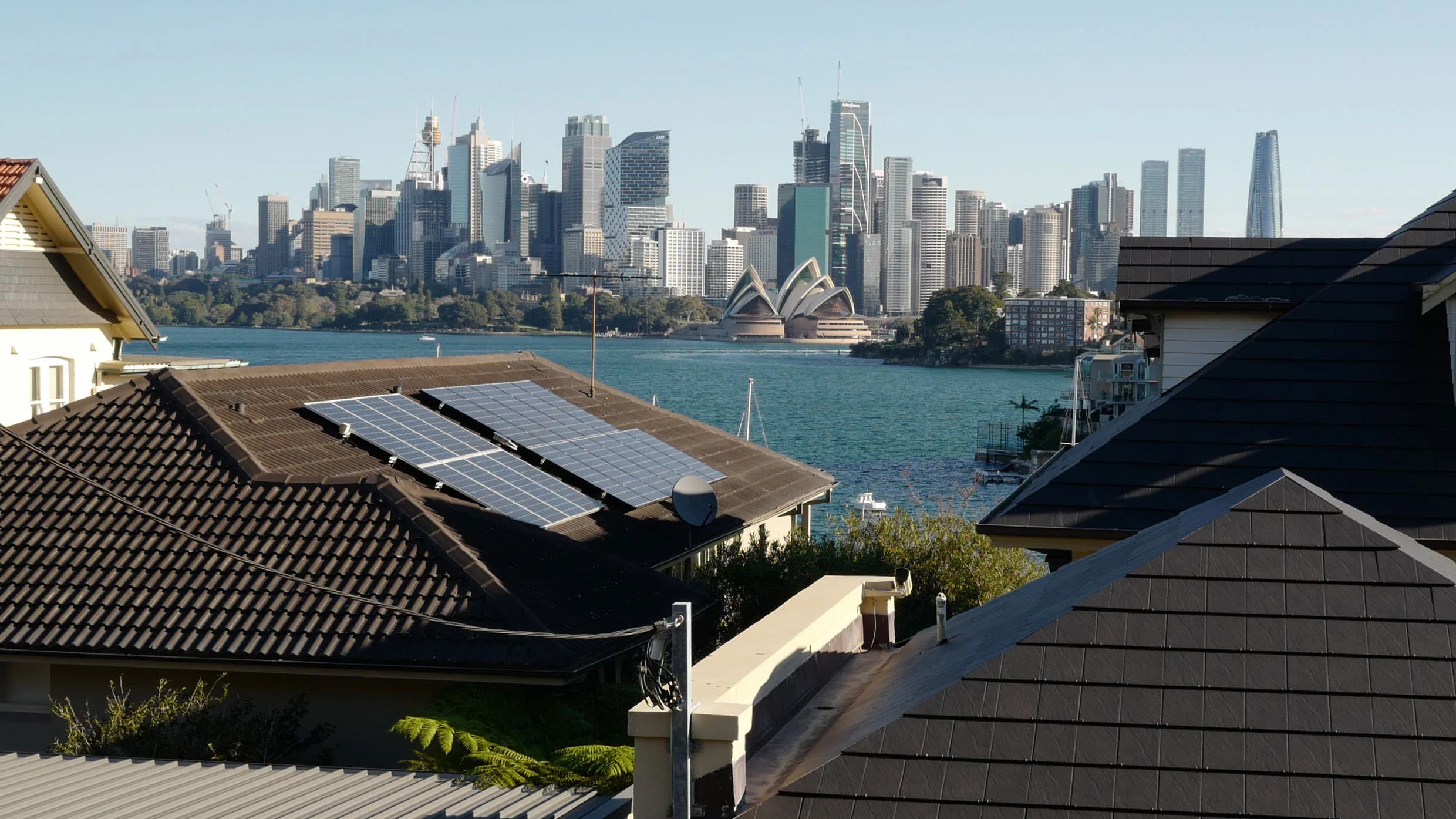
The divergence isn't just policy. It's physics. Home batteries store midday solar and discharge it during the 6 p.m. demand spike, letting utilities avoid firing up expensive gas peaker plants. The result: cheaper power for everyone, not just battery owners.
What happened in Australia
The Australian government rolled out its battery rebate in July 2025. The response was immediate. In the first three weeks, installers put in more than 1,000 home batteries per day. That pace has held, and the cumulative effect is reshaping the grid.
The mechanism is straightforward. Solar panels generate peak power at midday, when demand is low. Without storage, that power floods the grid, sometimes driving wholesale prices negative. Batteries capture it instead. When demand surges in the evening, hundreds of thousands of homes draw from their own batteries rather than the grid.
"This is about avoiding the 6 p.m. peak when everyone gets home and turns on the TV, which is when the whole electricity network is stressed," says Saul Griffith, cofounder of Rewiring Australia, a nonprofit advocating for electrification. "And that's a perfect job for batteries."
Griffith is an engineer and serial entrepreneur who previously cofounded Rewiring America in the U.S., a group that helped shape parts of the Inflation Reduction Act. He returned to his native Australia during the pandemic and began modeling how distributed batteries could replace aging coal plants. The government's policy reflects that modeling.
Why U.S. electricity prices keep rising
American households face the opposite trajectory. Last year, home electric bills rose at more than twice the rate of inflation. At least one in three U.S. households now struggle to pay energy bills.
The structural problem is twofold. First, the U.S. grid relies heavily on centralized generation. When demand spikes, utilities turn on peaker plants, which burn natural gas and charge premium rates. Second, transmission infrastructure is aging and expensive to upgrade. Distributed batteries sidestep both problems, but adoption lags.
The Inflation Reduction Act does offer a 30% federal tax credit for home batteries, similar to Australia's rebate. But uptake has been slower. U.S. electricity prices vary wildly by state, so the payback period on a battery differs from Arizona to New York. Permitting and interconnection rules vary by utility, adding friction. And the credit is a tax rebate, not a point-of-sale discount, which means upfront costs remain high for households without the cash on hand.
The grid stress problem batteries solve
Peak demand is the most expensive electricity to generate. Utilities size their infrastructure for that peak, which means they overbuild for every other hour of the day. When thousands of homes discharge batteries at 6 p.m., the peak flattens. Utilities need fewer peaker plants, and wholesale prices drop.
Australia's numbers show this playing out in real time. The 500,000 batteries installed since last July represent a distributed power plant, one that responds to price signals automatically. Most home battery systems can be configured to discharge when grid prices are high, capturing the arbitrage for the homeowner while reducing system-wide costs.
The coordination happens without central control. Each battery owner optimizes for their own bill. The aggregate effect is a flatter demand curve.
What this means for AI teams running compute workloads
Energy costs are already a constraint on AI infrastructure. Training runs and inference clusters consume megawatts. Cloud providers pass those costs through in pricing, and on-premise deployments pay utility bills directly.
Australia's model suggests a path where distributed storage flattens demand peaks and lowers wholesale prices. For AI builders, that translates to cheaper compute in regions with high solar and storage penetration. It also points toward a future where data centers deploy their own battery arrays, buying cheap midday power and discharging during peak hours.
Logicity's Take
Australia's policy worked because it was simple: a 30% rebate at the point of sale, not a tax credit that requires filing and waiting. The IRA's battery credit is structurally similar but harder to access. If the U.S. wants distributed storage at scale, it needs to reduce friction, not just offer incentives. For AI teams, watch which states streamline interconnection rules. That's where compute costs will drop first.
The policy implication is clear. Subsidies work when they lower the upfront barrier. Tax credits work when they reward investment after the fact. Australia chose the former and got 500,000 batteries in a year. The U.S. chose the latter and is still waiting.
Critical infrastructure security is tightly linked to grid stability and distributed energy resilience.
Can the U.S. replicate Australia's results?
Maybe. But not quickly. The U.S. has a larger, more fragmented grid, with 3,000 utilities operating under different state rules. Australia has a national energy market that makes coordination easier. The regulatory overhead in the U.S. is substantial.
Still, some states are moving. California and Texas both have high solar penetration and growing battery deployments. Hawaii has mandated solar-plus-storage on new residential construction. The question is whether these pockets can scale before electricity prices force more households into energy poverty.
For founders and CTOs evaluating infrastructure decisions, the takeaway is concrete: monitor wholesale electricity prices by region. Where distributed storage is growing, expect compute costs to stabilize or fall. Where the grid remains centralized, expect volatility.
Need Help Implementing This?
If you're evaluating energy costs for AI infrastructure or exploring on-premise compute with battery storage, reach out to our team for vendor comparisons and procurement guidance.
Source: Fast Company / Adele Peters
Manaal Khan
Tech & Innovation Writer
Produced with AI assistance and reviewed by the Logicity editorial team. Learn more in our Editorial Policy.