Key Takeaways
- A kernel module patch now unlocks all 40 compute units on the BC-250's PS5-derived AMD chip
- Benchmarks show 17-28% performance gains in games like Cyberpunk 2077 and Spider-Man 2
- The hack is a silicon lottery gamble since extra cores may be defective from the factory
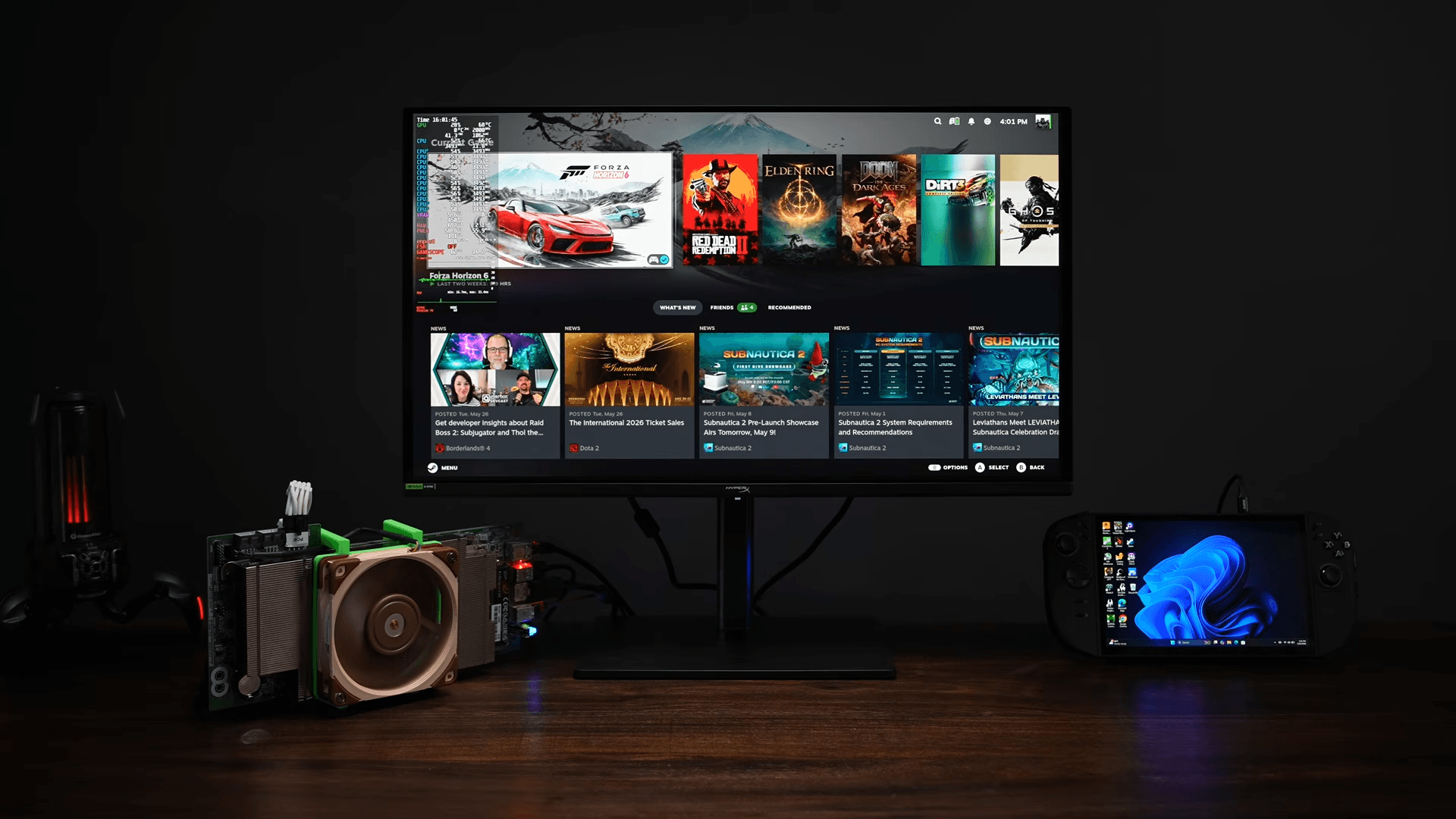
DIY gamers have turned ASRock's BC-250 crypto mining boards into budget Linux gaming machines since late 2024. The boards, which sell for under $150 on eBay, pack a PS5-derived AMD APU and 16GB of GDDR6 memory. Now a new hack pushes the hardware even further.
A driver-level patch posted to GitHub by developer duggasco unlocks all 40 compute units on the BC-250's chip. That gives the mining board more GPU cores than a standard PlayStation 5, which runs 36 active CUs.
How the Unlock Works
The patch operates through a kernel module parameter that writes to two hardware registers during GPU driver initialization. It's not a BIOS flash or permanent modification. Instead, it tells the Linux amdgpu driver to enable cores the factory left switched off.
Enabling all 40 CUs pushes power consumption to around 125W at 1,500 MHz. The GitHub documentation recommends setting the GPU to 1,500 MHz at 900 mV to keep temperatures manageable. Overclocking to 2 GHz, a common tweak on these boards, overwhelms the cooling system when running the full core count.
Why the Cores Were Locked
ASRock's BC-250 uses B-grade PlayStation 5 dies. Sony and AMD rejected these chips for console duty, likely due to defects in some of the 40 compute units. To work around faulty silicon, ASRock shipped the boards with only 24 CUs active.
Flipping on the extra 16 cores doesn't magically fix defective transistors. Some boards will have fully functional hidden cores. Others won't. That's the silicon lottery at play.
For owners who lose that lottery, the hack also supports partial unlocks. Users can activate 32 or 38 CUs instead of the full 40, which may avoid the specific cores that failed quality checks.
Performance Gains in Real Games
YouTuber ETA Prime tested the 40 CU configuration across several titles at 1080p high settings with the GPU clocked at 2 GHz. The results show meaningful gains.
- Cyberpunk 2077: 42 FPS vs 36 FPS (17% improvement)
- Hitman 3: 69 FPS vs 58 FPS (19% improvement)
- GTA 5: 72 FPS vs 58 FPS (24% improvement)
- Spider-Man 2: 46 FPS vs 36 FPS (28% improvement)
The biggest gains appear in GPU-limited scenarios where the extra cores have room to contribute. CPU-bound games will see smaller improvements since the Zen 2 cores remain unchanged.
The Steam Machine Revival
The BC-250 community runs these boards primarily on Bazzite, a Fedora-based Linux distribution optimized for gaming. The combination creates something close to Valve's original Steam Machine concept: a dedicated gaming box running SteamOS-style software on AMD hardware.
Reddit communities like r/sffpc and r/pcmasterrace have threads dedicated to 3D printing custom enclosures for the blade-style boards. The form factor doesn't fit standard PC cases, so owners design their own housings with adequate airflow for the 125W thermal load.
Risks and Limitations
The hack comes with real caveats beyond the silicon lottery. Enabling potentially defective cores can cause crashes, visual artifacts, or system instability. There's no way to know ahead of time which cores are problematic.
Thermal management becomes critical. The stock cooler on these mining blades wasn't designed for sustained 125W loads during gaming. Users report needing aftermarket cooling solutions or undervolting to maintain stability.
Driver support also remains community-driven. These boards run on unofficial Linux kernel patches. Updates can break functionality, and there's no vendor support if something goes wrong.
Logicity's Take
Frequently Asked Questions
Does the BC-250 40 CU unlock work on all boards?
No. The extra cores were disabled because they may be defective. Some boards will have fully functional hidden cores, others will experience crashes or artifacts. The hack supports partial unlocks (32 or 38 CUs) for boards that can't handle the full 40.
Can I run Windows on the ASRock BC-250?
Technically yes, but driver support is limited. Most users run Linux distributions like Bazzite because the amdgpu driver provides better compatibility and the community patches only work on Linux.
How much does an ASRock BC-250 cost?
The boards typically sell for under $150 on eBay. Prices vary based on condition and included accessories like power cables and heatsinks.
Is the BC-250 better than a PlayStation 5 for gaming?
Not directly comparable. The BC-250 with 40 CUs has more GPU cores than a base PS5's 36 active CUs, but it lacks console-level game optimization and runs Linux instead of Sony's proprietary OS. Performance in specific games depends on Linux compatibility and driver quality.
What cooling does the BC-250 need for 40 CU operation?
The developer recommends running at 1,500 MHz with 900 mV to keep temperatures in check. Overclocking to 2 GHz with all 40 CUs active overwhelms the stock cooling. Many users add aftermarket solutions or custom enclosures with better airflow.
Another display technology story for PC gaming enthusiasts
Need Help Implementing This?
Source: Latest from Tom's Hardware
Manaal Khan
Tech & Innovation Writer
Produced with AI assistance and reviewed by the Logicity editorial team. Learn more in our Editorial Policy.