Key Takeaways
- Garmin offers 14+ day battery life versus Apple Watch's daily charging requirement
- Apple Watch provides superior smartphone integration for iPhone users
- For strength training and gym workouts, both platforms now offer comparable accuracy
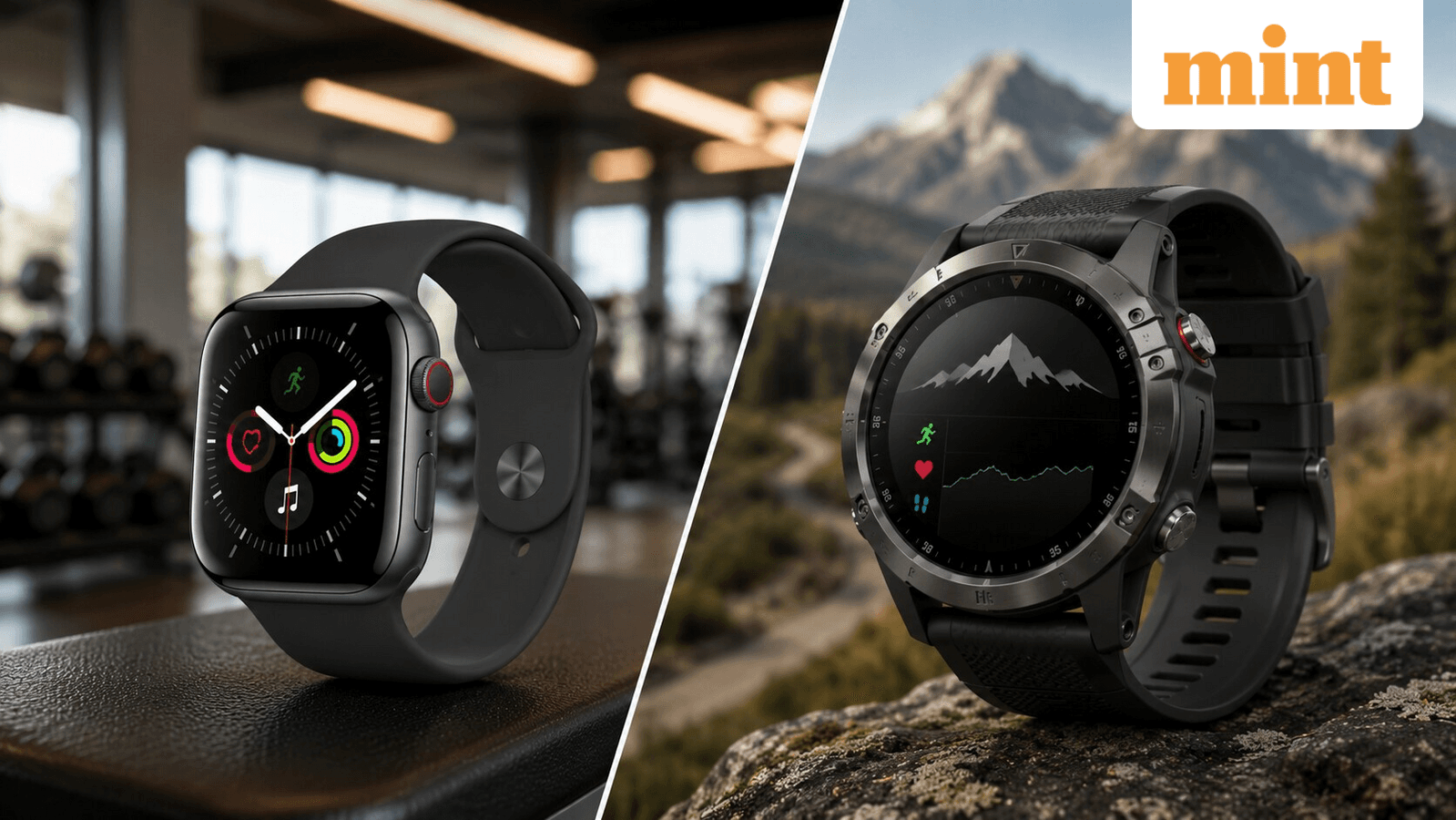
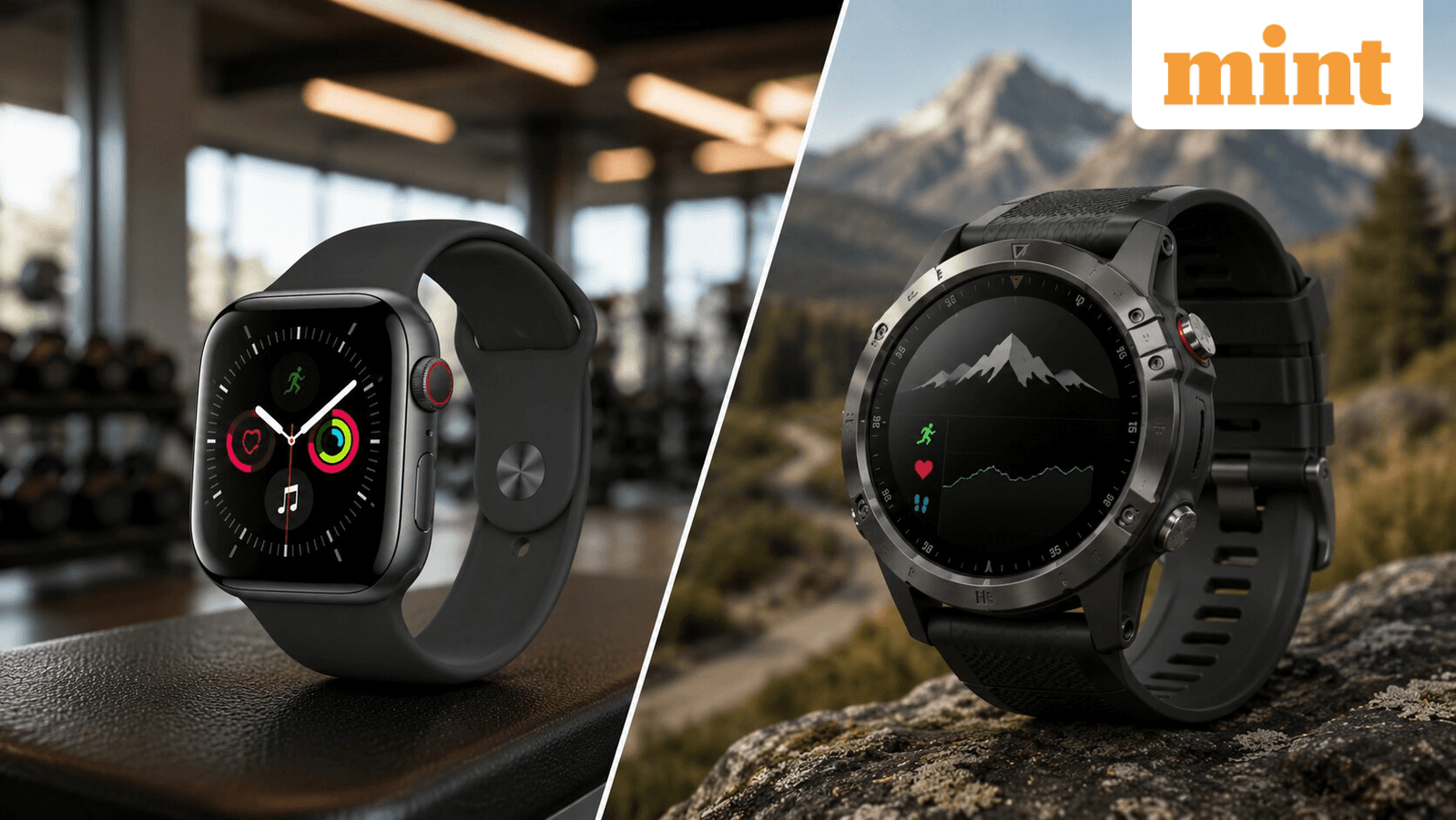
The smartwatch market has split into two camps. On one side sits Apple, offering seamless iPhone integration and clinical-grade health monitoring. On the other stands Garmin, built for athletes who prioritize weeks-long battery life and deep training analytics. For consumers caught in the middle, the choice has never been more confusing.
A 24-year-old working professional in Bengaluru recently posed this exact dilemma to ChatGPT. With a budget of ₹30,000 to ₹40,000, an iPhone in pocket, and a fitness routine mixing strength training, treadmill cardio, and occasional outdoor runs, the question was straightforward: which smartwatch actually makes sense?
The Core Dilemma: Smart Features vs Fitness Depth
The user's requirements read like a checklist pulled from both ecosystems. Accurate heart-rate tracking during workouts. Reliable sleep and recovery data. Strong GPS for outdoor activities. Battery life exceeding two to three days. Workout auto-detection. Smart notifications. Voice assistant support. Contactless payments.
The problem? No single device checks every box perfectly. Apple Watch feels like the best smartwatch overall. Garmin feels like the better fitness-first device. Online reviews swing wildly depending on whether the reviewer leans toward tech or athletics.
| Feature | Apple Watch SE/Series 9 | Garmin (Forerunner 165/Vivoactive 5/Instinct 2) |
|---|---|---|
| Battery Life | 18-36 hours | 5-14+ days |
| iPhone Integration | Seamless | Basic notifications only |
| Smart Payments | Apple Pay (widely accepted) | Garmin Pay (limited) |
| Fitness Metrics Depth | Good (VO2 Max, HRV) | Excellent (Training Load, Body Battery, Recovery) |
| GPS Accuracy | Strong | Industry-leading |
| Sleep Tracking | Good | Excellent |
| Third-party Apps | Extensive | Limited |
| Price Range (India) | ₹29,900-₹44,900 | ₹24,990-₹34,990 |
Battery: The Dealbreaker Nobody Admits
Garmin's brand position remains unchanged: "We measure battery life in months. Not hours." For the Bengaluru professional tracking sleep, recovery, and multiple weekly workouts, this matters more than spec sheets suggest.
Apple Watch requires daily charging. For some users, this becomes routine. For others, it creates what Reddit's r/smartwatch community calls "battery anxiety." Users who switch to Garmin rarely return to Apple, frequently citing this exact frustration. The counterpoint: former Garmin users often come back to Apple because of superior app integration and payment support.
“Smartwatches in 2026 aren't just trackers—they're proactive health guardians.”
— Dr. Elena Vasquez, Wearable Tech Analyst at IDC
For multi-day health monitoring, Garmin's 14 to 20 day battery endurance has become the benchmark in premium wearables. Apple has closed the gap with Ultra models, but those sit well above the ₹40,000 budget ceiling.
Fitness Tracking: Does Advanced Mean Useful?
The user posed a critical question: for someone doing strength training, functional workouts, and incline treadmill cardio, would Garmin's advanced fitness metrics actually be useful?
Garmin offers Training Load, Training Status, Body Battery, and Training Readiness scores. These metrics shine for endurance athletes preparing for marathons or triathlons. For gym-focused users, the value proposition weakens. Strength training tracking remains imprecise across both platforms, though both now offer rep counting and exercise detection.
Apple Watch provides VO2 Max estimates, heart rate variability tracking, and workout auto-detection. For the described routine, these features match the actual use case. You get enough data to track progress without drowning in metrics designed for competitive athletes.
The Ecosystem Lock-in Question
The user already owns an iPhone. This tilts the equation. Apple Watch integrates with iOS in ways Garmin cannot match: seamless notification handling, iMessage replies from wrist, Apple Pay acceptance at nearly every contactless terminal in urban India, and deep Health app integration.
Garmin Pay works, but acceptance remains spotty. Garmin Connect syncs with Apple Health, but the experience feels like two systems talking through a translator rather than native integration.
After the initial excitement wears off, would Apple's smart features remain useful? For most iPhone owners, yes. Quick replies, calendar glances, and tap-to-pay become invisible habits rather than novelty features.
The Trade-offs Neither Side Mentions
✅ Pros
- • Apple Watch: Best-in-class iPhone integration, extensive third-party app support, clinical-grade health features gaining medical clearances
- • Apple Watch: Superior voice assistant with Siri, better for calls and messages
- • Garmin: Multi-week battery eliminates charging anxiety, ideal for travel
- • Garmin: Deeper training analytics without subscription fees, rugged build quality
❌ Cons
- • Apple Watch: Daily charging requirement, limited outdoor durability in budget models
- • Garmin: Clunky notification handling, minimal smart features beyond basics
- • Apple Watch: Shorter software support lifecycle than Garmin's longer device lifespan
- • Garmin: Weaker ecosystem integration for non-fitness use cases
Garmin's fitness segment grew 33% year-over-year as of 2025, significantly outpacing the general market. This signals where serious athletes are voting with their wallets. But the global smartwatch market, projected to hit $120 billion by end of 2026, remains dominated by integrated devices like Apple Watch that serve broader consumer needs.
The Verdict for Mixed-Use Professionals
For someone who takes fitness seriously but isn't training for competitive events, the decision hinges on priorities.
Choose Apple Watch if daily smartphone integration matters. If you want to reply to messages, take calls, use third-party apps, and never think about payment compatibility, Apple delivers. The fitness tracking is good enough for gym workouts and casual runs. You'll charge daily, but it becomes habit.
Choose Garmin if battery anxiety would genuinely frustrate you. If you travel frequently, hate charging devices, or want deeper recovery metrics for long-term fitness tracking, Garmin wins. You'll sacrifice smart features but gain a device that fades into the background of daily life.
For the specific user profile described, the Apple Watch SE (2nd Gen) or a discounted Series 9 likely fits better. The fitness tracking meets the actual use case. The iPhone integration adds daily value. And the ₹30,000-40,000 budget accommodates either option.
Deep dive into the wearables pushing recovery metrics forward
Logicity's Take
Frequently Asked Questions
Is Apple Watch accurate for strength training?
Apple Watch tracks heart rate and calories during strength sessions with reasonable accuracy. Rep counting works for common exercises but remains imperfect. For serious strength athletes, dedicated gym apps like Strong or Hevy complement the native tracking.
How long does Garmin Forerunner 165 battery last?
The Garmin Forerunner 165 lasts up to 11 days in smartwatch mode and approximately 19 hours with GPS active. This significantly outperforms Apple Watch's 18-36 hour range.
Can Garmin work with iPhone?
Yes, Garmin smartwatches sync with iPhone via the Garmin Connect app and can push notifications. However, you cannot reply to messages, use Siri, or access the deep iOS integration that Apple Watch provides.
Which smartwatch has better sleep tracking?
Garmin generally offers more detailed sleep analytics including sleep stages, Body Battery recovery scores, and sleep quality metrics. Apple Watch provides solid sleep tracking but with less granular data in the standard Health app.
Is Apple Watch worth it if I don't use all the features?
Most Apple Watch owners use a fraction of available features. The core value lies in notifications, quick glances, and health tracking. If these matter, the device justifies its price even without exploring every capability.
Need Help Implementing This?
Source: mint / Tarunya Sanjay
Manaal Khan
Tech & Innovation Writer
Produced with AI assistance and reviewed by the Logicity editorial team. Learn more in our Editorial Policy.