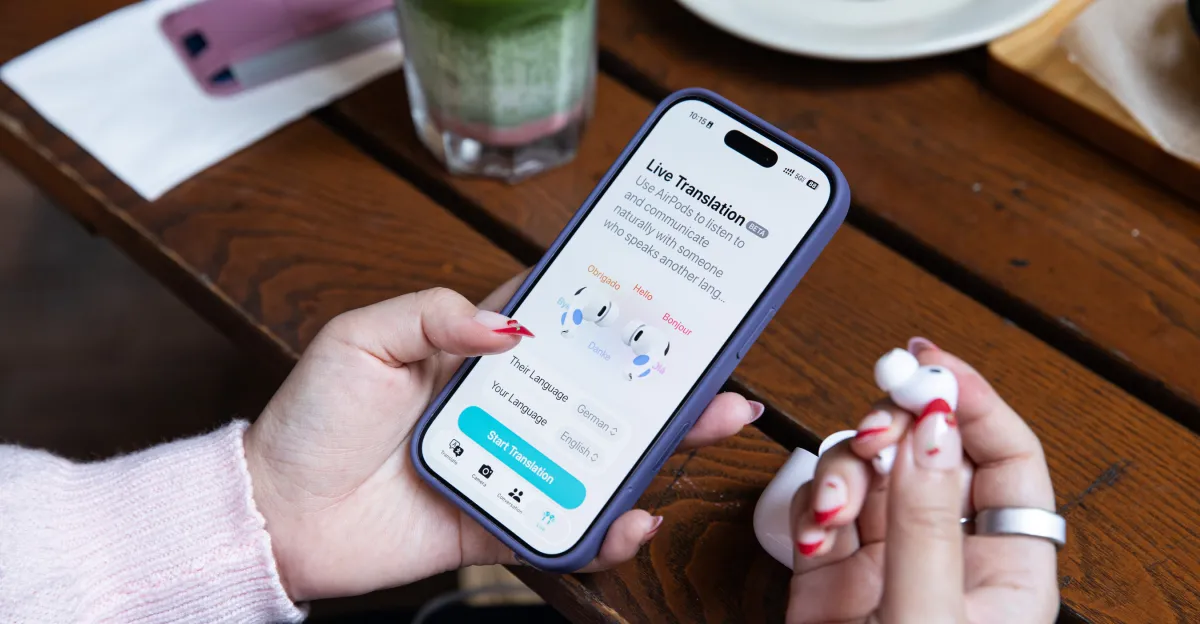
Apple is developing AirPods with built-in cameras, scheduled for late 2027, according to Bloomberg's Mark Gurman. The earbuds would give Siri visual awareness of your surroundings, a stepping stone toward the company's eventual smart glasses.
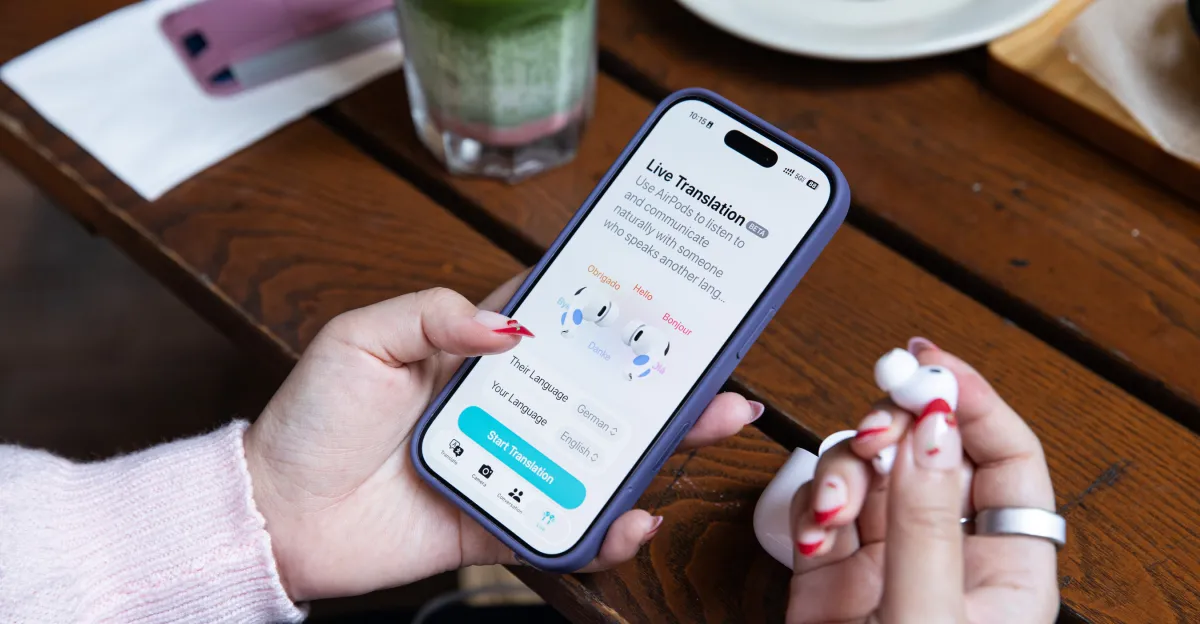
The report, published after WWDC wrapped, outlines a hardware roadmap stretching into 2027 and beyond. Cameras mounted in the AirPods stems would feed environmental data to Apple Intelligence, with indicator lights showing when information uploads to the cloud. Internally, Apple is testing the earbuds with iOS 28, the software update expected in fall 2028.

“The goal is to create a device that can see what the user sees, effectively acting as an external vision sensor for Apple Intelligence to provide real-time, context-aware assistance.”
— Mark Gurman, Bloomberg
Why put cameras on earbuds?
Apple's strategy centers on what it calls Visual Intelligence. Rather than waiting for smart glasses, which still face battery, weight, and social acceptance hurdles, the company wants Siri to understand spatial context now. Low-resolution infrared cameras in AirPods could identify objects, read signs, or recognize faces, then relay that information through audio.
Think of it as a bridge device. Meta's Ray-Ban smart glasses already offer similar features, but Apple appears to want the capability in a form factor millions already own. AirPods shipped over 90 million units in 2024 alone. If even a fraction upgrade to camera-equipped models, Apple gains a massive install base for visual AI before glasses are ready.
Privacy concerns are inevitable. Gurman notes the earbuds will include lights indicating when data uploads to the cloud, a design choice aimed at transparency. Whether that satisfies critics remains to be seen. Discussions on Reddit's r/Apple already show skepticism, with users arguing an LED indicator is not enough.
Apple's second foldable iPhone follows quickly
The report also confirms Apple's commitment to foldable phones. A second-generation model is planned to follow the first foldable iPhone, expected this fall. That timeline signals Apple sees the category as more than an experiment.
The first foldable reportedly features a 7.8-inch inner display, larger than Samsung's Galaxy Z Fold 6 at 7.6 inches. At an estimated $2,000 starting price, Apple is positioning the device as an Ultra-tier product, not a mainstream iPhone replacement.
Gurman acknowledges the compromises foldables still carry. He praises his Pixel 10 Pro Fold but notes apps that fail to adjust for larger screens and battery life that lags behind standard flagships. Apple presumably believes it can solve these problems, or at least minimize them, by controlling both hardware and software.
Relevant context on Apple's expanding India manufacturing footprint
The 20th anniversary iPhone: what's changing?
Internally dubbed V73 and V74, the 20th anniversary iPhone models will follow the iPhone 18 Pro and Pro Max this year. The headline feature: a nearly edge-to-edge display with curved glass wrapping around the sides. This would be the most significant iPhone design shift since the iPhone X eliminated the home button in 2017.
The standard iPhone 18 may not launch until next year. It would run an A20 chip similar to this fall's phones, while the 2027 anniversary models jump to a 2nm A21 processor. Apple is also reportedly considering Intel for some chip production alongside TSMC, a notable diversification given Intel's recent struggles.
Plans for an A22 Pro chip at 1.4nm suggest Apple is pushing fabrication limits aggressively. Whether those timelines hold depends on TSMC's yields and the broader component shortage looming over the industry.
New CEO, new variables
John Ternus recently took over as Apple's CEO. While Gurman presents these roadmaps as relatively firm, leadership transitions create uncertainty. Ternus may prioritize different products, accelerate some timelines, or kill projects that no longer make strategic sense.
A RAM and component shortage adds another variable. If Apple cannot secure enough parts for camera-equipped AirPods at scale, a late 2027 launch could slip. The company's supply chain expertise typically handles such challenges, but shortages have disrupted even Apple's plans before.
The bigger picture: AI everywhere, on everything
These rumors fit Apple's broader AI push. WWDC showcased AI features across iOS, macOS, and watchOS. Camera-equipped AirPods extend that strategy to wearables in a way that does not require users to hold up their phones or wear glasses.
The approach mirrors how Apple typically enters new categories: wait for others to prove the market, then release a polished version integrated with its ecosystem. Meta, Google, and startups have experimented with AI-powered wearables for years. Apple appears ready to make its move.
Frequently Asked Questions
When will Apple release AirPods with cameras?
Bloomberg reports the camera-equipped AirPods are scheduled for late 2027, with internal testing already running on iOS 28.
How much will Apple's foldable iPhone cost?
Estimates put the first-generation foldable iPhone at around $2,000, positioning it as a luxury device above the Pro Max.
What is the 20th anniversary iPhone?
Internally called V73 and V74, these models will feature edge-to-edge curved glass displays and 2nm A21 chips, launching in 2027.
Will AirPods cameras record video?
The cameras are reportedly low-resolution infrared sensors designed for spatial awareness, not video recording. They feed visual context to Siri for AI assistance.
Is Apple making smart glasses?
Yes, but camera AirPods appear to be a stepping stone. Apple wants to develop visual AI capabilities before dedicated smart glasses are ready for market.
Logicity's Take
Apple's camera AirPods bet is smarter than it sounds. Smart glasses face a chicken-and-egg problem: developers won't build for a platform with no users, and users won't buy hardware with no apps. By adding cameras to AirPods, Apple can train its visual AI models on real-world data from millions of users before glasses even ship. If this works, Apple enters the smart glasses market with both polished hardware and software that actually understands what it's looking at. The privacy backlash will be fierce, but Apple's willingness to proceed suggests it believes the utility outweighs the criticism.
Need Help Implementing This?
Building AI-powered wearable integrations or visual intelligence features for your product? Logicity's network of developers and consultants can help you navigate the technical and regulatory challenges. Contact us at consulting@logicity.in to discuss your project.
Huma Shazia
Senior AI & Tech Writer
Produced with AI assistance and reviewed by the Logicity editorial team. Learn more in our Editorial Policy.




