Key Takeaways
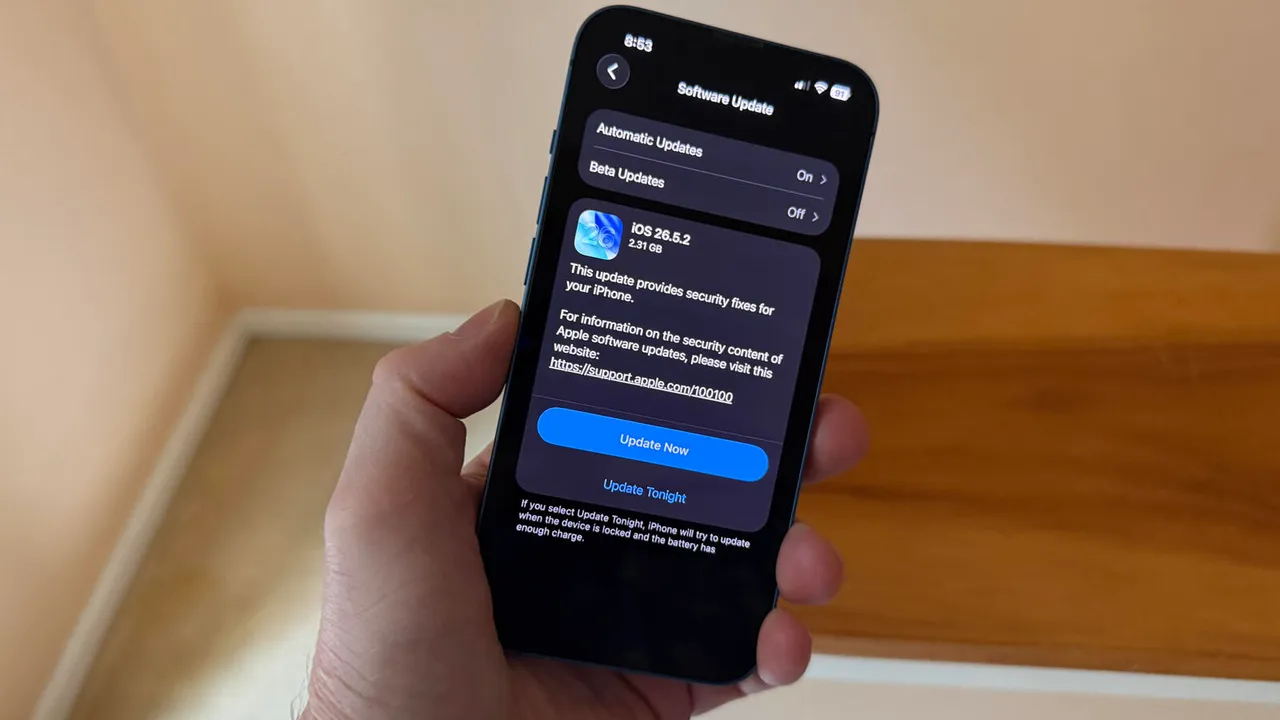
- Apple patched 29 security vulnerabilities in iOS, iPadOS, and macOS ahead of the planned July release
- The company cited AI-powered hacking tools as the reason for accelerating the update schedule
- Most flaws affect WebKit, which renders web content across all iOS apps, not just Safari
Apple released iOS 26.5.2, iPadOS 26.5.2, and macOS 26.5.2 on Monday, patching 29 security vulnerabilities weeks ahead of the originally planned July release. The company told Reuters that AI-powered hacking tools are shortening the window between vulnerability disclosure and active exploitation, forcing a shift away from its traditional bundled update cycle.
None of the 29 flaws have been exploited in the wild yet. That's precisely the point. Apple is trying to close holes before attackers can weaponize them, and the company believes AI is giving hackers a dangerous head start.
Why WebKit flaws matter beyond Safari
Most of the patched vulnerabilities target WebKit, Apple's browser engine. This affects more than Safari users. WebKit renders web content inside virtually every iOS app that displays links, embedded content, or in-app browsers. A malicious webpage loaded anywhere on your device could trigger these bugs.
"WebKit isn't just Safari, it's the engine rendering web content inside other iOS apps, so these flaws are reachable almost anywhere a link opens, not only in the browser," said Adam Boynton, senior enterprise strategy manager at Jamf. "Most are memory-safety bugs triggered just by loading malicious content."
The practical risk: an attacker could install malware or steal sensitive data simply by getting a user to tap a link. No app downloads, no suspicious prompts. Just a compromised webpage.
How AI changes the patch timeline
For years, Apple and Microsoft have bundled security fixes into scheduled major releases. The logic was simple: coordinate patches, test thoroughly, ship together. That approach assumed attackers needed weeks to reverse-engineer disclosed vulnerabilities and build working exploits.
AI compresses that timeline. Language models can analyze patch notes, identify the underlying flaw, and generate proof-of-concept exploit code in hours rather than weeks. The buffer between "vulnerability disclosed" and "exploit in the wild" is shrinking fast.
Apple's solution: pull fixes out of the feature cycle and ship them independently. The 29 patches in this update were already in the iOS 26.6 beta, scheduled for mid-July. Apple decided not to wait.
"It reflects the old approach breaking down," Boynton said. "Bundling fixes into big feature releases worked when you had weeks before a flaw got exploited, and that buffer is gone. I'd expect smaller, more frequent updates as a result."
How to update your devices
On iPhone and iPad, go to Settings > General > Software Update. On Mac, open System Settings > General > Software Update. Download and install version 26.5.2. The update is small and should take only a few minutes on a decent connection.
Don't wait. The vulnerabilities are now public knowledge. Every day you delay gives attackers another chance to build exploits targeting unpatched devices.
What this means for enterprise security teams
For organizations managing Apple device fleets, the shift toward smaller, more frequent security updates creates operational headaches. MDM workflows designed around monthly or quarterly patch cycles need rethinking. Testing windows shrink. User communication becomes more frequent.
The alternative is worse. Leaving devices unpatched while AI-assisted attackers scan for vulnerable targets is a losing bet. Speed now beats thoroughness.
Logicity's Take
Apple's move signals a broader industry shift. The predictable cadence of Patch Tuesday and quarterly iOS updates is becoming a liability when AI tools let attackers weaponize disclosures in hours. Expect Microsoft, Google, and other platform vendors to follow with similar out-of-band patching strategies. For IT teams, this means investing in automated patch management tools that can push updates faster. Jamf, Microsoft Intune, and Kandji are the leading options for Apple device fleets, with pricing ranging from $4-8 per device monthly. The cost of faster patching is lower than the cost of a breach.
Frequently Asked Questions
Has Apple confirmed any of the 29 vulnerabilities were exploited?
No. Apple stated that none of the patched vulnerabilities have been exploited in the wild. The early release is preventive, aimed at closing holes before attackers can weaponize them.
Why did Apple release this update early?
Apple told Reuters that AI-powered hacking tools are accelerating how quickly attackers can exploit disclosed vulnerabilities. The company decided not to wait for the scheduled July release of iOS 26.6.
Do I need to update if I don't use Safari?
Yes. Most vulnerabilities affect WebKit, which renders web content in virtually all iOS apps, not just Safari. Any app that displays links or embedded web content could trigger these flaws.
Will Apple continue releasing out-of-cycle security updates?
Apple hasn't announced a permanent policy change, but security experts expect smaller, more frequent updates to become standard as AI accelerates the threat landscape.
How AI companies are building tools that could be used by both researchers and, potentially, threat actors
Need Help Implementing This?
If your organization manages Apple devices at scale and needs help accelerating patch deployment workflows, contact Logicity's advisory team for vendor-neutral guidance on MDM solutions and security automation.
Source: Latest news
Huma Shazia
Senior AI & Tech Writer
Produced with AI assistance and reviewed by the Logicity editorial team. Learn more in our Editorial Policy.




